Fernando Vargas

114 posts

Fernando Vargas

Fernando Vargas

@fvarmad

Miami, FL Katılım Kasım 2015
195 Takip Edilen94 Takipçiler
Fernando Vargas
Fernando Vargas@fvarmad·
@Papa_Heme Dara in MGUS… seems a bit unethical IMO. Wouldn’t enroll any family member into something like this.
English
1
0
5
587
Papa Heme
Papa Heme@Papa_Heme·
Daratumumab for MGUS. Soon will be giving it to everyone to prevent the development of MGUS Daratumumab in high-risk MGUS and low-risk smoldering myeloma: results of the Phase II D-PRISM study | Nature Communications nature.com/articles/s4146…
English
3
7
68
9.8K
Fernando Vargas
Fernando Vargas@fvarmad·
@AhmadRehanKhan Interestingly she doesn’t share that the only studies looking at outcomes of patients treated by IMGs vs US grads shows either equal outcomes or slightly better in the IMGs group. Realistically speaking outcomes are likely equal.
English
0
0
1
186
Dr Ahmad Rehan Khan
Dr Ahmad Rehan Khan@AhmadRehanKhan·
This is a classic example of using numbers without context. Yes, the U.S. has a higher physician-to-population ratio than India and Pakistan. But comparing the U.S. to lower-resource, developing health systems and declaring “no shortage” is not a serious argument. India and Pakistan struggle with physician density due to limited resources, lower per-capita income, and infrastructure constraints. That’s expected. The U.S., meanwhile, spends the most on healthcare globally and still faces access issues. Why? Because the problem isn’t just numbers, it’s distribution, specialty imbalance, and system inefficiency. 𝗥𝘂𝗿𝗮𝗹 𝗔𝗺𝗲𝗿𝗶𝗰𝗮 𝘀𝘁𝗶𝗹𝗹 𝗵𝗮𝘀 𝗵𝗲𝗮𝗹𝘁𝗵𝗰𝗮𝗿𝗲 𝗱𝗲𝘀𝗲𝗿𝘁𝘀: 🔹 𝗣𝗿𝗶𝗺𝗮𝗿𝘆 𝗰𝗮𝗿𝗲 𝗮𝗻𝗱 𝗽𝘀𝘆𝗰𝗵𝗶𝗮𝘁𝗿𝘆 𝗿𝗲𝗺𝗮𝗶𝗻 𝗰𝗿𝗶𝘁𝗶𝗰𝗮𝗹𝗹𝘆 𝘂𝗻𝗱𝗲𝗿𝘀𝘁𝗮𝗳𝗳𝗲𝗱 🔹 Residency bottlenecks artificially limit physician supply 🔹 Burnout and early retirement reduce actual workforce capacity Even the Association of American Medical Colleges projects a shortage of up to 86,000 physicians by 2036 So yes, the U.S. has more doctors per capita than developing countries. And despite that, patients still struggle to access care. That’s exactly why the shortage conversation exists.
Mary Talley Bowden MD@MaryBowdenMD

Do we really have a physician shortage? US is far ahead of Pakistan and India in terms of physician density, yet we keep getting told we need their doctors to survive.

Matamoras, PA 🇺🇸 English
22
9
113
25.9K
Fernando Vargas
Fernando Vargas@fvarmad·
@DrBruggeman This is were AI should be used to optimize the process. It could quickly review the evidence and quick turn around.
English
0
0
0
11
Adam Bruggeman, MD
Adam Bruggeman, MD@DrBruggeman·
I have argued that prior authorization is a necessary part of our system What isn’t necessary is the gamesmanship of regularly denying claims with the knowledge that 90% won’t be appealed. Prior authorization went from reasonable gatekeeping to a profit strategy
Anil Makam@AnilMakam

prior auth sucks for all but its a tragedy of the commons 12 years of training does not mean you know how to appraise and apply evidence I know, because I was that person a lot of what doctors order, including at elite academic medical centers, is not needed I see it everyday

English
11
7
42
4.4K
Fernando Vargas
Fernando Vargas@fvarmad·
@Hragy Stable esophageal varices are not a contraindication for anticoagulation. I think we use the “AC contraindicated” to freely.
English
1
0
0
380
Hany Ragy
Hany Ragy@Hragy·
In Egypt we used to have many patients with esophageal varices and high CHADSVASC2, I close their LAA, I have always verbally told them that i wished we could give them pills cause i believe it is more effective in preventing stroke! Now I will say with confidence that there’s =
Davide Capodanno@DFCapodanno

All the explanations I’ve heard today for the negative CLOSURE-AF result—some so strained they’re almost impressive. 1) The devices were “outdated” and therefore responsible for excess complications (the usual argument that things only go wrong elsewhere). 2) DAPT was used after LAAO, which is now said to be obsolete because of bleeding concerns compared with DOAC-based strategies (a claim that is often repeated, less often demonstrated). 3) Stroke rates were similar, so the signal is attributed mainly to bleeding and procedural issues—as if that were a minor point. 4) The composite endpoint is criticized for mixing different mechanisms, although if anything it should have favored non-inferiority. 5) The early phase of enrollment is invoked to argue that complications are not representative of current practice (again, complications seem to belong to others). 6) And then there are the usual remarks about loss to follow-up, crossovers, and lack of blinding. What seems to be missed in this accumulation of arguments is straightforward: the burden of proof lies with LAAO, not with the control arm. The issue is the strength of the evidence supporting LAAO, not medical therapy, which remains the reference standard.

English
3
4
37
22.2K
Fernando Vargas
Fernando Vargas@fvarmad·
@Ghoshomy @NEJM Exactly these are clinically relevant (IV atbs, NF, hospitalization, etc). Here endpoint is keeping chemo intensity… Nothing clinically relevant (unless showing that maintaining intensity benefits the patient).
English
0
0
0
10
Fernando Vargas
Fernando Vargas@fvarmad·
@Ghoshomy @NEJM But what is the goal here then? No decrease in major bleeding, no OS benefit, no clinical relevant endpoint IMO. G-CSF is supportive and improves clinical endpoint in appropriate patients.
English
2
0
1
45
NEJM
NEJM@NEJM·
RECITE: In a phase 3 trial in patients with persistent chemotherapy-induced thrombocytopenia, 84% of those receiving romiplostim had no chemotherapy dose modifications, as compared with 36% of those receiving placebo (odds ratio, 10.16). Full trial results: nejm.org/doi/full/10.10… Editorial: Thrombopoietin-Receptor Agonists in Chemotherapy-Induced Thrombocytopenia nejm.org/doi/full/10.10…
English
1
44
146
35.1K
Fernando Vargas
Fernando Vargas@fvarmad·
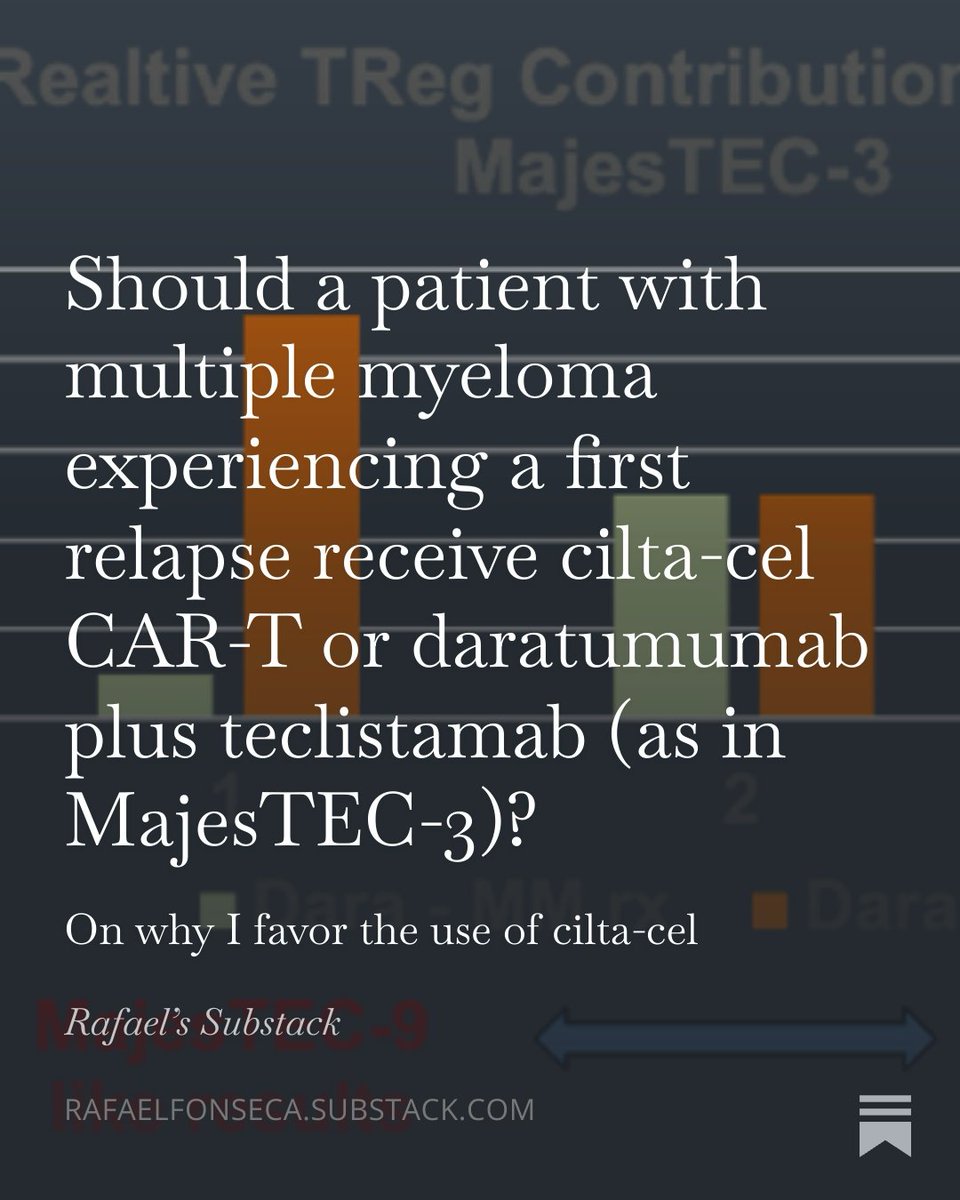
@Rfonsi1 I can’r read it but question are there plans for cost effectiveness/QALY analysis comparing both? Should certainly be part of the decision making.
English
1
0
0
70
Fernando Vargas
Fernando Vargas@fvarmad·
@Ghoshomy @NEJM Yes - my point is if you delay chemo/reduce doses but the OS is equal then it wouldn’t make sense to add a drug that add costs and toxicity. If I gave all the cycles as scheduled but the patient outcome didn’t improve then I treated myself.
English
0
0
1
41
Arnab Ghosh
Arnab Ghosh@Ghoshomy·
@fvarmad @NEJM The primary end point was the absence of CIT-induced modifications of the chemotherapy dose (reduction, delay, omission, or discontinuation) in both the second and third chemotherapy cycles. Not OS
English
1
0
1
118
Fernando Vargas
Fernando Vargas@fvarmad·
@bshah @HemSandoval I think when they use the word “trends” they are showing the inherent bias. They should have said positive here, no difference there.
English
0
0
1
14
bshah
bshah@bshah·
@HemSandoval I think we could say that about nearly every pharma sponsored trial that is published - so some nuance to this. Again, I don’t think we should abandon scrutiny (be it clinical retro data or a phase 3) - but I don’t agree that it means inherent bias
English
1
0
1
21
Fernando Vargas
Fernando Vargas@fvarmad·
@Just_DrAnya @drjasonfung Dr. Anya - what evidence do you have to support this statement? Please teach us, link some trials showing how it is a game changer in peer reviewed journals please… not an influencer MD post.
English
0
0
2
192
Dr. Jason Fung
Dr. Jason Fung@drjasonfung·
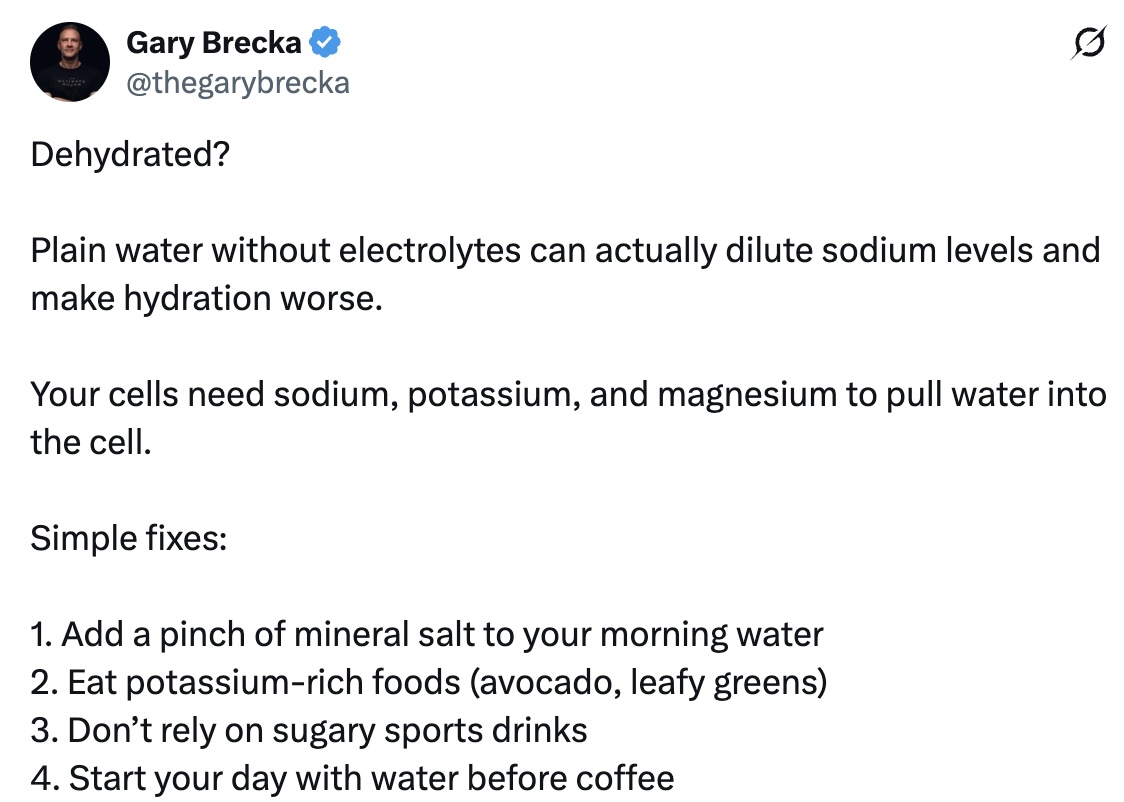
WTF? If you drink a lot of water, you will pee it out. That's what your kidneys do (speaking as a kidney specialist). I drink plain water (yes, without salt) almost every day of my life, as did virtually all humans for the last, say, million years. No, I am not worried about 'dehydrating' myself by drinking water. 🙄
Dr. Jason Fung tweet media
English
813
322
5.4K
1.1M
Fernando Vargas
Fernando Vargas@fvarmad·
@jasonwilliamsmd The problem with your statement is that there iz zero clinical evidence supporting your statement. No clinical trial has shown activity to date. You should do a well designed trial of immunotx +/- and publish it, the data positive or neg would be informative.
English
0
0
0
23
Jason R. Williams, MD, DABR
Jason R. Williams, MD, DABR@jasonwilliamsmd·
The CIA didn't hide a cancer cure. The pharmaceutical industry made it unprofitable to pursue one. I've been using antiparasitic drugs like ivermectin and mebendazole in my cancer protocols since 2017. Not because cancer is a parasite. That's an oversimplification that leads people down the wrong path. It's because parasites and cancer cells run the same biological playbook: hijack the host, evade immune detection, replicate, spread. Drugs designed to disrupt one can hit the other. What I've seen clinically is that these drugs, when used properly alongside immunotherapy, can extend lives that the conventional system had written off. But they're not magic bullets. Every cancer is different. Dosing matters. Combinations matter. I've also seen cases where fenbendazole appeared to accelerate tumor growth when used incorrectly. The science here requires precision. Mebendazole has over 200 published studies showing anti-cancer activity. The evidence has been building in plain sight for years. The real question isn't why the CIA had this document. It's why drugs that cost a few dollars per dose still can't get funding for large-scale cancer trials. You already know the answer.
Daily Mail@DailyMail

CIA faces furious backlash after hidden document with potential cure for cancer is declassified trib.al/cKVJB6i
English
358
6.5K
23.7K
1.3M
Fernando Vargas
Fernando Vargas@fvarmad·
@wgibson The ph 1/2 studies of APR-246 showed highly encouraging responses in MDS/AML. The point I am making is until the phase 3 data & OS isn’t confirmed I don’t get tremendously “excited” in TP53 malignancies. It can do wonders in the lab and fail in the clinic, lets hope not!
English
0
0
0
25
William Gibson
William Gibson@wgibson·
Eprenetapopt never showed any real preclinical activity. It was clear to most people in the field that it was not an on-target mechanism. You can easily see in the CCLE dataset that there is no correlation between TP53 mutation status (y-axis, # of TP53 mutations in each cell line) and compound sensitivity (x-axis). Subsequent dedicated studies showed definitively that APR-246 has nothing to do with TP53 status. Example: aacrjournals.org/mct/article-ab… One only had to look at the structure of Eprenetapopt to see that it was extremely unlikely that it was doing anything specific, nevermind reactivating (all?) TP53 mutations (how?!). Rezatapopt is an entirely different story and is an actual on-target, highly optimized drug. The same sorts of studies confirm this easily.
William Gibson tweet mediaWilliam Gibson tweet media
English
1
0
0
56
William Gibson
William Gibson@wgibson·
While a 20% overall response rate, is not the kind of thing that makes a big splash in NEJM, there's reason to be very excited about this. The "impossible" label on TP53 has been ripped off. This is just the first of what I think will be many p53-targeted compounds to come.
NEJM@NEJM

Original Article: Phase 1 Study of Rezatapopt, a p53 Reactivator, in TP53 Y220C–Mutated Tumors (PYNNACLE study) https://nej.md/3OIQC5P Science behind the Study: Restoring Function to a Variant of p53 in Solid Tumors https://nej.md/3N0pQW8 #Oncology #Genetics

English
7
14
69
11.6K
Fernando Vargas
Fernando Vargas@fvarmad·
@venkmurthy Compared to what? Most places where you go directly from high school its 6-7 years, so at most saving 2 years (and you have no escape route). Also to get law degree, pharmd, dental degree etc.. will be 6+ years.
English
0
0
0
34
Venk Murthy MD PhD
Venk Murthy MD PhD@venkmurthy·
There is no doubt that medical training is too long For most physicians a BS/BA has vanishing value except for those who need more time to mature (which many believe because they needed/enjoyed it everyone else *must* do it without any other option also) This is the biggest opportunity to save 2-4 years and $300k/doctor (financial + opportunity cost of ~$1m per doctor)
Nikhil Krishnan@nikillinit

All my doctor friends be like “I’m doing a fellowship” constantly. Lord of the rings ass career.

English
24
5
97
31.2K
Fernando Vargas
Fernando Vargas@fvarmad·
@GuiperiniMD @JohnPLeonardMD Until a randomized study proves otherwise, this is entirely ethical. Countless examples show that “fantastic” data ultimately fail to improve SOC.
English
0
0
0
35
Guilherme Perini, MD
Guilherme Perini, MD@GuiperiniMD·
@JohnPLeonardMD 😅😅😅 love the stoic answer... But I think the bulk of evidence suggests a very strong effect... If I had it, I would use it. Accepted PCNSL data is, with honourable exceptions, ph2 data anyway...
English
2
0
1
319
Fernando Vargas
Fernando Vargas@fvarmad·
@jeff_sharman @Papa_Heme Are we defining success based on ORR? Or OS? All patients in control arm would need to have access to revumenib in second line for it to be fair..
English
0
0
2
99
Jeff Sharman
Jeff Sharman@jeff_sharman·
@Papa_Heme Totally disagree- provided they can sequence drugs properly and minimize toxicity. Revumenib is a remarkable new targeted therapy - among the most exciting developments in aml! I’ll take that bet - two ash tacos
English
2
1
8
1.2K
Papa Heme
Papa Heme@Papa_Heme·
Free advice for investors. I suspect this will fail in a randomized trial when compared to ven aza in NMP1 mutated AML Azacitidine, Venetoclax, and Revumenib for Newly Diagnosed NPM1-Mutated or KMT2A-Rearranged AML | Journal of Clinical Oncology ascopubs.org/doi/10.1200/JC…
English
7
3
43
8.5K
Fernando Vargas
Fernando Vargas@fvarmad·
@doclauravater Sorry… doctors are encouraged to use prescription stimulants? I did my fair share of 36 hours calls, but that never even remotely crossed my mind (nor did anyone ever recommended them). That is a personal choice.
English
0
0
2
79
Laura Vater, MD, MPH
Laura Vater, MD, MPH@doclauravater·
Now, 130 years later, rather than using cocaine to stay awake, doctors are encouraged to use prescription stimulants. And despite the data that sleep deprivation is bad for our health and for patient safety, we are still depriving doctors of sleep, often for their whole careers.
English
10
58
631
12.9K
Laura Vater, MD, MPH
Laura Vater, MD, MPH@doclauravater·
Why do doctors work without sleep? Tradition.   In the 1890s, Dr. Halsted created a model for training where residents worked nearly 24/7.   Only later, we learned: Dr. Halsted used cocaine to stay awake & morphine to fall asleep, relying on residents to cover up the addiction.
English
55
650
3.7K
229.7K
Fernando Vargas
Fernando Vargas@fvarmad·
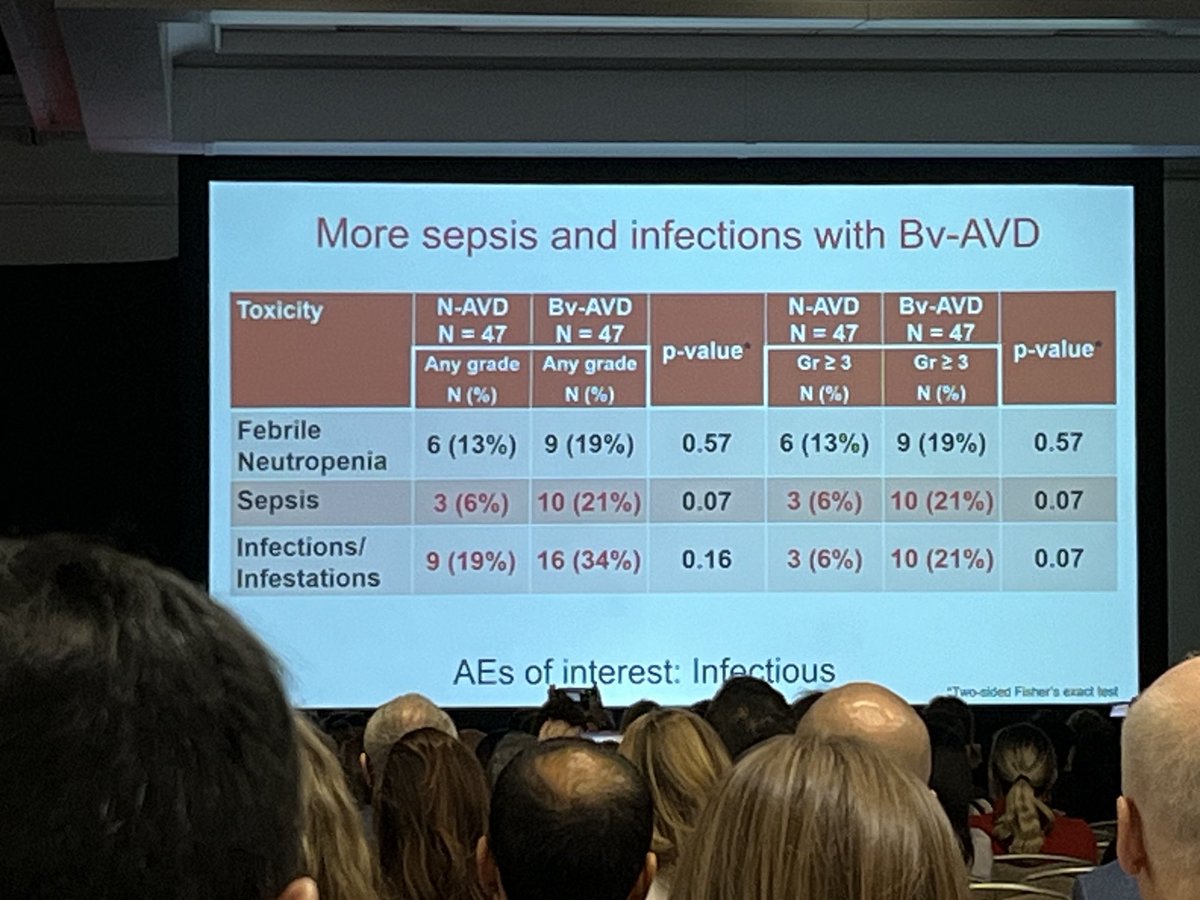
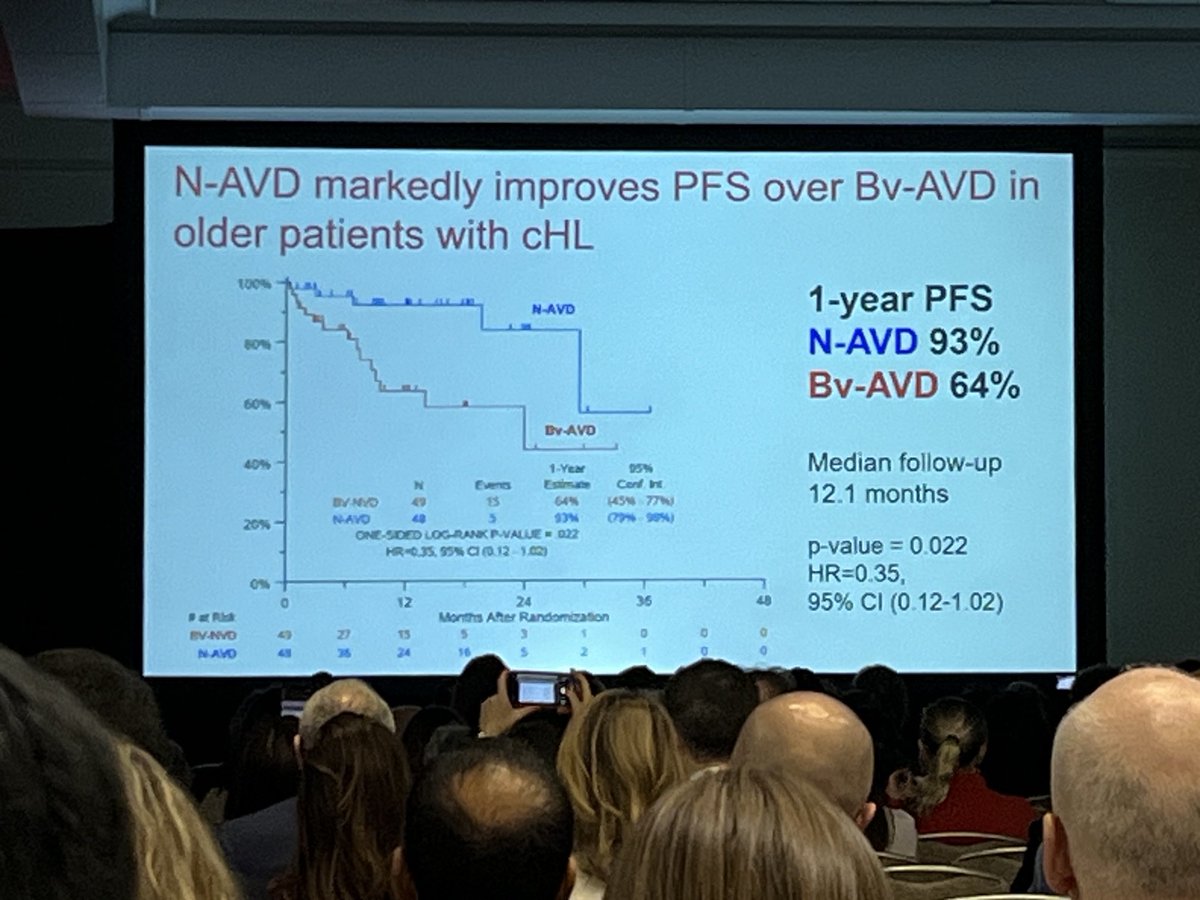
Fantastic data of Nivo-AVD for older pts with cHL. 1 year PFS of 93% (vs 64% for BV-AVD). Less neuropathy and infections with Nivo-AVD. New standard for this group of pts. #ASH23 #lymsm
Fernando Vargas tweet mediaFernando Vargas tweet mediaFernando Vargas tweet media
English
0
0
2
277