Golden Child

16.3K posts

Golden Child banner
Golden Child

Golden Child

@geeezy321

“Lived this life since birth. All these amenities was meant to be, before you do it physically you gotta think it mentally.”

HTOWN TX FLOSSIN IN A LEXXUS Katılım Eylül 2014
2.7K Takip Edilen362 Takipçiler
Golden Child
Golden Child@geeezy321·
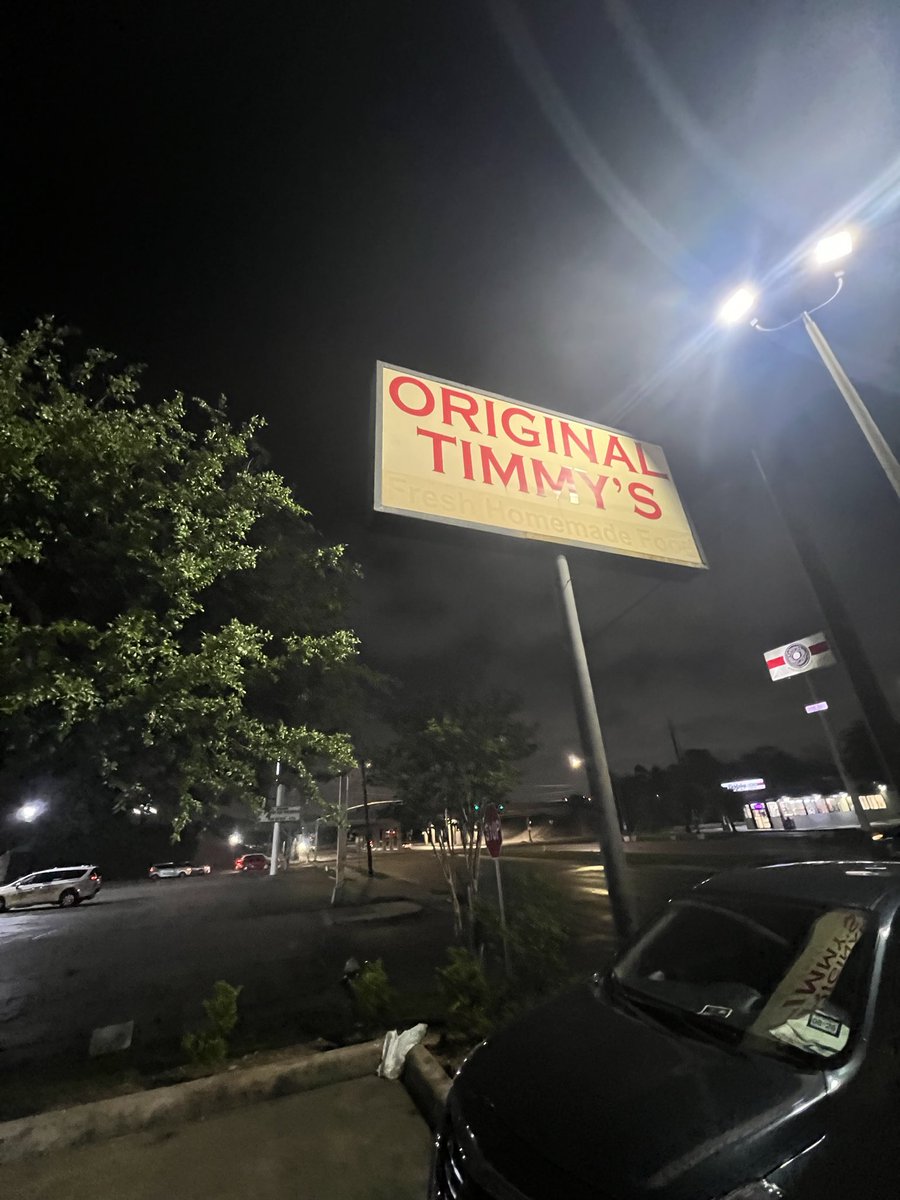
@audiboyjerm420 Man the OG the way the spice them bitches and mix that good ole koolaide let you know what time it is. Better bring that cash too- I seen that lil Asian lady cuss people the fuck out for ordering $80 worth of good then trying to use a card 😂😂😂
English
0
0
0
357
Jerm.
Jerm.@audiboyjerm420·
It’s a Southside thing, you wouldn’t understand
Jerm. tweet mediaJerm. tweet mediaJerm. tweet media
English
13
47
253
15.1K
James
James@SkipLeCates·
@JRDNLTHMS Back in 2017 the Houston Fire union hired an economist to provide data to compare HFD to what they had determined to be a private comparable. The City’s position was a private sector comparable didn’t exist. The depositions exist somewhere
English
2
0
4
43
Golden Child
Golden Child@geeezy321·
@lloydMcflyy @DIE4LAFLARE @angie_goodwood They did this same shit with Pimp C too!! I’m all the way in London seeing “Trill” and “NOMTOMBOT” on TShirts and Caps, acting like I’m the outsider cause I’m not wearing that BS lmao.
English
1
0
2
56
Von
Von@lloydMcflyy·
@geeezy321 @DIE4LAFLARE @angie_goodwood Thats what im saying manee! so many different folks making merch nd jus slapping screw face on it bc they know its gonna sell.. aint nb tryna gatekeep shit its about the principle
English
1
0
2
68
Golden Child
Golden Child@geeezy321·
@UCannotRelate @GoodJob81 @DIE4LAFLARE @angie_goodwood No doubt. This shit just looks so plain you’re correct. The Jersey is kind of dope, but compared to the collabs The Astros/Texans have had. The way UH 🏀 integrates Screw/PAT into their culture- this is just stale brother
English
0
0
1
25
🤧
🤧@UCannotRelate·
@GoodJob81 @geeezy321 @DIE4LAFLARE @angie_goodwood The drop is uninspired it just doesn’t feel like there’s any love in it and tbh it feels random. When Michael’s little capsule happened it felt like exploitative in a timely way. But rest in peace screw fr heavy on that
English
1
0
2
32
Golden Child
Golden Child@geeezy321·
@cjwarnke @MollyJongFast Vergüenza. As someone who grew up in SoTX/RGV, like we say “TOMA PUTO!!” The need for their proximity to Whiteness, at the expense of their fellow Latinos when ALL of us in that area decend from Immigrants is pathetic. Let them own it- if not this shit will happen again
English
0
1
8
331
CJ Warnke
CJ Warnke@cjwarnke·
👀👀👀 Latino Republicans in South Texas said the Trump administration’s efforts to restrict the right added to their wider frustrations over how the president has carried out his immigrant detention and deportation campaign. “I don’t think I can vote Republican anymore”
CJ Warnke tweet media
English
39
200
679
31.2K
Golden Child
Golden Child@geeezy321·
@theshellbelle @RiverOaksPrblms Stuns me we’ve LOST the ability to read folks for whom they truly are. One look at this Judge, it’s clear he was a square- and like Hidalgo has made this position his entire personality. Any criticism? You’re criticizing the court & I’ll use its power to get equal. Shameful
English
0
0
4
183
Golden Child
Golden Child@geeezy321·
@MikePrysner I grew up in SoTX am Hispanic and from WW1 to Iraq had my GF/Uncles, Aunts/Cousins/served in The Marine Core/Navy(26 Total) this is horrible to read if verified. Small town/Inner City Black/Immigrant/Latinos this is the MAIN way out for us. Truly disappointed
English
0
0
1
321
Golden Child retweetledi
Bushels 🌾 Barrels 🛢 & Bullion 💰
America Celebrates 250 years (and the end of Pax Americana) This note is about the US and the implications of another war in the Middle East, but first, some history: In 1956, Britain and France conspired with Israel to seize the Suez Canal from Egypt’s Nasser. It was a classic imperial move, the kind that had worked for a century. Except this time, Eisenhower said no. He threatened to dump U.S. holdings of sterling on the open market, which would have collapsed the pound overnight. Britain folded within days. France folded with it. That moment, more than any other, marks the true end of British imperial primacy. Not the World Wars, not the independence movements, not the Commonwealth. The moment a U.S. president made a phone call and the pound buckled. Reserve currency status doesn’t just reflect economic power. It is economic power, and when it goes, everything goes with it. It is also worth noting the bitter irony that in 1956 it was Israel’s adventurism that helped expose the limits of British power and accelerate the pound’s decline. History has a way of rhyming. The pound’s vulnerability at Suez didn’t emerge overnight. It had been building for decades, through two world wars that bled Britain fiscally dry, through the steady accumulation of the world’s gold by the United States, and through the slow recognition that the guarantor of global trade had changed addresses. Bretton Woods in 1944 formalized what was already true: the dollar was now the anchor of the global monetary system, convertible to gold at $35 an ounce, with every other currency pegged to it. It was an elegant system. It was also a system that required the United States to run perpetual trade surpluses and maintain fiscal discipline, neither of which proved politically sustainable. By the late 1960s the U.S. was spending heavily on Vietnam and the Great Society simultaneously, and foreign central banks, led by a deeply skeptical De Gaulle, began converting their dollar reserves into gold at an accelerating pace. France literally sent warships to New York to bring gold home. On August 15, 1971, Nixon closed the gold window. The dollar would no longer be convertible. Bretton Woods was dead. What replaced it was Kissinger’s deal: the petrodollar. The deal struck with Saudi Arabia in 1973 and 1974 was simple and profound. Oil would be priced exclusively in dollars. In exchange, the U.S. would provide security guarantees to the Gulf monarchies. You want energy, you need dollars. You need dollars, you hold Treasuries. You hold Treasuries, you finance American deficits. The gold standard was replaced not with nothing, but with oil and aircraft carriers. It worked because it rested on one non-negotiable guarantee: America would secure global trade routes, keep the sea lanes open, and ensure the free flow of energy to allies and adversaries alike. The Strait of Hormuz. The South China Sea. The Red Sea. These were never just geography. They were the load-bearing walls of the entire dollar architecture. And this is the thing people consistently fail to appreciate: commodities and geopolitics have always been linked. Most wars throughout history are, at their core, about securing access to resources. Energy. Grain. Metals. The players change. The underlying logic never does. Fast-forward to February 2022. Russia invades Ukraine. The U.S. and Europe respond by freezing $300 billion in Russian sovereign reserves. Swift expulsion and asset seizures. Just like that, we answered a question every central bank on earth had been too polite to ask out loud: what happens if America decides your dollar reserves are no longer yours? Biden gave them the answer. Loudly. This was not just a sanctions regime. This was a fundamental break in the trust architecture that underpins reserve currency status. The dollar’s value as a reserve asset was always partly about neutrality, the assumption that it was beyond politics. We torched that assumption. Every non-Western central bank quietly updated its threat model that week. If it can happen to Russia, it can happen to anyone who finds themselves on the wrong side of Washington. Subsequent uses of financial sanctions against various actors only compounded the damage, each one further eroding the perception that the dollar was a neutral settlement medium rather than a political weapon. The de-dollarization trend and the de-globalization trend are not separate stories. They are the same story. When the guarantee of free trade breaks down, countries retrench. When the reserve currency gets weaponized, countries diversify. When the hegemon’s will to enforce the rules-based order wavers, everyone starts making contingency plans. We are now deep inside that dynamic. The Houthis have been attacking commercial shipping in the Red Sea for over a year. Iranian proxies armed with Iranian-supplied missiles. The U.S. response has been airstrikes that changed nothing. Global shipping rerouted around the Cape of Good Hope, adding weeks and billions in costs. The Strait of Hormuz carries roughly 1/5 of the world’s petroleum liquids and it is now de facto under the control of the IRGC. When asked about it, the current U.S. administration has been explicit: that’s other countries’ problem. Let that sink in. The Strait of Hormuz, the single most important chokepoint in the entire petrodollar architecture, the physical artery through which the dollar’s claim to reserve status is literally pumped, and the position of the United States government is a shrug. If the U.S. cannot credibly guarantee the Strait stays open, the petrodollar system loses its central physical premise. You cannot price oil in dollars if you cannot guarantee the oil moves. At the same time, Trump has made clear he wants to withdraw from NATO commitments, remove troops from Germany, and generally signal that the American security umbrella is no longer a given but a transaction. NATO without credible U.S. commitment is just a bureaucracy. U.S. troops in Germany are not just a tripwire against Russian aggression, they are the physical embodiment of the guarantee that underwrites European confidence in dollar-denominated trade and finance. Remove them and you don’t just weaken European security. You weaken the entire signaling architecture that tells the world the American system is worth buying into. Meanwhile in the Pacific, the U.S. has drawn down defensive assets across Southeast Asia, leaving Taiwan and Japan increasingly exposed at precisely the moment China is conducting its most aggressive military posturing in decades. Every ally in the region is asking the same question Europe is asking: is the guarantee real? And they are all beginning to arrive at the same uncomfortable answer. Meanwhile we are signaling to Europe and to Ukraine that support has a political price and an expiration date. Every one of those signals is read by every finance ministry and central bank on the planet. The question they are all asking is whether the guarantee is real. The answer is becoming less clear by the month. Here is what makes this moment uniquely dangerous and what most mainstream commentary refuses to confront directly. The United States government has, to a degree without modern precedent, allowed its foreign policy in the Middle East to be effectively captured by a foreign government. The unconditional support for Israel, regardless of the conduct of its military operations, regardless of the cost in American credibility, regardless of the alienation of Arab partners whose cooperation the petrodollar system literally depends upon, has gutted America’s ability to act as a neutral and trusted arbiter of global order. And, to be clear, I am not arguing that American interventionism is the right path forward. But unconditional support of Israel, executed recklessly, is absolutely disastrous. Eisenhower could call Britain and France off Suez in 1956 because the world believed America was acting in the interest of global stability rather than a particular ally. That credibility is gone. When the U.S. vetoes ceasefire resolutions at the UN while simultaneously claiming to be the guarantor of a rules-based international order, the cognitive dissonance is not lost on the Global South, on Arab oil producers, or on the central banks quietly reducing their Treasury holdings. A hegemon that cannot be trusted to act with even a semblance of neutrality is not a hegemon. It is an Israeli puppet. And puppets do not get to set the terms of global finance. So what fills the void? Not the yuan. Not yet, anyways. China’s capital account is closed. There is no deep, liquid, freely convertible yuan bond market for the world to park reserves in. The yuan cannot replace the dollar for the same reasons the dollar couldn’t have replaced the pound in 1930, the institutional architecture doesn’t exist yet, and China is not trusted. You don’t replace a weaponized reserve currency with someone else’s weaponized reserve currency. But here is where it gets interesting: countries that want to transact with each other in oil, in commodities, in bilateral trade, don’t need a reserve currency. They need a settlement medium. And gold, the asset with no counterparty, no issuer, no sanctions risk, is reemerging as exactly that. Central bank gold demand has hit multi-decade highs three years running. Russia and China conduct the overwhelming majority of their bilateral trade in national currencies supplemented by gold reserves. The BRICS have advanced a hybrid digital settlement mechanism backed by physical gold, now in pilot phases for cross-border transactions. India, the Gulf states, and much of the Global South have followed suit in various degrees. This is not theoretical. It is happening. Gold makes structural sense in a fragmented world because it cannot be frozen, it cannot be sanctioned, and it has no political allegiance. It is the asset that sits outside the system, which is precisely why every nation building a parallel financial architecture is accumulating it. The 1970s swap of gold for oil as the dollar’s backing was always a political arrangement. We are watching its reversal in slow motion. Here is the strategic reality the West refuses to say out loud: Russia, China, and Iran understand supply chain vulnerabilities in ways that Western governments, captured by short-term political cycles and decades of globalization orthodoxy, have consistently failed to. China has spent 20 years building commodity self-sufficiency. Domestic rare earth processing. Long-term oil contracts with Russia, Iran, and Saudi Arabia priced outside the dollar. Port infrastructure from Djibouti to Pakistan to Sri Lanka. Control over the processing of the critical minerals, lithium, cobalt, rare earths, that every advanced weapons system and clean energy technology depends upon. The Belt and Road isn’t an aid program. It’s a parallel trade and settlement architecture being built in plain sight. Russia, despite sanctions, has reoriented its entire commodity export infrastructure eastward and built payment systems that bypass Swift entirely. Iran has spent decades developing asymmetric capabilities specifically designed to threaten the chokepoints the petrodollar depends on. These are not accidents. These are strategies. Coherent, long-horizon, supply-chain-aware strategies pursued by adversaries who understood that the real battlefield was always logistics and monetary architecture, not just military hardware. And here is the painful corollary: the United States’ ability to respond militarily or industrially to a major conflict is far more constrained than the public appreciates. Decades of offshoring have hollowed out the defense industrial base. Shipbuilding capacity is a fraction of what it was in World War II. Ammunition production, exposed dramatically by the Ukraine war, is running well below what sustained high-intensity conflict would require. And critically, the United States is dependent on China for the processing of the rare earth minerals and critical materials that go into precision munitions, electronics, and advanced weapons platforms. We have, with remarkable lack of foresight, handed our primary strategic adversary leverage over our ability to rearm. If a serious conflict erupts in the Taiwan Strait or the Persian Gulf, the supply chain constraints on the U.S. military response would become visible very quickly, and that visibility itself would be destabilizing in ways that are difficult to fully model. Now layer on the fiscal reality. The United States is running deficits in excess of $1.8 trillion annually, carrying over $36 trillion in total debt, with interest payments now exceeding the entire defense budget. The Iraq War cost an estimated $2 to $3 trillion over two decades. A serious military confrontation in the Persian Gulf or Taiwan Strait, against a near-peer adversary with the capability to sink carrier groups and disrupt satellite communications, would cost multiples of that, and would need to be financed at interest rates far above the near-zero environment that made the post-2008 debt accumulation painless. There is no fiscal headroom for another generational war. The bond market knows this. Foreign central banks know this. And adversaries who have studied American fiscal trajectories know this too. The drive toward de-globalization flows from the same source as de-dollarization, as countries unwilling to depend on American guarantees that seem less ironclad than before race to onshore supply chains, secure friendly energy sources, and develop parallel payment rails. China and its partners embraced this with characteristic foresight. The West, still deeply integrated into just-in-time global networks and politically unable to have honest conversations about strategic dependency, is playing catch-up. We are way behind. And we are distracted. 2026 is the 250th anniversary of the United States. This moment may well be remembered not as a celebration of enduring liberty but as the year the long arc of American hegemony reached its visible inflection point. Previous reserve currency transitions followed a consistent pattern: military overextension, fiscal deterioration, loss of trade route control, erosion of allied trust, and the emergence of a credible alternative architecture. Check, check, check, check, and check. The American empire was always an empire of systems, financial, military, institutional. Its genius was making those systems feel like global public goods rather than instruments of U.S. power. Free trade. Dollar liquidity. Security guarantees. For a long time they were both. When you start weaponizing the systems, when you subordinate them to the interests of a single foreign ally, when you shrug at the Strait of Hormuz and pull troops from Germany and leave Taiwan exposed, you reveal the seams. And once seen, they cannot be unseen. The Strait of Hormuz is not a shipping lane. The Red Sea is not a regional conflict. Taiwan is not a sovereignty dispute. NATO is not a relic. They are all load-bearing elements of the same structure. The world is watching whether the guarantees are real. The dollar’s premium, the “exorbitant privilege”, is priced on the assumption that they are. If they’re not, that premium disappears, and with it the ability to run deficits, export inflation, and fund ourselves at the expense of everyone else. Course correction remains possible. First, the US must start divorce itself from Israel. That will require a regime change here, not overseas. Next comes strategic investment in domestic industrial capacity and critical mineral independence, through a foreign policy that can again be trusted to reflect something broader than the interests of a single lobbying apparatus. But the momentum toward self-reliance and alternative arrangements gathers strength with each passing disruption. The commodities markets, ever pragmatic, are already casting their votes. 250 years in, the American century may be ending not with invasion or defeat, but with the quiet, devastating withdrawal of trust. That’s how empires end.
English
40
196
835
309.9K
Golden Child
Golden Child@geeezy321·
@ImToBlame Lmaoo next thing they’ll be telling us it was Biden and Obama themselves that sold Bibi fake information so that Trump would fail and not win the Peace Prize for stopping his 20th War in 2 weeks.
English
1
2
188
6.3K
Golden Child
Golden Child@geeezy321·
@BrilynHollyhand Lmaoo this guy is sweeter than a glass a lemonade in Southern Alabama 😂😂😂. Ole Sassy ass Bitch
English
0
0
0
38
Brilyn Hollyhand
Brilyn Hollyhand@BrilynHollyhand·
I fear there aren't as many Republicans as committed to saving America as there are Democrats committed to destroying America. That's why I wrote my new book, flew to NYC, woke up at 4 AM, & spent the day on news shows. Republicans can't be pushed around by the Left any longer!
English
192
109
835
39.3K
Golden Child
Golden Child@geeezy321·
@RepLuna Lmaooooo don’t start that emphatic bullshit now!!! Came into Congress talking cash shit about DOGE, Fraud, No Wars, etc…. Dems are going to sweep midterms- which will make “Democracy” WORSE because absolutely, positively NOTHING will get done, for 2 more years
English
0
0
0
4
Rep. Anna Paulina Luna
At this rate, it’s not even about being a Democrat or Republican anymore. It’s literally the American people versus a uniparty establishment that is corrupt to the core. It’s time for voters to wake up when they go to vote on Election Day. Stop sending the same garbage to the Senate.
English
4.2K
14.4K
58.4K
811.7K
Golden Child
Golden Child@geeezy321·
@JDVance JD- please make sure you get @FLOTUS some tutorial classes. Been here half her life and still talks and reads in cursive. She needs all the assistance she can gett!! Have Usha help her out as well!
English
0
0
3
32
Tom Kloza
Tom Kloza@TomKloza·
Dan is by all means the Pulitzer-Prize winning expert on global oil flows, but I have much better hair.
⚡️David Blackmon⚡️@EnergyAbsurdity

🚨Yergin Warns of Potential Economic Meltdown: Iran’s Strait of Hormuz Shutdown Triggers the BIGGEST Global Energy Disruption in HISTORY Daniel Yergin - Pulitzer Prize-winning energy historian, S&P Global vice chairman, and author of the definitive book on oil - issues a stark warning in this interview with Fox's Maria Bartiromo. He calls Iran’s closure of the Strait of Hormuz “the biggest energy disruption that really has ever happened in history.” Yergin is no alarmist: He's a highly regarded expert offering his best measured evaluation. Here are Yergin’s key points: ▪️ Asia is already rationing: 80% of the oil and 90% of the natural gas that normally flowed through the Strait went east to Asia. Countries there are now rationing fuel, ordering workers to stay home 2–3 days a week, and desperately shifting back to coal for power generation. ▪️ Short-term pain is manageable — longer term is catastrophic: A couple of weeks might be absorbed, but any extension “is a big hit to the global economy, including here in the United States.” ▪️ Helium supply disruptions hit critical tech: Iran isn’t stopping at oil and gas. They’re choking off fertilizer shipments and nearly half the world’s helium supply - the gas essential for cooling superconductors in semiconductor manufacturing, MRI machines, and high-tech research. ▪️ Yergin’s blunt assessment: “What the Iranians are really doing is waging war on the world economy.” ▪️ Tehran’s power play: Iran is trying to convert an international waterway into “an Iranian basically canal that they can control and extract money from” — already charging Chinese shippers. ▪️ California is ground zero for America: The state slashed its domestic oil production by two-thirds over the last 25 years, now imports roughly 70% of its oil (much of it routed through Asia from the Middle East), and is “the part of the country that is most vulnerable directly, physically to the disruption.” ▪️ The only reason the rest of the U.S. mainland isn’t suffering alongside Asia is the shale revolution — the very energy breakthrough environmentalists fought tooth-and-nail for a decade. ▪️That revolution flipped America from the world’s biggest oil importer (dangerously dependent on Middle East supply) into the world’s biggest producer of oil and natural gas. It created a domestic energy shield that is now protecting the American economy from this man-made crisis. Energy independence isn’t a slogan. It’s a strategic necessity. @DanielYergin @MorningsMaria @SPGEnergyOil @CERAWeek #Iran #oil #helium #fertilizer #ShaleRevolution

English
3
1
16
4.6K
Golden Child
Golden Child@geeezy321·
@TomKloza His book, “The New Map,” is a must read. I’d also advise that anything Carlos Pasqual of S&P Global writes/interviews as well is equally as good. He was a huge part of CERA last week, but is worth following/reading
English
0
0
1
26
Golden Child
Golden Child@geeezy321·
@Maphesdus @RnaudBertrand They can be free ranged eating bugs/worms/etc, my friend raised chickens like 2-3 acres per 1000 chickens think it was. The issue is, when it comes to “Commercial Farming” they don’t lay as many eggs decreasing profit. Commercial hens lay like 30” yr- F’Range a quarter of that.
English
1
0
1
366
Arnaud Bertrand
Arnaud Bertrand@RnaudBertrand·
Was discussing tonight with a friend of mine who is in the business of chicken food (as in the food you feed chicken). One of the largest such businesses out there. Turns out, chickens quite literally eat oil: chicken feed requires methionine, a key amino acid produced with sulfur - itself extracted as a byproduct of oil refinement. And so, as a direct consequence of the oil shock, there's now apparently major issues in the poultry industry. Really insane to think about how deep the consequences of Trump's war on Iran go (and how dependent on oil we are): even chickens will go hungry globally because of this, and humans will inevitably follow...
English
101
823
3.4K
195.7K
Golden Child
Golden Child@geeezy321·
@LBinTheseTweets @ChaseWilsonNC @iamskylerb There’s quite a few Chicken Farms in Gonzales/Moulton/Elgin- many which have been there Decades. Tyson has their main plant there/HEB in S.A. That entire area has HUGE Pork/Poultry Farms- ALOT of them Black Owned. Von’s is only 35 Acres- some of those span a few 100 acres
English
0
0
2
50
Skyler Paycheck
Skyler Paycheck@iamskylerb·
Von Miller is the largest Black chicken farm owner in America 💰. He produces for HEB, Whole Foods and other major groceries.
English
170
5.2K
33.2K
1.2M
Golden Child
Golden Child@geeezy321·
@just_an35731 @DJRTistic One of my favorite Houston DJ’s for this exact reason is @flashgparks - dude is a pure encyclopaedia and once he gets going the vibe jumps by like 100 LOL! Funk, old obscure Soul 45’s you and it. But he we brings Houston out it gets real
English
0
0
0
17
Just An Opinion
Just An Opinion@just_an35731·
@DJRTistic You want to rock Houston got to play Keke, Hawk, Pokey, Zro, Slim Thug, CLC, Moe, Fat Pat, Yung, Jdawg, DMD, GBs, Street Military, ABN etc. You will have young and old jamming. Once Mo City Done play its a wrap !
English
1
2
10
822
DJ R-Tistic
DJ R-Tistic@DJRTistic·
Houston is similar to L.A., where allll generations love their 90s classics. They’re playin Just a dog, Tops drop, Southside, and Wanna be a baller at the spot I’m at
English
11
33
267
28.2K