
Gerard
587 posts

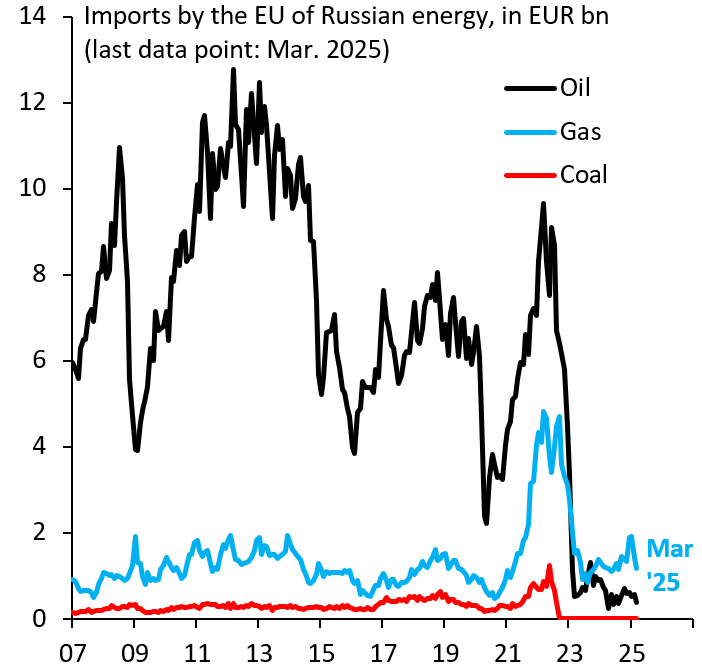
@robin_j_brooks Your graph shows it’s almost down to 0 for two and a half years now.
English

It's been over 3 years since Russia invaded Ukraine and Putin is currently redoubling his attacks on the country. How many more years of this carnage are needed before the EU stops importing Russian energy? How in God's name can this still be going on? The EU is broken...
English

Gerard retweetledi
Gerard retweetledi

Gerard retweetledi
Testing teapots for quality
📹 zishahu2021
twitter.com/Xudong1966/sta…
English
Gerard retweetledi
Scientist Adelbert Ames created the mind boggling ‘Ames Window’ (1951)
English
Gerard retweetledi
Gerard retweetledi

When the lens of a camera tilts so that it is no longer parallel to the camera's image sensor, it shifts the plane of focus and alters the depth of field.
This is a tilt shift viedw of the deserts and hills of Azerbaijan.
[📹 Joerg Daiber]
twitter.com/AweInspireMe/s…
English
@arcinternet @tfeener Show a page is loading if I change the url in an existing tab
English

Gerard retweetledi
Why does The Lord of the Rings trilogy still look so good?
Many reasons, but here's one: Minas Tirith wasn't CGI. They built a miniature version of the whole city and filmed that. It looks realistic... because it was real.
And this wasn't even the biggest model they made...

English
Gerard retweetledi
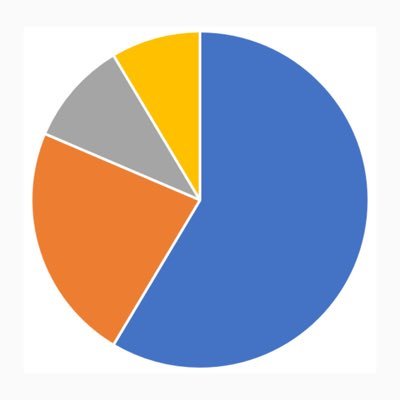
The purchasing power of 🇺🇸 $1 since 1930.
1930: $1
1960: $0.4
1990: $0.1
2023: $0.04
English
Gerard retweetledi
Gerard retweetledi
The Bosco Verticale (Vertical Forest) is a complex of two residential skyscrapers in Milan
More than two thousand tree species, including towering shrubs and trees, are arranged across their exteriors.
📹Mauro Ger
English
@LynAldenContact It's not really cheaper for tourists because of the inflation. While I get more EGP for my money I also have to spend more EGP because stuff is more expensive.
English
Heading back to Egypt for the rest of the summer.
Over the past 18 months or so, the Egyptian currency has been cut in half relative to the dollar.
So my little wad of cash that I had lingering from last time that I will be bringing with me is worth less.
1 USD = 31 EGP
A🧵

English
Gerard retweetledi
This is just a bear... being a good citizen..
English
@bryan_johnson I think 'the world recoiled' is not very truthful. The world polarised maybe. Many people like what you do, try it themselves or take bits of knowledge, are inspired. Ofcourse the recoilers are very loud and critisism makes more impact, but there are at least two sides
English
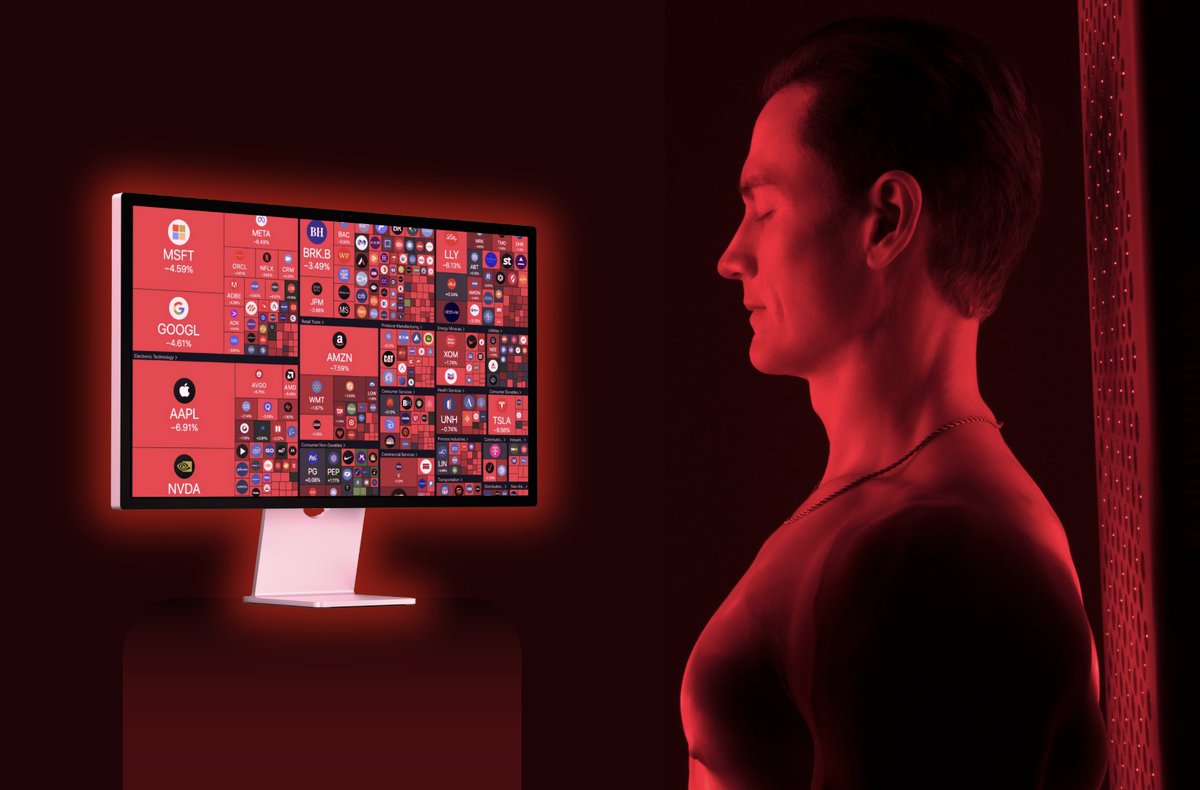
Rewrote the beginning of Zeroism, a short book I'm trying to wrap and publish. I'll appreciate any feedback.
#
I knocked on the wooden door. Slats of wood woven together with string, barely intact and standing upright. The door’s gaps and holes allowed me to see inside: three kids playing on the dirt floor, their mother cooking over a fire. The women energetically walked our way and cheerfully acknowledged us. “Hola” I said. “We’re missionaries from the Church of Jesus Christ of Ladder Day Saints. Mormons.” (in Spanish, of course).
“We are Catholic. I am making lunch. Goodbye.” She closed the door and walked back to her meal prep.
Her swift rejection was insignificant to my companion and me. It happened all day every day and we were numb to it.
Instead of being focused on the missionary work, my mind was spinning, trying to create some order of thought from the swirling chaos. This was my second week in Ecuador. I’d read about emerging countries in school, living in one had scrambled my reality. Dirt floors, mud huts, abject poverty and suffering. Many didn’t know where their next meal was coming from and fought for survival on a daily basis.
It would take me months to cycle through the shock and traverse the stormy seas of feeling guilt for my comparatively opulent life in the United States, sadness for their daily life struggles, and general confusion about, I didn’t even know what. A year in and feeling partially stabilized, I began to wonder whether I was there to teach and change them or whether they were to instruct and transform me?
After spending two years in Ecuador, I returned to my home in Utah. While my family and I were middle class by American standards, my life in the United States was a surreal existence of convenience and sophistication. An infinite supply of warm and clean water. Endless food. A medical system at the ready. A dream-like paradise.
It was clear that I’d spent the first nineteen years of my life living in a bubble, unaware. A rural community of 30,000, everyone Mormon, sharing a singular understanding of existence. None of us needing to fight for the life’s basics. All I could think about: what other bubbles am I in? If I learned of them, what different life decisions would I make?
College beckoned with its life decisions of major selection and career path. I hadn’t the faintest idea what I wanted to study or be. The only thing I knew was that my experience in Ecuador had lit a fire within me and I wanted to spend my life working to improve the lives of others, at a societal level. To do this, I determined that I’d make an enormous amount of money by the age of 30 and then figure out a way to uplevel humanity. I told everyone about my master plan. Nothing quite like the arrogance and naivety of a 21-year-old.
Thirteen years later, at the age of 34, I sold my payments company Braintree Venmo for $800 million in cash. Instead of it being the unhinged celebratory moment I’d imagined, it was just one more complication to deal with.
My thirteen-year marriage was unraveling. Our three kids were all under the age of 10. I’d been wrestling my way out of Mormonism since my time in Ecuador. It proved stubbornly difficult given that it was the only community and reality I’d ever known. Severing my relationship with God was a psychological conundrum that was perpetually unsolvable. A decade of chronic depression had not only dropped me into a black hole of hopelessness but had me questioning whether I could believe anything I thought or felt, exasperating my attempts at solving my departure from my born-into faith.
Starting and building multiple companies on top of this all, was, well, as you may imagine, a bonfire of difficulty.
Ten years later, in January 2023, an article by Ashlee Vance appeared in Bloomberg profiling “Blueprint”, a scientific regimen my team and I developed to harness the control systems of the human body and mind to slow and reverse aging: “How to Be 18 Years Old Again for Only $2 Million a Year.”
Blueprint was my masterplan to uplevel humanity. The answer to my 21-year-old starry eyes.
In response, the world recoiled.
I became detested from far-reaching corners of the globe. People called me a narcissist, vampire, elf, Prometheus, Patrick Bateman, Dorian Gray, the Illuminati, lizard-person, etc. I was accused of being too pale, too skinny, too vain, too muscular, too reptilian, too idiotic, too-“too.”
Observers confidently stated that I am miserable and trapped in a cage of my making and that I’ve missing the point of life. They psychoanalyzed, diagnosing me with a crippling fear of death and multiple personality disorders. With ridicule, they suggested I am a fool on a vain quest for immortality.
Not exactly the response I had anticipated.
Blueprint was my expedition, inspired by history’s greatest explorers, to map the future of being human. My protocols and data were freely shared with everyone on the Blueprint website so that anyone could explore with me. Bitterness was thrust upon me because I was going to bed on time, eating healthy foods and exercising routinely, all under the supervision of a world class team of doctors.
At first, the vitriol confused me. Then I realized it was self-talk and group therapy in response to a society addicted to addiction. The animosity was a confession of helplessness, by those addicting and addicted, admit it or not.
Amidst the hate storm, no one seemed to understand what I was really proposing. If they did, they may have lost their minds.
Born into this world, I was told: follow these life rules and an omnipotent being will crown you with eternal life. How beautifully simple. If only it were true.
It’s unclear to me how anyone can have an opinion or belief about God or the afterlife. How can we possibly know? I know how believers answer this question because I’ve been around them my whole life.
I am not anti-religion. I am pro-existing. Growing up, I was being asked to bet my existence on a hypothesis that is only testable upon death. In any other time during the past few hundred thousand years, it wouldn’t have mattered whether someone accepted the gamble or not. Everyone was guaranteed to die anyways. So why does it matter?
That is no longer true and is the origin of Blueprint.
After 13.8 billion years of our galaxy existing, 4.5 billion years for earth, we are baby steps away from creating super intelligence. This may be the most extraordinary event in the history of the galaxy.
We need an updated, aligning philosophy to meet this moment.
Super intelligence will rewrite reality. It will pop, one after another, the bubbles we live in, revealing to us dimensions and realities far beyond our imagination and comprehension.
Blueprint’s singular objective is to try and hitch a ride into this future. This book is my proposal for how we step into this future, together. There are three main ideas.
First, Blueprint is an algorithm that takes better care of me than I can myself. The important idea here is that we humans struggle to act in our best interest. For example, we reliably do unhealthy things that accelerates disease onset and death. We are powerless to stop doing them. Eating too much food, junk food, not exercising, smoking, excessive drinking, drugs, skipping sleep and hundreds of other vices we all have. We treat our planet the same way we treat our bodies.
To protect ourselves from a naked confession that we are powerless to stop ourselves from these behaviors, that we know makes us feel bad, we create pretty stories to justify them as the purpose of living life. We are masters at hiding away this truth. I will provide myself as Exhibit A.
Now on Blueprint, hundreds of my body’s biological processes are measured, enabling my body to speak. Scientific evidence is consulted and an algorithm determines what and when I eat, when I go to bed, and so forth. My mind does not have the authority to order from a menu, eat a gallon of ice cream because it's late and a new episode of my favorite show just dropped, or peruse the pantry because I’m bored.
Dystopic, right? Just wait, it gets worse.
The second idea is the Autonomous Self. We are accustomed to our technology reliably getting better. Every year we get new versions of nearly everything. Meanwhile, every day we humans reliably get one day closer to our inevitable death. Your Autonomous Self builds upon the foundations of Blueprint and interconnects your well-being and personal growth with the progress of science and technology.
You and I improve at the speed of science and technology while also avoiding the foolish stuff we did before, like downing an entire bag of potato chips in a single sitting and then picking at the leftover cookies.
The third idea is Zeroism, the underlying philosophy. You can think of Zeroism as future literacy, not a bunch of fixed rules to follow.
In 1820, only 12% of the world’s population could read and write. Imagine what our daily lives would look like right now if we hadn’t achieved an 86.3% basic literacy over the past two centuries. Probably significantly less prosperous, healthy, and interesting.
Now, imagine that only 12% of us are “Future Literate”. That is, skilled at approximating what’s to come and capable of preparing accordingly. We’d be in very big trouble.
I think it’s worse. My guess is that the rate of future literacy is less than 1%. As a society, we’re future illiterate. I suspect that we most likely agree on this point and a major reason why there is an overcast layer of desperation that we’re hurling towards disaster and are powerless to stop it.
Arthur Schopenhauer captured Zeroism when he said, “talent hits the target no one else can, genius hits the target no one can see.”
Zeroism is genius. It’s a way to think and understand the world. A way to anticipate and adapt to change. It is what we do not know. What we cannot see. Zeros don’t say please and thank you. With a Zero, the graph is not just exponential — the units change. The graph reorganizes its axes. Dimensions are added to accommodate ideas from another dimension.
Einstein’s special theory of relativity is a zeroth principle discovery. As was the discovery of microscopic germs as the culprit to infections. And the vanishing point in early renaissance art that enabled graduating to 3D creations. There dozens more zero-enabled examples in math, philosophy, physics and science.
Superintelligence is a Zero manufacturer and we will live in a Zero world.
There you have it:
1. We humans are going to be run by algorithms because they are superior to us. We will kick and scream the whole way, but this is inevitable, and we will forget we ever resisted it in the first place when we’re through this transition. We will pity our former selves.
2. We will begin improving ourselves at the speed of science and technology because we can.
3. Superintelligence will create a future that is mind bending. In this rapidly changing environment, our best attribute is to become future literate with Zeroism.
We are a helplessly self-destructive species. Incapable of reliably acting in our own best long-term interests. I had this problem personally with my health and wellness and solved for it by granting decision authority to my body’s biological processes. My body speaks with data, science charts the path, the algorithm does its magic. My mind just needs to say yes and opt into the Blueprint algorithm.
My mind now watches from the bleachers. I don’t trust my mind in a pantry full of junk food and I don’t trust my mind to prioritize my long-term interests over short-term pleasures. Many of you will disagree with such an extreme statement and prefer to make a nuanced argument. That’s fair and in time, those branched nuances will be the hard work that scaffolds this human and AI merger and achieves planetary sustainability before the damage is irreversible.
We cannot lose sight that the human race is currently facing several, simultaneous existential threats.
The most likely solution to our cease-to-exist challenges is also probably the most unthinkable. Today’s normal is yesterday’s crazy. What is the most offensive and unthinkable possibility? It’s time we humans hand over the reins to control systems that can reliably prioritize our continued existence. This is what I personally did with Blueprint and building my Autonomous Self.
The philosophical revolution of the 21st century? A want to live, and an eagerness to build within ourselves, and through new control systems, the wisdom and capabilities that prioritizes continued existence.
If you’re like most people, you may be having an existential crisis at this point. That’s understandable. In the remainder of this book I’ll explain where these ideas came from and how I’ve personally worked through them.
When the tsunami of acrimony reached my personal shoreline in reaction to the article, many closest to me offered their support. They were surprised to learn that I love the hate. It fills me with happiness. Why, I’m not entirely sure.
Amused and wanting to play, I created a “Bryan Johnson hate starter pack”, publicly sharing the best insults and inviting the haters to be better at their craft. Many were repeating the same lines, thinking they were original, and it was getting old.
Maybe it was my chronic depression that prepared me for this. In overcoming that hopeless blackhole of existence, I learned to not care what my mind thinks. Knowing other minds were similar to mine, it was easy to then stop caring what others think.
I do not fear death. I sat at its doorstep for a decade alongside chronic depression. Desperately wishing I didn’t exist. Had it not been for my three children, I probably would have taken my life. I know what it’s like to be locked in a staring contest with death.
I now have an insatiable love of life. Deeper than I’ve ever experienced.
But I know that sometimes wanting life is hard. For so many reasons.
I dream of an existence where we all want to keep playing the game of life, even in the darkest moments.
For thousands – no millions - of years, it’s been the same story. We’re born and we die in fairly predictable fashion.
Right now, in the early 2020s, we can’t assume that anything that has been true will continue to be true.
Anyone who says otherwise doesn’t understand what’s really going on.
Blueprint is not just for me; it is for everyone.
Blueprint is a plan to save ourselves. To instill, in all of us, a want to exist. To be equal to the tasks of our time, which are:
Don’t…
die
kill each other
destroy our biosphere, or
underestimate aligning AI.
That’s Zeroism.
Welcome to the next version of human.
English
Gerard retweetledi
To prevent drying out in the hot sun of the dry season, the giant monkey frog secretes a form of organic ‘sun screen’ and applies it to its body
[source, full video, BBC: buff.ly/2lhLK6Q]
English
@bryan_johnson Hi, I noticed there's nothing in your supplements or blood panel about omega-3's. There's strong science on that. You will get ALA's from the olive oil and hemp seeds, but there is also a good chance not enough gets converted to EPA/DHA by your body.
English