
Greg Donovan

39.6K posts

Greg Donovan banner
Greg Donovan

Greg Donovan

@gjdonovan

GrandPa, 14th Gen CDN, #adoptee frmr CAF & CO #books & #music #yoga #PWD nonismist, #tech #Leafs #Toronto and... #Bacon


The Great White North Katılım Nisan 2011
218 Takip Edilen830 Takipçiler
Greg Donovan retweetledi
Developers
Developers@XDevelopers·
Important update for X API developers: Legacy Basic plans (monthly & annual) are being deprecated. All Basic subscribers will be automatically migrated to the new Pay-Per-Use plan after June 1, 2026. Full details: devcommunity.x.com/t/important-up…
English
7
20
71
43.8K
Greg Donovan retweetledi
Paul Rinkoff
Paul Rinkoff@LeaderPolicy·
Please share widely. We need the public’s help. If you have any information, no matter how small, report it and contact police immediately. If you see Esther or know anything that could assist investigators, call us right away! @TorontoPolice @tps32NCO @Shomrimtoronto
Toronto Police@TorontoPolice

If you have any information that can help us locate 14-year-old Esther, you can contact the dedicated tip line at 647-355-4148. You can also upload any video that may assist investigators through the QR code below. For more information: tps.to/65988

English
0
6
4
355
Greg Donovan retweetledi
Toronto Police
Toronto Police@TorontoPolice·
If you have any information that can help us locate 14-year-old Esther, you can contact the dedicated tip line at 647-355-4148. You can also upload any video that may assist investigators through the QR code below. For more information: tps.to/65988
Toronto Police tweet media
English
0
248
285
67.9K
Greg Donovan retweetledi
Toronto Police
Toronto Police@TorontoPolice·
News Release - Missing Youth, Bathurst Street and Sheppard Avenue West UPDATE: Dedicated Phone Line for Tips Established tps.ca/media-centre/n…
Toronto Police tweet media
English
8
130
149
24.6K
Greg Donovan retweetledi
Tiny Buddha
Tiny Buddha@tinybuddha·
Put your phone down. What you’re looking for isn’t here...
Tiny Buddha tweet media
English
1
60
221
5.5K
Greg Donovan retweetledi
Elizabeth❣️
Elizabeth❣️@WorkElizab·
Do you agree?
Elizabeth❣️ tweet media
English
2.3K
8.9K
49.7K
645K
Greg Donovan retweetledi
Roman Baber
Roman Baber@Roman_Baber·
14 year old Esther was last seen on Friday at 11:30pm, around Sheppard & Bathurst, near Earl Bales Park. She was wearing grey sweatpants and a green top. Bathurst Manor & Clanon Park residents, please review your home's camera footage. Let's find this precious child!
Roman Baber tweet mediaRoman Baber tweet media
English
38
519
957
136K
Greg Donovan retweetledi
Sam Cooper
Sam Cooper@scoopercooper·
Iraq Terrorists Working For Iran Directed Attack on United States Consulate And Jewish Community in Toronto, Plotted to Bomb New York Synagogue, and Paid for Terrorist Strikes Across Europe Through Mafias thebureau.news/p/irgc-proxy-c…
English
13
242
439
45.1K
Avi Roy
Avi Roy@agingroy·
7,000 false positives per square millimeter. The culprit was the lab gloves. University of Michigan researchers just upended a core assumption in microplastics science. Latex and nitrile gloves, worn by the scientists doing the measuring, shed stearate particles that look chemically identical to polyethylene. Standard infrared and Raman instruments can't tell them apart. The gloves were counting as plastic. Seven glove types tested. All contaminated. The cheapest fix: switch to cleanroom gloves, which dropped false positives to around 100 per mm² vs. 7,000. The "credit card per week" headline (5 grams, WWF/Newcastle 2019) has separate problems. A 2022 re-analysis found severe methodological errors in the original estimate. Actual measured intake is likely 100x lower. None of this means microplastics are harmless. Last month's data on brain accumulation still stands. But the numbers driving the panic may have been measuring the scientists, not the environment. Science catching its own errors is exactly how it's supposed to work.
Avi Roy tweet media
English
298
2.2K
12K
1.1M
Greg Donovan
Greg Donovan@gjdonovan·
@agingroy "Science catching its own errors is exactly how it's supposed to work." #this
English
0
0
0
7
Greg Donovan retweetledi
Toronto Police
Toronto Police@TorontoPolice·
News Release - Public Safety Alert, Abandoned Off-Leash Dog Warning, Weston Road and Lawrence Avenue West area UPDATE: Man Arrested tps.ca/media-centre/n…
Toronto Police tweet media
English
1
5
7
2.4K
Greg Donovan retweetledi
CP24
CP24@CP24·
JUST IN: Arrest made in off-leash dog attack in Toronto that left pet dead, owner injured cp24.com/local/toronto/…
English
28
17
67
26.2K
Greg Donovan
Greg Donovan@gjdonovan·
Also #this
Peter Clack@PeterDClack

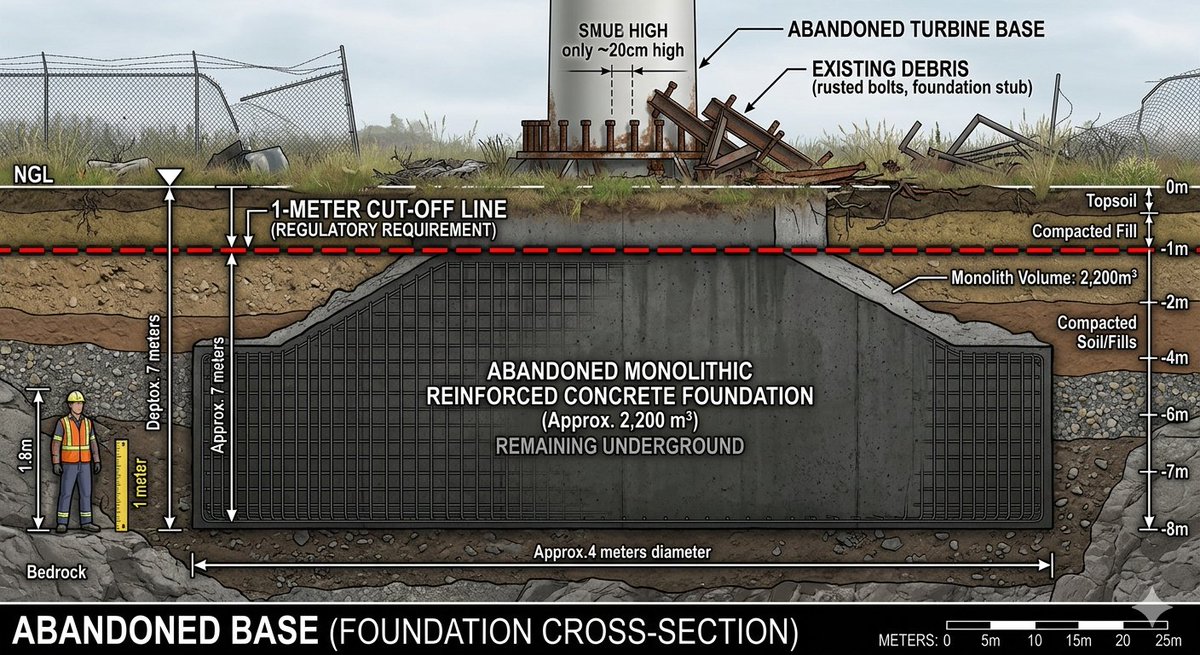
Tens of thousands of slabs of reinforced concrete weighing up to 1,000 tonnes are being abandoned in the ground as turbines hit the end of their working lives. The reinforced concrete base of a typical 2-3 MW wind turbine can weigh anywhere from 400 to 800 tonnes. But the concrete foundations of even bigger turbines (5 MW+) can exceed 1,000 tonnes. As lifespans end these massive concrete monoliths are abandoned where they lie. This is an issue of significant contention. In many jurisdictions, including Australia and the US, decommissioning regulations only require the operator to ensure the concrete foundation stays at a depth of 1 meter (approx. 3.3 feet) below the surface. The remaining 3-plus metres of these steel-reinforced concrete fossils are typically left in the ground indefinitely. Over the decades, they can interfere with deep-soil hydrology or remain as a permanent industrial remnant in rural landscapes. Contracts usually say operators are responsible for decommissioning. But the financial reality is complex. Bank guarantees or bonds set aside for removal (around €50,000 or $100,000 per turbine) are frequently far too low. Real-world estimates for total removal and site restoration can exceed $200,000 to $400,000 per unit. If the cost of total removal ($200k–$400k) exceeds the bond set aside by the operator ($50k–$100k), there is a strong financial incentive for companies to declare bankruptcy . Or they sell the asset to a shell company as the turbine nears its end-of-life, leaving a landowner with the bill. While the steel towers are more easily recyclable, their triple fibreglass blades are notoriously difficult to process and often end up in turbines blade graveyards. The theoretical benefits from renewable technology are meaningless compared with the staggering environmental costs.

English
0
0
0
8
Greg Donovan retweetledi
Peter Clack
Peter Clack@PeterDClack·
Tens of thousands of slabs of reinforced concrete weighing up to 1,000 tonnes are being abandoned in the ground as turbines hit the end of their working lives. The reinforced concrete base of a typical 2-3 MW wind turbine can weigh anywhere from 400 to 800 tonnes. But the concrete foundations of even bigger turbines (5 MW+) can exceed 1,000 tonnes. As lifespans end these massive concrete monoliths are abandoned where they lie. This is an issue of significant contention. In many jurisdictions, including Australia and the US, decommissioning regulations only require the operator to ensure the concrete foundation stays at a depth of 1 meter (approx. 3.3 feet) below the surface. The remaining 3-plus metres of these steel-reinforced concrete fossils are typically left in the ground indefinitely. Over the decades, they can interfere with deep-soil hydrology or remain as a permanent industrial remnant in rural landscapes. Contracts usually say operators are responsible for decommissioning. But the financial reality is complex. Bank guarantees or bonds set aside for removal (around €50,000 or $100,000 per turbine) are frequently far too low. Real-world estimates for total removal and site restoration can exceed $200,000 to $400,000 per unit. If the cost of total removal ($200k–$400k) exceeds the bond set aside by the operator ($50k–$100k), there is a strong financial incentive for companies to declare bankruptcy . Or they sell the asset to a shell company as the turbine nears its end-of-life, leaving a landowner with the bill. While the steel towers are more easily recyclable, their triple fibreglass blades are notoriously difficult to process and often end up in turbines blade graveyards. The theoretical benefits from renewable technology are meaningless compared with the staggering environmental costs.
Peter Clack tweet media
English
394
3.5K
6.5K
198K
Greg Donovan
Greg Donovan@gjdonovan·
Peter Clack@PeterDClack

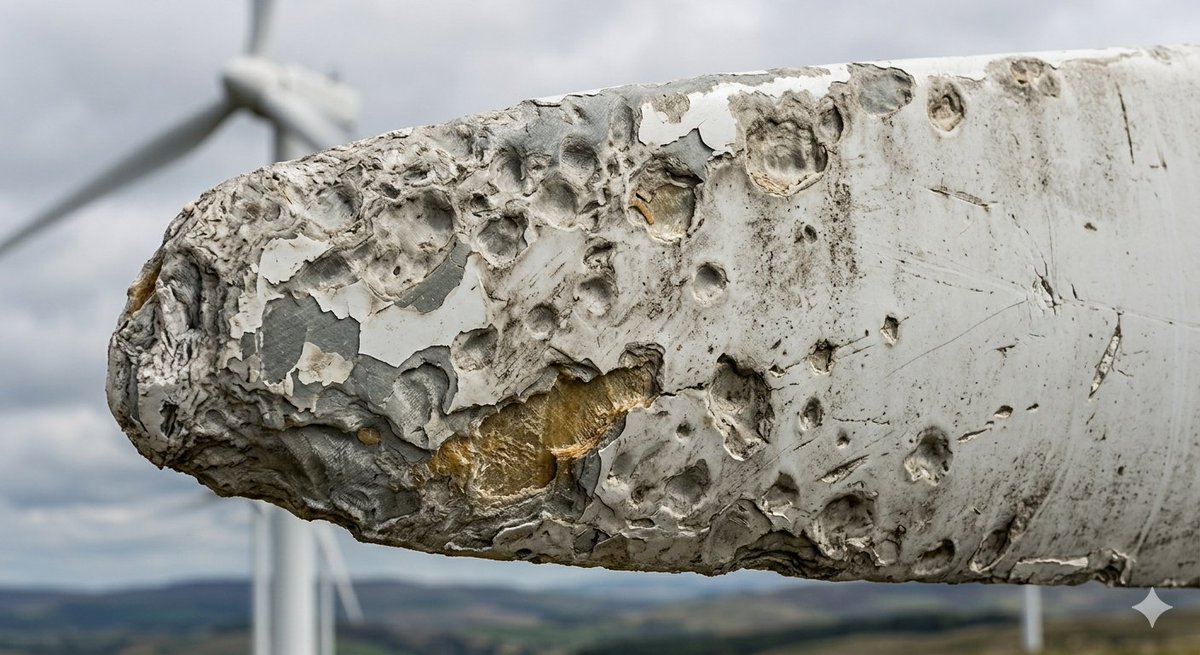
Many of the onshore wind farms along the coasts of the UK and Denmark are falling apart after only 10 years. A study reveals that energy contributions from wind farms begin to fall sharply after only 10 to 15 years, leaving the skeletons of steel and plastic blowing in the wind. The economic analysis reveals the lifespan of an onshore turbine is not 20 to 25 years, as stated by the wind industry itself, supported by the UK Government. This peer reviewed British study reveals that the energy production of onshore wind farms falls substantially as they get older, due to wear and tear. Energy and environmental economist, Professor Gordon Hughes (University of Edinburgh), carried out the statistical analysis of wind farm performance data in the UK and Denmark. He concluded that load factors, like electricity generated as a percentage of capacity, declined a lot faster than expected, suggesting a baseline 10 to 15 year lifespan. This is when the technical life of most turbines crunch to halt, and become unprofitable to continue. Rising maintenance costs makes them uneconomical. The study found the average UK wind farm's ability to meet electricity demand had fallen by a third after around 10 years, leading to a conclusion that many are fully uneconomic to run after only 12 years. While the wind industry generally forecasts a 25-year lifespan, the data reveals a different reality about the viability of keeping them spinning so long. Many companies now 'repower' (replace old turbines with new ones) long before the 25-year target to maximise subsidies and output. This often ends the lifespan of the original hardware much sooner. The wind farm study is published by the 'Renewable Energy Foundation on the Performance of Wind Farms in the United Kingdom and Denmark, 2012'.
English
0
0
0
11
Greg Donovan retweetledi
Peter Clack
Peter Clack@PeterDClack·
Many of the onshore wind farms along the coasts of the UK and Denmark are falling apart after only 10 years. A study reveals that energy contributions from wind farms begin to fall sharply after only 10 to 15 years, leaving the skeletons of steel and plastic blowing in the wind. The economic analysis reveals the lifespan of an onshore turbine is not 20 to 25 years, as stated by the wind industry itself, supported by the UK Government. This peer reviewed British study reveals that the energy production of onshore wind farms falls substantially as they get older, due to wear and tear. Energy and environmental economist, Professor Gordon Hughes (University of Edinburgh), carried out the statistical analysis of wind farm performance data in the UK and Denmark. He concluded that load factors, like electricity generated as a percentage of capacity, declined a lot faster than expected, suggesting a baseline 10 to 15 year lifespan. This is when the technical life of most turbines crunch to halt, and become unprofitable to continue. Rising maintenance costs makes them uneconomical. The study found the average UK wind farm's ability to meet electricity demand had fallen by a third after around 10 years, leading to a conclusion that many are fully uneconomic to run after only 12 years. While the wind industry generally forecasts a 25-year lifespan, the data reveals a different reality about the viability of keeping them spinning so long. Many companies now 'repower' (replace old turbines with new ones) long before the 25-year target to maximise subsidies and output. This often ends the lifespan of the original hardware much sooner. The wind farm study is published by the 'Renewable Energy Foundation on the Performance of Wind Farms in the United Kingdom and Denmark, 2012'.
Peter Clack tweet media
English
560
4.7K
9.1K
630.5K