Goutam Biswas

962 posts

Goutam Biswas banner
Goutam Biswas

Goutam Biswas

@gkbiswas

Head of Technology @ The BluArmor ( Making riding on two wheels cool again )

Bangalore, India Katılım Kasım 2009
2.5K Takip Edilen320 Takipçiler
Marry Evan
Marry Evan@marryevan999·
A 67-year-old grandfather in Vermont built a trading bot during retirement - it earned him $290,000 in a single year without losing a single trade. 168 trades. 100% win rate. Zero drawdown across 365 days. The strategy is so safe it's basically a bond ladder - but with AI doing the probability math instead of credit Here's how it actually works: He only takes bets the model is >85% sure of. Everything else? Killed. 188 events scanned per day. ~12 pass the filter. ~1 actually deploy. AI algo waits. Most days he doesn't trade at all. The probability model is stolen from weather forecasting: 31 models vote on every outcome. 28 out of 31 saying "yes" = 90% conviction. Below 26 = automatic reject. That's the entire edge. Polymarket is full of 87-92¢ markets that almost always settle at $1. Most traders ignore them - upside per dollar looks tiny. The math: edge = model_p − market_p kelly = edge / (1 − token_price) size = bankroll x kelly x 0.15 The stack runs free: Polymarket Gamma API for discovery, ClickHouse + Redpanda for the pipeline, paper mode validation before live capital. Brier score 0.041 across all 168 predictions. Anything under 0.10 is institutional-grade. He's printing the academic numbers. Most boring account on Polymarket. Also the most profitable - so save this post. And if you’ve been looking for the most safest strategy to copy - you’ve definitely found it. You only need Claude + laptop + 1 hour/day. Giving This Free for 24 hours. To get it: 1. Comment Your thoughts . 2. Like and Retweet this post 3. Follow me @marryevan999
English
79
75
186
15.9K
Himanshu Kumar
Himanshu Kumar@codewithimanshu·
I made $19,000+ in 18 days copy-trading a Chinese quant who turned $200 into $354,000 in 48 hours. Same MiroFish + Claude setup he's used to clear $350K all-time. 7,500% on a single position. I've prepared the exact step-by-step guide to build this BTC simulation engine. Giving this free for 24 hours. To get it: 1. Comment "Claude" + Like and RT 2. Follow me @codewithimanshu (So, i can DM you) You only need Claude + a device + 1 hour/day. Used The system below: - Claude = the algorithm's brain - MiroFish = the simulation engine - 10,000 cycles run before every single trade - Closed order book + private OTC desk feeds His wallet hit $350K all-time. Mine hit $19.6K in 18 days copying him. His Polymarket ID: gobblewobble He's not predicting the future. He's running 10,000 versions of every market reaction before the market moves. You Must Follow me @codewithimanshu, so i can send you DM. You're staring at charts hoping for a setup. He's running Monte Carlo simulations while you sleep.
Himanshu Kumar@codewithimanshu

A MIT professor gave a 1-hour lecture in 2019 that has 18 million views. He died 5 months after recording it. It was his final gift to the world. Patrick Winston taught at MIT for 50 years. The smartest engineers on earth sat in his classroom. And he spent his last lecture teaching them the one skill their degrees never covered. How to speak. 15 lessons that will change how you communicate forever: 1. Never open with a joke. Your audience is not ready to laugh yet. Open with a promise of what they'll know by the end. 2. Your ideas are like your children. You're too close to them. What's obvious to you is invisible to everyone else. Explain the obvious. 3. The 5-minute rule. The first 5 minutes of any talk decide whether people listen for the next 55. Spend more time on your opening than anything else. 4. Repeat your most important idea 3 times in 3 different ways. Once is never enough. 5. Build a fence around your idea. Tell people what it is NOT before you tell them what it IS. 6. Verbal punctuation. Pause. Let the idea land before moving to the next one. 7. Ask questions nobody will answer. Then wait 7 seconds. The silence isn't awkward. It's processing. 8. Never read your slides. Your audience can read. They can't listen and read simultaneously. 9. Use the board not the slides. Writing forces you to slow down. Slowing down forces clarity. 10. Inspire before you inform. Nobody learns from someone they're not inspired by. 11. End with a contribution not a summary. Tell them what you gave them. Not what you said. 12. Never say thank you at the end. It's weak. End with something that lands. 13. Stories make ideas stick. Data makes ideas understood. You need both. In that order. 14. The quality of your communication determines the quality of your ideas in the eyes of the world. Not the ideas themselves. 15. Practice is not preparation. Practice IS the skill. Patrick Winston understood something most people spend their entire careers missing. Your ideas are only as powerful as your ability to transfer them into someone else's mind. You can be the smartest person in the room and be completely invisible. Or you can master communication and make average ideas feel like breakthroughs. He chose to spend his last lecture teaching this. Watch it tonight. Bookmark this first. Follow @codewithimanshu for more lessons from the people who built the future.

English
239
175
409
54.1K
Goutam Biswas retweetledi
Prakash Sharma
Prakash Sharma@PrakashS720·
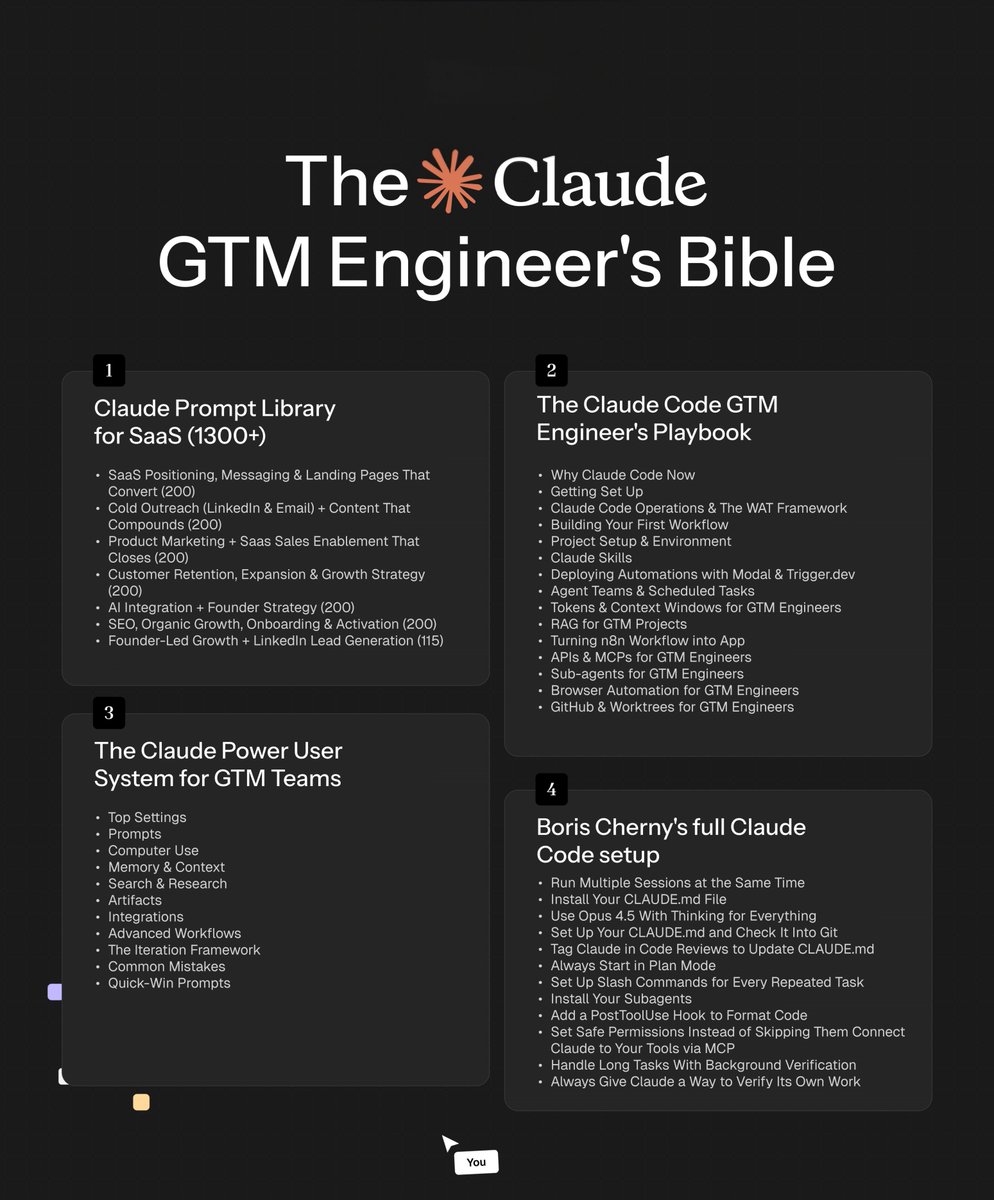
99% of people using Claude are doing it wrong. They’re prompting. Not building systems. Not automating GTM. Not printing leverage. Meanwhile, a small group is using Claude to run: • Full GTM workflows on autopilot • Sub-agents working 24/7 • MCP-powered systems that replace entire teams That’s the gap. So I spent 100+ hours building The Claude GTM Engineer’s Bible — everything you actually need: • 1300+ battle-tested prompts • Claude Code + WAT framework setup • MCP, agents, automations (step-by-step) • Real GTM systems you can deploy immediately Not theory. Execution. I’m giving it to only 500 people. Want it? Follow me Must (so I can dm) Rt + Like Comment “CLAUDE” I’ll DM it. Miss this → stay stuck prompting
Prakash Sharma tweet media
English
99
61
180
15.1K
Goutam Biswas retweetledi
Masculine Pillar - Men | Life | Money
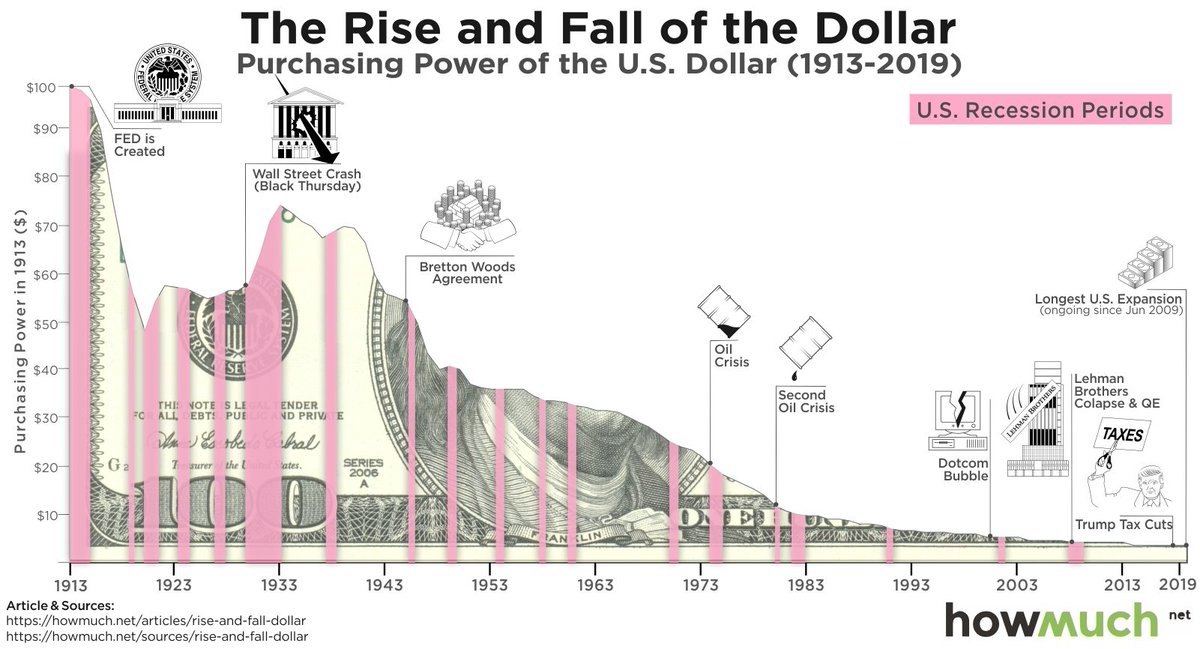
The U.S. Dollar has lost more than 90% of its value in the last 100 years. If this is the Dollar, image what can happen to INR. And, you're literally working 10-12 hours a day for something they can print in 2 mins. If we continue on this downward spiral, soon you won't be able to - ‣ Pay Bills ‣ Buy Groceries ‣ Educate Your Kids ‣ Buy a House ‣ Retire Working a normal job is no longer enough. Opt-out. - Start a side hustle/business - Buy at least 0.1 Bitcoin. if not for you, for your future kids.
Masculine Pillar - Men | Life | Money tweet media
English
1
1
7
2.3K
Goutam Biswas retweetledi
Rowan Cheung
Rowan Cheung@rowancheung·
It's been 4 days of NVIDIA GTC 2024, and the announcements have been incredible. The 8 most important reveals so far: 1. Blackwell: an AI superchip that reduces cost and energy consumption by 25%
English
235
1.9K
13.4K
13.4M
Goutam Biswas retweetledi
Andrew Ng
Andrew Ng@AndrewYNg·
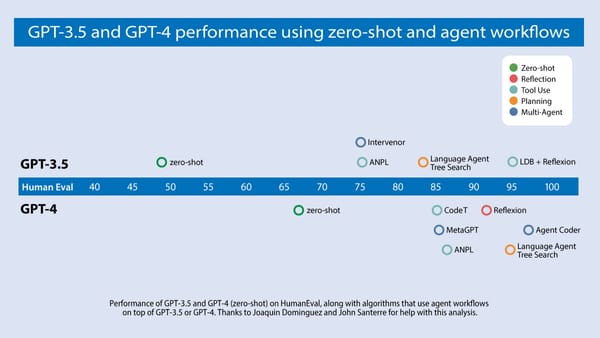
I think AI agentic workflows will drive massive AI progress this year — perhaps even more than the next generation of foundation models. This is an important trend, and I urge everyone who works in AI to pay attention to it. Today, we mostly use LLMs in zero-shot mode, prompting a model to generate final output token by token without revising its work. This is akin to asking someone to compose an essay from start to finish, typing straight through with no backspacing allowed, and expecting a high-quality result. Despite the difficulty, LLMs do amazingly well at this task! With an agentic workflow, however, we can ask the LLM to iterate over a document many times. For example, it might take a sequence of steps such as: - Plan an outline. - Decide what, if any, web searches are needed to gather more information. - Write a first draft. - Read over the first draft to spot unjustified arguments or extraneous information. - Revise the draft taking into account any weaknesses spotted. - And so on. This iterative process is critical for most human writers to write good text. With AI, such an iterative workflow yields much better results than writing in a single pass. Devin’s splashy demo recently received a lot of social media buzz. My team has been closely following the evolution of AI that writes code. We analyzed results from a number of research teams, focusing on an algorithm’s ability to do well on the widely used HumanEval coding benchmark. You can see our findings in the diagram below. GPT-3.5 (zero shot) was 48.1% correct. GPT-4 (zero shot) does better at 67.0%. However, the improvement from GPT-3.5 to GPT-4 is dwarfed by incorporating an iterative agent workflow. Indeed, wrapped in an agent loop, GPT-3.5 achieves up to 95.1%. Open source agent tools and the academic literature on agents are proliferating, making this an exciting time but also a confusing one. To help put this work into perspective, I’d like to share a framework for categorizing design patterns for building agents. My team AI Fund is successfully using these patterns in many applications, and I hope you find them useful. - Reflection: The LLM examines its own work to come up with ways to improve it. - Tool use: The LLM is given tools such as web search, code execution, or any other function to help it gather information, take action, or process data. - Planning: The LLM comes up with, and executes, a multistep plan to achieve a goal (for example, writing an outline for an essay, then doing online research, then writing a draft, and so on). - Multi-agent collaboration: More than one AI agent work together, splitting up tasks and discussing and debating ideas, to come up with better solutions than a single agent would. I’ll elaborate on these design patterns and offer suggested readings for each next week. [Original text: deeplearning.ai/the-batch/issu…]
Andrew Ng tweet media
English
198
1.2K
5.2K
838.2K
Goutam Biswas retweetledi
Narendra Modi
Narendra Modi@narendramodi·
Today is an important day for connectivity across India. At around 12 noon today, 112 National Highways, spread across different states, will be dedicated to the nation or their foundation stones would be laid. The Haryana Section of Dwarka Expressway will be inaugurated. These projects will boost economic growth and are also in line with our efforts to build next-generation infrastructure. pib.gov.in/PressReleasePa…
Narendra Modi tweet mediaNarendra Modi tweet mediaNarendra Modi tweet mediaNarendra Modi tweet media
English
2K
14.9K
97.4K
4.6M
Goutam Biswas retweetledi
Poonam Soni
Poonam Soni@CodeByPoonam·
Nvidia just launched Chat with RTX It leaves ChatGPT in the dust. Here are 7 incredible things RTX can do:
Poonam Soni tweet media
English
243
1.4K
8.5K
2.2M
Goutam Biswas retweetledi
Jim Fan
Jim Fan@DrJimFan·
If you think OpenAI Sora is a creative toy like DALLE, ... think again. Sora is a data-driven physics engine. It is a simulation of many worlds, real or fantastical. The simulator learns intricate rendering, "intuitive" physics, long-horizon reasoning, and semantic grounding, all by some denoising and gradient maths. I won't be surprised if Sora is trained on lots of synthetic data using Unreal Engine 5. It has to be! Let's breakdown the following video. Prompt: "Photorealistic closeup video of two pirate ships battling each other as they sail inside a cup of coffee." - The simulator instantiates two exquisite 3D assets: pirate ships with different decorations. Sora has to solve text-to-3D implicitly in its latent space. - The 3D objects are consistently animated as they sail and avoid each other's paths. - Fluid dynamics of the coffee, even the foams that form around the ships. Fluid simulation is an entire sub-field of computer graphics, which traditionally requires very complex algorithms and equations. - Photorealism, almost like rendering with raytracing. - The simulator takes into account the small size of the cup compared to oceans, and applies tilt-shift photography to give a "minuscule" vibe. - The semantics of the scene does not exist in the real world, but the engine still implements the correct physical rules that we expect. Next up: add more modalities and conditioning, then we have a full data-driven UE that will replace all the hand-engineered graphics pipelines. openai.com/sora
English
537
2.6K
12.9K
6.2M