Sheela Godbole MD

1.6K posts

Sheela Godbole MD

Sheela Godbole MD

@godbole_dr

Researcher/Clinical Epidemiologist and grandmom. ClinicalTrials- COVID 19, HIV,Public Health, Surveillance. ‘Opinions are personal’ @ICMRNARI @icmrdelhi

Pune, India Katılım Temmuz 2019
238 Takip Edilen428 Takipçiler
Sheela Godbole MD retweetledi
Massimo
Massimo@Rainmaker1973·
He was Satyendra Nath Bose, an Indian physicist whose quiet brilliance in the 1920s forever altered our understanding of the quantum world. In 1924, Bose, then a 30-year-old professor in British India, sent a groundbreaking manuscript directly to Albert Einstein. The paper offered a novel, more elegant derivation of Planck's law for blackbody radiation by treating light quanta (photons) as indistinguishable particles—a radical departure from classical statistical methods. Impressed by its insight, Einstein personally translated the work into German and facilitated its publication in the prestigious Zeitschrift für Physik. This exchange sparked a brief but profound collaboration. Einstein extended Bose's statistical approach to material atoms, predicting a bizarre new state of matter at ultra-low temperatures: what we now call a Bose-Einstein condensate (BEC), where particles behave as a single quantum wave. Bose's original framework became known as Bose-Einstein statistics, and the class of particles that obey it—those with integer spin, including photons, gluons, W and Z bosons, and the Higgs boson—was later named bosons in his honor by Paul Dirac. Unlike fermions (matter particles like electrons), which obey the Pauli exclusion principle and cannot occupy the same quantum state, bosons can pile into identical states en masse. This "social" behavior underpins extraordinary macroscopic phenomena: the coherent light of lasers, the zero-resistance flow in superconductors, and the collective quantum coherence in BECs. Despite the monumental impact—his statistics describe half of all fundamental particles and enabled key advances in quantum field theory, condensed matter physics, and particle physics—Bose remained remarkably unassuming. He continued teaching at universities in Dhaka and Calcutta (now Kolkata), mentored students, pursued ideas in X-ray crystallography, unified field theory, and other areas, and never sought the spotlight. Nominated several times for the Nobel Prize (notably for Bose-Einstein statistics and his later work), he was never awarded it, and his name rarely appears in popular accounts of 20th-century physics. There's a poignant humility in his story: a man whose legacy literally names one of the two fundamental families of particles in the universe, yet whose personal fame never matched the scale of his contribution. Bose reminds us that true influence often arrives without fanfare. Some breakthroughs echo through textbooks and technologies, while their creators work in the background, content to let the universe carry their ideas forward—even if history's spotlight rarely finds them.
Massimo tweet media
English
58
1.4K
5.5K
387.7K
Sheela Godbole MD retweetledi
ICMR NIRBID
ICMR NIRBID@IcmrNiih·
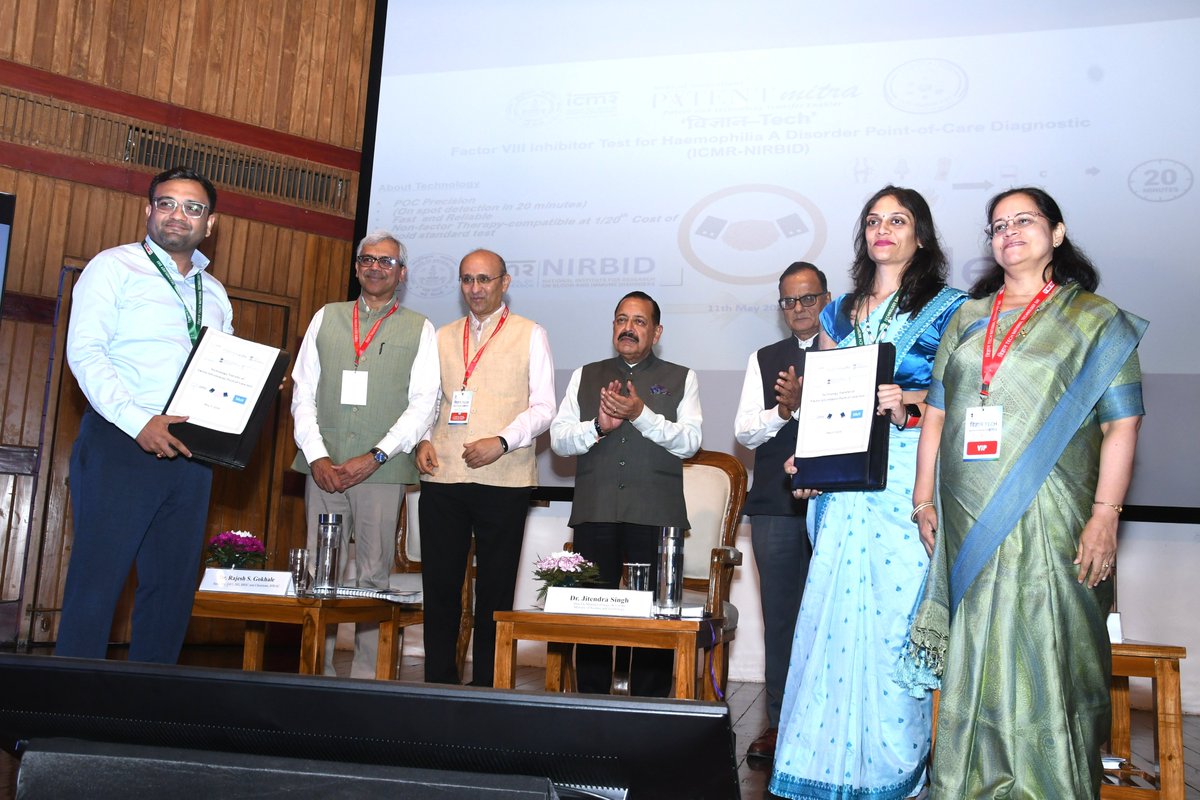
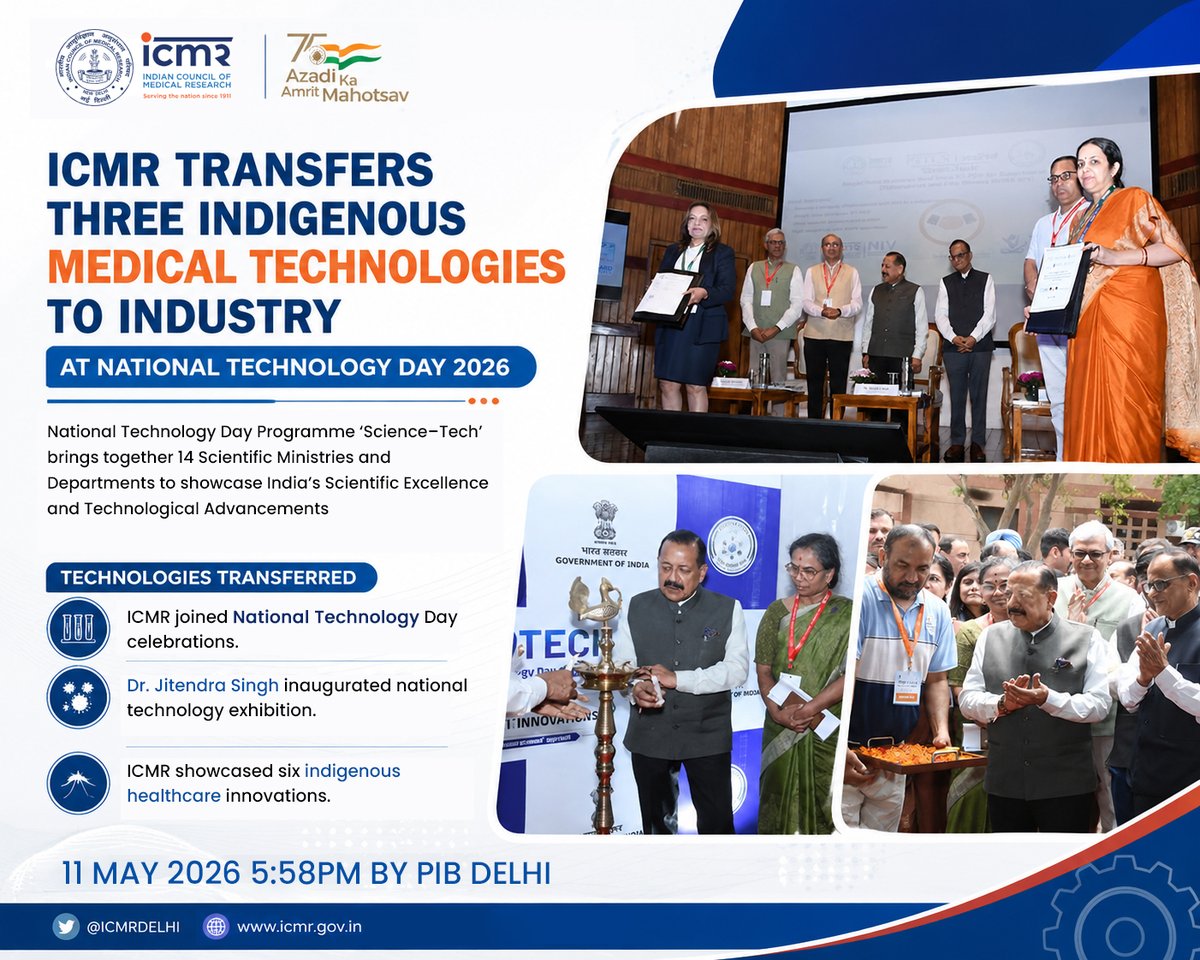
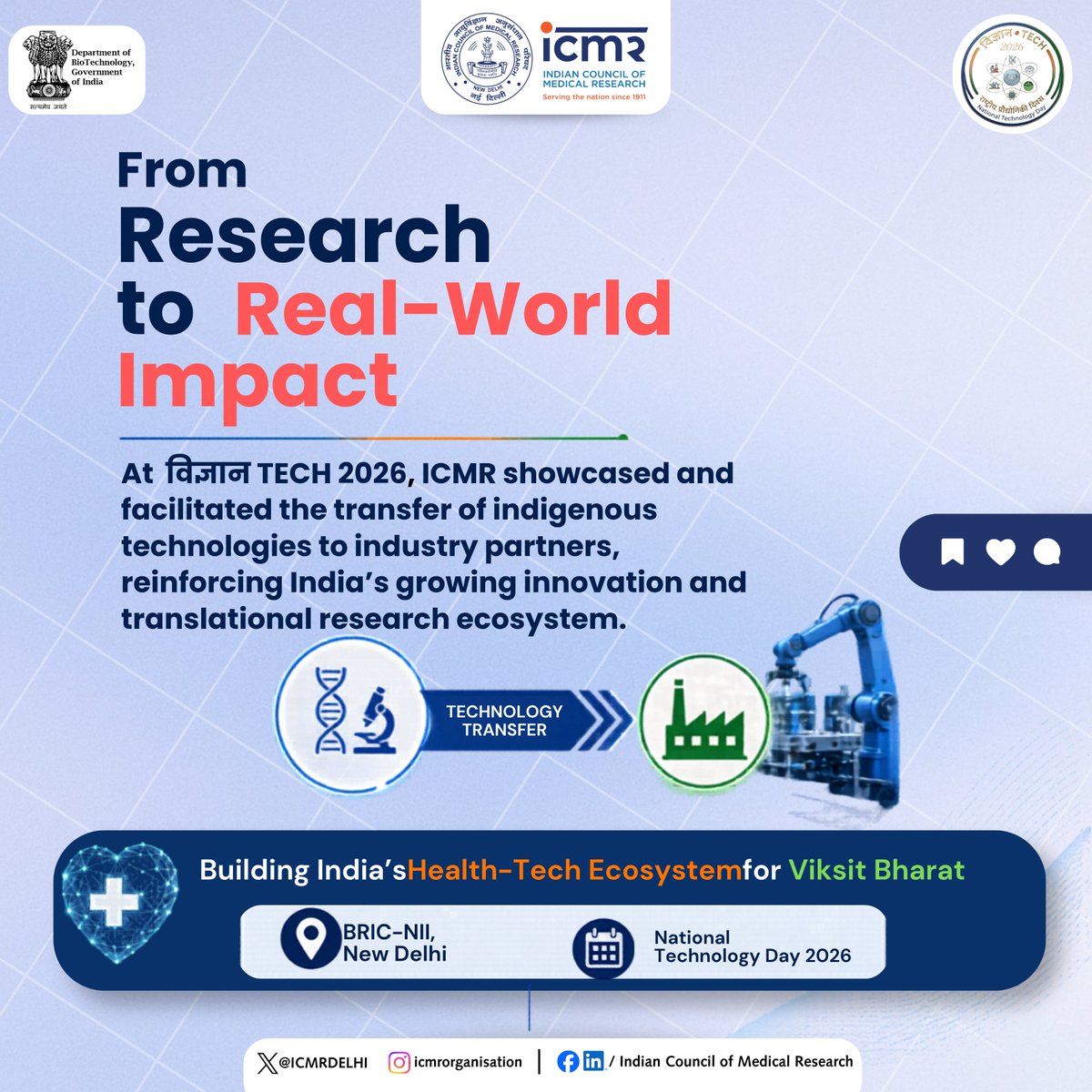
Proud moment for ICMR–NIRBID at #NationalTechnologyDay2026! Our novel FVIII Inhibitor POCT, developed by Rucha Patil, Sharda Shanbhag, Sweta Kaskar & Moni Singh, was transferred to Meril Life Sciences at ‘विज्ञान–Tech’ at BRIC–National Institute of Immunology.
ICMR NIRBID tweet mediaICMR NIRBID tweet media
English
2
8
16
315
Sheela Godbole MD
Sheela Godbole MD@godbole_dr·
ICMR - committed to Viksit Bharat with new health technologies and Medical Countermeasures every year !
PIB India@PIB_India

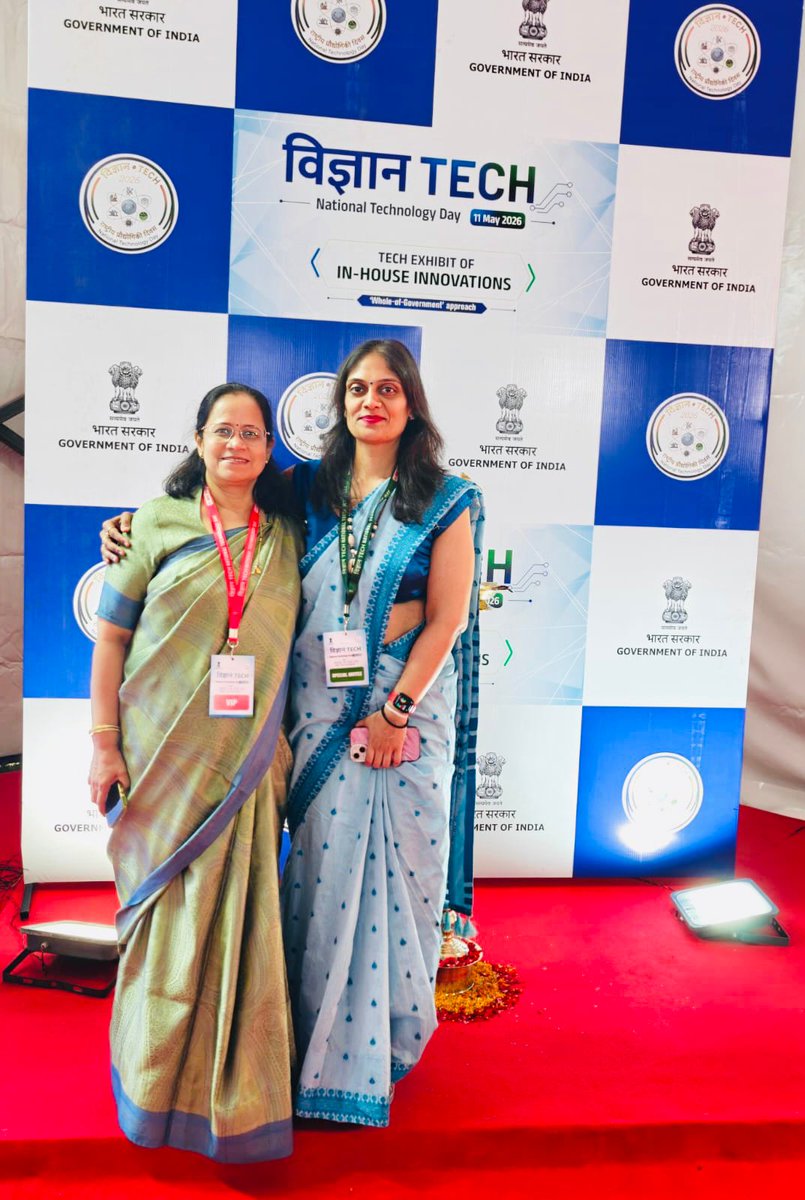
➡️ #ICMR transfers three Indigenous Medical Technologies to Industry at National Technology Day 2026 ➡️ National Technology Day Programme ‘विज्ञान–Tech’ brings together 14 Scientific Ministries and Departments to showcase India’s Scientific Excellence and Technological Advancements ➡️ As part of its showcase, ICMR exhibited six high-impact indigenous technologies spanning the Biopharma, Health, and Bioindustrial & Green Chemicals sectors ➡️ These included Covaxin, the COVID Kavach ELISA Kit, a CRISPR-Cas-based TB Detection System, the Nipah Point-of-Care Assay, a Diagnostic ELISA Kit for Dengue Detection, and a Biolarvicide for Mosquito Control Read here: pib.gov.in/PressReleasePa… @MoHFW_INDIA #NationalTechnologyDay

English
0
2
3
28
Sheela Godbole MD retweetledi
Crazy Vibes
Crazy Vibes@CrazyVibes_1·
In 1919, a woman with a master’s degree in physics answered a newspaper ad for a temporary job at a cancer hospital. That “temporary” position lasted forty years and helped save millions of lives. Her name was Edith Hinkley Quimby. She had graduated with a master’s in physics from the University of California at a time when women were barely allowed in laboratories. She understood radioactivity, mathematics, and experimental design at a level most of her male colleagues could only envy. But every door slammed shut in her face. “We don’t hire women for faculty positions.” “Perhaps a secretarial role?” “Have you considered teaching elementary school?” When her husband, physicist Shirley Quimby, took a teaching job at Columbia University, Edith followed him to New York. She packed away her ambitions along with the rest of their belongings. Then she spotted the small classified ad: Memorial Hospital for Cancer and Allied Diseases needed a physicist. Temporary position. Dr. Gioacchino Failla interviewed her. He asked serious questions about her research, her calculations, her understanding of radiation. For once, someone looked at her work instead of her gender. “When can you start?” he asked. That temporary job became her life’s work. In the early days of radiation therapy, chaos ruled. Radium sources sat in open containers with almost no safety measures. Doctors guessed dosages. Some patients received too little radiation and their cancer raged on. Others received too much and suffered horrific burns or died from radiation poisoning. No one truly understood how radiation moved through human tissue at different depths. Edith saw the suffering and recognized a physics problem that could be solved. She spent years working directly with radioactive materials — measuring, calculating, mapping. She exposed herself to radiation in ways that would be unthinkable today. She developed comprehensive dosage tables that told doctors exactly how much radiation to use, where to place sources, and how to protect healthy tissue. These became known as the “Quimby Rules.” Suddenly, radiation therapy could be precise instead of guesswork. Predictable. Safer. More effective. Cancer patients who once faced almost certain death now had real hope. Her work didn’t stop there. She helped establish the entire field of nuclear medicine, studying how artificial radioactive isotopes could be used for both diagnosis and treatment. She published more than seventy-five scientific papers. She taught. She mentored. She created safety protocols that protected both patients and medical workers for generations. One of her students was Rosalyn Yalow, who went on to win the Nobel Prize in Physiology or Medicine in 1977 for developing radioimmunoassay — a technique that revolutionized medical diagnostics. Yalow stood on foundations Edith had built. Edith received major honors in her lifetime: the first woman to win the Janeway Medal from the American Radium Society in 1940, the Gold Medal from the Radiological Society of North America in 1941 (only the second woman after Marie Curie), and later the Gold Medal from the American College of Radiology. She became a full professor at Columbia University’s College of Physicians and Surgeons despite never earning a PhD — a rare achievement. She kept working into her late sixties and beyond, long after many would have retired. When she died in 1982 at age ninety-one, she had transformed radiation from a dangerous experimental tool into one of the most powerful weapons in the fight against cancer. Today, every time a cancer patient receives carefully calibrated radiation therapy, every time a medical worker wears a radiation badge for protection, every time someone survives because doctors knew exactly how much radiation to deliver — Edith Quimby is there, even if her name is rarely spoken. She never sought the spotlight. She didn’t chase fame or fortune. She simply showed up every day, did the meticulous, often invisible work, and made medicine safer and more effective for millions of people she would never meet. History loves to celebrate the loud names and dramatic breakthroughs. But some of the most important contributions come from quiet persistence in laboratories and hospital basements. From women who were told they didn’t belong, yet stayed anyway and solved problems that saved humanity. Edith Quimby walked into a temporary job in 1919 and spent the next four decades quietly building the scientific foundation that still underpins modern radiation oncology and nuclear medicine. She changed the world without ever needing the world to notice her name. That is the mark of a true pioneer.
Crazy Vibes tweet media
English
7
311
835
15.1K
Sheela Godbole MD retweetledi
ICMR- NINE
ICMR- NINE@icmrnine·
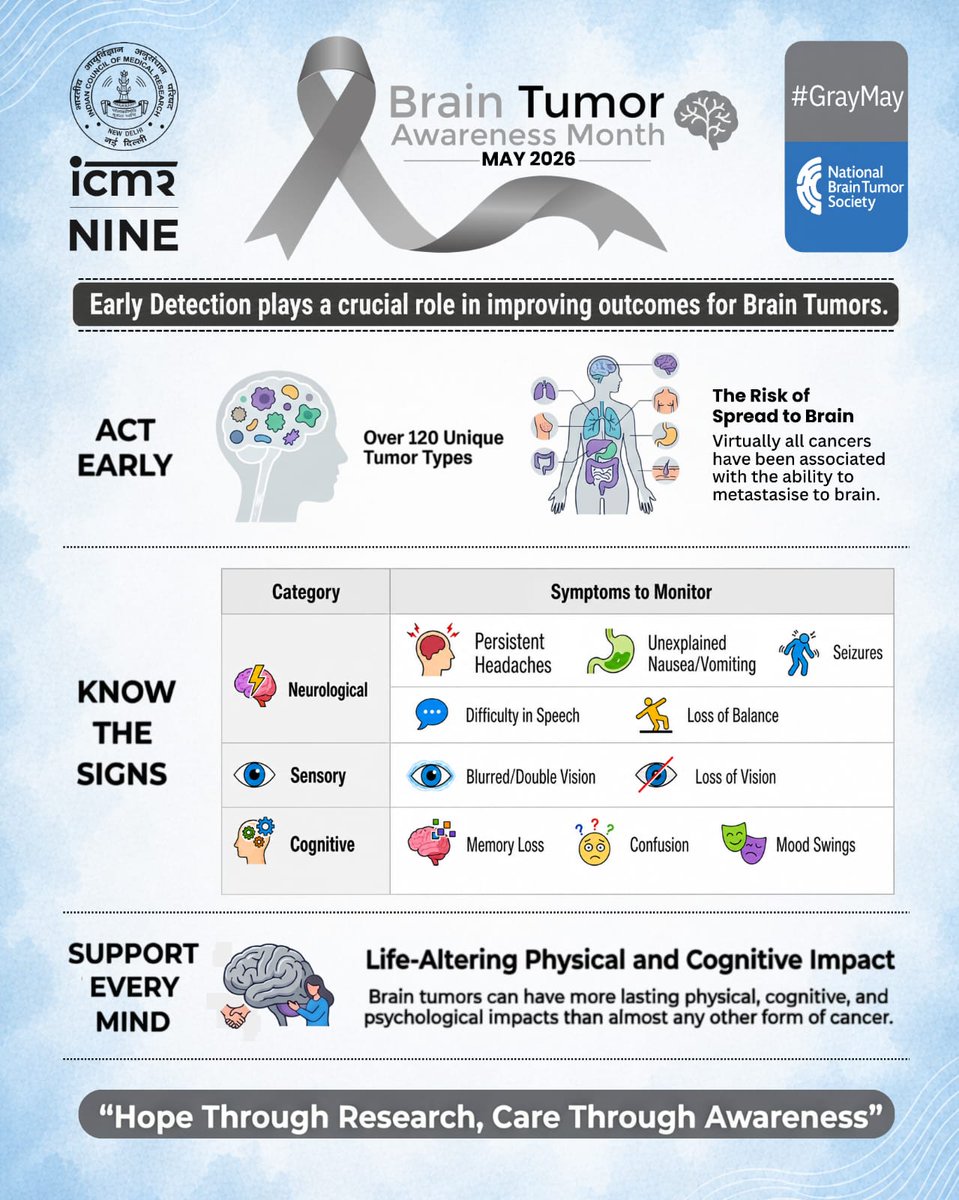
#GoGrayInMay highlights the importance of early detection, as brain tumors may present with subtle but significant symptoms. This #BrainTumorAwarenessMonth don’t ignore warning signs; seek timely care, which can make a critical difference in outcome. #icmrnine
ICMR- NINE tweet media
English
0
11
15
1.1K
Mohandas Pai
Mohandas Pai@TVMohandasPai·
A great Indian and business leader leaves us. Om Shanti
Mohandas Pai tweet media
English
77
107
738
53.9K
Sheela Godbole MD retweetledi
AIIMS, New Delhi 🇮🇳
AIIMS, New Delhi 🇮🇳@aiims_newdelhi·
As Dr M. Srinivas moves on from AIIMS New Delhi to take up his new role at NITI Aayog, we bid him a heartfelt farewell and wish him the very best for the journey ahead. Widely regarded as simple, approachable, and deeply committed, he led with humility while driving a transformative phase for the institution—strengthening patient-centric care, advancing digital and paperless systems, and championing a cleaner, greener campus. From closely overseeing services at the main hospital to personally engaging with peripheral centres like Ballabgarh, his attention to detail consistently improved patient experience. Colleagues recall how he stood firmly for AIIMS at every forum, always placing the institution above all else, and fostering a strong sense of unity—reminding everyone that AIIMS is one family. His leadership leaves a lasting impact, and his legacy will continue to guide the way forward.
AIIMS, New Delhi 🇮🇳 tweet media
English
9
14
95
4.2K
Sheela Godbole MD retweetledi
ICMR
ICMR@ICMRDELHI·
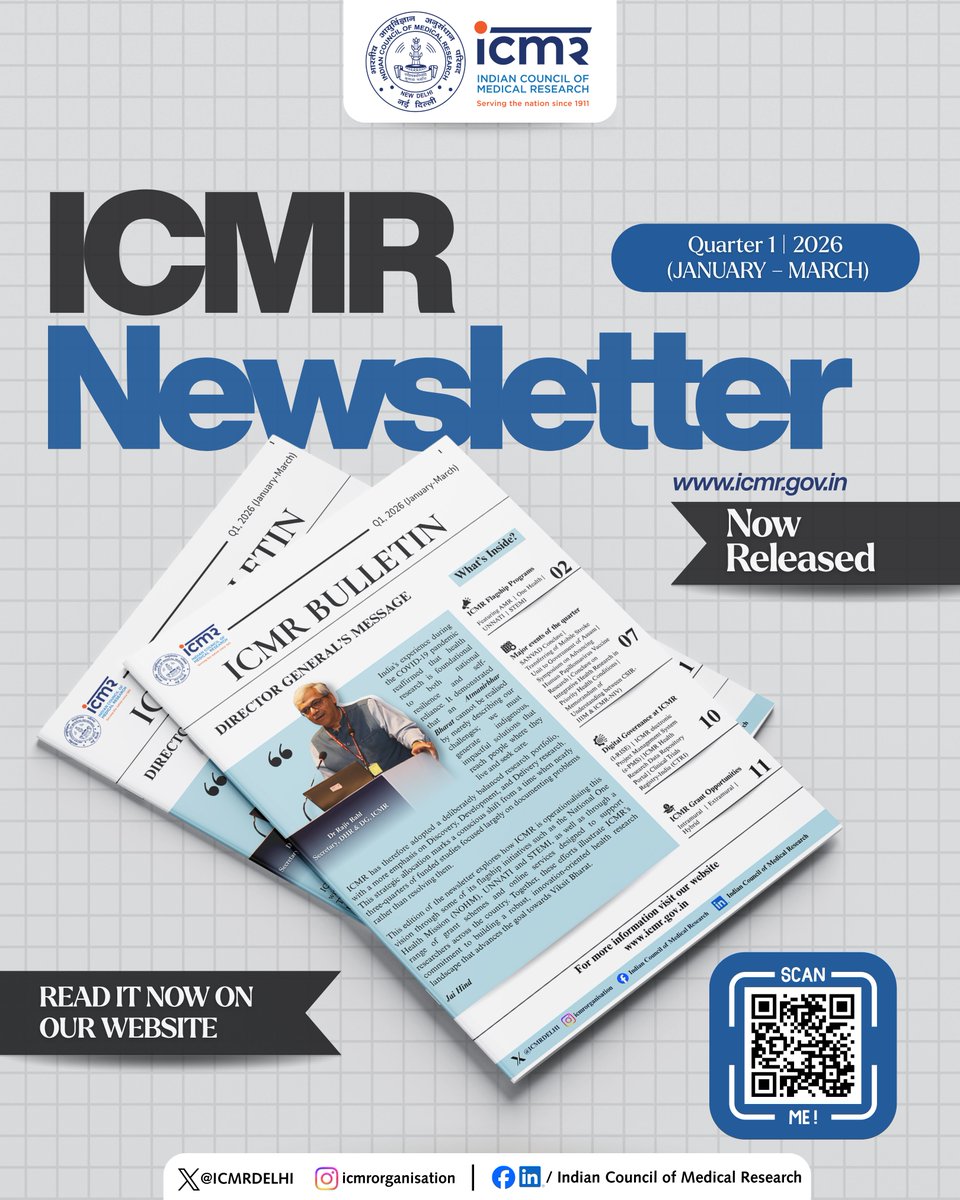
The January–March 2026 edition of the newsletter by Indian Council of Medical Research is now available. Stay informed about the latest developments, initiatives, and advancements. 📷 Read more: icmr.gov.in/icmr-newsletter
ICMR tweet media
English
0
29
46
2.2K
Sheela Godbole MD retweetledi
Anant Bhan
Anant Bhan@AnantBhan·
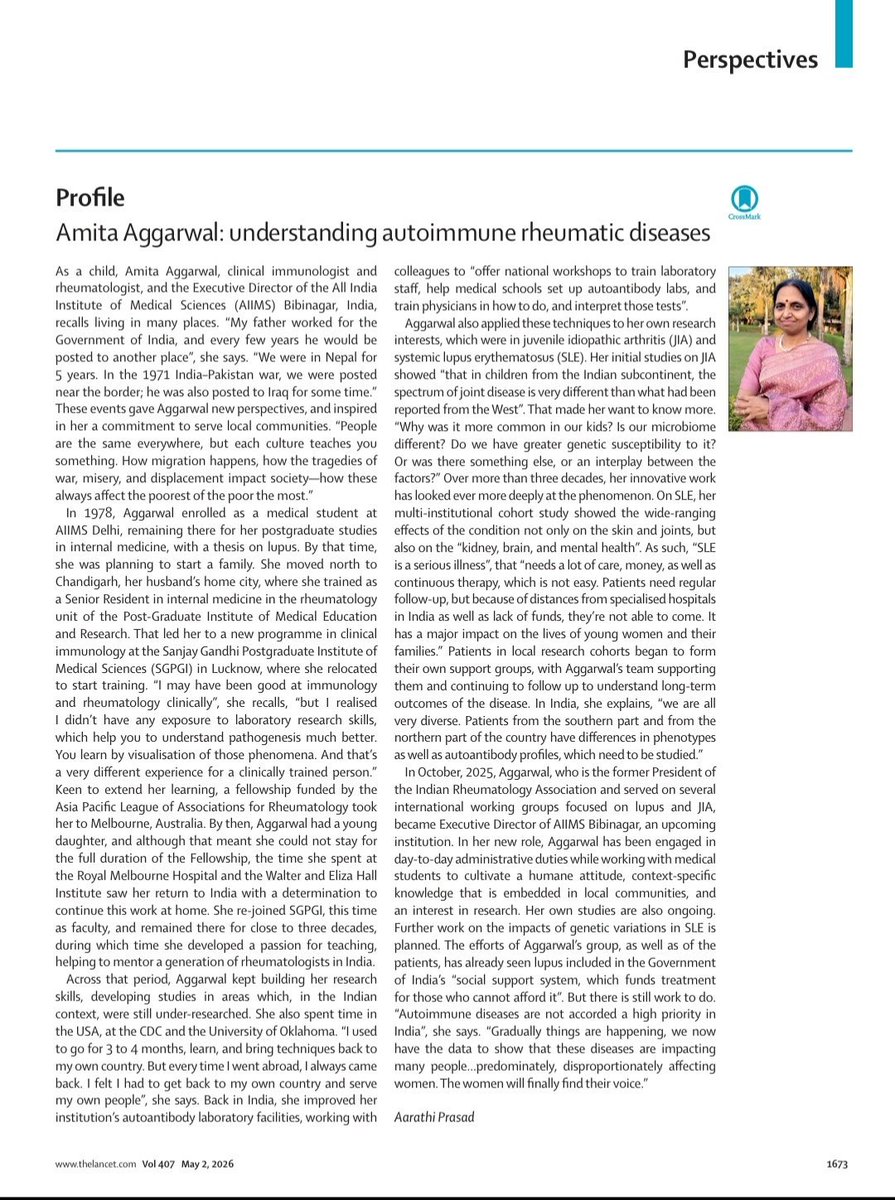
The Lancet in its latest issue (02 May 2026) profiled Dr Amita Aggarwal, who has been an inspiring clinician, academic, and researcher in the field of autoimmune rheumatic diseases- through her stellar work @SGPGI & in her current role as Executive Director @AiimsBibinagar
Anant Bhan tweet media
English
4
23
66
3K
Sheela Godbole MD
Sheela Godbole MD@godbole_dr·
Proud to be an Indian. Truly chuffed to participate digitally in the Census of India 2027! A help to the lakhs of enumerators who will toil in the May heat. A wonderful initiative and so easy to use. Kudos to RGI and Census Commissioner.
Sheela Godbole MD tweet media
English
0
0
4
42
Sheela Godbole MD retweetledi
National AIDS Control Organisation
You think you're sharing a needle. You're actually sharing HIV, Hepatitis B & Hepatitis C. Don’t gamble with your health. Use a new needle. Every time.
English
0
4
5
138
Sheela Godbole MD retweetledi
Deepak Rajput
Deepak Rajput@DeepakBE_BT·
@IcmrNari @ICMRDELHI Glad to hear👏🏻 This is really a great initiative taken by a scientific organization to answer the queries of general people.
English
0
1
1
21
Sheela Godbole MD retweetledi
ICMR-NIHR-BBSR
ICMR-NIHR-BBSR@ICMR_RMRCBBSR·
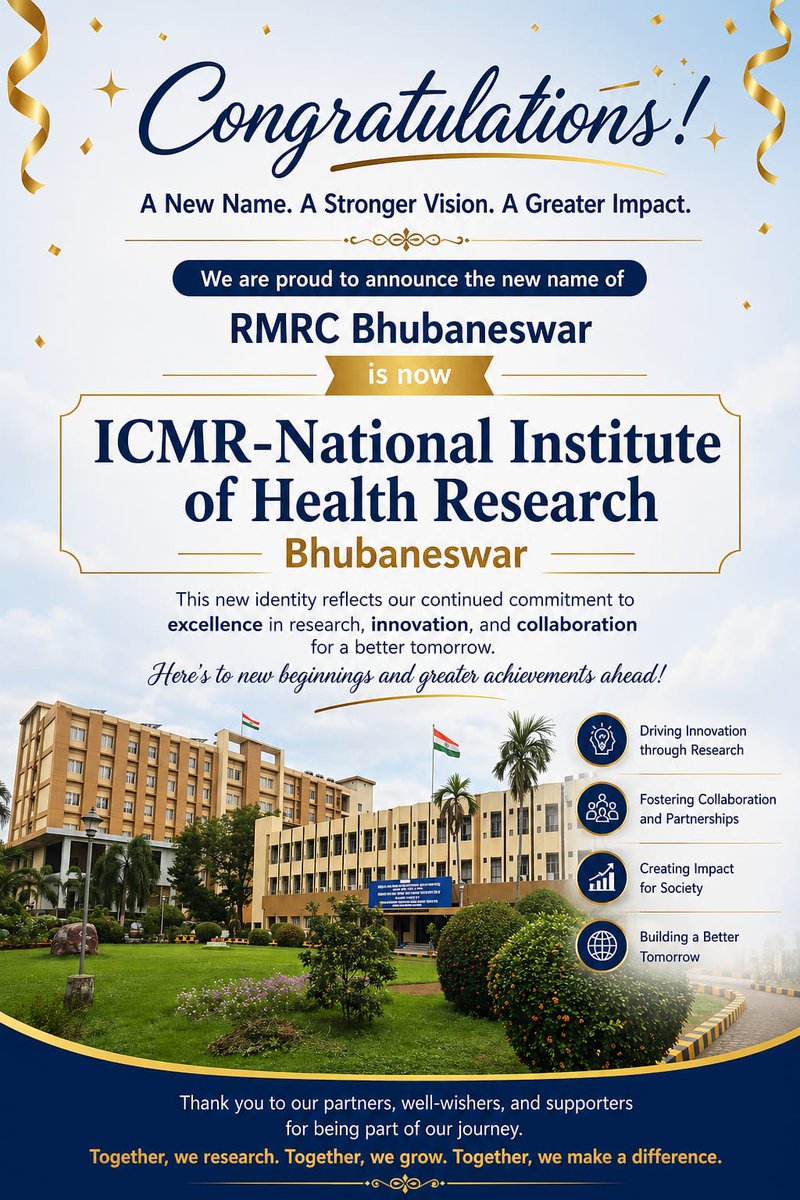
Cheers to a new chapter! 🎉 @ICMR_RMRCBBSR is now ICMR-National Institute of Health Research, Bhubaneswar. Here’s to new beginnings, groundbreaking innovation, and a stronger impact on society.✨ #NewBeginnings #ICMR #HealthResearch
ICMR-NIHR-BBSR tweet media
English
0
29
60
1.1K