Cards of History
12.9K posts

Cards of History
@GodPlaysCards
Short lessons, big legacies. Your collection of the world’s greatest historic events and figures.
Katılım Şubat 2023
561 Takip Edilen58.1K Takipçiler
Sabitlenmiş Tweet

When the Spanish landed at Sacsayhuamán they were astonished by what they found.
The chronicler Pedro Cieza de León wrote that the walls seemed impossible for human hands to have built, some Spaniards suggested giants or demons must have been responsible.
The largest stone is estimated to weigh around 130 tonnes, and they are polygonal in shape, fitted together without mortar with such precision that not even a sheet of paper can slide between them.
Some blocks have up to 12 angles, each face cut to match a different neighboring stone perfectly. The entire complex stretches over 300 meters in length and the main walls rise to nearly 6 meters high, yet what stands today is only an estimated 20% of the original structure.
Many of the stones were used by the Spanish to build colonial Cusco. Churches, palaces, and foundations across the city were constructed with Inca stone.
The Cathedral of Cusco, the Church of Santo Domingo, and countless mansions along the city's main streets all rest on foundations of Sacsayhuamán granite.
People are still debating how this was made.

English

@SirEvanAmato I knew a guy in Austria who did the same.
English

One of the best periods in my life was when I lived in London and spent my entire paycheck attending the opera. I went to plays, ballets, and concerts while subsisting on canned beans and Tesco ready to eat sandwiches.
It was a horrendous financial decision, yet one of the best things I’ve ever done. Those months in London shaped me like no other, and my soul was transformed by the music I encountered. “Man does not live by bread alone", indeed.
English

@real_mpwilcox You are too kind. 🫡
Much obliged brother!
English

Doing a great service. Support this account and their work.
Cards of History@GodPlaysCards
Not on my watch.
English


For two centuries, the Ottoman Empire had pushed westward, swallowing kingdoms whole.
Vienna was on the brink of collapse, the gate to all of Europe was about to fall open.
Then, over the ridge of the Kahlenberg hill, came the largest cavalry charge in recorded history.
🔸By 1683, the Ottoman Empire was the most powerful military force on earth. Grand Vizier Kara Mustafa marched with more than 150,000 soldiers toward Vienna, pulling with him over 300 cannons and a supply chain that stretched back to Constantinople.
🔸On July 14th, the Ottomans surrounded Vienna and began digging. They ran tunnels beneath the city walls, packed them with gunpowder, and detonated them one by one. The city's 12,000 - 15,000 defenders watched their walls crumble from the inside out.
🔸After two months under siege, Vienna was dying. Food had run out, disease was spreading through the streets, and the garrison had lost a third of its men. The city's commander, Ernst Rüdiger von Starhemberg, sent desperate messengers through enemy lines begging for relief.
🔸Holy Roman Emperor Leopold I had spent weeks negotiating one of the most unlikely alliances in European history. Catholic Austria, Protestant German princes, and the Polish-Lithuanian Commonwealth agreed to set aside their rivalries and march together. King Jan III Sobieski of Poland would lead them.
🔸Jan Sobieski was already a legend before Vienna. He had spent his career fighting the Ottomans on Poland's eastern frontier, and the Turks called him the "Lion of Lechistan." When the Pope personally wrote to him asking for help, Sobieski mobilized 74,000 men and began the march south.
🔸On the evening of September 11th, the allied commanders gathered on the Kahlenberg hill overlooking Vienna. Below them, the Ottoman camp stretched across the plain like a city of its own, with silk tents, horse herds, and cooking fires as far as the eye could see. Sobieski turned to his son and said: "Tomorrow we fight."
🔸The battle opened at dawn on September 12th with infantry clashing in the woods and ravines below the hill. For eight hours the fighting ground on, neither side breaking. Then, at around four in the afternoon, Sobieski ordered his cavalry to the ridge.
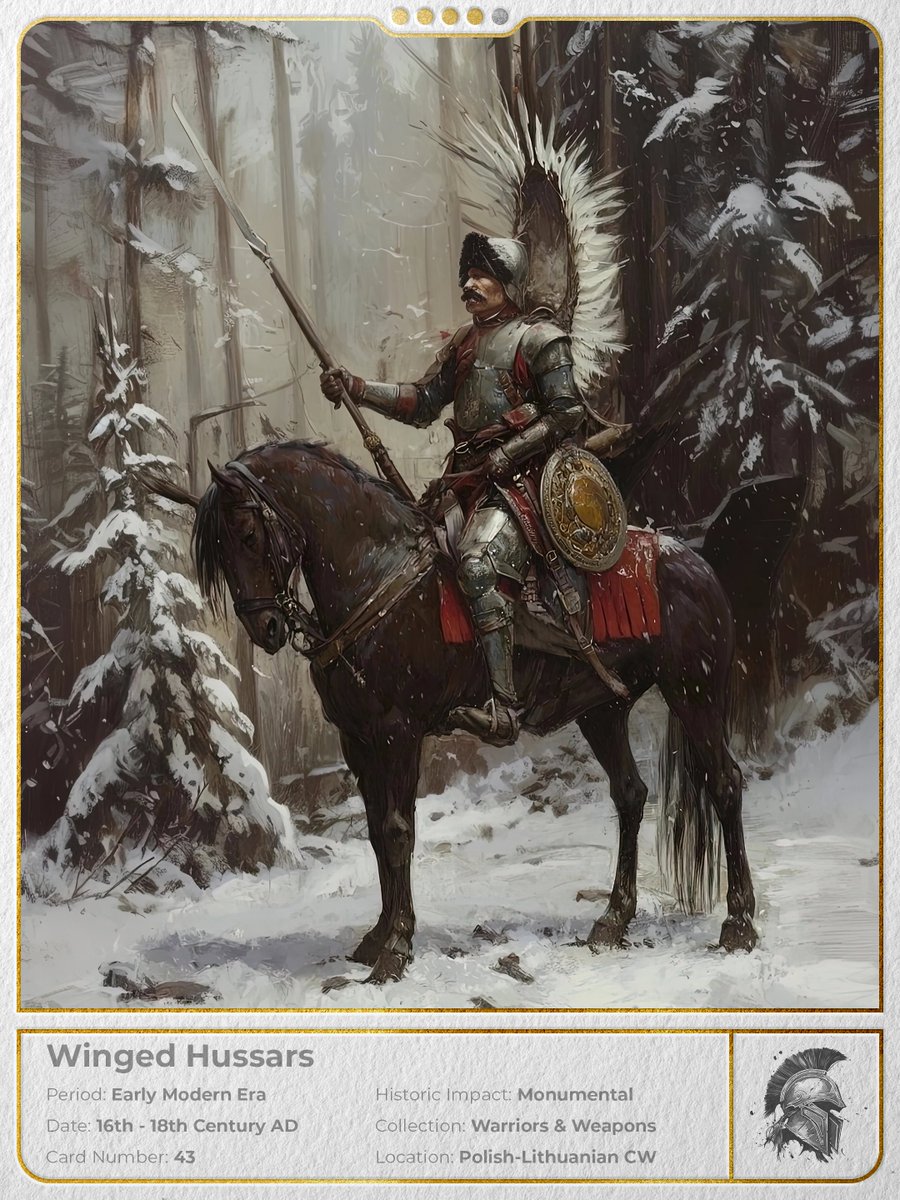
🔸The Polish Winged Hussars were the most feared heavy cavalry in the world. They rode massive warhorses, carried 16-foot lances, and wore wooden frames on their backs that held enormous eagle and ostrich feathers. At full gallop, the wings created a roaring sound that witnesses said was unlike anything they had ever heard.
🔸18,000 horsemen crested the hill and began riding downhill toward the Ottoman camp. Sobieski led from the front with 3,000 of his Polish Winged Hussars.
The ground shook. The Ottoman lines, which had held all day, looked up to see a wall of horses, lances, and screaming wings descending on them at full speed. The formation collapsed almost immediately.
🔸The battle raged for 15 hours after which the Ottoman army was in full retreat. Kara Mustafa abandoned his command tent, his treasury, his artillery, and the green banner of the Prophet Muhammad. The Poles captured so much coffee from the Ottoman camp that it is credited with introducing the coffeehouse culture to Vienna.
🔸Kara Mustafa fled to Belgrade, where he was executed by order of the Sultan three months later. The Ottoman Empire never again threatened central Europe with the same force. The siege of Vienna is now considered the high-water mark of Ottoman expansion into the West.
🔸On the evening of the victory, Sobieski wrote a letter to the Pope. In it, he borrowed the words of Julius Caesar and wrote: "I came, I saw, God conquered." He had just saved Western Europe. He sent the letter before the bodies were even cleared from the field.
🔸The Winged Hussars charged for the last time at Vienna, and they won the most consequential cavalry battle in modern history. Within a generation, the age of mounted shock warfare would be over forever.
Most people have never heard of the Battle of Vienna or of Jan Sobieski (he will receive his own card in due time). I believe it is vital you are now part of the group that does.
History has a way of burying the moments that changed everything. Europe was about to fall. These men ensured it didn't.
Thanks for sticking with me. Tomorrow I've got another fantastic story lined up for you.

English

This is exactly the reason I'm on X, the most wonderful people, the most educated audience.
Michael Bruno@brubarian
I just found this account. I immediately followed. And I’m going to buy everything they offer. Amazing.
English

I just found this account. I immediately followed. And I’m going to buy everything they offer.
Amazing.
Cards of History@GodPlaysCards
Not on my watch.
English

@GodPlaysCards @grok Thanks Doing God's work man. Some would say teaching this is divisive but if you value European history it should be mandatory in every country. Europe was very close to being conquered. Very close.
English


@GodPlaysCards Honest question but do schools in Eu teach about this battle in many levels of history. @grok you have any info about teaching of this battle in eu.
English

@GodPlaysCards Appreciate it! Can't wait til we get to the second story :)
English

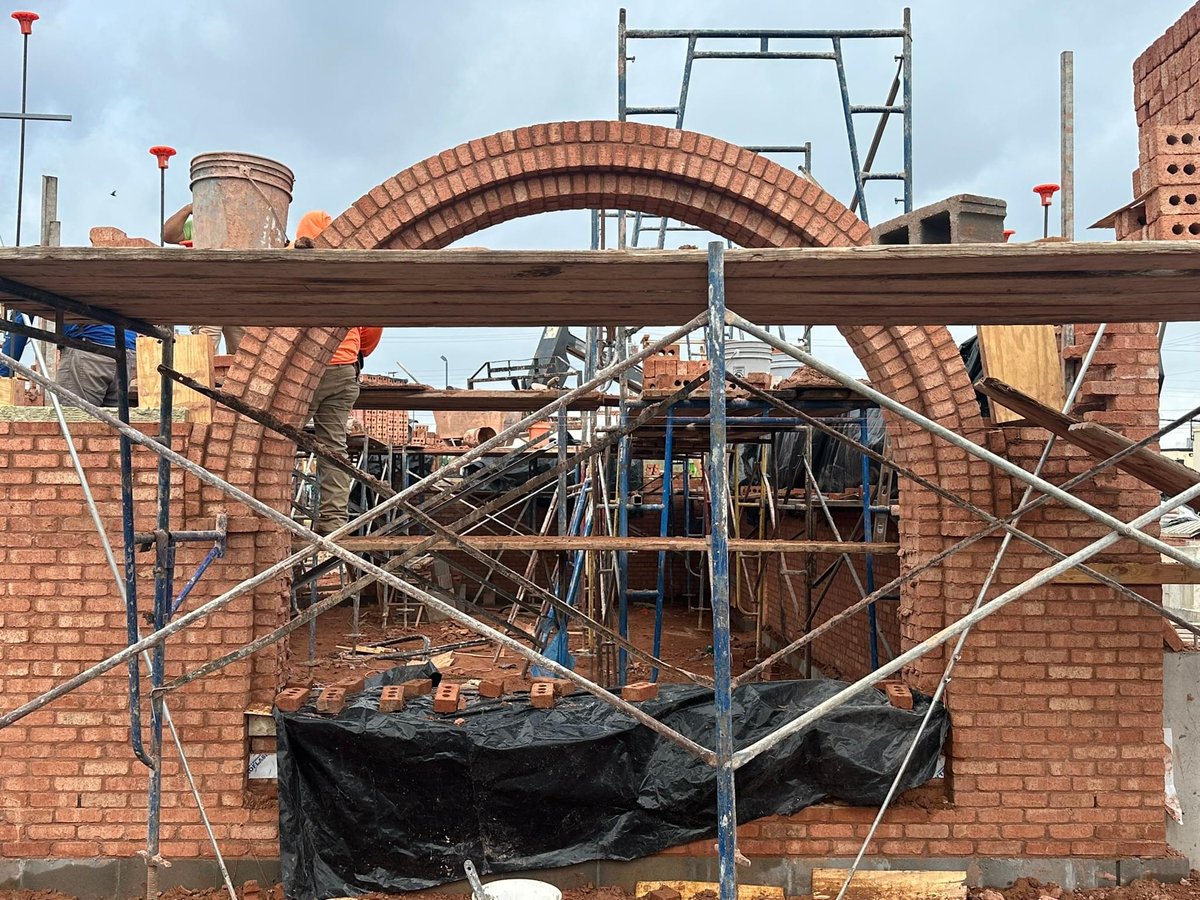
This arch is 10' wide. We already have 3 courses of voussoirs (the layers of the arch), and have a final course that you can see started at the bottom. The thickness (proportionate to size of arch) and dimensionality (reveals created from stepping brick in/out) are part of what make this beautiful.
But one more tip to make your brick arches look great: as the radius expands outward with multiple voussoirs, don't line up the mortar joints. If you look closely, you can see the mortar joints are not aligned on the arch. If we DID line them up, which masons often do by default, the mortar joints start getting really thick, and it looks bad.
We are laying what's called a "rough arch", where the mortar joint creates the wedge from the radius, rather than cutting each brick into the wedge shape.
Rough arches can look amazing, and work just as well as "gauged" arches (when you cut the brick), but are 10x faster - and much cheaper. But the mistake I often see made when laying a rough arch is 1) lining up the mortar joints or 2) laying the brick vertically on edge, as a soldier course, which has the same effect as lining up mortar joints when laying "rowlocks" (what we've done here). You end up seeing the mortar joint for a continuous 8" rather than 4", and so the mortar joint gets beefy towards the top and does not look good.
So:
1. Lay rough arches
2. Use rowlocks (we often cap with a header)
3. Don't line up mortar joints
4. Create reveals by corbelling out layers of voussoirs
The same rules apply to veneer. You can communicate this to your architect/GC/mason, but I'd include pictures to show them.
**each way you lay a brick has a name. What you typically see in a wall is a "stretcher", where the long face lays horizontally. Header is where you turn a stretcher 90 degrees so you see the short face. Rowlock is when you turn that header on edge, as you see in this arch**

English

@GodPlaysCards When I have deliveries from Poles or Lithuanians I always, literally, thank them for their ancestors' dedication, for the Winged Hussars, for deciding they would prevail. They are surprised at the acknowledgement.
English

@TheKingDude Thanks for the QT Mike!
I've completed my masters in Vienna, still one of the most gorgeous cities in the world.
English


Preparing shipments for Monday morning.
Your time to order is now.
God wills it!
GIF
Cards of History@GodPlaysCards
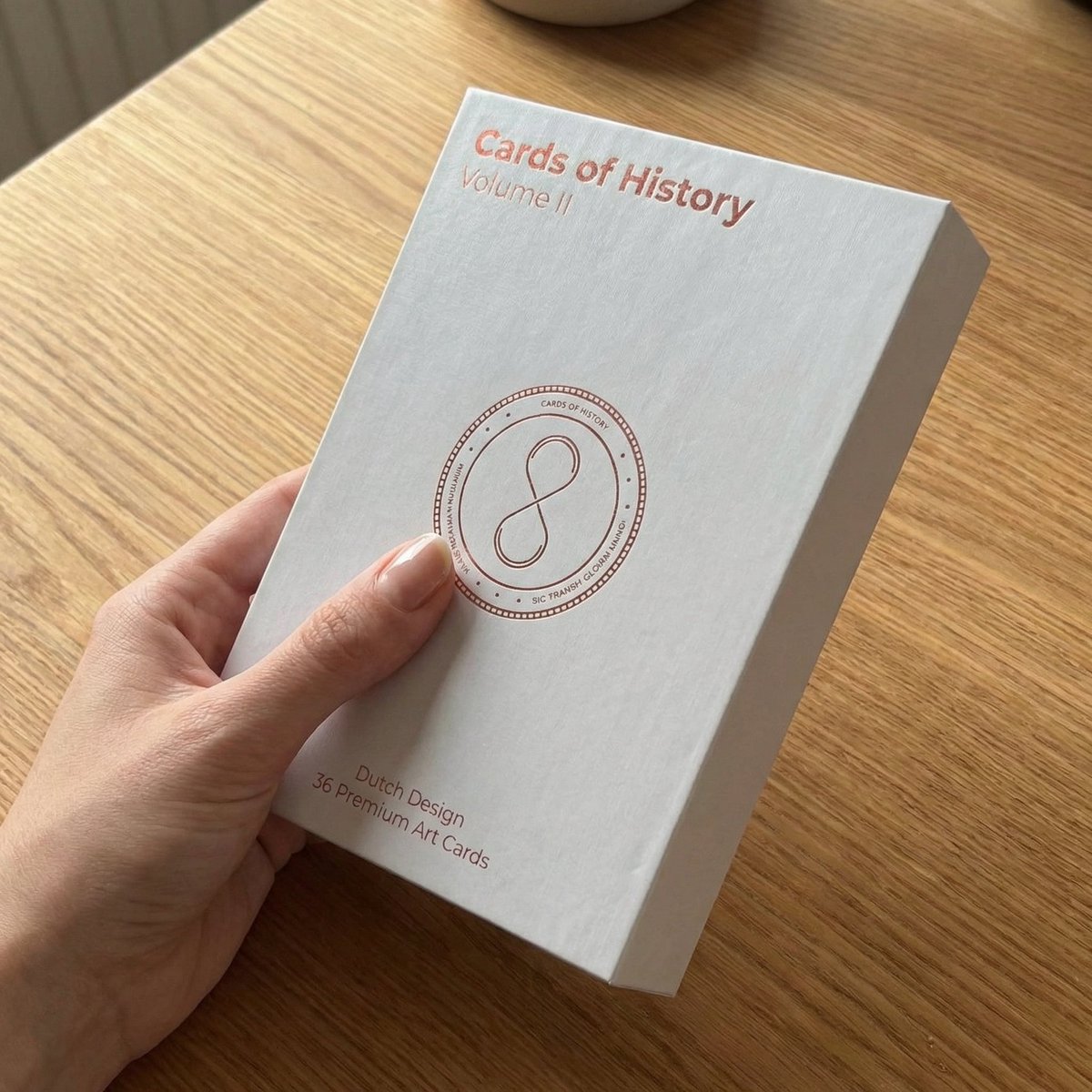
You know this: - would look absolutely fantastic in your study. - would hook your kids to history. - would be the best gift you've received or given. The 5th edition: The French Legacy is out now. And I'm shipping a new batch tomorrow!
English

@AnWu367225 I didn't know this, thanks for sharing these details.
English

@GodPlaysCards Trzeba dodać, że jadąc z Polski armia Jana Sobowskiego potrzebowała prowiantu i wody dla koni, a Niemcy nc nie dali.
Dotarli pod Wiedeń wyczerpani i głodni.
A dowódca austryjacki nie zsiadł z konia by przywitać Jana III Sobieskiego bo uważał go za niegodnego.
Polski

@Ninopjetri Yes, I did a card on him. Will drop an article soon!
English

@GodPlaysCards Love this, now can you do Skenderbeg who also fought the ottomans and saved Europe
English

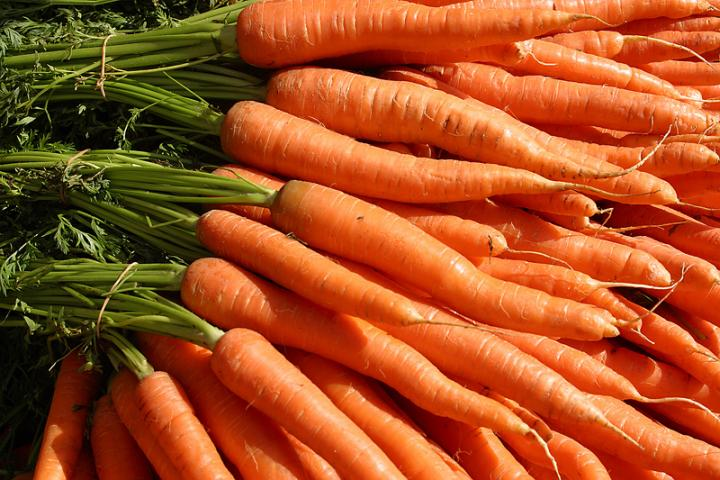
You associate carrots with their orange colour because Dutch farmers decided it should be
Before the 16th century, carrots were black, purple, white, red, and yellow
Farmers in Hoorn found a mutant orange strain and bred it into consistency through selective hybridisation
They made orange the default
Then exported it to every kitchen on earth
The Dutch didn't conquer with armies
They also decided what your carrots look like


English

@GodPlaysCards @archi_tradition Try a bike trip from Dinant along the Meuse towards France. You’ll thank me later:)
English