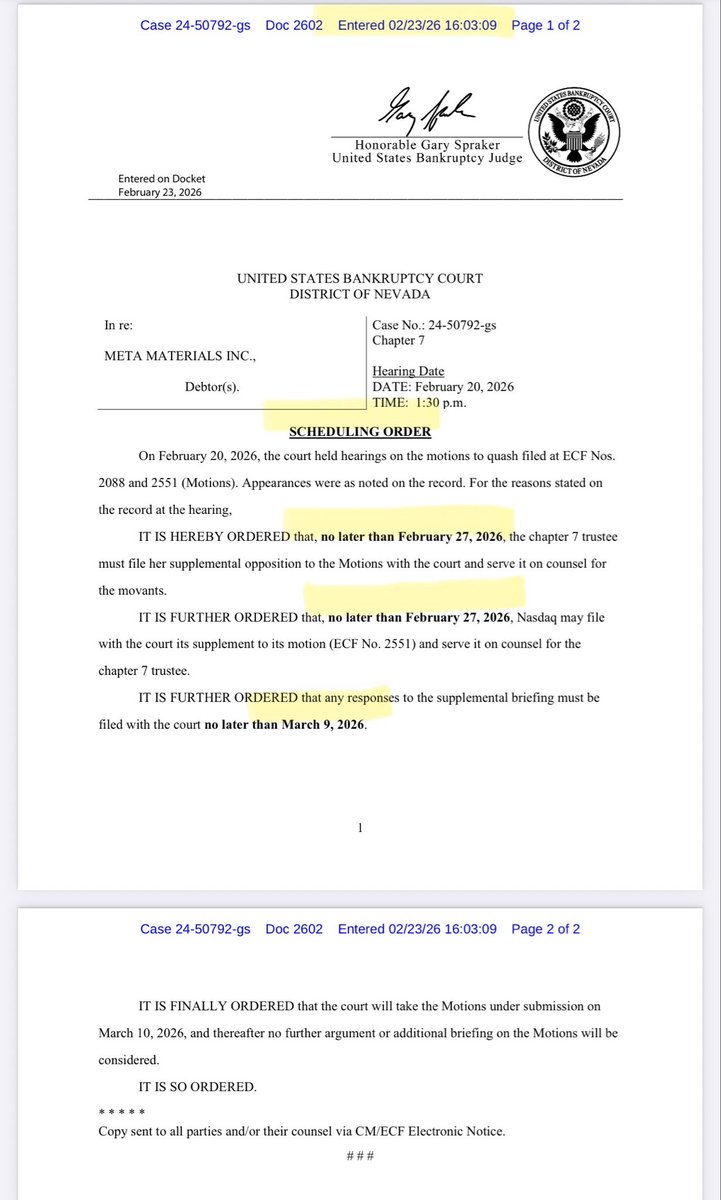
George Palikaras@palikaras
Another win! This is a massive one vs. DTCC.
One step closer to triangulate the data. Thanks for sharing @kimkep4796
For the record, I need ZERO access to the trading data information for my case (including the Nasdaq 6 month data - I was informed some are really scared I would use, but wait… is there something of value they are uniquely aware of?? -> for the dum dums 🗿🗿)
The fact that NASDAQ went and hired Meta’s Nevada Counsel, Ballard Spahr, would be hilarious if it wasn’t true. (For the record the Managing Partner at the Las Vegas office R Kim, was excellent for four years)
Mistake or not the laws in Nevada are clear and the options available to the trustee are very significant, for example:
1.Expedited motion to disqualify under Nevada RPC 1.9/1.10 (and 1.7 if concurrent), citing Nevada’s substantial-relationship framework.
2.In the same package, request relief that strikes/denies the motion to quash (or at least bars the conflicted firm from further participation), and sets an accelerated schedule for conflict-free counsel to appear.
3.If Nasdaq (or any subpoena target) resists after an order, escalate to compel + contempt/sanctions using §105(a)/inherent authority and, where appropriate, Rule 9011 / §1927.
4. Discovery of all privileged information between Nasdaq and Ballard Spahr (more nuanced)
Example: In re Burnett (Arkansas bankruptcy court)
The court found an attorney violated the Code, Bankruptcy Rules, and local rules, and ordered:
•Disgorgement of fees, and
•Suspension from practicing in the bankruptcy courts of that district, pending review by the state disciplinary authority.[uscourts]
Takeaway:
When a bankruptcy judge decides counsel abused the system, consequences can include both financial sanctions and a practice ban in that court.