@FirstHillcap I didn’t ask about pricing, because there are two big clients (SONY and TSM), I don’t think RS has any pricing power. However thay said that capacity is fully booked and their expansion is based on the clients’ expectations.
English
Grana Research
103 posts

@granaresearch
Deep-dive equity research. Exploring opportunities across GARP, Deep Value, and Special Situations.

I didn't like the "gaming slowdown" message $APP delivered today on their Jeffries conference presentation. :-((

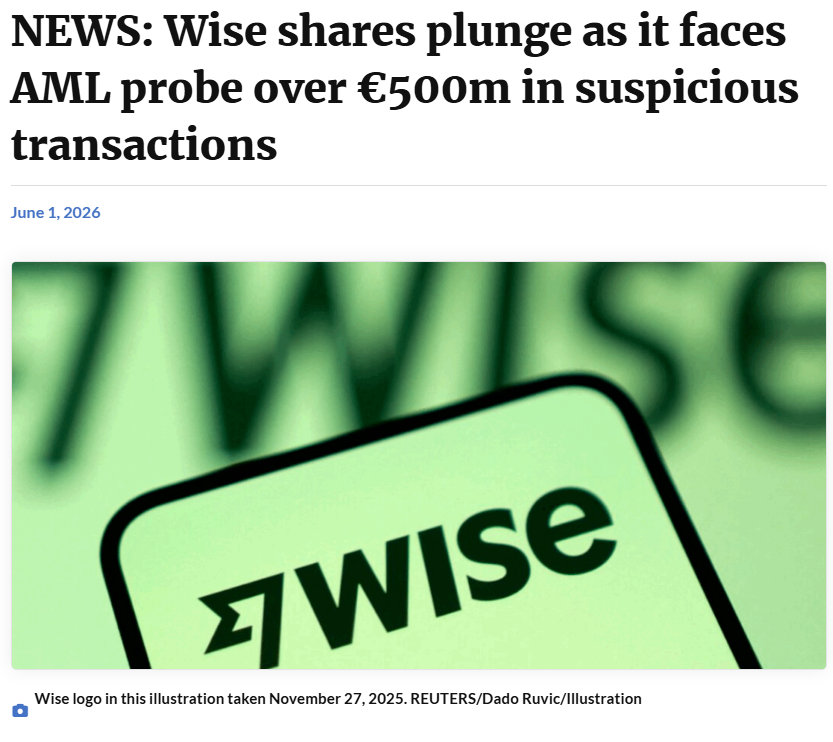
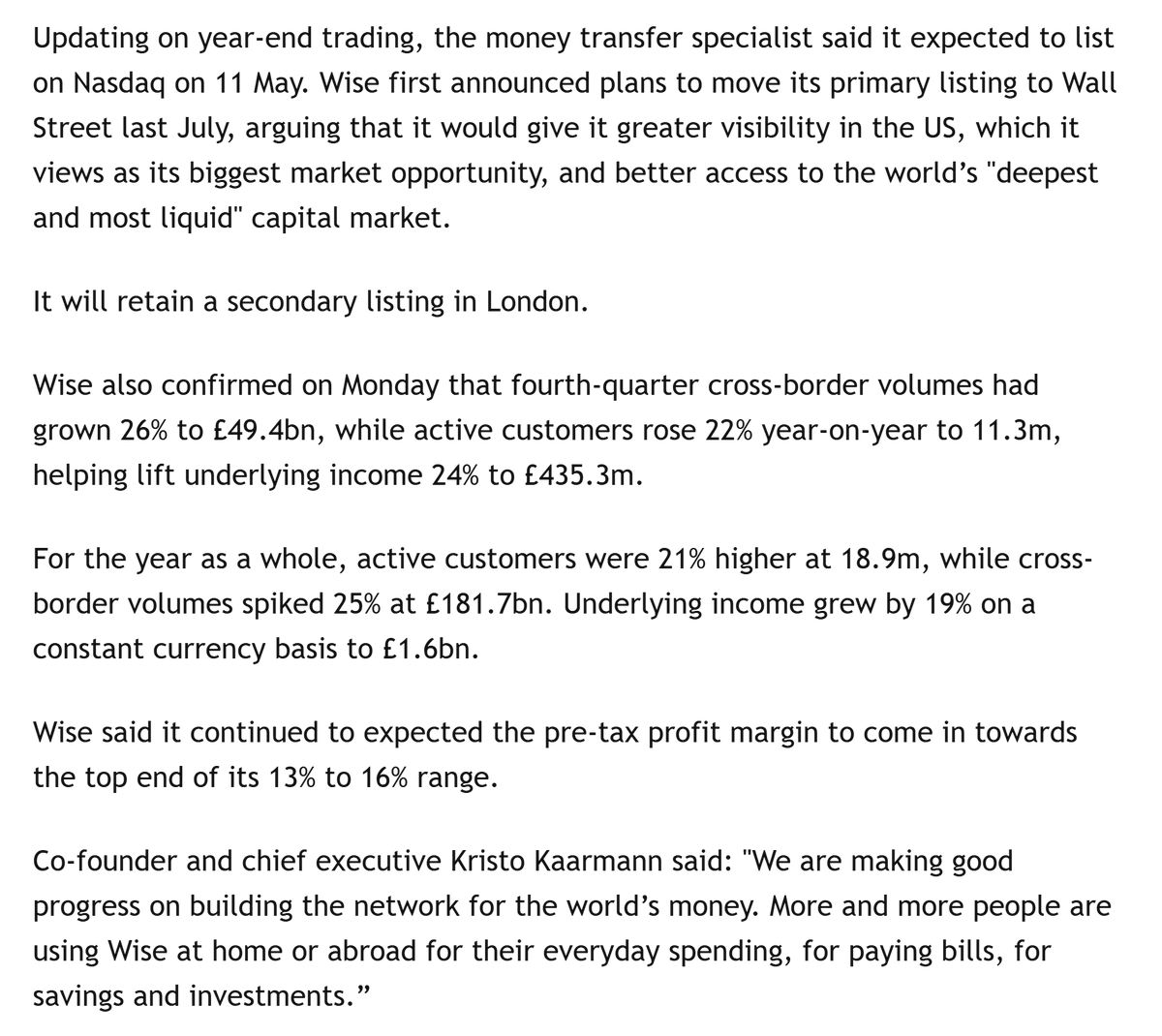
A potential force behind the lobbying effort against $WSE $WISE.L appears to be Iberpay, the operator of Spain's national payment system. That is what we heard and what we understood from Iberpay — that they were saying: "Well, we're lobbying against that behavior because we don't want that behavior to grow. What we're building at a European level across the different networks that do SEPA payments is to also replace Swift or multiple banking connections, and then connect major corridors through systems such as Faster Payments in the U.K., Pix in Brazil, and their equivalents." What concerns regulators? Under Wise's pooled-liquidity model, there is no clear end-to-end payment chain linking the sender and the recipient in the traditional sense, because funds do not pass through the standard sequence of intermediary banks. Frankly, these concerns represent a risk to the entire Wise transfer model. How this issue is ultimately resolved could have significant implications for the future of the European cross-border payments market. There are, however, some encouraging signals. The amount under discussion is relatively small — roughly $500 million of transactions. One can cautiously infer that Wise's KYC/AML controls are functioning effectively. This has long been our base assumption, given that KYC and AML compliance represent one of Wise's largest operating expense categories.






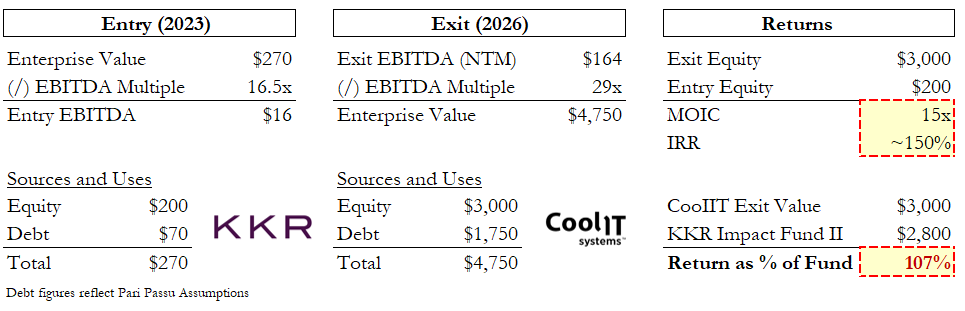
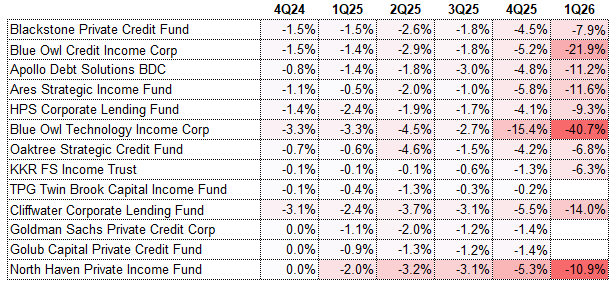
Apollo is certainly not immune: should systemic risks materialize across the sector, $APO will feel the pain too. The right question to ask, however, is: what the worst case actually looks like, what happens to the credit business's growth trajectory going forward, and - most importantly - how does the downside scenario compare to what the market has already priced in. $APO is arguably the best-positioned alternative asset manager against the risks currently facing the industry, because: a) the company has minimal reliance on BDC / retail / wealth channels for fundraising and, therefore, no meaningful risk of capital outflows; b) the asset base is dominated by permanent capital, which accounts for approximately 60% of total AUM and over 70% of FGAUM; c) the largest single source of capital is its wholly-owned insurance subsidiary, Athene - roughly 42% of AUM and ~58% of earnings; d) Apollo carries minimal software exposure within its AUM mix and limited Private Equity allocation, which reduces asset marking risk.