@sincead33@lasapan67@Dogmaticist 1.) I don't care what you think about our authors because I don't care what you think in general.
2.) Your takes are terrible on several topics
3.) I wasn't talking with you on the post; I was talking about you.
4.) I just have a problem with those who intentionally study little.
I waste my time reading a lot of the nonsense of your authors and their cope as well for the sake of bringing the lost into the Church. If you seriously think when your authors quote the Fathers, especially St. Augustine, for the rule of faith, they are making convincing arguments and aren't just quoting the most vague, vanilla statements and assuming it's opposed to us, then your standards of what you find convincing and not "cope" are just malformed by your bias, as is the case with many Reformed Catholikes.
Never understood what your problem with me was...
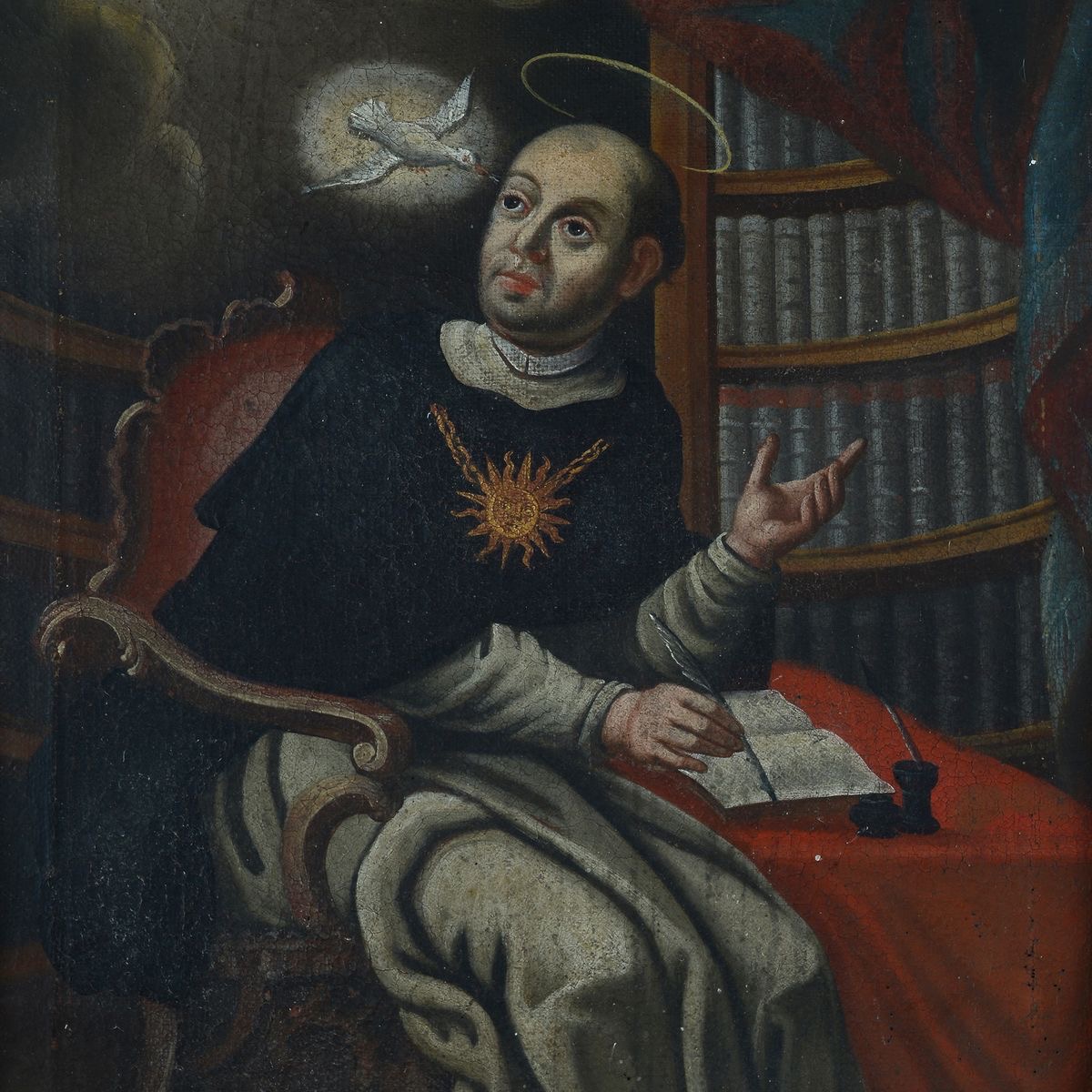
Thomas Aquinas repudiates the Reformed reading of Augustine:
"From this authority the aforesaid heretics have taken occasion to err from evilly understanding Augustine’s words. For when Augustine says: You are not to eat this body which you see, he means not to exclude the truth of Christ’s body, but that it was not to be eaten in this species in which it was seen by them. And by the words: It is a mystery that I put before you; in its spiritual sense it will quicken you, he intends not that the body of Christ is in this sacrament merely according to mystical signification, but spiritually, that is, invisibly, and by the power of the spirit. Hence (Tract. xxvii), expounding John 6:64: the flesh profiteth nothing, he says: Yea, but as they understood it, for they understood that the flesh was to be eaten as it is divided piecemeal in a dead body, or as sold in the shambles, not as it is quickened by the spirit . . . Let the spirit draw nigh to the flesh . . . then the flesh profiteth very much: for if the flesh profiteth nothing, the Word had not been made flesh, that It might dwell among us."
- St. Thomas Aquinas, ST. III. Q. 75. A. 1.
@nephosnox a posição referente a ceia não é rasa nos doutores. o Donatismo da IPB é algo a ser combatido, não a ser desistido (e novamente, não é a posição dos doutores).
Parece que seu problema é com a igreja moderna e não com a igreja reformada em si.
@graywithin Posições referentes à ceia muito rasas ou superficial, o Donatismo corre solto… a fácil problematização de doutrinas mais ortodoxas, a maioria parece ter um problema em um estilo de culto que adore Cristo sem necessidade de estímulos externos como a música apelativa ou discurso
Tenho sentido muita paz indo na católica, vai ser uma decisão muito difícil e com certeza vou perder muitos amigos, mas seguir o Senhor não é sobre ter amigos
"For if even now that unimpaired vigor were to remain, in which blameless nature once existed, each person’s own will would be able to reconcile him to God and free him from punishment. Christ would have expiated death in vain by dying, and the blood of the Lamb would not have taken away the sin of the world. Nor would the human race have needed to be born again under a new condition, since sound wisdom, sound faith, sound free choice, and a mind free from sickness would live a life worthy of participation in the highest blessings.
Nam si nunc etiam illaesis vigor ille maneret, in quo insons natura fuit, sua quemque voluntas conciliare Deo poenaque absolvere posset, nequidquam Christus mortem moriendo piaret, peccatum et mundi sanguis non tolleret agni, nec genus humanum generari rursus egeret conditione nova, quoniam sapientia sana, sana fides, sanum arbitrium, mens libera morbo vitam agerent dignam summorum participatu."
— Prosper of Aquitaine, Carmen de ingratis, vv. 880-885
@graywithin Existem vários motivos elencados, sempre estudei teologia e via várias inconsistências teológicas, mas o baque final por revelação mesmo, ando passando uma época de trevas e meu pai de sangue como católico me trouxe uma palavra de Deus e São José que me orientou muito
@OrthoAugustine@ScholasticsFan this quote does not state that it ceases to be sin qua act, but that it ceases to be sin qua guilt of punishment, which means there is a constant remission of the guilt of fault.
Alger of Liège, book 1, ch. 6:
"It is to be known, that a sacrament and a mystery differ in this, because a sacrament is a visible sign signifying something, but a mystery is something hidden signified by it, nevertheless one is put for the other, you receive your mystery."
St. Augustine, On Free Choice, book 3:
"If a scandal is taken from the truth, it is more useful to allow the scandal to be born, than for the truth to be abandoned."
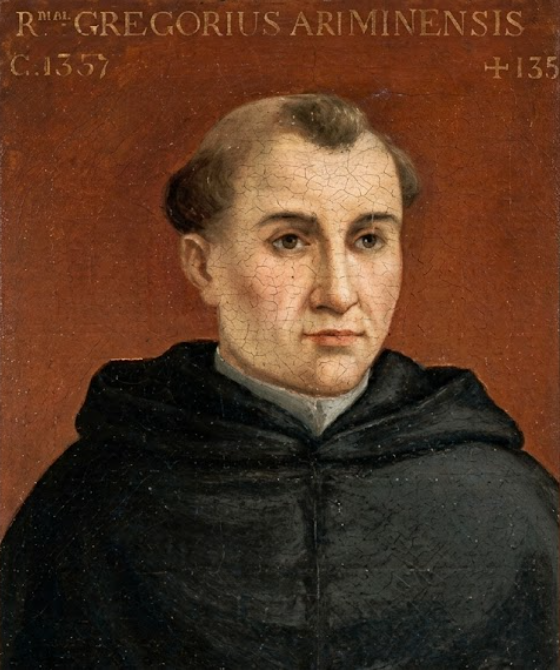
"Before baptism, therefore, original vice was sin; after baptism, however, although it still exists, it is nevertheless not sin, sin being understood properly, that is, as guilt."
— Gregory of Rimini
Libert Froidmont:
"But Lord (Johannes) Wiggers explains that difference of helps and of perseverance most learnedly and most clearly in entirely that manner, in which the Bishop of Ypres does; so that it can seem by far more likely that the Bishop received it from Wigger +
Libert Froidmont:
"The opinion of Capreolus, Soncinas, and Gregory of Rimini is, that God concurs otherwise with our will to good acts, otherwise to evil ones. He predetermines, and applies, and impels it to act to the good; but not thus to the evil, +
Valentin Loscher:
"(...) in the controversy concerning free will with Erasmus of Rotterdam he (Luther) defended a philosophical absolute decree as it were, especially with the publication of his book on the enslaved will."
Conrad Danhauer:
"I. The scholastic division into a threefold kind of divine foreknowledge is not accurate, because middle foreknowledge can conveniently be referred to the theoretical and natural. +