GuilleFix — k/acc | /dd ⏩

27.9K posts

GuilleFix — k/acc | /dd ⏩ banner
GuilleFix — k/acc | /dd ⏩

GuilleFix — k/acc | /dd ⏩

@guillefix

explorer. ⏩ AI+BCI+XR+cognitive liberty! | building neurotech @Nudge | friendly transhumanist 💚 Art+Science+Ambition+Community | k/acc | e/ψ /dd

SF@Earth (for now) Katılım Aralık 2009
4.7K Takip Edilen2.5K Takipçiler
Sabitlenmiş Tweet
GuilleFix — k/acc | /dd ⏩
So incredibly excited by what we are building. This is how we achieve cognitive liberty! Here’s how: We need an interface with the brain that is a safe and precise as possible. Physics basically gives you a few options * Waves (eg electromagnetic, acoustic) * Mechanical (eg implants, surgery) * Chemical/diffusive (eg drugs) Chemical/diffusive methods have too little spatial specificity Mechanical approaches are promising but are very hard to do very safely (ie surgery is hard) specially deep in the brain EM waves either scatter too much by tissue and bone, or are too long wavelength to focus well to the resolution we care about, or give harmful radiation Acoustic waves at ultrasound frequencies live in this nice goldilocks zone of 1) can propagate deep into tissue 2) have millimeter wavelengths, allowing milimeter level resolution in focusing, and 3) have well understood safety profiles (not as hard to do safely). And it has already been demonstrated to affect the activity of neurons through various mechanisms that change the permeability of ion channels (see work by Mikhail Shapiro, Kim Butts Pauly, and many others.) So it seems like the most natural method with our current level of technology to interface with the brain at pretty good spatiotemporal resolution! So we decided to do it. First challenge was to build a device that can create ultrasound waves that get focused to a point. Usually you would focus waves with a lens that shapes the wave such that it converges to some point in space. But we want to have more control over where focus. Furthermore, your skull itself acts like a lens for ultrasound, as most solids do. But its randomly shaped so it actually defocuses the ultrasound. We need to shape the wave in such a way that its deformed in the precise opposite way thaf the skull deforms it, to compensate for it. Such precise control of a wave can be done with a “phased array”. I mean you literally control the amplitude and relative timing of the wave at a whole grid of points, and you can create basically arbitrarily shaped wave shapes. In particular you can shape a wave that will converge at a particular point in the brain, after going through a particular person’s skull. So we built this in a few months. But, I just said that the way we need to focus/shape the wave depends on the shape of a particular person’s skull. So we need to know the precise shape of your skull. In fact we need to know several of its properties too, like how much it attenuates sound. There’s ideas for how to image these with ultrasound itself but they arent well developed yet. So we decided to start with the current bethemoth of medical imaging: MRI Ok so now we need our device to work inside an MRI machine. No ferrous materials. The electronics must produce signals as clean as Bach’s well-tempered claviers, as any high frequency noise will be picked up by the MRI machine and make its imaginging noisy. Ok we now have a decent way to know how the skull of a person looks. Now we need to figure out how it actually distorts the ultrasound so that we can compensate for it. Well the physics of ultrasound is quite well understood, as as its numerical solution methods. The physical properties of skulls? Eh not so well. But we can measure them. We can improve on the existing methods to infer material properties from MRI and other imaging methods. Now, we have a method to produce a focus anywhere in the deep brain, for any brain We have also shaping all the engineering of the device around safety, which is quite well understood for ultrasound. Thermal and cavitation effects are the main effects to keep under control, which we can do via conservative analysis of the physics and a variety of measurements! Now we are ready to begin to tackle the real challenge: neuroscience, and how to help people and improve their lives! We built our first ship, and now we can finally begin to sail!^^ And we are looking for more people to join the journey!>>
Nudge@nudge

Our mission is to develop the best technology for interfacing with the brain to improve people’s lives.

English
8
2
80
8.9K
Angelina Lue
Angelina Lue@angelina_lue·
Hey twitter/x, one of my goals this year is to share more things that excite me with the world. I’m starting here so let me introduce myself: My name is Angelina, I’m 22, and I currently live in SF! For the past six months, I’ve been working at Meta Superintelligence Labs on model training infra and data strategy👩🏻‍💻 Before that I was at UCLA studying CS and Econ and spent a lot of my time in college building in fintech and investing in early stage companies (General Catalyst Venture Fellows, NEA, Mantis VC). I love food, traveling to new places, a good story, snowboarding, and hosting dinners and game nights🕺🏻 I also love meeting new people, feel free to say hi :)
Angelina Lue tweet media
English
104
4
535
166.8K
GuilleFix — k/acc | /dd ⏩ retweetledi
Elliot Roth || SF
Elliot Roth || SF@ThatMrE·
Eggscellent news for antibody production. Next up: growing micro organs for testing drugs using egg vasculature.
Packy McCormick@packyM

I am so clucking eggcited that Neion Bio is finally coming out of its shell. 🐣 Today, pharma uses Chinese hamster ovary (CHO) cells to produce biologics like Keytruda and Humira in huge stainless steel bioreactors. Merck spent $1B on a single Keytruda facility. In early 2024, Elliot Hershberg wrote that chicken eggs are much more efficient bioreactors. They run on grain and water, produce six grams of protein per unit, and we already farm them at massive scale. Sam Levin, who we previously backed at Melonfrost, and Dimi Kellari explored the frontiers of this research, which they could get their arms around because the cutting edge stuff is happening in a very small number of labs around the world. They realized that the time was right to build a company that uses nature's bioreactors to produce drugs at a fraction of the cost. In today's NYT article, Sam predicts that the cost can be 1/10th or even 1/100th of the current cost, and that just 3,900 hens could meet global Humira demand. I'm proud to back Sam, Dimi, and the Neion Bio team as they work to hatch the balk of the world's biologics and dramatically lower the cost to produce critical drugs, right here in NYC. And I'm sure they're happy that I can share my chicken puns with all of you instead of just replying to investor updates with them. Check out what they're up to in the NYT article below.

English
0
2
26
2.1K
levy
levy@1929stockcrash·
antique book fairs hold some hidden gems
levy tweet media
English
139
1.7K
21.9K
563.6K
GuilleFix — k/acc | /dd ⏩
This is an awesome short sci-fi story. I believe that BCI will bring risks to overcome, of a similar magnitude as its opportunities for benefiting humanity. We'll need advances in cybersecurity, psychology/philosophy, etc. to match these. I'm glad Jenny is exploring this (we need more people thinking about such important problems!), and also painting a very humane perspective.
Jenny Qu@GuanniQu

Indirect prompt injection is still unsolved. I wrote a story about where that goes if we don't fix it. The brain-computer interface is fiction. The exploit isn't. pebblebed.com/blog/escape-se…

English
2
0
3
197
GuilleFix — k/acc | /dd ⏩
RT @Haxiomic: Back in 2016 a good friend, Salik and I were exploring how we can improve tooling for bioinformaticians with our startup – th…
English
0
1
0
23
GuilleFix — k/acc | /dd ⏩ retweetledi
Zoe (is building utopia 🚀) || bio/acc 🧬
Many good biology ideas never get tested because the researcher can't afford $2,000 in lab supplies. At @PrimordiaGrants we aim to close that gap by funding tightly scoped experiments that can de-risk impactful ideas in 3-6 months. Apply now 👇
Zoe (is building utopia 🚀) || bio/acc 🧬 tweet media
English
9
72
393
51.9K
GuilleFix — k/acc | /dd ⏩ retweetledi
Greg Brockman
Greg Brockman@gdb·
if you can imagine it, you can build it
English
986
1.2K
9.2K
518.7K
GuilleFix — k/acc | /dd ⏩
trying to understand people etiologically (what mechanistic causes cause them to do x or y) is often dehumanizing trying to understand people teleologically (what goals they have) is often humanizing
English
0
0
0
76
GuilleFix — k/acc | /dd ⏩ retweetledi
Bryan Johnson
Bryan Johnson@bryan_johnson·
“Being a good lover” is the top answer. Problem is that most don't know how to make love because they're porn educated. I was doing you a solid by writing a science-based guide.
Stirling Cooper@StirlingWisdom

“What made you stay with your partner?” 10,358 men and women across 43 countries and 22 languages were asked this question (of which 6,833 were women) Their top answer? “Being a good lover” If this isn’t proof sex is the glue that holds relationships together, I don’t know what is.

English
73
65
2K
733.6K
GuilleFix — k/acc | /dd ⏩ retweetledi
Georgia Channing
Georgia Channing@cgeorgiaw·
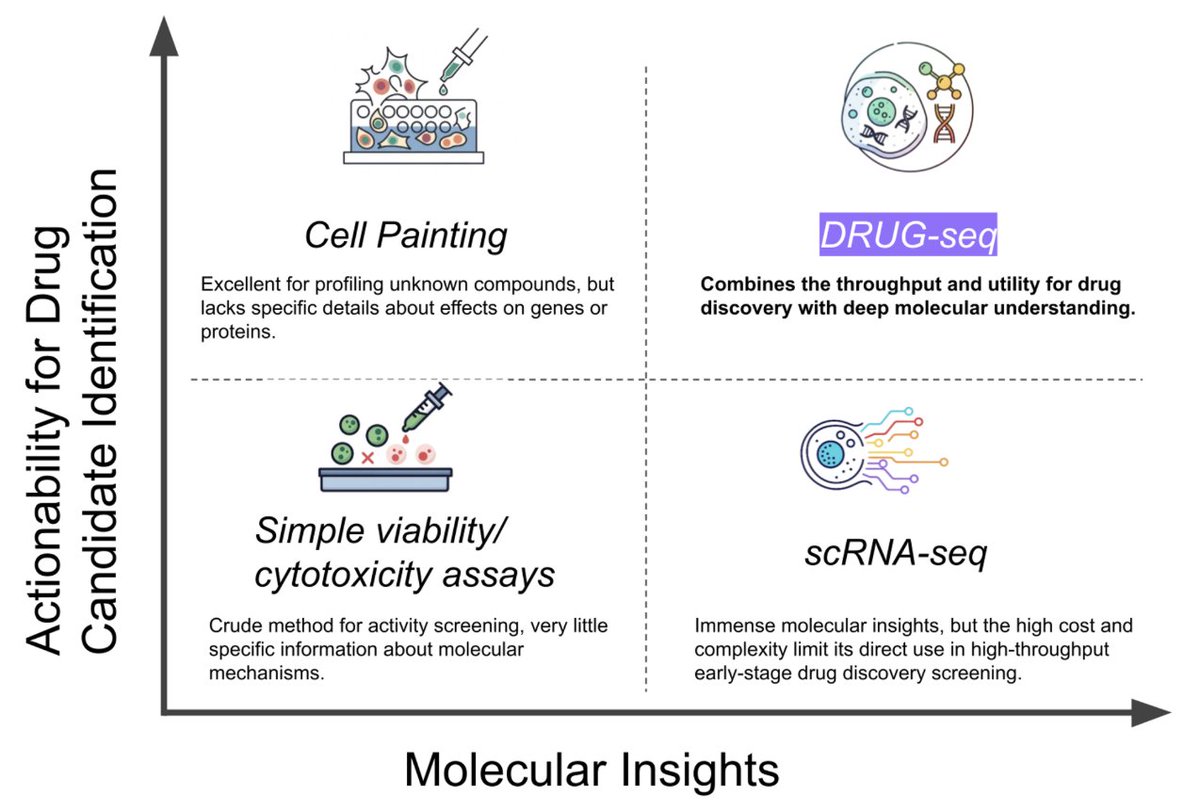
💊💊💊 @Ginkgo just dropped GDPx4 💊💊💊 29.9 MILLION rows of DRUG-seq data, perfect for benchmarking + large-scale perturbation modeling critical for anyone who can't afford their own high-throughput lab a little more in 🧵
Georgia Channing tweet media
English
2
56
321
28.1K
GuilleFix — k/acc | /dd ⏩
startup idea: any online service, but without captcha or with smarter captcha, such that all the agents prefer to use it
English
0
0
0
93
GuilleFix — k/acc | /dd ⏩
i feel like i wanna make a tribe doc: a micro-constitution for my closest tribe, which is also a family seed
English
0
0
0
79
GuilleFix — k/acc | /dd ⏩
btw this is exactly the gap that I think exists ok “marh-augmentation software” and definitely doesnt need to exist. The problem is that solving this requires extreme mastery of software+HCI and is only valuable to a really niche set of the population. But with the new tools that exist, may be time to retackle this.
Lim Yen Kheng@LimYenKheng

Sure you can "hold them apart" by hand with Mathematica/Maple as well. But I feel like that's a pain in the ass. But I do rely on Maple for intermediate steps 6/n

English
0
0
0
240