Halo CME

4.3K posts

Halo CME banner
Halo CME

Halo CME

@halocme

Solar physicist at LMSAL (alum UTkyAst). I believe space weather missions (for safe human space exploration) need a way higher investment than science missions.

Palo Alto, California Katılım Ekim 2013
978 Takip Edilen31.2K Takipçiler
Sabitlenmiş Tweet
Halo CME
Halo CME@halocme·
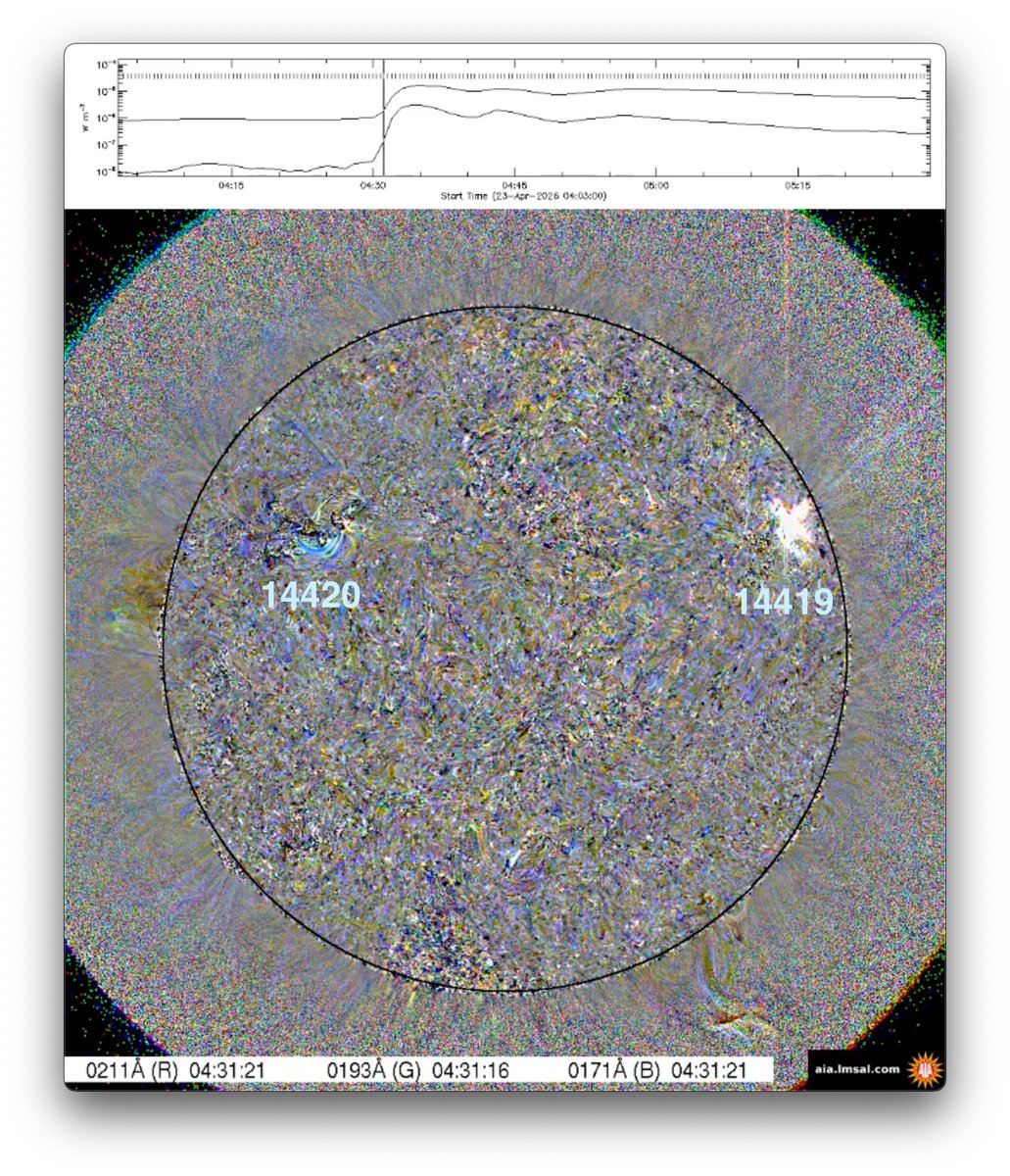
MOST POWERFUL FLARE IN SOLAR CYCLE 25. It was X9.0 in GOES X-ray measurement. It was quite eruptive, leaving a coronal wave. The eruption/CME seemed to result from magnetic reconnection rather than ideally from a pre-existing flux rope. It may come in less than 3 days.
English
125
1.9K
6.6K
846.4K
Halo CME
Halo CME@halocme·
@doktornihil I want to understand how a CME is "eaten by" the high speed stream, using realistic numerical models (which will continue to be the only way for us to understand the underlying processes).
English
1
0
2
100
Halo CME
Halo CME@halocme·
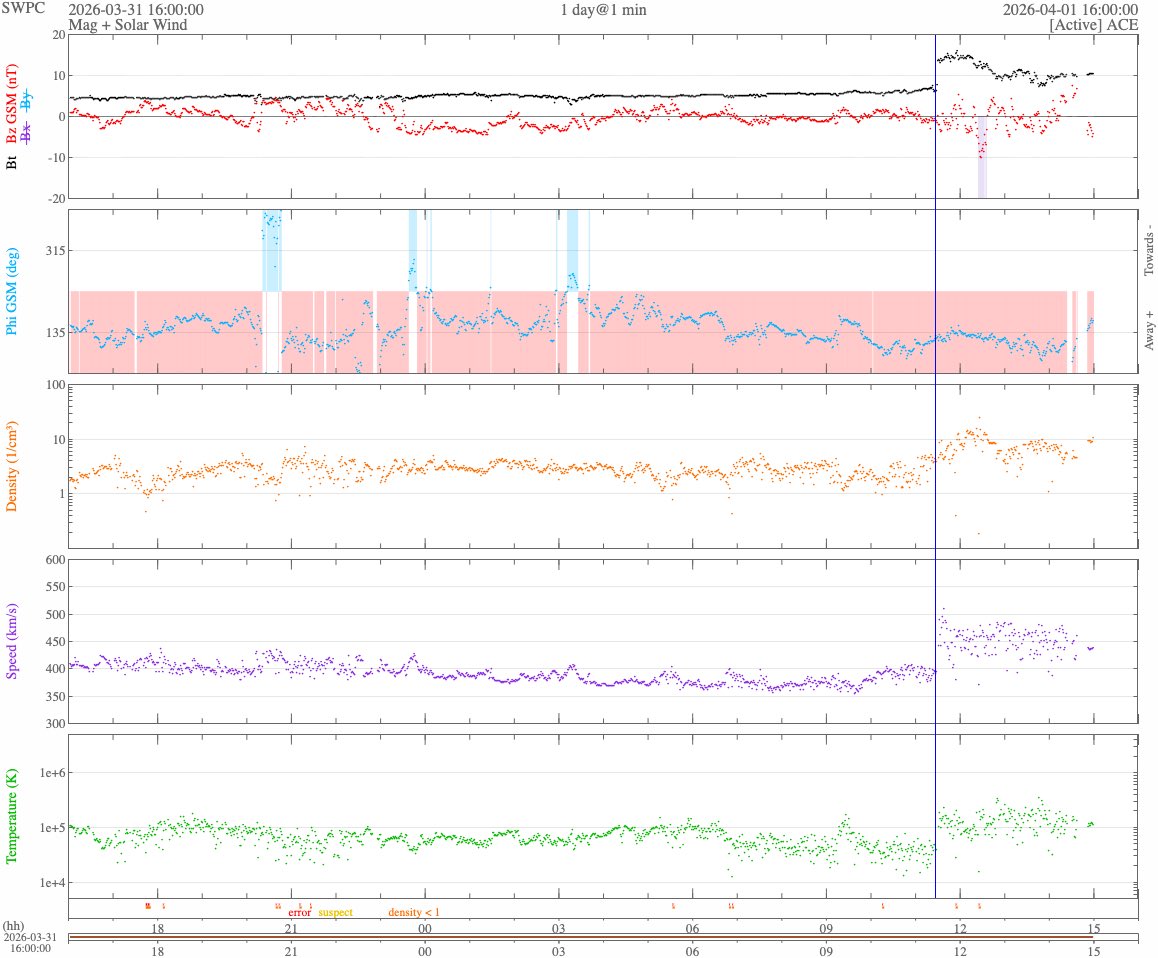
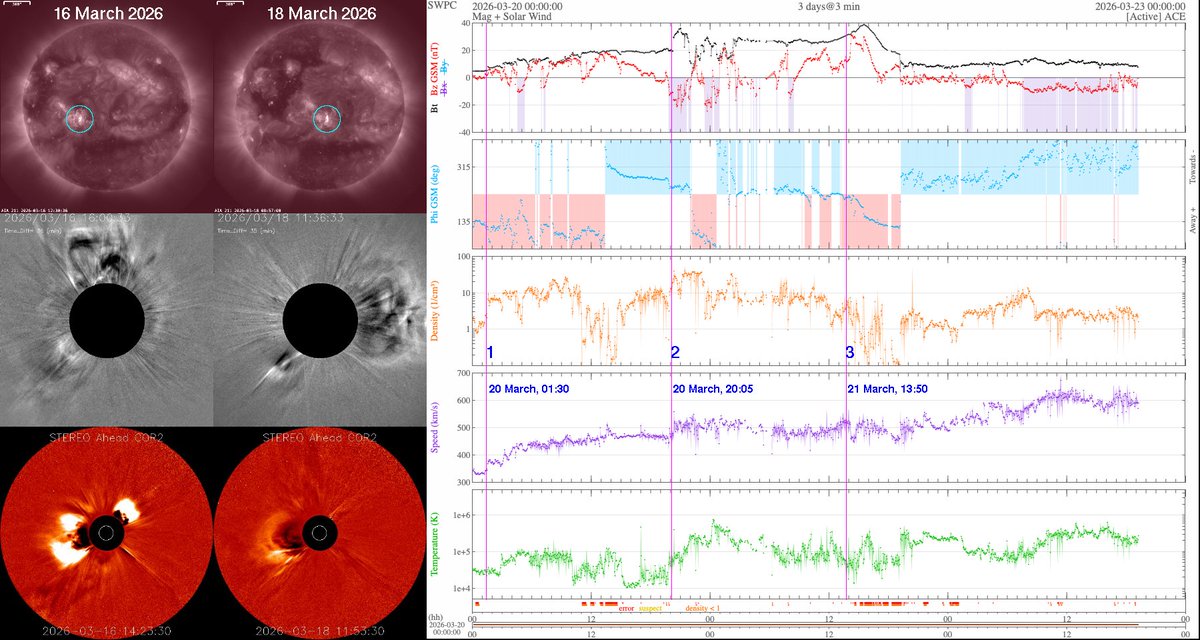
What happened to the recent promising CMEs? We saw a shock at ~20 UT on 03/20 (shaded in pink).  If this resulted from the 03/18 CME,  the 03/16CME left only the tiny increase at ~01:30 on 03/20 (blue line). I'd have expected it to arrive much earlier and to be more prominent...
Halo CME tweet media
Dr. Tamitha Skov@TamithaSkov

Fashionably Late! After being delayed in transit by the "legs" of a glancing solar storm blow, we are finally seeing hints that the expected solar storm may be arriving now! Originally forecasted to arrive on the 19th, STEREO-A HI imagery indicated it was moving slower than coronagraph imagery predicted. Aurora chasers get ready, the storm will likely intensify!

English
2
3
23
2K
Vincent Ledvina
Vincent Ledvina@Vincent_Ledvina·
@halocme Well, we are at G3 now so it worked out in the end I think 🤣
English
2
0
4
505
Halo CME
Halo CME@halocme·
Another eruption in AR 14392 associated with an M2.7 flare. The region is right in Earth strike zone, and we may expect the CME to arrive on March 21. This event was also characterized by a nice coronal wave, likely a shock wave that was responsible for a type II radio burst.
English
0
32
105
4.8K
Halo CME
Halo CME@halocme·
Thank you. But the gap between 09:48 and 15:00 makes it hard to find the possible CME from the eruption that took place around 12:00. Let's wait a little longer. GOES19 CCOR also does not seem to have many frames.
JMM716@MShil716

@halocme Just now, some frames are up!

English
6
8
41
3.8K
Halo CME
Halo CME@halocme·
A big eruption that occurred about four hours ago in AR 14392. As I wished yesterday, the region has evolved to a configuration that is conducive to the production of this nice coronal wave. Although coronagraph data are not yet lined up, Earth may be hit late on March 18.
English
6
87
228
30.9K
Halo CME
Halo CME@halocme·
I have not seen an explosive expansion producing a coronal wave since Feb 1. The latest M1.0 flare from AR 14392 may be hardly such an event. It was associated with an unimpressive CME. Hoping that the region gets further energized, I am posting this animation.
English
2
23
106
6.1K
Halo CME
Halo CME@halocme·
CMEs over the past 10 days. This period may be generally CME-poor, especially no halo CMEs associated with major solar flares. I was not highly motivated to tweet. There were two M2.4 flares near the limb, one (Feb 16) eruptive, another (Feb 25) not.
English
0
18
73
4K
Halo CME
Halo CME@halocme·
Shock arrival! As expected (with mild confidence), we confirm around 14:20 on 4 February a shock wave driven by the CME /X8.1 flare around midnight of 1-2 February (~62 hour transit time). I would think this is a glancing blow, not followed by a flux rope. But we will see..
Halo CME tweet media
Halo CME@halocme

The latest X8.1 flare was eruptive you might have expected. It was a big filament (cool material) eruption. It was also seen as a coronal wave. We need to wait for more coronagraph data to say if/when the associated CME will arrive, but it will probably on Feb 4.

English
0
18
97
5.7K
Halo CME
Halo CME@halocme·
The latest X8.1 flare was eruptive you might have expected. It was a big filament (cool material) eruption. It was also seen as a coronal wave. We need to wait for more coronagraph data to say if/when the associated CME will arrive, but it will probably on Feb 4.
English
32
493
2.1K
157.7K
Halo CME
Halo CME@halocme·
We have just had an X8.1 flare in AR 14366.  I will report later how eruptive this event is.
Halo CME tweet media
English
4
34
170
6.7K
Halo CME
Halo CME@halocme·
Solar orbiter is ~8° west of the Sun-Earth line and ~0.74 AU away from the Sun, i.e., close to Earth. It would be very interesting to compare the ICME signatures at L1 and Solar Orbiter.
Jessi Ferrari@silverstingray

@halocme

English
1
18
69
7.5K
Halo CME
Halo CME@halocme·
The proton spectrum is soft and the peak is around the time of the passage of the shock, i.e., this peak is an energetic storm particle (ESP) event. We may not expect the creation of a second radiation belt as was in the 1991 March event. Event list: ngdc.noaa.gov/stp/space-weat…
Halo CME@halocme

The X1.9 flare/CME has been an overachiever! It is responsible for the SEP event with the highest >10 MeV proton flux (3.7e4) since 1991-03-23, i.e., higher than the Bastille Day 2000 and Halloween 2003. Now G4 storm (Kp=8+) thanks to strong magnetic field and high wind speed.

English
1
22
91
8.9K
Halo CME
Halo CME@halocme·
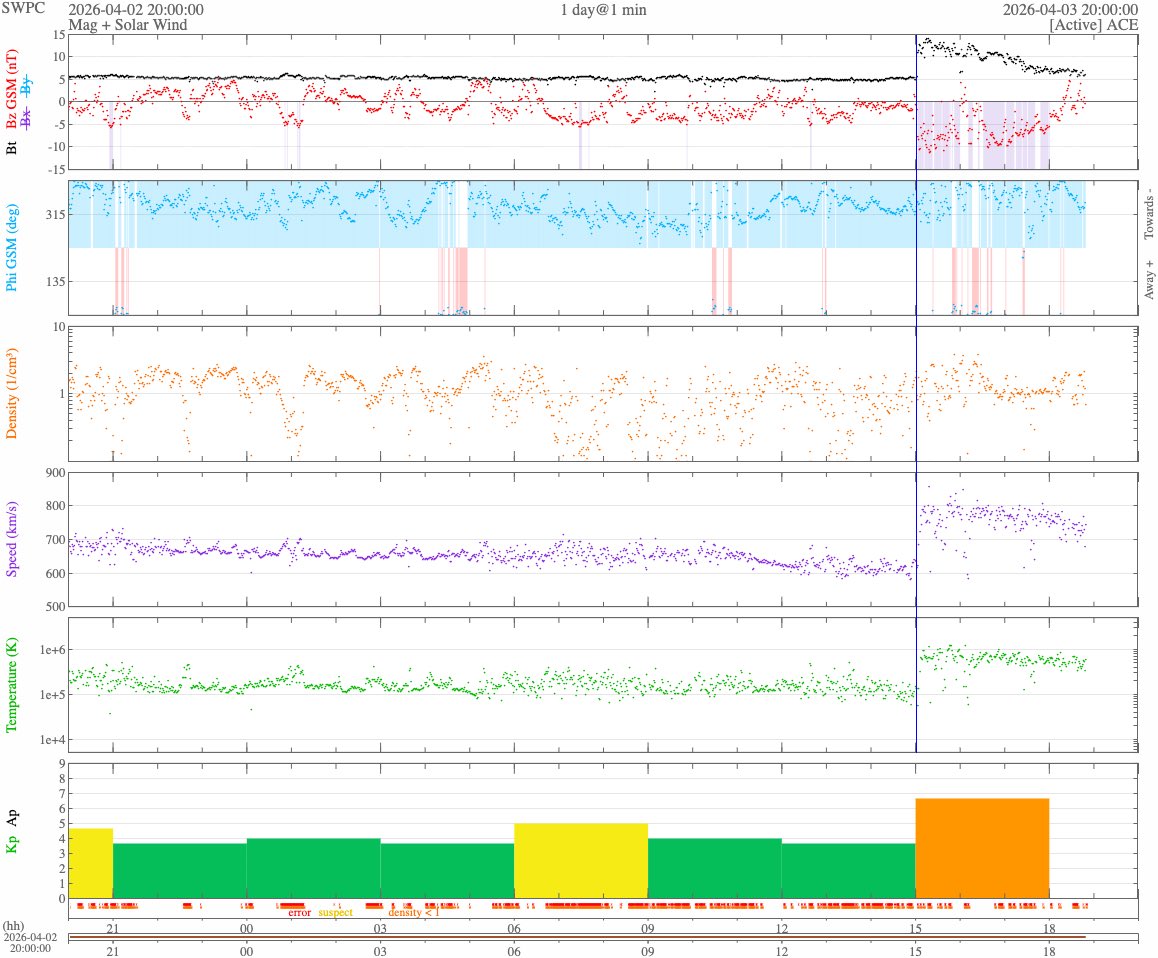
The X1.9 flare/CME has been an overachiever! It is responsible for the SEP event with the highest >10 MeV proton flux (3.7e4) since 1991-03-23, i.e., higher than the Bastille Day 2000 and Halloween 2003. Now G4 storm (Kp=8+) thanks to strong magnetic field and high wind speed.
Halo CME tweet media
English
1
59
211
17.3K
Halo CME
Halo CME@halocme·
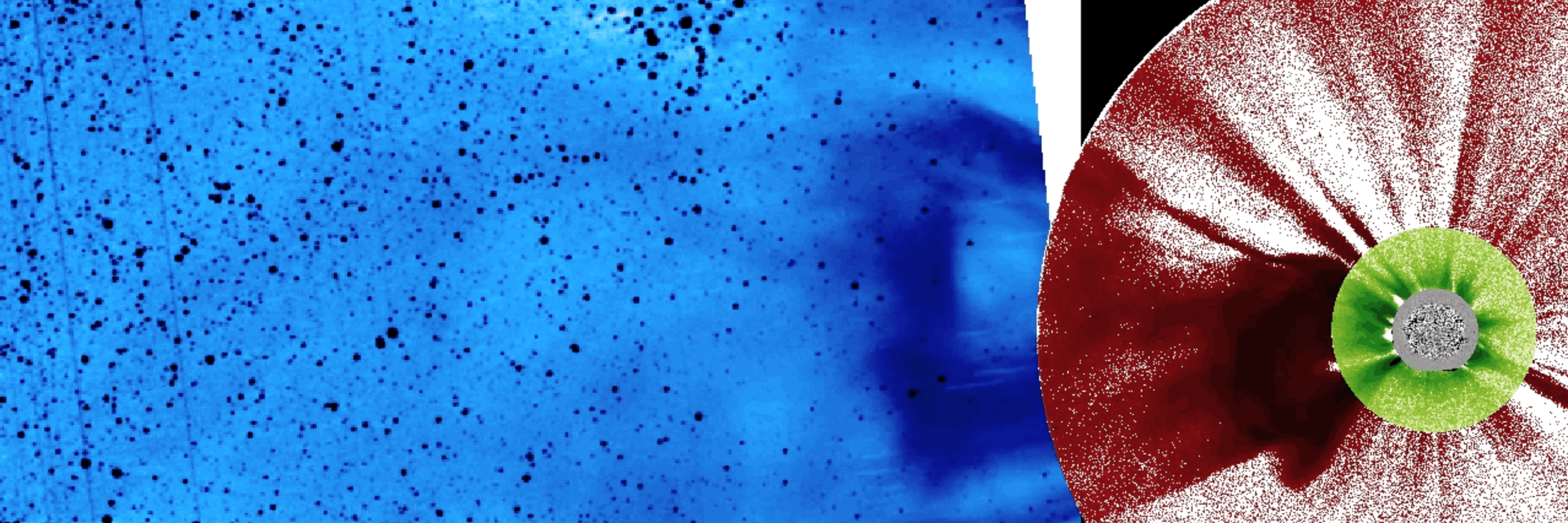
The shock wave driven by the CME associated with the X1.9 flare seems to have arrived. This is indicated by ACE magnetic field data, although the plasma data may not be trusted. The transit time to 1 AU was ~25.5 hours, not one of the fastest, but quite fast nonetheless.
Halo CME tweet media
Halo CME@halocme

X1.9 flare at 17:27 UTC on 2026-01-18. The associated CME produced a proton event of 40 pfu (so far), albeit of a soft spectrum. The CME may at least glance us early on Jan 21.

English
2
18
104
65.1K
Halo CME
Halo CME@halocme·
Yes, it is hard to tell. The >10 MeV proton flux exceeds the highest value (10^4) of the y-axis. @NWSWPC needs to update the graphic.
Gabe_Z@GabezWX

@halocme Actually, 14400 now haha!

English
4
5
53
5.5K
Halo CME
Halo CME@halocme·
Amazing! The halo CME associated with yesterday's X1.9 flare in AR 14341 produces the largest SEP event in cycle 25 in terms of >10 MeV protons by GOES (1.19x10^4 pfu at 18:30). The soft spectrum implies their production not too close to the Sun.
Halo CME tweet media
English
1
23
121
11.3K
Halo CME
Halo CME@halocme·
This is a close-up view of the X1.9 eruptive flare from yesterday. It overlays AIA 304 Å images on HMI line-of-sight magnetograms, showing where the eruption started and how and in which directions it spreads.
English
1
29
103
3K