

hanut singh
1.4K posts
hanut singh
@hanut101
U BETTAH WERQ!
new delhi, india Katılım Haziran 2009
147 Takip Edilen302 Takipçiler

The Graydon Carter is delightful - I forgot that magazines could be irreverent and that the irreverence was its purpose. Can’t think of too many publications now anywhere in the world that does that
English
hanut singh retweetledi

Here is the full video of Meryl Streep’s glorious acceptance speech for her honorary Palme d’Or at #Cannes2024.
English
hanut singh retweetledi

@typingvanara @anupamachopra Must reread… tremendous book…soul shaking.
English

I've recently felt the desire to re-read One Hundred Years of Solitude. And as I read the first page, I remembered the electric, shattering effect that this novel had on me when I first read it. Thread below, and a new year's wish...
English
hanut singh retweetledi
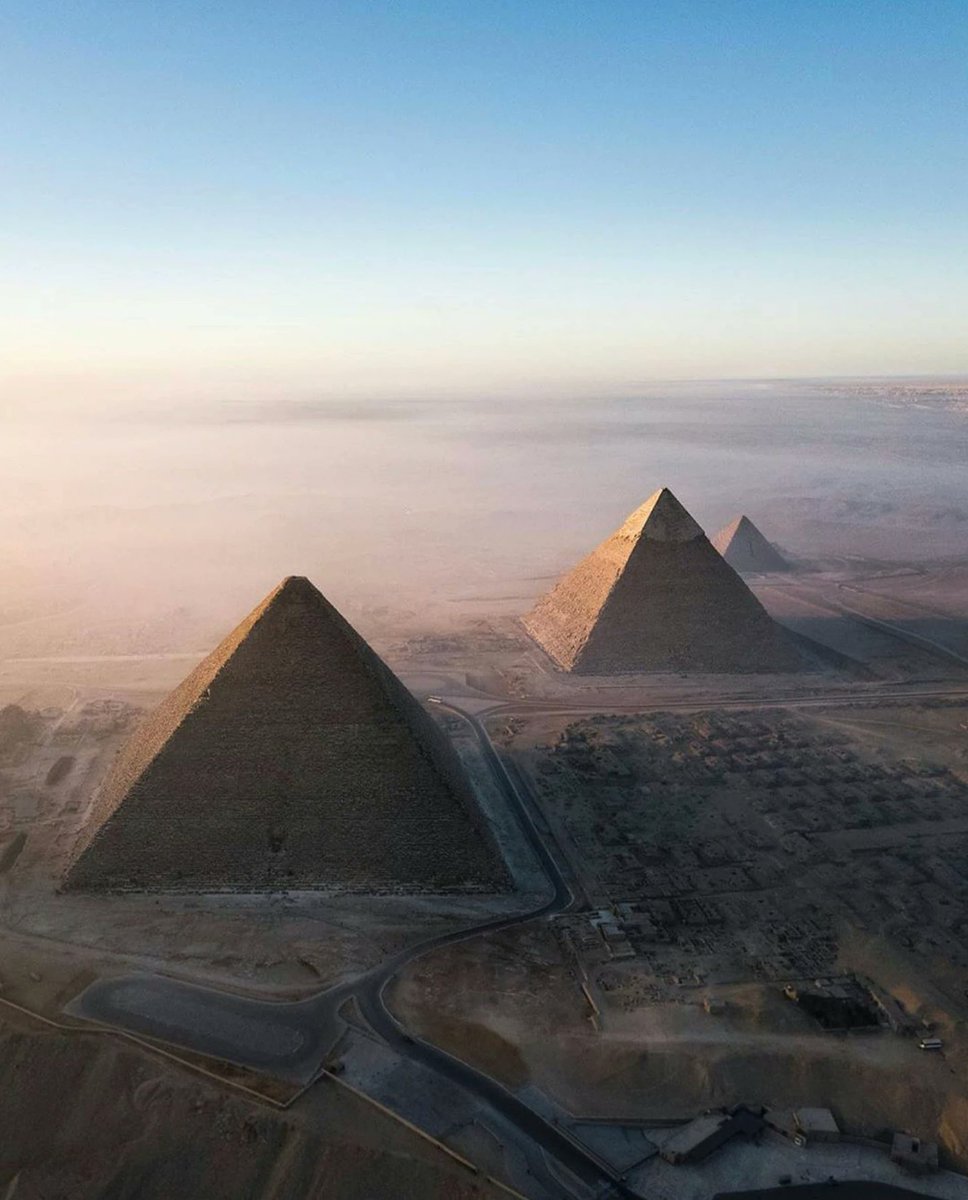
We're so used to seeing and hearing about the pyramids that it's easy to forget how strange and extraordinary they really are.
So, just to remind you:
When woolly mammoths went extinct the Pyramids of Giza were already more than 500 years old.
Cleopatra and Julius Caesar are closer in time to the present day — to the Burj Khalifa — than to the construction of the Pyramids of Giza.
Where are they and who built them?
There are three pyramids on the Giza Plateau, which is on the west bank of the River Nile, in northern Egypt. They aren't far from Memphis, which was the capital of Ancient Egypt when they were constructed.
The largest and oldest was built in less than thirty years around 2570 BC for the Pharaoh Khufu. The second was built for Khufu's son, Khafre, and is only a few metres shorter. The third and smallest was then built for Menkaure, Khafre's son. Three monumental tombs for three generations of the same family.
Nearby are many more tombs for various members of the royal court, the Sphinx, several more temples, and the remains of a sort of workers' town including houses, workshops, bakeries, kitchens, breweries, a hospital, and a necropolis.
Khufu's Pyramid, known as the Great Pyramid, was the tallest building in the world for over 3,800 years — that is, until the spire of Lincoln Cathedral in England was constructed in 1311.
And at more than 6 million tonnes it was the heaviest manmade structure ever built, and is still third behind only the Great Wall of China and the Three Gorges Dam.
The mortar used in constructing the Great Pyramid alone weighs over half a million tons, which is more than the total weight of the Burj Khalifa.
See, the Great Pyramid is almost entirely solid — there are only a few narrow shafts and three small chambers inside. It was largely built from huge blocks of local Giza limestone, although its exterior was once covered in polished white limestone transported there from nearby Tura, and its interior includes blocks of granite weighing up to 80 tonnes transported from Aswan, over 500 miles away.
The *precision* of the pyramids is also remarkable. On a technical level their masonry is astonishingly accurate, but even more amazing is that the four sides of the Great Pyramid are all almost exactly the same length — they have a variation of no more than 60 millimetres.
Not to forget that all three pyramids are aligned according to the points of the compass — within one tenth of a degree of perfect geographical accuracy.
And if these facts weren't impressive enough, the actual construction of the pyramids — the specifics of how the blocks were quarried, transported, and lifted into place — remains a marvel we have yet to fully understand.
But those are merely the facts of the Pyramids of Giza; perhaps more interesting is what they really mean.
After all, you can learn a lot about any society from its architecture. What we say about ourselves can rarely be trusted — but what we do and what we leave behind is always truthful. In other words, that which we build expresses our priorities, how our society works, and who has the most power.
Think of it this way: what are the biggest buildings in the modern world?
By volume it is factories (the Boeing Everett Factory is number one right now) and distribution centres.
By total floor space it is airports and malls.
By height it is mixed-used skyscrapers, though they are usually dominated by offices, especially relating to finance. The Pentagon was the world's largest office building until this year; it has been overtaken by the Surat Diamond Bourse in India.
By capacity? Well, there are sports stadiums, the biggest of which is the Narendra Modi Stadium in India, with an official capacity of 132,000. That being said, no single complex can hold a greater number of people than the Masjid al-Haram in Mecca, which has a capacity of 4 million.
So the largest buildings in the 21st century are almost all related to industry, finance, retail, transport, and leisure — with religious worship something of an outlier. This is a technologically advanced, industrial, highly consumerist society in which businesses hold a great deal of power, and in which the wants and demands of the public are very important.
For comparison, during the Middle Ages nothing came remotely close to cathedrals in size or complexity, though castles and fortresses were also far bigger than everything else. We can draw the basic conclusion that religion was of immense and central importance, that the church as an institution was very wealthy, and that power was actually spread out among the hereditary nobility rather than being entirely concentrated in the monarch alone, not to mention the political and spiritual power also held by the church.
So, what about the Pyramids?
The Ancient Greek historian Herodotus remarked that the Pyramids of Giza were proof of how tyrannical a ruler Khufu — or Cheops, as the Greeks called him — must have been. In his native Greece the largest buildings were temples for public worship; the Great Pyramid was a monument to but one man alone, and this shocked Herodotus.
The biggest buildings of the 21st century are all useful. They have a clear and immediate purpose, and usually one which benefits — in some sense — lots of people. A factory produces things we all use, a distribution centre organises our online shopping, an office is a place of work, and a stadium is where we go for entertainment. Our largest buildings are intimately and inseparably related to employment and consumption.
What about the Pyramids? They were tombs for the Pharaohs and they were supposed to last forever. In other words, they had no immediate use or purpose, at least for the living. They served only one person: the Pharaoh — plus his family and closest supporters, though they were buried nearby rather than inside — in his journey through the Afterlife.
So this is not the same as a large and lavish royal or presidential palace; such buildings are designed to be used as a seat of power and administration — by several succeeding generations or leaders.
Meanwhile, all the resources and labour that went into building the Pyramids, which were literally manmade mountains, were for the benefit of one Pharaoh alone, after his life had ended — and, to a lesser extent, those lucky enough to have been buried nearby at the time.
Does that mean Khufu and his descendants were tyrants? In some sense, yes. But there is evidence that those who built the Pyramids were not, as Herodotus thought, slaves, and were instead closer to conscripted workers and freely employed craftsmen who were fairly remunerated for their labour.
See, it wasn't just that Khufu held total political power; he was also the spiritual leader of his subjects, such that their work was fundamentally religious in nature — it might have even helped them achieve a better afterlife.
There was nobody who could refuse Khufu's desire to build the largest tomb in human history, because he was a divinely appointed intermediary between gods and humans; no regulation to stop him, because his will was the law; no limits to his expenditure, because he collected the taxes and owned all the land in the kingdom.
However powerful the world's richest and most influential people might now seem, none of it compares to the power wielded by Pharaohs like Khufu; a power that was political, financial, legal, military, and spiritual — absolute.
And so the Pyramids are a glimpse into a society fundamentally and almost irreconcilably different from that in which we now live, to the earliest epochs of human civilisation, long before democracy and the rule of law, when one man could rule as a god and have mountains built to serve as his personal, eternal monument on earth.
English
@ukcmo @pushkardhami @OfficeofDhami massive breaks in roads outside our home. This has been going on for years. Not ok. Whats going on? Why such a breakdown of civic duties. Help. Urgent.
English
@ganeshjoshibjp pls help. Roads outside my home are terrrrrrrrrible. This is very unfair on citizens here. Pls come and see. URGENT. Its the duty of the government to see to this. 🙏
English
@pushkardhami dear sir- we have had a home in mussoorie for 4 generations. The roads are such a mess its awful. No civic help- this is URGENT. Pls send someone to look asap. How can it reach this state.
English
Complete mess- mussoorie…the hills are heaving, traffic is insane, and soon we will see the hills collapse because of negligence. Roads are unnavigable. Pls help @BJP4India @narendramodi @nitin_gadkari @ganeshjoshibjp @PMOIndia
English
Infrastructure a mess in mussoorie. Roads in shambles. Very distressing for residents. @OfficeOfNG @nitin_gadkari @PMOIndia four generation’s we have loved here. Its a mess. Help.
English
Absolutely ridiculously bad roads in mussoorie. Dear Pm @narendramodi @bjputtarakhand @nitin_gadkari @OfficeOfNG we are tax paying citizens who face terrible infrastructure issues in mussoorie in a home we have lovingly had and looked after for four generations. Roads a MESS.
English
hanut singh retweetledi

Britney Spears and Madonna dancing Like a Virgin at Britney’s Wedding
English
hanut singh retweetledi

hanut singh retweetledi


English
Roberto Calasso has died : a wonderful writer who truly loved india and a great publisher. I used to love hanging out with him as a young editor, he was such good company.
English

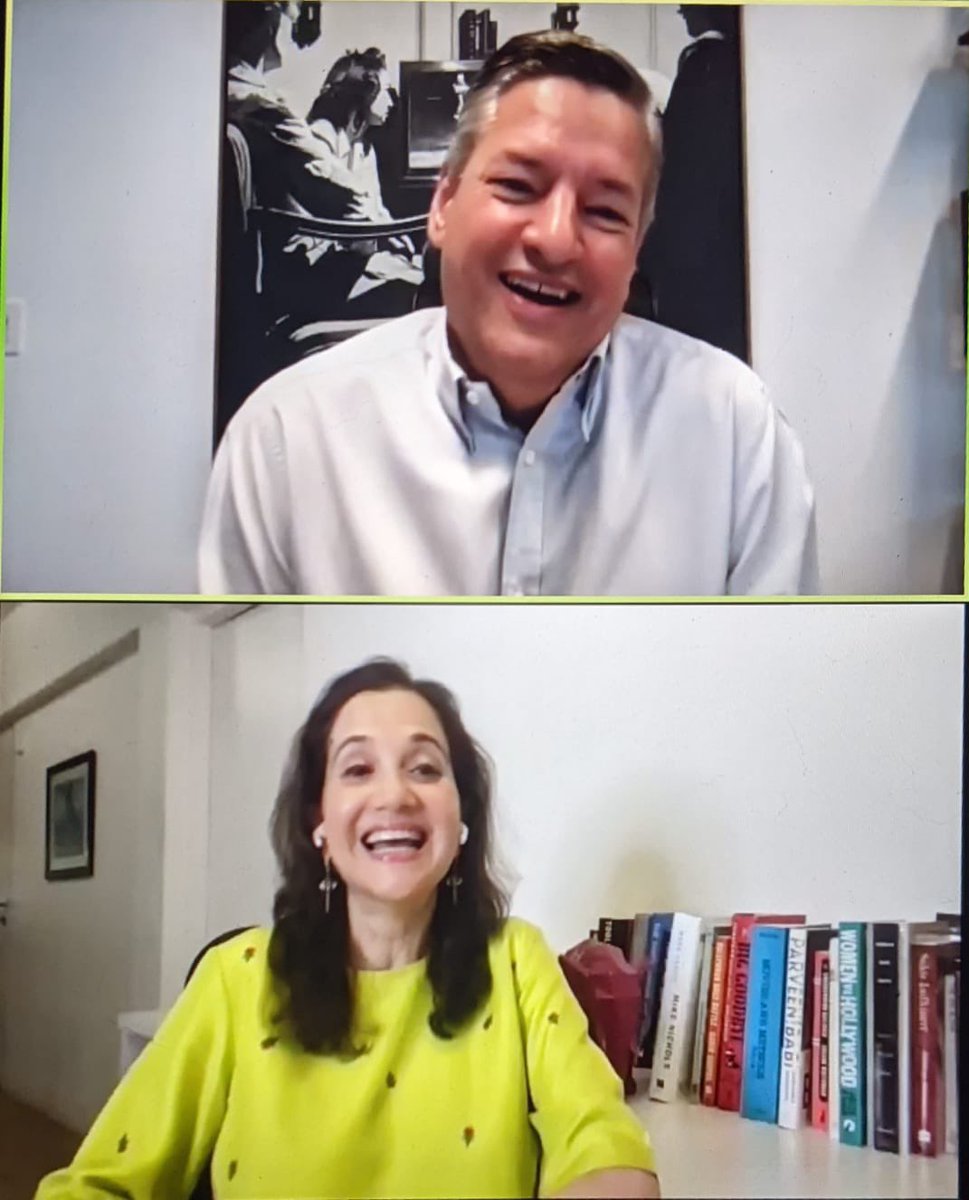
#TedSarandos makes being a studio head look easy! Loved chatting with him on #FrontRow - about his creative instincts, the churn at @NetflixIndia, people pitching him stories in strange places & the fraught relationship with @Festival_Cannes! I hope we can do this in person soon!
English



hanut singh retweetledi

#BedtimeStory 15-track EP featuring 13 remixes, an edit version and #Survival is available on all digital platforms today! open.spotify.com/album/6A1Yzf6A… #LetsGetUnconscious

English