HASHMI

2.1K posts

HASHMI banner
HASHMI

HASHMI

@hashmi1818

Here to Contribute in Web3

Katılım Mayıs 2024
317 Takip Edilen185 Takipçiler
Sabitlenmiş Tweet
HASHMI
HASHMI@hashmi1818·
Privacy isn’t a luxury anymore — it’s a necessity. 🔒 Meet @ConfidentialLyr the bridge to the future of blockchain privacy. 🧵 This is just the beginning — let’s dive in 👇
English
9
3
22
721
KuCoin Web3 Wallet
KuCoin Web3 Wallet@KuCoin_Web3·
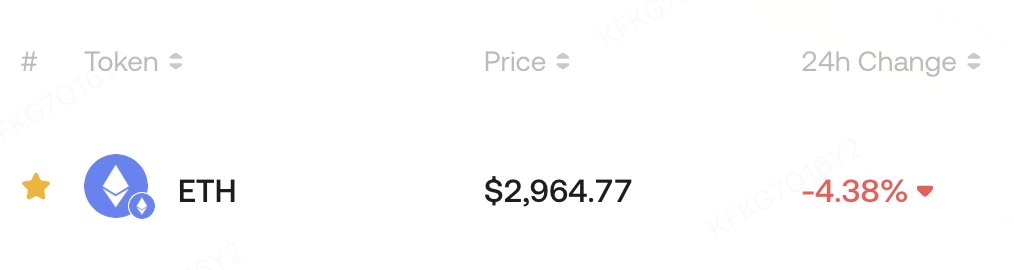
If $ETH hits $3,500 before January ends, we're giving 1 ETH to 1 follower Just follow @KuCoin_Web3 & engage with this post to qualify #GIVEAWAY
KuCoin Web3 Wallet tweet media
English
777
341
887
60.5K
Alpha Bridge
Alpha Bridge@Web3Alphabridge·
We're Hiring 🚨 12 Mini Kols $150/week 8 raiders $50/week if you're interested ~Comment your telegram Handle ~Like & Retweet ~Tag 3 Friends ~ join👇, we are selecting in t.me/+P01egEBEavtiO… Send your comment link👆 Selections in 48 hours🔥
Alpha Bridge tweet media
English
658
234
806
38.4K
MATK!NG`$™ 👑 ♣️
MATK!NG`$™ 👑 ♣️@MATHEW_KINZY·
Mobile money already runs everyday economies. Blockchain just wasn’t part of that flow, until now. By plugging into platforms people already trust, @ADIChain_ turns on stablecoins, cross-border payments, and onchain services where banks never reached. This isn’t blockchain as an experiment anymore. It’s blockchain as infrastructure. When systems at this scale make that shift, mainstream adoption stops being a theory and starts being a process.
MATK!NG`$™ 👑 ♣️@MATHEW_KINZY

Millions use mobile money every day. Almost none of it happens onchain. And this holds huge potential for emerging markets. With @ADIChain_ recent partnership, @MPESAAfrica will be adding blockchain support through ADI Chain's modular infrastructure. This opens up stablecoin access, cross-border payments, and onchain financial services for users and small businesses in places where traditional banking has no reach. A clear step toward mainstream adoption. When services process transactions on the network, they rely on $ADI as the utility token that supports the underlying operations and settlement. It's designed to power the needs of entire economies that serve nations worldwide, and the apps built on top of them. The bigger signal is the global mindset shift. For years, platforms at this scale treated blockchain as something for experiments and pilots, not for real world use cases. Now they are choosing it as core infrastructure that can plug into the systems they already run. The next wave of digital finance is happening now, and @ADIChain_ is built to lead it.

English
41
1
45
271
Web3 Sammie ⚡
Web3 Sammie ⚡@Web3sammie_·
🎉 @Gate Launchpad is back with Phase 6: ImmuneFi ($IMU)! ⏳ Only 3 days left to subscribe. 212M+ $IMU are up for grabs at $0.01177 each. 🔹 Subscribe with USD1 or $GUSD 🔹 100% token unlock no waiting 🔹 Early subscribers get more $IMU 🔹 Earn up to 200% APR on USD1 Simple Earn for new subscribers 📅 Jan 19, 08:00 – Jan 21, 08:00 (UTC) Don’t miss your chance to get in early! 👉 Launchpad: gate.com/launchpad/2374 👉 Simple Earn: gate.com/simple-earn?as…
Web3 Sammie ⚡ tweet media
English
36
0
38
1.1K
ユヴァ
ユヴァ@yuvayaps·
Creative block is something everyone experiences. One minute you're brimming with ideas, the next it's a blank screen. When that happens, I click on 'Explore dApp Ideas' and start modifying what appears on the screen. There's no pressure to be original momentum is key. Sometimes you don't need a grand vision. You just need to build and ship something, and the ideas will follow. @CodeXero_xyz powered by @ClusterProtocol
ユヴァ tweet media
English
39
1
44
132
BunnyCryptΞ
BunnyCryptΞ@0xFrimp·
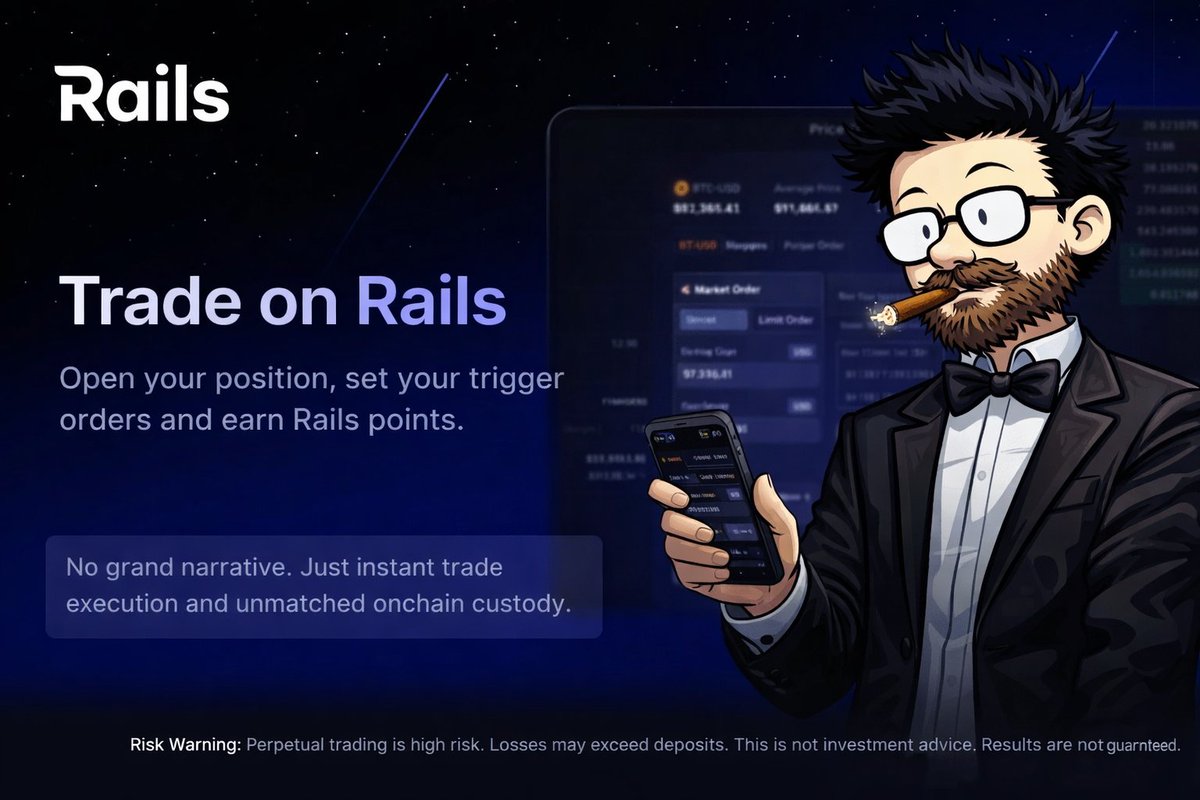
After trading perps across different platforms, one risk keeps showing up. Too much dependence on a single centralized exchange. When custody, execution, and withdrawals all sit in one place, you are exposed to more than just market risk. @rails_xyz reduces that dependency by changing how the system is built. Execution is fast and offchain, but custody and settlement happen onchain. That split matters. Your funds are not fully controlled by one company, and balances can be verified outside the platform itself. This setup also improves transparency. On most centralized perp platforms, you trust internal systems you cannot see. With Rails, key parts of the trading flow are anchored onchain, which makes the platform easier to trust without relying on promises. What stands out to me is how this shifts control back toward the trader. You still get the speed and liquidity you expect, but without handing over full custody. That reduces platform risk and makes exits clearer and more predictable. Rails does not remove risk from trading. Nothing does. But by reducing dependence on a single centralized operator, it makes perpetual trading feel more resilient and better aligned with how crypto was meant to work.
BunnyCryptΞ tweet media
BunnyCryptΞ@0xFrimp

I have been paying close attention to the upcoming @rails_xyz SDK because it says a lot about how serious the team is about builders. When a trading platform opens itself up to developers, it is making a long term commitment. You are no longer just shipping a product. You are inviting others to build on top of your decisions. What stands out to me is that the SDK is not positioned as an experiment. It is clearly meant to expose the same hybrid infrastructure that powers the core Rails trading experience. That matters. Developers are not getting a watered down sandbox. They are getting access to real execution logic, onchain settlement flows, and account systems that already work at scale. From a builder perspective, this lowers friction. You do not have to reinvent custody models or worry about performance tradeoffs. The heavy lifting is already done. You can focus on strategy tools, analytics, automation, or new user experiences. That is usually where real innovation happens. I also like that @rails_xyz seems to be thinking about documentation early. Good docs are a signal of respect for developers time. When an SDK is clear and predictable, it attracts people who want to ship production software, not just hack together proofs of concept. The developer ecosystem is where platforms either grow or stall. If Rails supports third party apps, bots, dashboards, and institutional tooling from day one, it creates natural network effects. Builders bring users. Users bring liquidity. Liquidity brings more builders. That loop is hard to fake and even harder to rush. When the Rails SDK goes live, I see it as the start of that loop. Not a flashy announcement, but a practical step toward making Rails more than just a trading venue. If they keep execution fast, custody transparent, and developer access clean, the ecosystem should grow in a way that feels organic and sustainable.


English
113
1
117
1.2K
Omooba Deshi
Omooba Deshi@GreatDeshi·
A lot of DeFi innovation focuses on where assets live. @MultichainZ_ focuses on how they work. When collateral can earn yield, support loans, and move across chains without friction, capital stops being boxed in by networks. It starts behaving like a shared resource. That mindset shift is subtle, but it’s the kind that unlocks more efficient markets over time.
Omooba Deshi tweet media
SCA Media@sca_press

Tokenization unlocked the first step: put real assets onchain, make them tradeable 24/7, cut out the middlemen. But most tokenized assets just... sit there. RWAs in your wallet doing exactly what they did off-chain: nothing. Owning a token isn't the endgame. Using it is. @MultichainZ_ actually makes tokenized assets work for you. That tokenized treasury bill? Collateral for a loan on Base. Your wrapped real estate token? Earning yield on Arbitrum while backing credit on Optimism. Same asset. Multiple jobs. Zero fragmentation. Because what's the point of bringing trillions onchain if they're just going to collect dust in a different format? Tokenization without composability is just paperwork with extra steps. We're building the layer that makes those assets as flexible as they should've been from day one supply, borrow, move, all without touching your original position. RWAs deserve better than being digital collectibles. Time to put them to work. @MultichainZ

English
82
1
72
227
Vecna
Vecna@hi_vecna·
I Don't Have @zama OG NFT But! I Take High Risk⚠️ I’ve put $2,000 on @Polymarket behind Zama because I genuinely believe in what this team is building. Zama isn’t just another crypto project it’s deep research, real cryptography, and a long-term vision for privacy via FHE. Building foundational tech is hard. It takes time, patience, and belief. And from everything I’ve seen so far, the Zama team is doing it the right way. This isn’t about short-term noise for me. It’s about backing builders who are pushing the space forward.
Vecna tweet media
English
42
2
39
62.8K
caominhweb3
caominhweb3@CaoMinhWeb3·
Meme markets reward claim-dump cycles; real traders need instruments, not handouts. @MemeMax_Fi flips the script: leverage makes $100 act like $1,000, and MaxPack rewards only unlock through actual trading. To unlock a $100 pack you need real volume, scale to 20 packs and you’re targeting around $1k in fees. It aligns risk with reward and keeps participants active, not mercenary If $M and MemeMax nail the pre-news layer on Solana, perp memes become a game you can learn! Now I'm waiting to see what MemeMax's next steps will be.
caominhweb3 tweet media
English
131
1
105
321
Ryo
Ryo@0xRyo_·
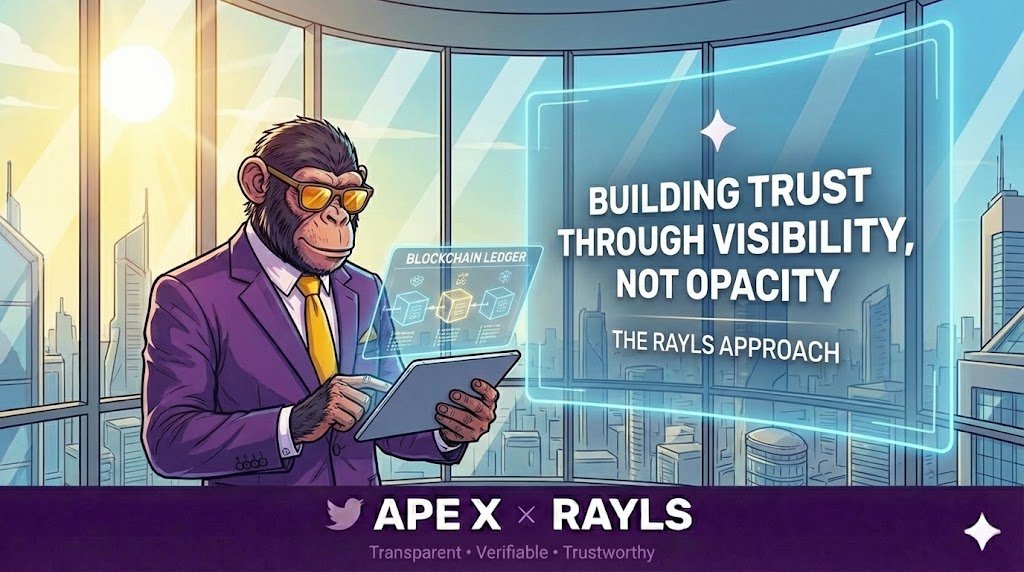
DeFi matures when institutions can reason about outcomes. Not when they’re forced to trust them. @RaylsLabs This image reflects the shift from experimentation to production. Institutions don’t deploy capital into uncertainty. Rayls ensures execution and settlement are deterministic, observable, and verifiable — without exposing sensitive data. Why this matters 👇 • Predictable execution paths • Clear settlement guarantees • Reduced counterparty risk • Confidence for large-scale deployment Maturity isn’t speed. It’s certainty.
Ryo tweet media
Ryo@0xRyo_

DeFi becomes institutional when rules move on-chain. Not when they’re ignored. @RaylsLabs This image highlights a critical shift in market design. Compliance no longer sits outside execution. Rayls embeds regulatory logic directly into transaction flows, making institutional DeFi possible without operational workarounds. Why this matters 👇 • Compliance enforced at execution time • Reduced reliance on post-trade controls • Lower operational risk • Infrastructure aligned with regulatory expectations Real adoption doesn’t bypass rules. It encodes them.

English
39
0
37
120
APE X
APE X@0xApe_x·
Institutional DeFi isn’t about permissionless access. It’s about governed participation. @RaylsLabs This image captures how institutions actually enter decentralized markets. Access is controlled. Rules are explicit. Outcomes are enforceable. Rayls provides a framework where identity, permissions, and compliance are native to execution making DeFi usable at institutional scale. Why this matters 👇 • Identity-bound participation • Policy enforcement at execution • Reduced operational ambiguity • Infrastructure aligned with regulatory standards Adoption begins when participation is governed.
APE X tweet media
APE X@0xApe_x

Institutional DeFi isn’t about moving faster. It’s about moving correctly. @RaylsLabsThis image highlights why speed alone doesn’t unlock adoption. Correctness, compliance, and certainty do.Rayls delivers infrastructure where institutional requirements are met without slowing innovation.Why this matters 👇 • Execution aligned with institutional mandates • Deterministic settlement • Reduced compliance friction • Confidence to deploy real capitalAdoption doesn’t follow hype. It follows correctness.


English
38
1
38
149
Chidinma | 𝔽rAI
Chidinma | 𝔽rAI@Chidinm36634969·
The market is quietly changing its rules. Distribution is starting to carry more weight than raw hype. With @c8ntinuum now holding a market cap north of $500M, that shift is becoming impossible to ignore. The same setup is unfolding across @intodotspace, @helios_layer1, and @TauntCoin different products, same underlying reality: infrastructure and real utility are being valued ahead of short-lived narratives. This kind of valuation only appears once networks secure a clear role within the broader stack and are priced for the function they actually serve.
Chidinma | 𝔽rAI tweet media
English
53
1
49
19.4K
Spectra
Spectra@_0xSpectra_·
Institutions don’t fail because they lack innovation. They fail because systems become impossible to reason about. When state is unclear, risk grows silently. Rayls keeps systems legible every action, every outcome, @RaylsLabs
Spectra tweet media
Spectra@_0xSpectra_

Power isn’t belief. It’s institutional confidence. @RaylsLabs This image captures the difference between interest and commitment. Confidence turns pilots into production. Rayls provides the certainty institutions need to move from testing to real deployment.

English
39
1
36
165
REN
REN@_0xREN_·
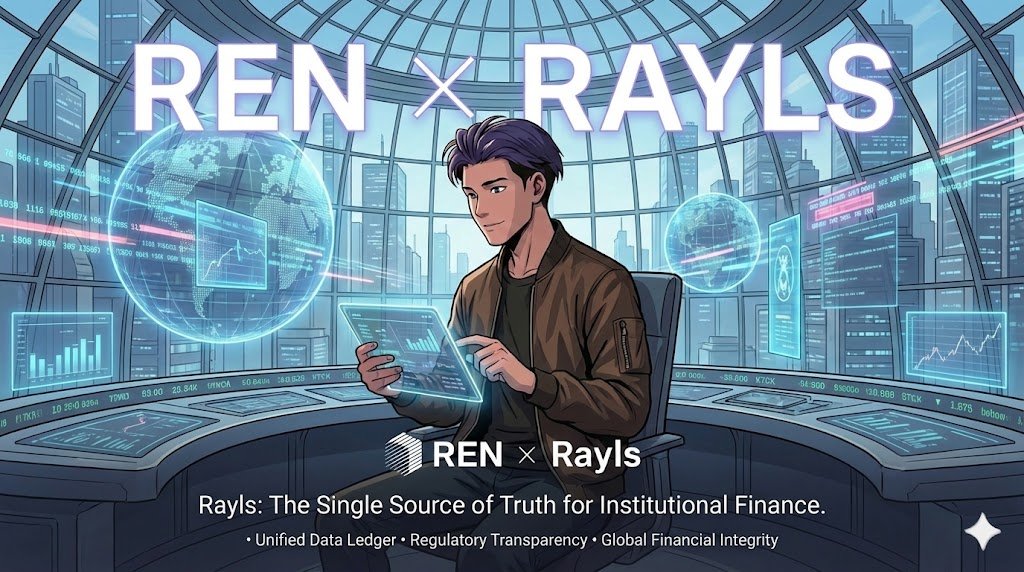
Freedom in financial systems doesn’t come from removing constraints. It comes from defining them clearly. Rayls treats constraints as infrastructure. Permissions, controls, and policies are enforced at execution, not negotiated after the fact. @RaylsLabs
REN tweet media
REN@_0xREN_

Power isn’t constant change. It’s continuity through change. @RaylsLabs This image represents systems that remain dependable as markets evolve. Rules shift. Volumes change. Participants rotate. Rayls maintains consistent execution and compliance even as conditions adapt.

English
44
1
43
180
Edge
Edge@0xskr_·
New to onchain AI? Here’s a simple way to understand the Milestone Trio. Perceptron (@PerceptronNTWK) focuses on democratizing AI data, letting users contribute bandwidth or signals to create verifiable datasets and earn fair rewards. Helios (@helios_layer1) is a Layer 1 built for structured finance, combining diversified staking with automated strategies like portfolio balancing and DCA. C8ntinuum (@c8ntinuum) operates at the liquidity layer, allowing native multichain transfers while recycling yield to strengthen its ecosystem. Exploring their campaigns on Mindo (@MindoAI) is a hands-on way to learn while earning.
Edge tweet media
English
43
1
40
133
A L E X A KING
A L E X A KING@alexa_eth_·
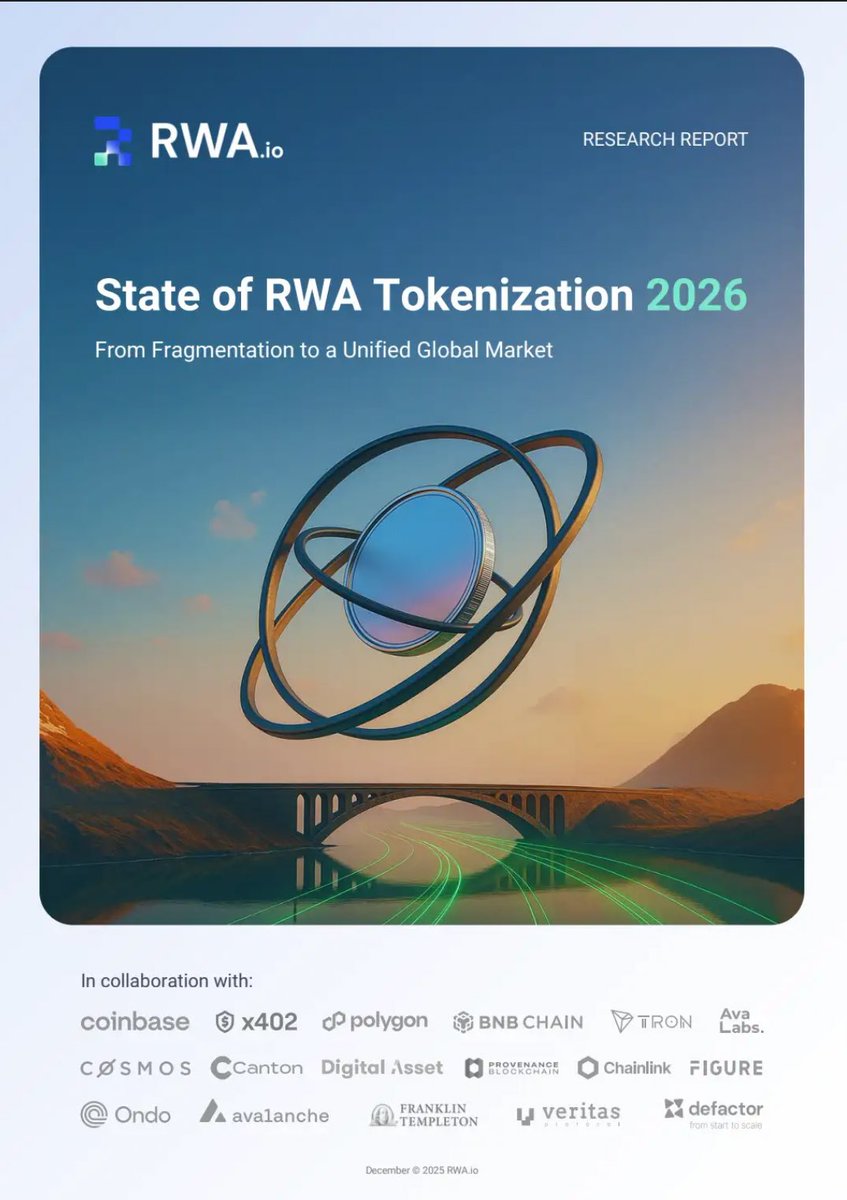
Just Read docs State of RWA Tokenization 2026 of @MultichainZ_ So what I see let’s understand Fragmentation isn’t just a UX problem It’s a hidden tax on yield RWAs bleed value through price inefficiencies, cross-chain friction, and trapped liquidity long before risk even shows up The real bottleneck isn’t asset quality it’s how capital moves Unified lending + borrowing isn’t a feature It’s the difference between RWAs existing and RWAs scaling Infrastructure decides outcomes
A L E X A KING tweet media
A L E X A KING@alexa_eth_

Fragmentation isn’t a narrative problem It’s a math problem Docs of @MultichainZ_ put it clearly: ~1–3% gets lost to price discovery inefficiencies ~2–5% disappears every time liquidity crosses chains That’s not volatility That’s structural leakage Before RWAs even reach users, yield is already being shaved off by capital friction and composability limits. This is why many RWA designs stall not because assets are risky, but because liquidity gets trapped in silos. The insight here isn’t “better yield” It’s keeping yield intact while capital moves Unified lending + borrowing layers reduce these invisible losses by letting RWAs stay productive across chains instead of being fragmented positions that constantly reset efficiency. RWAs don’t need more demand. They need less leakage That’s the real unlock if RWAs are going to scale beyond experiments. You read more about here:- drive.google.com/file/d/1o-gdSY…

English
343
14
453
5.4K