Héctor M. Monacci

1.7K posts

Héctor M. Monacci

Héctor M. Monacci

@hectormonacci

Con los que miran al frente / de noble corazón

Buenos Aires Katılım Haziran 2010
195 Takip Edilen147 Takipçiler
Sabitlenmiş Tweet
Héctor M. Monacci
Héctor M. Monacci@hectormonacci·
Vos sabés (La marcha del golazo solitario)
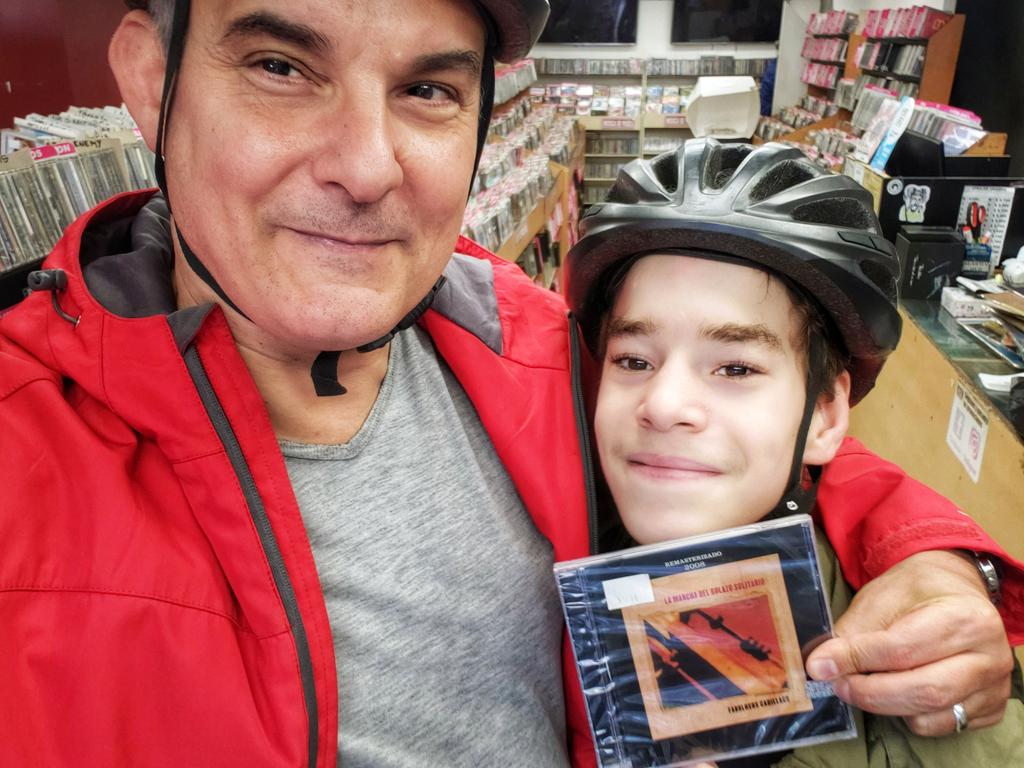
Héctor M. Monacci tweet media
Ciudad Autónoma de Buenos Aires, Argentina 🇦🇷 Español
1
0
9
0
Stewart Lynch
Stewart Lynch@stewartlynch8·
Everything that's wrong with modern software can be summed up in two words: "Unnecessary Complexity" Programming languages, project structure, build systems. libraries, performance, team structure, all suffer from this. Unnecessary complexity affects most human activities. Just look at politics and the legal system. We try and solve every problem by adding something new which just adds another set of problems. But programming has a particular problem because programmers usually self select for enjoying complexity. We enjoy being able to understand something complex and get it working. We are engineers of probably the most complex structures humans have ever created. Because of this it's our job to fight complexity where ever we can. There will always be complex problems where we do need to flex our brains, but everywhere else we need to strive for simplicity. Complexity is the enemy of good software.
English
43
36
334
20.1K
Héctor M. Monacci retweetledi
Purpura
Purpura@Purpura57912934·
In 800, the Roman Empire faced a challenge that was not simply military or diplomatic, but ideological: a form of geopolitical identity theft. When Pope Leo III crowned the Frankish King Charlemagne as “Emperor of the Romans,” he was not reviving a vacant western imperial office abolished long ago in 480, but inventing a rival claim to Roman universality, even though the Roman Empire still fully existed in Constantinople (Charlemagne was crowned as the one and only Roman Emperor). There had been earlier Roman usurpations and breakaway imperial regimes (the Gallic Empire under Postumus and Palmyra under Zenobia) but these emerged from within the Roman imperial world. The Frankish case was different: an external Kingdom, legitimized by the Papacy rather than by the Roman army, Senate, or Constantinopolitan court, claimed the name and dignity of an existing state and people. Constantinople’s refusal during the 812 peace talks to recognize Charlemagne as “Emperor of the Romans” captures the distinction. From the Roman perspective, this was not merely another usurpation; it was the creation of a competing faux Roman identity in the West - a revolutionary act whose consequences would shape medieval Europe for centuries. In long-term retrospect, the most damaging role was played by the Papacy, which had been the driving engine of the whole affair, setting the stage for the fracturing of Christianity into imperial and ersatz imperial camps over the next 250 years, a division that continues to persist to this day. Papal power to crown a Roman Emperor, and the idea of the Papacy as the source of imperial power, were completely invented in 800 and were without any precedent (it was later justified by the so-called Donation of Constantine or Donatio Constantini, a forged Roman imperial decree by which the 4th-century emperor Constantine the Great supposedly transferred authority over Rome and the western part of the Roman Empire to the Pope; composed in the 8th century shortly before the act of 800, it was used, especially in the 13th century, in support of claims of political authority by the Papacy - Lorenzo Valla, an Italian Catholic priest, exposed the forgery in 1439–1440). For the Roman imperial authorities in Constantinople, the papal coronation of Charlemagne as the Roman Emperor in 800 was a deeply unsettling act of betrayal, since the Christian Church had effectively become a department of state in 380 through the Edict of Thessalonica (Cunctos populos), and the Popes themselves were, in essence, imperial officials. Needless to say, this whole setup and the Church rift that followed it also created the conditions that would lead to the Crusader sack of Constantinople in 1204, an event that many historians consider the real fall of the Roman Empire, since the state and society never fully recovered from it, making them far easier prey for the final Ottoman conquest. Nonetheless, the events of 800 have another meaning and importance: they are the actual birth of the modern West as we know it. The Pope’s crowning of Charlemagne in 800 as the Roman Emperor is actually the point of divergence from all things Roman - in retrospect, the exact opposite of what it was proclaimed to be: a moment when Western Europe and Roman history parted ways and were set on very different paths. The Roman Empire continued to exist for centuries to come, ruled from Constantinople, but not as a historical part of the West as we understand it (which is also the ultimate reason why we mislabel it with an invented name, too). Historiographically and ideologically, we are still unable to give the medieval Roman Empire its due, despite the fact that academia is essentially free of the constraints of the past. Illustration: Napoleon before the Throne of Charlemagne (Henri-Paul Motte, 1898).
Purpura tweet media
English
14
39
218
120.6K
Héctor M. Monacci
Héctor M. Monacci@hectormonacci·
@buanzo Hermosa idea. Me gustaría buscar, no sé, en las memorias de Colón o de Magallanes si no se nota este mismo fenómeno
Español
0
0
1
12
Héctor M. Monacci retweetledi
Fernando A. Iglesias
Fernando A. Iglesias@FerIglesias·
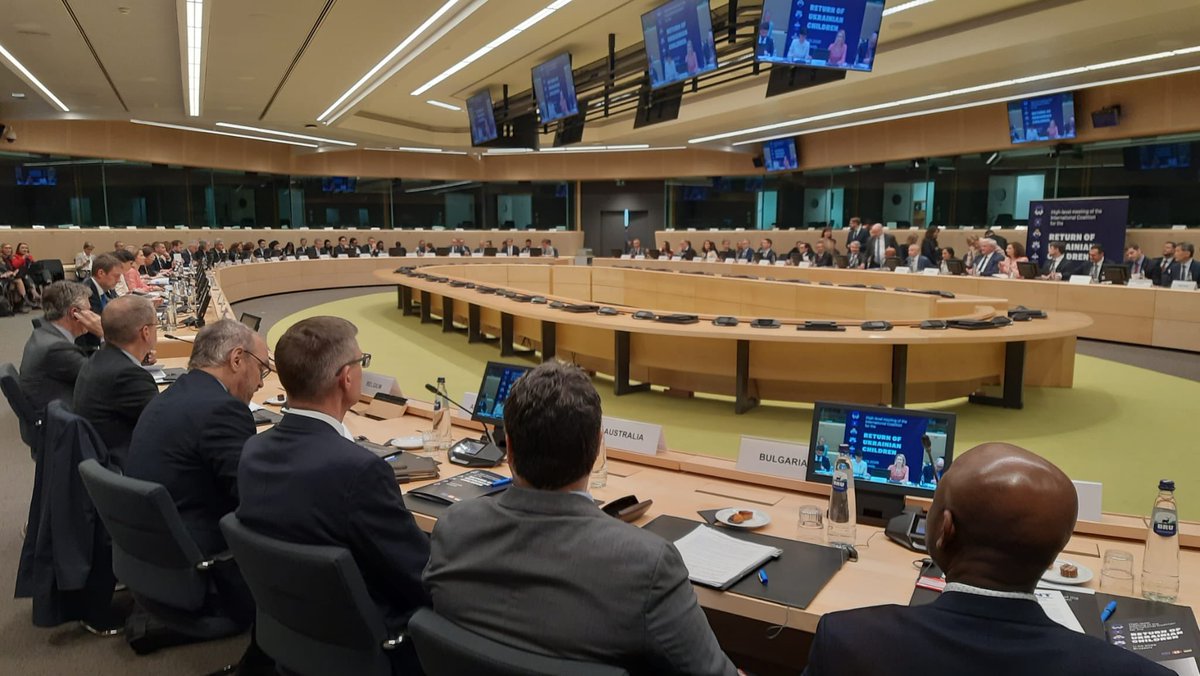
Hoy tuve el gusto y el honor de representar a la Argentina en la reunión de la Coalición Internacional para el Retorno de los Niños Ucranianos desarrollada en el Servicio Europeo de Acción Exterior, SEAE. Raptados, expatriados, adoctrinados y borrada su identidad, lo que la Rusia de Putin está haciendo con ellos es una atrocidad y un crimen de esa humanidad cometido contra quienes no pueden defenderse. Nuestro país forma parte de la Coalición desde mayo de 2024 luego de un pedido de la Cámara de Diputados al Poder Ejecutivo propuesto por el diputado @DamianArabia, aprobado en la Comisión de Relaciones Exteriores cuando yo era su presidente, y puesto en práctica inmediatamente por el presidente @JMilei Bring all them back home, Mr. Putin!
Fernando A. Iglesias tweet mediaFernando A. Iglesias tweet media
Español
12
80
279
9.7K
Héctor M. Monacci retweetledi
Volodymyr Zelenskyy / Володимир Зеленський
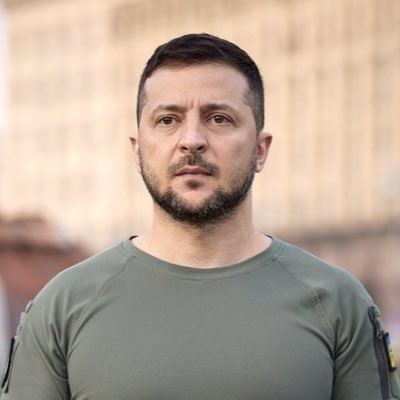
Thank you for your support – Argentina, Austria, Belgium, Czechia, Estonia, Finland, Germany, Latvia, Lithuania, Malta, Montenegro, the Netherlands, Slovakia, Spain, Sweden, the UN, EU, Council of Europe, OSCE PA.
English
308
1.6K
12K
264.8K
Cliff Pickover
Cliff Pickover@pickover·
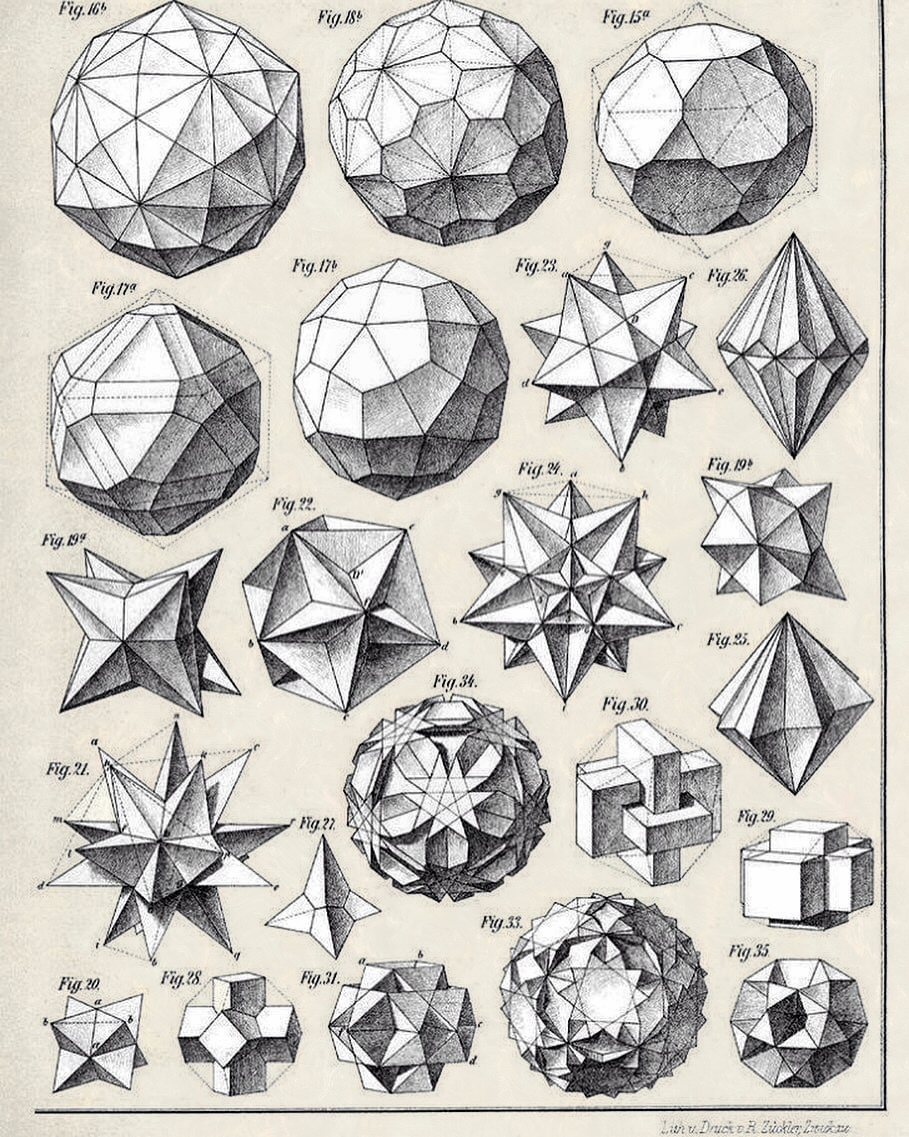
Mathematics, maths, math. The year is 1900. This is what geometrical drawings looked like more than a century ago, before the age of the computer and computer graphics. Plate from the book: Max Bruckner, "Vielecke und Vielflache" (Leipzig, 1900).
Cliff Pickover tweet media
English
9
84
447
11.3K
Héctor M. Monacci retweetledi
Volodymyr Zelenskyy / Володимир Зеленський
One of the most cynical Russian war crimes is the systematic, calculated transfer of Ukrainian children, scattering them across Russia, concealing their fate, “reprogramming” their culture, and continuously, shamelessly subjecting them to militarization. It is vitally important to bring our children back home from there. Before the Russians break them. And every initiative, every activity, every effort that helps achieve this also helps Ukraine. I said this while addressing participants of the Civil Society and Expert Day. Thanks to our Bring Kids Back UA initiative, we have secured 2,126 returns, and we will continue this work. We have engaged strong international mediators to help bring the children home. I am grateful to every country that has joined our Coalition for the Return of Children. I want to thank every leader of the countries contributing to the effort, and every First Lady of countries that care and are concerned about the fate of abducted children. I thank our Bring Kids Back team. I am grateful to all diplomats, international organizations, and journalists who maintain focus on the rescue of children.
English
485
5K
14.9K
185.9K
Patricio Naranjo
Patricio Naranjo@PatricioNaranjo·
@hectormonacci Cualquier cosa, acá hay unos pocos más para filmar la caída en cámara lenta.
Patricio Naranjo tweet media
Español
1
0
0
27
Héctor M. Monacci
Héctor M. Monacci@hectormonacci·
Hoy se despide el último disco mecánico del Consulado en Los Ángeles. Lo que queda es pura velocidad del estado sólido!
Héctor M. Monacci tweet media
Español
2
0
4
54
Héctor M. Monacci
Héctor M. Monacci@hectormonacci·
Con @furmanbios pero con poco tiempo para hablar del futuro. Así son las emergencias consulares!
Héctor M. Monacci tweet media
Español
1
0
1
38
Héctor M. Monacci
Héctor M. Monacci@hectormonacci·
@buanzo Sí, y después esa ceremonia, ya tradicional, de verlo saltar en pedacitos al caer en las lajas del patio... Y recuperar los imanes!
Español
1
0
1
12
Héctor M. Monacci
Héctor M. Monacci@hectormonacci·
El teclado lo encontré acá, en lo de Alias's
Héctor M. Monacci tweet media
Español
0
0
1
26
Héctor M. Monacci retweetledi
Raúl Shakespear
Raúl Shakespear@BaguinosRaul·
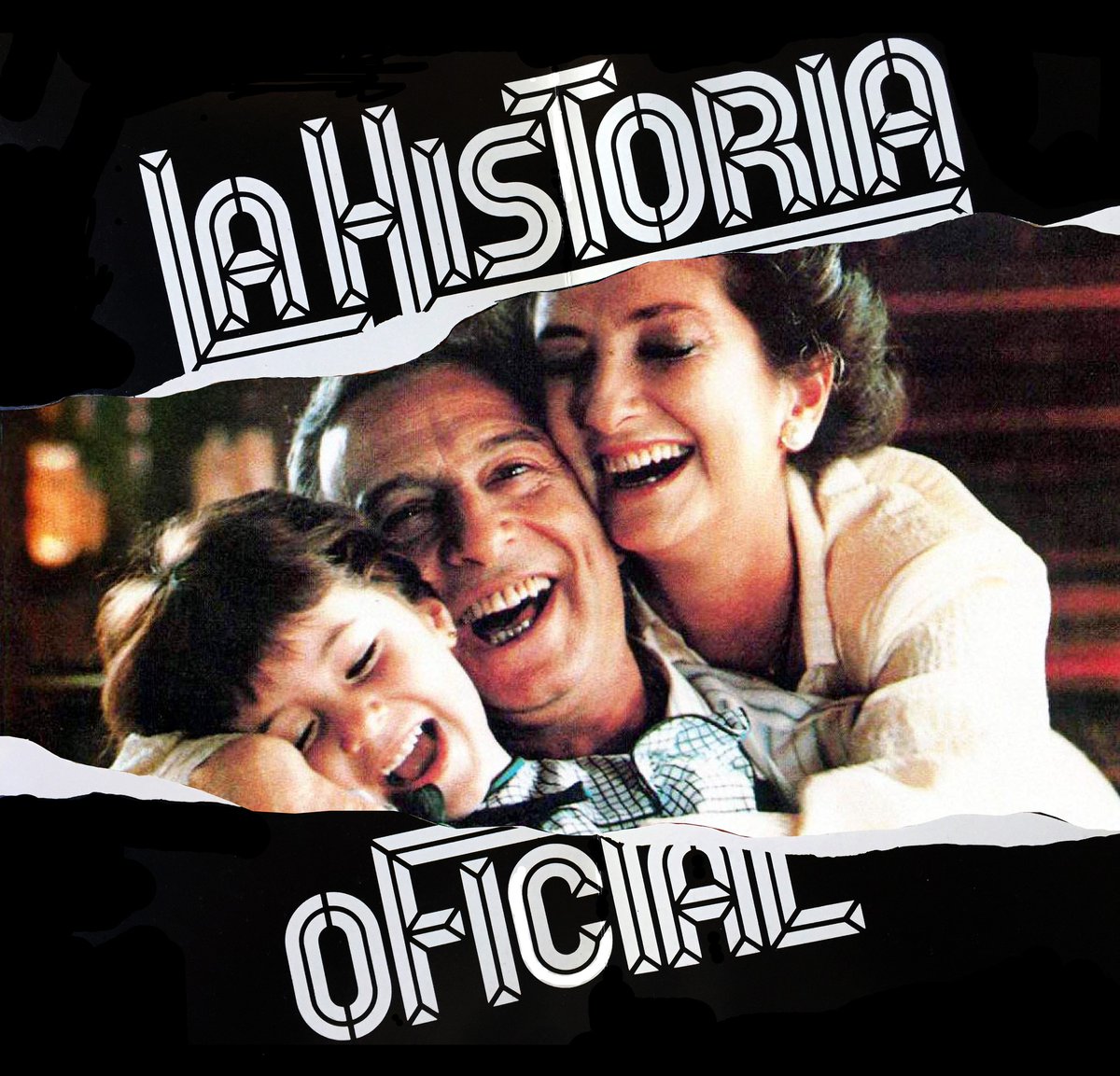
Nuestro Homenaje al gran Luis Puenzo. Diseñamos para él con Ronald en 1984 títulos y toda la comunicación y difusión que finalmente se transformó en el primer Oscar argentino. El afiche está expuesto en el Museo del Cine. #shakespearestudio #comunicación #afiche #identificación
Raúl Shakespear tweet media
Español
0
1
1
31
Maximiliano Firtman
Maximiliano Firtman@maxifirtman·
Estoy haciendo revisión técnica de un libro pars una conocida editorial, así en modo clásico, como un desquiciado de hace una década: leyendo y anotando lo que veo. "Claude can make mistakes." 😳
Maximiliano Firtman tweet media
Español
4
3
48
3.8K
Héctor M. Monacci retweetledi
Estefanía Coluccio
Estefanía Coluccio@Estef_ciencia·
Acabo de ver la obra maestra de Teo López Puccio en el teatro Picadero. MUY, MUY, MUY buena. Muy Única. Busca a la matemática. No les cuento si la encuentra o no. Se las súper recomiendo. ❤️
Estefanía Coluccio tweet media
Español
1
3
35
569
Héctor M. Monacci retweetledi
Ernesto Lechner
Ernesto Lechner@ErnestoLechner·
Cuando pasó esto tenía 24 años y me había graduado de una escuela de cine. Tenía reuniones en Paramount, me representaba una de las agencias más grandes de Los Ángeles y estaba convencido de que Hollywood era mi destino. Había escrito un guión que se llamaba “El espíritu de la glorieta” sobre un adolescente obsesionado con el paso del tiempo que es exiliado por sus padres a una isla llena de fantasmas. Evidentemente, la autobiografía era lo mío. En ese momento tan auspicioso me llamó mi querido amigo Lars para contarme que conoció a una señora millonaria. La señora quería diversificar sus finanzas e invertir en películas. Leyó mi guión, se enamoró y decidió que “El espíritu de la glorieta” sería su primer proyecto. Lejos de asombrarme ante este milagro inexplicable, me pareció natural y hasta previsible que una señora acaudalada hubiera descubierto mi genialidad. Sin el menor nerviosismo – no hay nada más liviano que la estupidez de la juventud – tuvimos una reunión con Lars y la señora para hablar de los pasos a seguir. La señora Lisa tendría entonces unos 50 años. Era excéntrica, poseída por un entusiasmo casi histérico que se desparramaba en su manera de hablar. Le expliqué a Lisa que “El espíritu de la glorieta” se podía producir por unos 10 millones de dólares. Ni se inmutó. Inclusive comentó con una sonrisa que los dos habíamos calculado un presupuesto similar y que la cifra estaba al alcance de sus posibilidades. Hablamos de formar un equipo, del director de fotografía y el casting del elenco. Lars co-produciría junto a Lisa, y yo sería guionista y director. Para celebrar este feliz momento, Lisa nos invitó a almorzar en su casa. Y ahí deberían – deberían, subrayo – haberse encendido las primeras luces rojas. La casa de Lisa era simpática, pero decididamente de clase media estadounidense. No era la mansión de una millonaria. Cocinó un carré de cerdo con puré de papas, y noté que coqueteaba con Lars de una manera que lindaba con lo inapropiado, especialmente considerando la diferencia de edad. Decidí no discriminar a mi amable productora por el hecho de que fuera un poco peculiar. Hollywood es así. Somos todos pintorescos. Pasó un tiempo y Lisa sonaba frustrada. Habló de litigios pendientes, de un dinero que debía ser liberado pronto, de los bancos y sus trabas financieras. El problema no era el dinero en sí, sino accederlo prontamente. Se sentía incómoda ante la idea de aplazar la filmación. Entonces empezó a dejar mensajes en mi contestador. Sonaba frenética, angustiada. Repetía una y otra vez que debía comunicarme con una tal Julie Primp. Que esta mujer tenía toda la información pertinente en cuanto al dinero. Unos meses más tarde estaba escuchando mis mensajes y casi me caigo de espaldas. Julie Primp, administradora de la escuela de cine donde cursé mis estudios, llamaba para ver cómo me había ido en el año que transcurrió desde mi graduación. A los pocos minutos estaba en el teléfono con Julie Primp. Le pregunté si sabía algo de una señora Lisa, y suspiró consternada. “Ah, ella”, dijo. “Si, yo sé quién es. Siempre me envía la misma carta, obsesivamente, y después llama dejando mensajes incoherentes. Si querés te mando la carta, para que entiendas mejor”. Leí la carta. En ella, la señora Lisa denunciaba un complot internacional para defenestrarla. Ella, LA INVENTORA DEL INTERNET, había sido silenciada, estafada, despojada de los millones de dólares que se merecía por haber cambiado el curso de la humanidad. No había duda al respecto. La señora que se enamoró de mi talento estaba loca de atar.
Ernesto Lechner tweet media
Español
6
3
30
1.4K