

Hellphish89
41.3K posts
Hellphish89
@hellphish89
Lover of racing/cars, spaceflight, and planes. Dunning Kruger sometimes gets the best of me.
Katılım Eylül 2020
254 Takip Edilen405 Takipçiler
Iranian IRGC-affiliated outlet Tasnim says that Iran’s military is preparing for any potential “foolish acts” by the US, and will respond to any attack by escalating the war and striking new targets.
English
@User7666251633 @morbid_moth @Fe_Ferss It sucks SO much when the humidity hits. Add in lack of breeze here and youll need a fork and knife for the air.
English

@hellphish89 @morbid_moth @Fe_Ferss A coworker moved from Wyoming to here in Florida, and he said the humidity down here makes it so much more unbearable.
English

⚠️🇬🇧A WARNING if you follow British Vtubers🇬🇧⚠️
It's going to be gross and🔥HOT🔥 in the UK soon, what you need to know to prepare:
~YES we WILL be complaining about the weather.
~YES it's going to be insufferable.
x NO we don't have AC.
x NO we will not shut up about it.

English
Thank you for the kind words @CroftyF1 , @karunchandhok , and Graeme. We are hurting a bit in the #NASCAR fandom.
Mr Matthew CFB@MrMatthew_CFB
F1 commentators David Croft and Karun Chandok, as well as Cadillac F1 Team Principal Graeme Lowdon pay tribute to Kyle Busch.
English
@JohnnyBlockers @AndIllWhisperNo @EsotericCD @NRO Many of those Democrats should be in or under the prison. Essentially saying "you need to let go of the fact that they used govt depts against their opposition" is patently insane.
English

@AndIllWhisperNo @EsotericCD @NRO Yeah I get consequences but the worst thing about Donald Trump is Donald Trump being president.
English

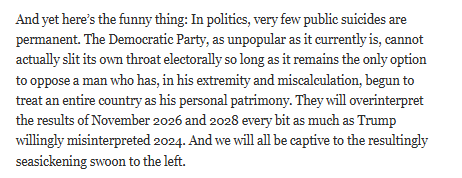
Here I am once again, just trying to drill down to the heart of the matter, at @NRO: nationalreview.com/corner/the-unf…
English



@CJJohns37859982 @Scopes29 @jeff_gluck Fuck off. Austin is just trying to make sense of it all like everyone else. You can take your self righteous bullshit and shove it.
English

@Scopes29 @jeff_gluck Silver spoon trying to act like a mentor. That's comical.
English

I urge you all to go read Austin Dillon's tribute post on his Instagram page if you haven't.
English
@grahamformaine Hey look everyone, the Nazi is angry Gaza got mud stomped in the war it started.
English

The words "Gaza" and "genocide" appear precisely zero times in the DNC autopsy.
Turning a blind eye to crimes against humanity was a grave injustice, and a terrible election strategy.
English
@RoKhanna Khana over here bitching about a govt that started a war and got positively mud stomped.
English
There is not a single mention of Gaza in the 192 page DNC autopsy report. As someone who campaigned in Michigan and Wisconsin, let me tell you- one of the main reasons we lost was our blank check to Israel while they committed a genocide.
Our party must put human rights first.
English
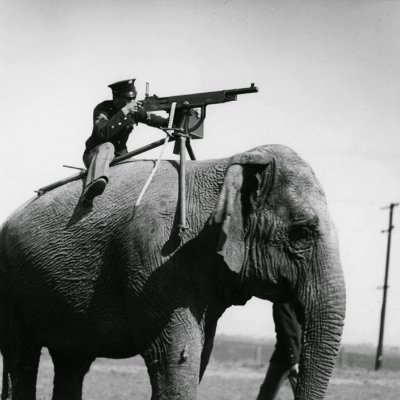
@CalumDouglas1 Its the old casualties per vehicle comparison. In ground forces terms its similar to how the Brits suffered more casualties per tank because lack of helmets.
It is odd to me that the UK never (iirc) developed their own 50 caliber heavy mg.
English

This goes for life in general.
Jeff Gluck@jeff_gluck
Just a reminder there's no wrong way to grieve, you can be sad in whatever way is right for you and people shouldn't be telling others how to act/say/feel in a time like this. (Seeing a few comments in the replies toward others that could use this reminder.)
English
@StevePender @DVanLangenhove "MUH JOOOZ" makes you sound like a fucking retard.
English

@DVanLangenhove At some point you have to acknowledge that it's judeo-bolshevism vs European nationalism and it's been ongoing for well over a century at this point. This doesn't happen outside of a weaponized psychological op to make us think any defense of our nations is like Hitler.
English

Mohamed Bakkali, the logistical brain behind the Paris and Bataclan attacks that killed 129 and wounded hundreds more, is allowed penitentiary leave by the Brussels court.
If Bakkali continues his “calm and good behaviour” according to the court, he could soon be freed indefinitely.

English
@DVanLangenhove Vigilantes should do the needful. Then that judge should be dealt with however people feel is appropriate.
English
@Aviation_Intel The footage being hilariously low quality doesnt help matters either. Its like those constantly blurry Bigfoot pictures..lol
English

First glance, likely the sensor darting/losing track not the object.
Faytuks Network@FaytuksNetwork
The release includes a UAP encounter from June 6, 2020. Around 4:34 in the video, the UAP in question quickly darts out of frame.
English
@morbid_moth @Fe_Ferss Him complaining about dry heat is cute. Now add ~75% humidity or higher to it. Feels like the God damn jungles of the South Pacific here in the summer.
English

If CIA is undermining @DNIGabbard, that’s a problem
A huge problem
Senator Rand Paul@SenRandPaul
Based on @C__Herridge's reporting & our CIA whistleblower's testimony, the CIA appears to be ILLEGALLY SPYING on @DNIGabbard's team, INTERFERING w/ investigations on the COVID coverup, the JFK, MLK, & RFK assassinations, UAPs, etc. We've got to get to the bottom of what they're hiding.
English
Hellphish89 retweetledi

Will Buxton remembers two-time NASCAR champion Kyle Busch.
English
@RacingTerritory Whoever told them need to be fucking fired. Absolutely ridiculous that they would do that to the family.
English

The Associated Press is reporting that Kyle Busch became unresponsive while testing in the Chevy simulator on Wednesday.
Source: apnews.com/article/nascar…

English
@Chic_AvantGarde @TheMaineWire Have a gun at the ready for next time.
English

@TheMaineWire I heard a child scream next door. Ran our security camera & the huge pit bull had launched their little girl into the air knocking her out. The pit got away from the boy & went after the girl a second time. Called animal control who showed up; but pit bull is still there. ☠️
English

A Bangor man and his 3-year-old son were out gardening when a neighbor's aggressive pit bull charged.
The man did as any father should, and took action to protect his child.
After misleading reporting by other media outlets, a lynch mob leaked his business card online.
He was bombarded with death threats via phone, email and social media.
We interviewed the man and obtained security footage of the incident.
It's an unbelievable story:
English