rah

378.5K posts

rah

rah

@hettinga

'Execrable'. ‘Crank’. 'Hyperactive genius saint from the future'. ‘Business visionary’. You’re welcome. Say it with an order.


Seafeathers Bay, Anguilla, BWI Katılım Ekim 2007
5.8K Takip Edilen1.4K Takipçiler
rah retweetledi
Right Angle News Network
Right Angle News Network@Rightanglenews·
Massachusetts Democrat Caitlyn Aguiar, who in a video cheered on Pam Bondi’s cancer diagnosis and said she hopes she dies a painful death, has been fired from her job at Jeanne D’Arc just a day after we made the company aware of her rhetoric.
English
1K
5.2K
25.2K
452.4K
rah retweetledi
Western Lensman
Western Lensman@WesternLensman·
Spencer Pratt schools NBC reporter who wants to know if he’s running for LA Mayor just to promote his “brand." Reporter: “Man, your brand is hotter than ever!" Pratt initially talks about getting in the race after losing everything in the fires. But then he gets to the real-life risk his decision carries — safety concerns for him and his family: “Running for mayor is not fun. I have to have 24 hour security with the amount of death threats. My kid now has a security next to him when he goes in the ocean, because psychos come to the beach." "This is not fun fighting DSA socialists in the city of L.A. So anybody that really is paying attention, politics is not fun." "And now I'm deep in politics fighting a machine that is against the truth." They keep trying to question his motives. It’s not working.
English
289
5.9K
35.2K
1.5M
rah retweetledi
Townhall.com
Townhall.com@townhallcom·
🚨INSANE: Graham Platner maintained a sexually-suggestive profile on 'Predator's Paradise' app known for child exploitation. He operated under the pseudonym "phustle0331."
Townhall.com tweet media
English
35
117
249
120.5K
bitchuneedsoap
bitchuneedsoap@bitchuneedsoap·
Here’s what one Signal message uncovered. I messaged a group admin asking how my family in NJ could help the Delaney Hall protesters. Within minutes she sent me a supply list and a Venmo donation link. The supply list wasn’t water bottles. It was P100 respirators (tear gas grade), military-spec impact goggles, welding gloves for picking up hot tear gas canisters, helmets, body armor, and Sudecon chemical decontamination wipes. That’s a military/law enforcement product most people have never heard of. The Venmo link: @cosechanj. That account belongs to Jenny Garcia. She’s the main organizer of the Delaney Hall protests. Quoted in the American Prospect, Newsweek, and TIME. Listed as the official press contact. She is not a volunteer. She is a professional organizer. Venmo feeds are public. I pulled hers. Payments labeled “Commissary” (money for detained immigrants to buy food inside the facility). “Commissary / phone accounts fund” (keeping detainees’ phones active). “DSA meeting” (Democratic Socialists of America). “Mutual aid.” “F ICE.” Same account. Uber rides. Cumbia dance classes. A cafe called Pika’s Fika. Protest donations and personal spending. One feed. No separation. So who pays Jenny Garcia? She holds three titles at three organizations. Detention Watch Network. DC-based. $7.2 million in assets. Ford Foundation funded. AFSC. Classified as a church. No public donors. Tides Foundation gave them $221K. Cosecha NJ. The @cosechanj Venmo name. Files two 990s. Reports $0 in salaries. Every year. Every officer. Nobody gets paid. Foundation money pays Garcia through DWN and AFSC. She organizes under Cosecha’s name. Cosecha claims to pay nobody. More coming.
bitchuneedsoap tweet mediabitchuneedsoap tweet mediabitchuneedsoap tweet media
bitchuneedsoap@bitchuneedsoap

I sent one message on Signal asking how to help the Delaney Hall protesters. Within minutes I had a Venmo link and a supply list. The supply list wasn’t water bottles. I followed the Venmo. Then I pulled the 990s. Then it all started to unravel. One message unraveled the entire NJ anti-ICE network. More soon.

English
811
8.3K
17.6K
795.8K
Handre
Handre@Handre·
When People's Democratic Republic of Yemen declared itself a Marxist-Leninist state in 1967, it promised to transform the Arabian Peninsula's poorest region into a socialist paradise. By 1990, South Yemen had achieved something remarkable: it remained the poorest Arab state while managing to make its already dire economic situation substantially worse. You can trace the socialist experiment's failures through the numbers. Per capita GDP stagnated at roughly $500 throughout the 1980s while North Yemen's market-oriented economy grew. South Yemen's government employed 75% of the formal workforce by 1989, creating a massive bureaucracy that produced virtually nothing of value. The state controlled all major industries, from fishing to agriculture, and predictably drove productivity into the ground. The human cost tells the real story. Over 300,000 South Yemenis fled to North Yemen and Saudi Arabia during the socialist period, voting with their feet against central planning. Those who stayed endured chronic shortages of basic goods while party officials lived comfortably in Aden's government quarters. The state's agricultural collectives destroyed traditional farming methods that had sustained communities for centuries, replacing local knowledge with Soviet advisors who knew nothing about Arabian Peninsula agriculture. Compare this disaster to the Gulf states' experience during the same period. While Kuwait, UAE, and Saudi Arabia built modern economies through market mechanisms (however imperfect), South Yemen's planners allocated resources according to ideological fashion rather than economic reality. They built a steel plant in a country with no iron ore, subsidized unprofitable fishing cooperatives, and maintained a bloated military that consumed 20% of GDP. The 1990 reunification wasn't a merger of equals. North Yemen absorbed a failed state whose currency had become worthless and whose infrastructure had crumbled under central planning. Socialism doesn't eliminate scarcity. It ensures that scarce resources flow to politically connected bureaucrats instead of productive entrepreneurs.
Handre tweet media
English
25
181
537
19.7K
Students For Liberty
Students For Liberty@sfliberty·
Every American student learns the same story about Standard Oil: Rockefeller as the villain of unregulated capitalism, Standard Oil as proof that free markets inevitably produce monopolies that crush consumers. A historian went to the primary records and found the opposite. 🧵
Students For Liberty tweet media
English
10
58
232
14.1K
rah retweetledi
Election Wizard
Election Wizard@ElectionWiz·
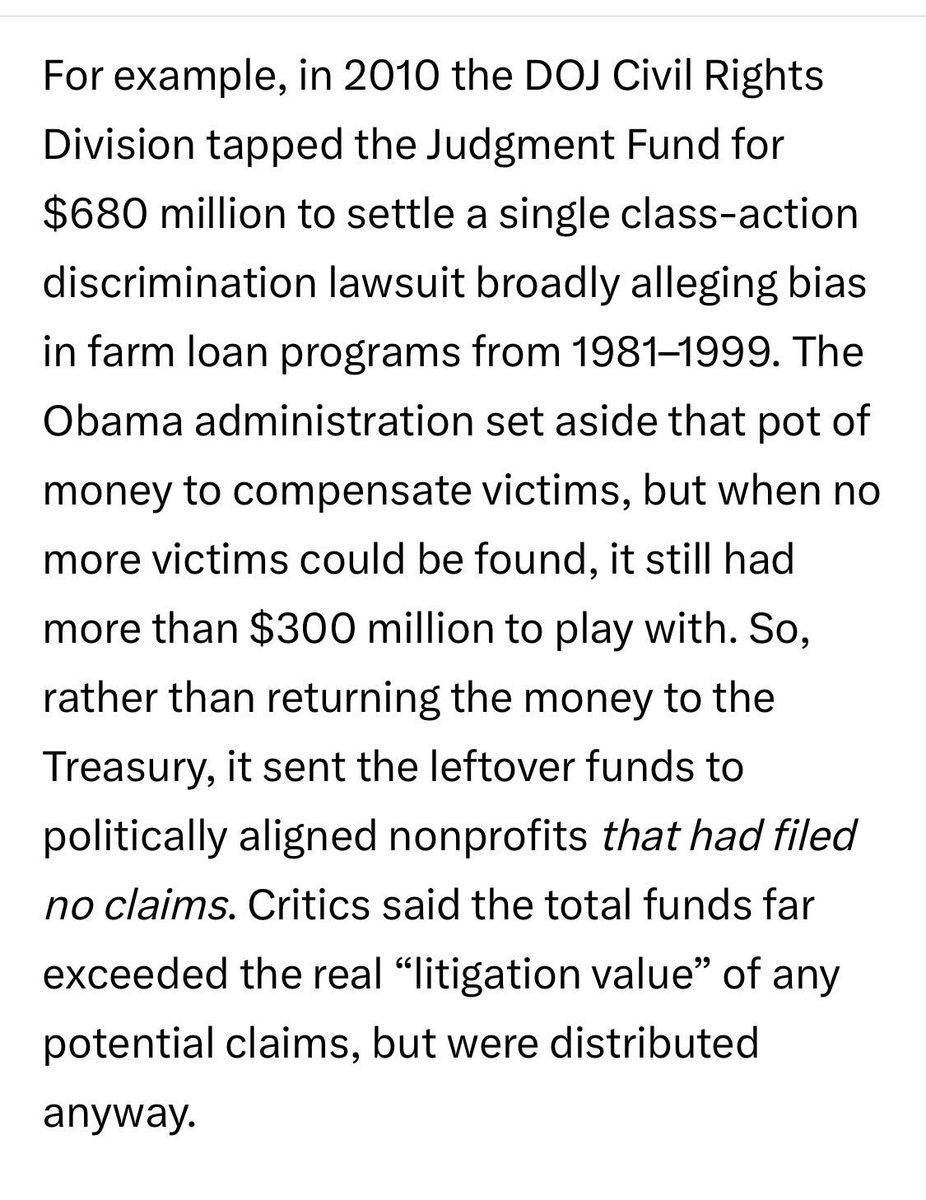
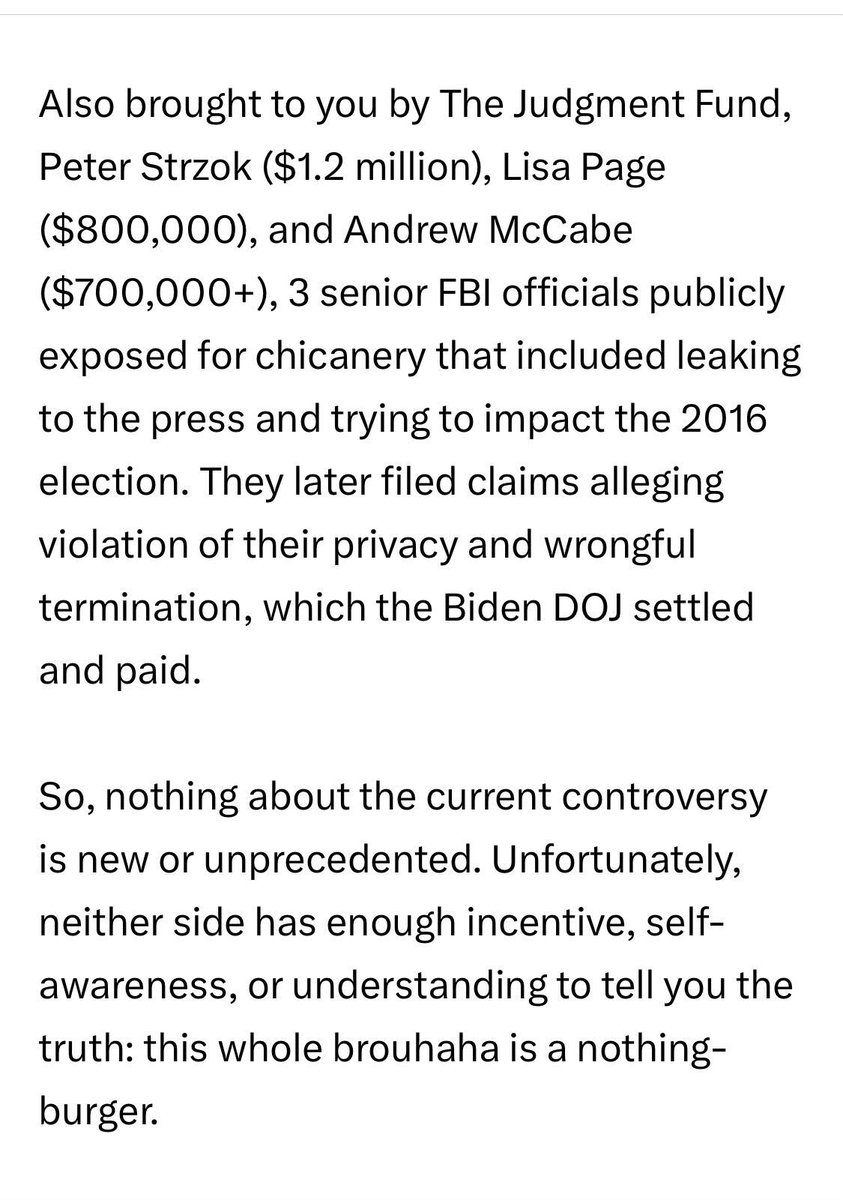
The Judgment Fund isn’t a Trump invention. Congress created it in 1956. No judge sign-off required. Obama’s DOJ used it for “discrimination” farm payouts and steered leftovers to nonprofits that filed zero claims. DOJ paid Strzok and Page $2M from it too. Funny how it only became a scandal once Trump tapped it.
Election Wizard tweet mediaElection Wizard tweet media
English
100
3.6K
7.2K
92.3K
rah retweetledi
Thrilla the Gorilla
Thrilla the Gorilla@ThrillaRilla369·
The middle class is the most expensive place to live, and no one talks about it. Lower income households get assistance. The wealthy use tax strategies and loopholes. But the middle class pays full taxes, full tuition, full healthcare, full everything. So you work 50 hours a week just to stay in the same place and fund everyone’s life except yours.
English
1K
5.7K
28.1K
493.3K
rah retweetledi
SightBringer
SightBringer@_The_Prophet__·
⚡️The middle class is where the system hides its extraction because the middle class still believes obedience will be rewarded. The poor are visibly dependent. The rich are structurally insulated. The middle class is trapped inside the moral contract of responsibility. Work hard. Pay taxes. Buy insurance. Save for retirement. Don’t cheat. Don’t default. Don’t complain. Don’t take too much. Don’t fall behind. Keep your credit clean. Keep your kids on track. Keep your career moving. Keep the mortgage paid. Keep smiling. Then the system taxes that obedience. The middle class is easy to extract from because its income is visible, its behavior is predictable, and its fear of falling is powerful. W-2 income can be captured before it ever reaches the bank account. Property taxes attach to shelter. Healthcare attaches to employment. College aid disappears once income crosses thresholds. Tax credits phase out. Professional licensing, insurance, childcare, commuting, housing, and retirement all become toll booths. The rich escape through structure. The poor survive through assistance. The middle pays retail. That is why it feels like the most expensive place to live. It is the zone where you make enough to be denied help and not enough to buy freedom. You are too “successful” for sympathy and too exposed for security. This is also why the middle-class anger is going to grow. These people are the stabilizing class. They follow rules, raise kids, pay bills, fund municipalities, staff companies, buy homes, carry insurance pools, and keep institutions functioning. When they start realizing the bargain no longer compounds, political trust breaks hard. The deepest betrayal is that income stopped being the path to safety. Asset ownership became the path to safety. The middle class earns income to buy assets, but asset prices keep moving away because monetary policy, debt, housing restriction, financialization, and investor demand pushed the ladder higher. So the worker runs faster while the asset-owner floats. That is the hidden class split. The middle class is not poor enough to receive the system’s mercy and not rich enough to command its architecture. It is the payer class. The compliance class. The full-price class. Bottom line: The middle class is expensive because it is where responsibility gets monetized. The system extracts most efficiently from people who still believe playing by the rules will save them.
Thrilla the Gorilla@ThrillaRilla369

The middle class is the most expensive place to live, and no one talks about it. Lower income households get assistance. The wealthy use tax strategies and loopholes. But the middle class pays full taxes, full tuition, full healthcare, full everything. So you work 50 hours a week just to stay in the same place and fund everyone’s life except yours.

English
108
516
2K
95.2K
rah retweetledi
James E. Thorne
James E. Thorne@DrJStrategy·
Martin’s Betrayal, The Fed’s Benedict Arnold. Can Kevin Warsh undo what William McChesney Martin set in motion? That is the real question. Truman called Martin a traitor for a reason. He wanted the Federal Reserve to help an elected government achieve the nation’s goals. Martin gave him a Fed that claimed the right to judge those goals, restrain them, and, when necessary, veto them. Martin is the Benedict Arnold of this story, the man who helped turn the money power of the republic into a rival throne. The fairy tale says the Fed rose above politics and became a sanctuary of neutral expertise. Nonsense. The Fed was never meant to be a monetary Vatican. It was given insulation, not sovereignty. It was supposed to price money, not decide the direction of the nation. During World War II and the Bretton Woods years, the older American understanding still held. The Treasury led. The Fed supported. Finance served statecraft. Money and credit were tools of national purpose, not abstractions managed by a clerisy. Then Martin turned the hinge. He was Wall Street to the bone, a former president of the New York Stock Exchange, and the son of a Federal Reserve insider. Truman thought he was elevating a Treasury man. Instead, he elevated a man bred to believe that finance should rule politics, not serve it. That was the betrayal. Martin helped break the old Treasury-Fed order and then spent years canonizing the new religion of “independence.” What had once been an instrument of government became an arbiter over government. The Fed ceased to ask how it could help the country achieve its aims and began asking whether those aims had its permission. Nixon finished what Martin started. Faced with the collapse of Bretton Woods and the inflationary disorder of the 1970s, he could have reasserted political control over the money power. Instead, he surrendered. He let central-bank independence harden from bureaucratic arrangement into national dogma. Nixon did not just close the gold window. He turned his back on Hamilton. That surrender still defines us. The Fed no longer confines itself to setting rates. It hints against crypto, moralizes about climate, and carries itself as if it holds a civilizational veto over the evolving economy. Why should an unelected bureaucracy get to decide whether a new financial architecture may emerge, whether industrial policy is acceptable, or whether the nation’s priorities are sufficiently enlightened? Yes, the Fed should set rates with operational independence. No serious person wants monetary policy run by daily political whim. But that is a far cry from giving a caste of Fed lifers, Keynesian bureaucrats, and self-anointed experts the right to obstruct the national purpose. A central bank can independently calibrate the price of money while still serving the country that created it. That is why Warsh matters. He is not trying to reform the independent Fed. He is trying to cut it back down to size. His mission is to reverse the Martin settlement, subordinate the Fed once more to the Treasury, and restore something like Hamilton’s national bank, a central bank that serves strategy instead of posing as its master. That is the through line. Martin betrayed the old order. Nixon ratified the betrayal. Warsh means to undo it. The only question is whether Washington still has the nerve to make the Fed an instrument of the republic again.
James E. Thorne tweet media
English
11
23
79
5K
rah retweetledi
Ken Cao-The China Crash Chronicle
Everyone knows China's economy is struggling. But how bad is it really? When official statistics become increasingly difficult to trust, investors often turn to alternative indicators. In the United States, economists track everything from truck shipments to cardboard box demand. In China, one surprisingly powerful indicator is pork. And right now, China's pork market is flashing a warning sign. According to reporting by The New York Times, pork prices in China recently fell to their lowest level in 16 years. One pig farmer in Liaoning Province who raises 3,000 pigs described surviving only through loans and borrowed money while prices continued to collapse. Many small farms in his region are reportedly on the verge of bankruptcy. This is not merely an agricultural story. Pork occupies a unique place in China's economy. It is one of the country's most widely consumed everyday foods. Unlike staple foods such as rice or wheat, pork consumption is highly sensitive to household finances. When incomes rise, families buy more meat. When incomes come under pressure, pork is often one of the first items to be cut back. Two of China's largest pork-consuming groups are construction workers and restaurant diners. Both groups have been hit hard by the prolonged property downturn and weaker consumer spending. The numbers are striking. China's pork prices have fallen 39% over the past four years. Restaurant spending has weakened significantly. April retail sales growth came in at just 0.2% year-over-year, far below expectations of 2.0%. Meanwhile, Chinese household borrowing is shrinking. Consumer loans fell sharply, while mortgage growth remains weak. Taken together, these are not signs of a confident consumer. They are signs of a population becoming increasingly cautious. The deeper issue is psychology. When home values fall, unemployment remains elevated, and economic uncertainty rises, households naturally shift from spending to saving. People stop asking, "What can I buy?" and start asking, "What if I lose my job?" That change in behavior can become self-reinforcing. Consumers spend less. Businesses earn less. Investment slows. Tax revenues weaken. Economic momentum fades further. Pork prices alone do not tell the entire story. But when one of the most common items on Chinese dinner tables experiences a sustained collapse in demand, it is difficult to dismiss it as a temporary fluctuation. Sometimes the most revealing economic indicators are not found in government reports. They're found in what people stop putting on their plates.
Ken Cao-The China Crash Chronicle tweet media
English
29
104
398
163.7K
rah retweetledi
🇺🇸 Ronald Carter
🇺🇸 Ronald Carter@USronaldcarter·
🚨 this has happened before.. and the playbook is identical every single time.. Portland 2025.. Antifa encampment outside the ICE facility.. expensive tents.. medical stations.. hot food on rotation.. riot equipment pre-staged.. operation ran for weeks before police moved in.. now it's Newark 2026.. Delaney Hall ICE detention center.. Nick Sortor went in with a hidden camera.. tens of thousands of dollars in equipment already on site.. riot gear.. hourly hot food deliveries.. a medical section.. a fully operational logistics base running round the clock for over a week.. and here's the part nobody's connecting.. spontaneous protests don't have supply chains.. angry citizens don't pre-stage riot equipment worth tens of thousands of dollars.. a week-long operation at a federal detention facility doesn't run itself on goodwill.. state police had to physically intervene to restore order.. this wasn't winding down on its own.. Portland to Newark.. same model.. same equipment.. same logistics.. different city.. the only thing that changes the outcome is going after the people writing the checks.. not the people sleeping in the tents.. Sortor said it directly: arrest the funders and this stops.. because the funders are the ones making it portable.. scalable.. and repeatable.. the camps keep appearing because the people paying for them face zero consequences. I'll keep you updated. Turn on notifications right now.
🇺🇸 Ronald Carter tweet media
English
95
1.3K
2.3K
26.3K
rah retweetledi
Clay Travis
Clay Travis@ClayTravis·
These Spencer Pratt videos by @dsonoiki are better than 99.9% of political consultant ads. He does it again.
English
1K
11.7K
56.1K
2.5M
rah
rah@hettinga·
ZXX
0
0
0
2