
Anshuman Sharma retweetledi
Anshuman Sharma
1.9K posts


Anshuman Sharma
@heyanshuman
Fulbright Scholar. Harvard Graduate. Communication Sciences. Public Health. #ForeverCurious @FulbrightPrgrm @Harvard @HarvardChanSPH
Katılım Kasım 2012
521 Takip Edilen328 Takipçiler

Anshuman Sharma retweetledi

🚨BREAKING: @The__1958 have announced a protest for the Fulham game in the most hilarious way ever! 😂
English
Anshuman Sharma retweetledi

Very well written @deepigoyal Every word is true. It beggars belief that a Champagne Socialist who married a film star and had a designer wedding in Udaipur and a first wedding anniversary in Maldives has the audacity to then shed crocodile tears around alleged exploitation of gig workers. Aam Aadmi my foot
Deepinder Goyal@deepigoyal
Last one on this topic, and I have been holding this in myself for a while. For centuries, class divides kept the labor of the poor invisible to the rich. Factory workers toiled behind walls, farmers in distant fields, domestic help in backrooms. The wealthy consumed the fruits of that labor without ever seeing the faces or the fatigue behind it. No direct encounter, no personal guilt. The gig economy shattered that invisibility, at unprecedented scale. Suddenly, the poor aren't hidden away. They're at your doorstep: the delivery partner handing over your ₹1000+ biryani, late-night groceries, or quick-commerce essentials. You see them in the rain, heat, traffic, often on borrowed bikes, working 8–10 hours for earnings that give them sustenance. You see their exhaustion, their polite smile masking frustration with life in general. This is the first time in history at this scale that the working class and consuming class interact face-to-face, transaction after transaction. And that discomfort with our own selves is why we are uncomfortable about the gig economy. We want these people to look our part, so that the guilt we feel while taking orders from them feels less. We aren't just debating economics. We are confronting guilt. That ₹800 order might equal their entire day's earnings after fuel, bike rent, and app cuts. We tip awkwardly, or avoid eye contact, because the inequality is no longer abstract. It's personal. Pre-gig era, the rich could enjoy luxury without moral discomfort. Labor was out of sight. Now, every doorbell ring is a reminder of systemic inequality. That's why debates explode. It's not just policy. It's emotional reckoning. Some defend the system (“they choose it”), others demand change (“this isn't progress, its exploitation”). And here’s the uncomfortable twist: the unsaid ask of clumsy ‘solutions’ isn’t dignity. It is about returning to invisibility. Ban gig work and you don’t solve inequality. You remove livelihoods. These jobs don’t magically reappear as formal, protected employment the next day. They disappear, or they get pushed back into the informal economy where there are even fewer protections and even less accountability. Over-regulate it until the model breaks, and you achieve the same outcome through paperwork instead of slogans: the work evaporates, prices rise, demand collapses, and the people we claim to protect are the first to lose income. And then what happens? The rich get their old comfort back. Convenience returns without faces. Guilt dissolves. We go back to clean abstractions and moral posturing from a distance. The poor don’t become safer, they become invisible again: back in cash economies, back in backrooms, back in shadows where regulation rarely reaches and dignity isn’t even debated. The gig economy just exposed the reality of inequality to the people who previously had the luxury of not seeing it. The doorbell is not the problem. The question is what we do after opening the door. Visibility is the price of progress. We can either use this discomfort to build something better (which we keep doing continuously as delivery partners are our backbone), or we can ban and over-regulate our way back into ignorance. One of those choices improves lives. The other simply helps the consuming class feel virtuous in the dark.
English
Anshuman Sharma retweetledi

Most of our delivery partners did not want to go on a strike yesterday. The 0.1% miscreants I mentioned in the tweet below were illegally snatching parcels from those who wanted to work, beating them up, and threatening to damage their bikes. Which is why local law authorities had to intervene on their own.
So who were these riders who were creating this trouble? Largely the ones who were terminated by the system for repeated abuse and fraud on the platform. They impersonate, steal food, and also abscond with the cash they collect from the customers, amongst other things.
These individuals want to arm twist us to let them back on to the platforms, and exploit the system for their own sake. And are perhaps being supported and instigated by politically motivated individuals who just want to stir up chaos for media mileage.
Deepinder Goyal@deepigoyal
Zomato and Blinkit delivered at a record pace yesterday, unaffected by calls for strikes that many of us heard over the past few days. Support from local law enforcement helped keep the small number of miscreants in check, enabling 4.5 lakh+ delivery partners across both platforms to deliver more than 75 lakh orders (all-time high) to over 63 lakh customers during the day. This happened without any additional incentives for delivery partners - NYE does see higher incentives than usual days and yesterday was no different than the past NYE days. I am grateful to local authorities across the country and to our teams on the ground for clear enforcement and swift coordination. Most importantly, thank you to our delivery partners who showed up despite intimidation, stood their ground, and chose honest work and progress. One thought for everyone: if a system were fundamentally unfair, it would not consistently attract and retain so many people who choose to work within it. Please don’t get swept up by narratives pushed by vested interests. The gig economy is one of India’s largest organised job creation engines, and its real impact will compound over time, when delivery partners’ children, supported by stable incomes and education, enter the workforce and help transform our country at scale.
English
Anshuman Sharma retweetledi

Paper boy in India with 17 years of experience.
English
Anshuman Sharma retweetledi

China’s population pyramid is dire.
• The last large cohort of women, those aged 34 to 39, is rapidly moving into the non-reproductive age range.
• There is an extreme surplus of males. More than 30 million. These are men who cannot possibly find a wife, an enormous population of incels by mathematical necessity.
• Since around 2020, the number of children born has completely collapsed and shows no sign of recovery. In a few decades, China will be full of elderly people and short on workers.

English
Anshuman Sharma retweetledi
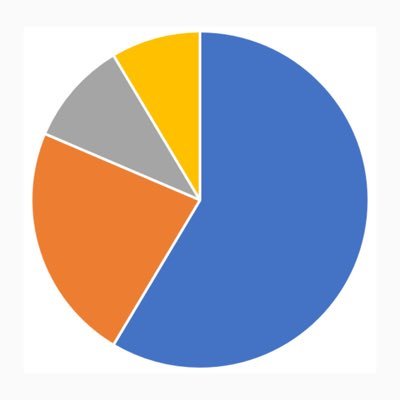
World's biggest economies in 2075, projected by Goldman Sachs:
🇨🇳 China: $57 trillion
🇮🇳 India: $52.5 trillion
🇺🇸 United States: $51.5 trillion
Thank you for your attention to this matter.
English
Anshuman Sharma retweetledi

Wealth Creation leads to Job Creation.
To understand the nature of employment in India, one must understand labour markets and business climate across states of India. #Jobs #EaseofBusiness

English
Anshuman Sharma retweetledi
When the Boss (Sir Alex) walks in & interrupts your recording… wait till the end when his phone rings 😂
Even after 12 years, we still can’t find the courage to tell him off!!
Rio Meets Michael Carrick 👌🏽
English
Anshuman Sharma retweetledi

Supreme Leader Kim Jong-un has never visited Epstein's Island.

English
Anshuman Sharma retweetledi


Anshuman Sharma retweetledi

Instead of installing cameras and speakers to prevent cars from buying petrol or diesel, you can install multiple pollution-checking devices at the petrol pump.
Forcing people to sell their cars just because of its age, not pollution, is unacceptable.
Your goal should be pollution, not the age of the cars.
English
Anshuman Sharma retweetledi
Anshuman Sharma retweetledi

Anshuman Sharma retweetledi

Anshuman Sharma retweetledi
Anshuman Sharma retweetledi
Indians love watching porn & downfall porn.
They will vehemently deny enjoying both, but they do. Watching someone’s downfall is especially enjoyable, when you think the success was a function of luck. It’s very difficult to digest Non-Academic success. We had a feudal past, The king was elected by a genetic lottery and everyone else were subjects. There was hardly any social mobility. Most people were poor, wealth concentrated in the King’s treasury. If at all some grain merchant or money lender got rich, every few generations, there was some plunder by invaders and you were back to square one. Then we got independence, and entered socialism, social mobility was taboo again, everybody waited for the scooter for 6 months. The only unlock to prosperity for the middle and lower class was education, especially entrance exams. The competition was tough. Seats limited. Hence anyone who won that race, was unanimously acclaimed. Any one who cleared UPSC, or an IIT JEE, was an instant role model. There was no scope for jealousy, the respect was undisputed. Hence, an IIT Baba, despite all his fraud talk, is still respected by the masses, and assumed to be divine coz of his IIT tag. It’s the ISI mark of quality.
But when the economy opened up and we found alternate ways to success for average looking next door guys, like an Instagram or a Youtube channel, where a kid in Haldwani, Uttarakhand can buy half a dozen luxury cars by just making inane daily vlogs. It left the scope for jealousy open. Coz the age-old mental structures were broken, but the success was still non academic. Hence it was always seen with suspicion, accompanied by a patient wait for the downfall, so as to prove our models right.
This is the downfall porn, we love. Coz it just proves our parents right. We subconsciously inherit our parents’ moral compass, our judgment eventually reverts to the mean.
“padhoge likhoge banoge nawaab”
English
Anshuman Sharma retweetledi

This is pretty funny. Who knew SNL was still capable of that.
English
Anshuman Sharma retweetledi
The lines of bread this man pulls out of the oven
x.com/i/status/18513…
English