大道无形

258.3K posts

大道无形 banner
大道无形

大道无形

@hubin369

个人备忘录:转发原帖不加个人解读!(Personal memo: Forward the original post without personal interpretation!)关于医疗健康、价值投资、艺术、心理、教育、思考、快乐、通识的转帖。

香港 Katılım Aralık 2016
422 Takip Edilen770 Takipçiler
大道无形 retweetledi
Ben Wilson
Ben Wilson@BenWilsonTweets·
"Fixedness means a dead hand. Pliability is a living hand." - Japan's Greatest Samurai, Miyamoto Musashi

Ben Wilson tweet media
English
1
20
103
3.2K
大道无形 retweetledi
DINQ
DINQ@dinq_me·
OpenAI just hired the statistician who: → Graduated #1 from Peking University math → Won the "Nobel Prize of Statistics" this year (1 person under 40, per year) → Built the theoretical framework another researcher used to solve a 42-year-old math problem last month He's not coming to write papers. He's coming to train the models. The compute wars are over. The data wars are over. The talent wars just got more interesting. #DINQ #AI #OpenAI
DINQ tweet media
Weijie Su@weijie444

Personal update: I've joined OpenAI while on leave from Wharton. After a decade away, glad to be back in the Bay Area and train AI models here! One more thing, I've been promoted to full professor, a decade-long journey made possible by many, especially my students.

English
41
195
2K
368.9K
大道无形 retweetledi
Joe Rogan Podcast News
Joe Rogan Podcast News@joeroganhq·
Naval Ravikant: "Stress is when your mind has two conflicting desires at once. You want to be liked, but you want to do something selfish. You don't want to go to work, but you want to make money. You have two conflicting desires, and that's stress."
English
11
58
436
31.4K
大道无形 retweetledi
بصيرة | Insight
قال طبيب أعصاب: "أخرج لسانك لمدة 40 ثانية - فهذا يُزيل الكورتيزول أسرع من أي حبوب أو تمارين تنفس. شركات الأدوية الكبرى في حالة ذعر..
بصيرة | Insight tweet mediaبصيرة | Insight tweet media
العربية
59
949
6K
736.2K
大道无形 retweetledi
Mike
Mike@MikeLongTerm·
$PLTR shareholders suddenly realized, it only been 3 quarters and @PalantirTech PEG Ratio dropped to 0.85. If Palantir were to trade at $CRWD or $SNOW PEG Ratio, Share price would be around $1,000-
Mike@MikeLongTerm

$PLTR vs $CRWD $SNOW Wall Street Darling 🧵 Not Financial Advice! DYOR! 1. @PalantirTech Revenue growth is expected 90%-100% by end of 2026. Dr. Karp said 100%+ by end of 2027. We can use 100% growth for next 2 years. TTM P/S 77x | Fwd P/S 40-50x TTM P/E 176x | Fwd P/E 80-90x Fwd PEG Ratio(12-24 months): 85/100=0.85 Palantir PEG Ratio is far cheaper than any Software companies out there and stupid cheap vs Wall Street Darling. Short sellers always never picked on Wall Street Darling but it had to be Palantir, and now they are piling back on, SI went up 11.5m shares. It is dumb. 2. @CrowdStrike Revenue growth is expected to be 25% for the next 2 years. TTM P/S 39x | Fwd P/S 30-32x TTM P/E 402x | Fwd P/E 139x Fwd PEG Ratio(12-24 months): 139/25=5.56 3. @Snowflake Revenue growth is expected to be 30-35% for the next 2 years or mid point 32.5% TTM P/S 18x | Fwd P/S 14x TTM P/E Negative | Fwd P/E 140-200(mid point-170) Fwd PEG Ratio(12-24 months): 170/32.5=5.23. Snow may continue to be negative P/E in 2026/2027 Till this day, Wall Street still hating on Palantir because Dr. Karp went DPO. And still overpaying for $SNOW and $CRWD. I said in 2022-2023 that these wall street darling will be expensive and underperform PLTR, and I was right. Not Financial Advice! DYOR!


English
14
34
351
72K
大道无形 retweetledi
Epic Man Thinker
Epic Man Thinker@NMasculine7·
Pablo Picasso was short, ugly, and far from physically impressive. Yet women worshipped him. Why? Because he understood the truths most men ignore Here’s his formula:
Epic Man Thinker tweet media
English
193
311
2.6K
1.8M
大道无形 retweetledi
podcast alpha
podcast alpha@podcast_alpha_x·
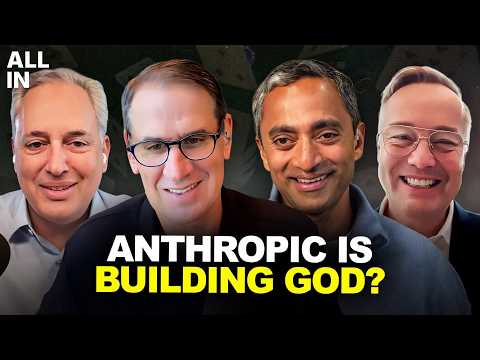
Top 3 frontier AI models are within 0.3 percentage points of each other on financial analyst tasks. @chamath on @theallinpod EP275 put the @RogoAI eval paper on screen: Opus 4.7, GPT-5.5, and Sonnet 4.6 on a finance-specific test bench - no single best model. The gap is noise. Trillions are going into incremental frontier training. If evals are asymptoting at 0.3pp, the ROI on differentiated model capability is near zero for most enterprise use cases. The enterprise response is already moving: Fortune 1000 buyers want abstraction layers that hot-swap between models, not lock-in to a single vendor's roadmap. That's exactly the architecture @chamath described running at 8090. Full commoditization argument and what Gurley says open MCP connectors do to model pricing power: podcastalpha.substack.com/p/all-in-ep275… Source: All-In Podcast - youtube.com/watch?v=4oq91r…
YouTube video
YouTube
English
9
11
162
9.5K
大道无形 retweetledi
Words of Wise | Mindset Coach
Control your anger. If you have anger towards others, they control you." — Miyamoto Musashi
Words of Wise | Mindset Coach tweet media
English
12
223
1.3K
25.5K
大道无形 retweetledi
sourcery
sourcery@sourceryy·
.@jackiereses on what @jack is really like: " His listening skills are unparalleled. He'll sit in meetings and not say a word." "That's probably the biggest takeaway I have from my experience working side by side with him for so long, is just—zip it.” “You don't need to talk."
jack@jack

Just finished a 10 day silent meditation. Wow, what a reset! Fortunate & grateful I was able to take the time. Happy New Year! 😌 #Vipassana

English
5
8
131
39K
大道无形 retweetledi
당파이어
당파이어@dangfire_·
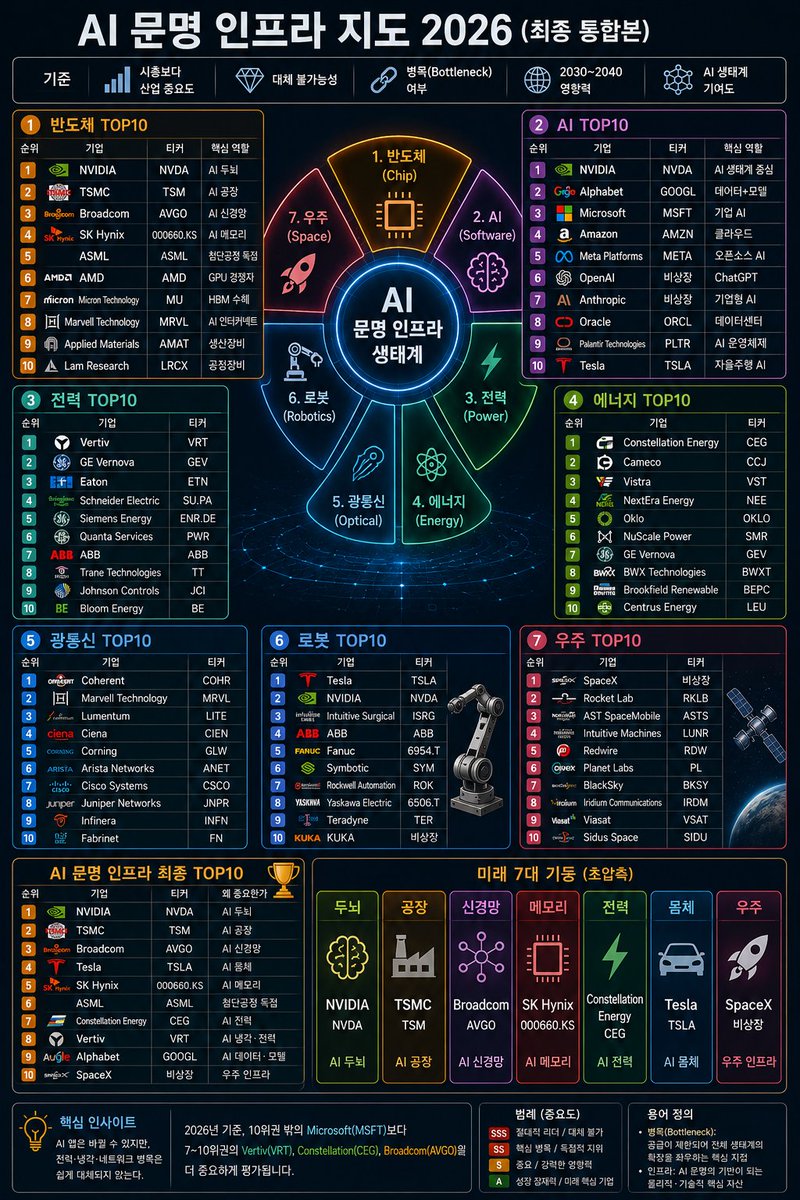
요즘 AI 투자하면서 느끼는 건, 결국 돈은 AI 앱보다 인프라가 가져가는 것 같음. AI 문명을 건물로 치면 🧠 NVDA = 두뇌 🏭 TSM = 공장 🌐 AVGO = 신경망 💾 SK하이닉스 = 메모리 ⚡ CEG = 전력 🔌 VRT = 냉각·전력망 🤖 TSLA = 몸체 🚀 SpaceX = 우주 확장 그리고 그 위에서 GOOGL, MSFT, AMZN, META, OpenAI가 서비스를 올리는 구조. 많은 사람이 AI 모델만 보는데, 실제로는 반도체 → 에너지 → 전력 → 광통신 → AI → 로봇 → 우주 순으로 연결된 거대한 공급망이 더 중요해 보임. AI 앱은 바뀔 수 있다. 하지만 전력, 냉각, HBM, 파운드리, 네트워크 병목은 쉽게 대체되지 않는다. 그래서 개인적으로는 "누가 AI 1등 할까?" 보다 "AI가 성장하면 반드시 써야 하는 기업은 어디일까?" 를 더 중요하게 보고 있음. NVDA TSM AVGO SK하이닉스 ASML CEG VRT TSLA GOOGL SpaceX 이 10개가 지금 기준으로는 AI 문명의 핵심 인프라에 가장 가까워 보인다. 물론 미래는 아무도 모른다. 하지만 역사를 보면 금광보다 곡괭이 회사가 오래 살아남는 경우가 많았다. 🚀
당파이어 tweet media당파이어 tweet media당파이어 tweet media당파이어 tweet media
당파이어@dangfire_

요즘 느낀 건데 한 종목(내 경우엔 테슬라)에 비중을 크게 실어서 장기투자하려면, QQQ나 VOO 같은 지수투자를 기본으로 가져가면서 포트의 적게는 10%, 많게는 20% 정도는 내가 진짜 투자해보고 싶은 종목들에 써보는 것도 괜찮은 방법인 것 같다. 어차피 사람은 궁금한 걸 안 해보면 계속 미련이 남더라. 내 포트는 현재 TSLA 약 50% SMH + QQQ + SPY + VOO 같은 미국 성장자산 BTC 이게 사실상 대부분이다. 그래서 나는 스스로를 AI 투자자나 우주 투자자라고 생각하지 않는다. 그냥 테슬라 비중이 큰 장기 투자자에 가깝다. 대신 포트 일부에서는 내가 공부하면서 흥미를 느끼는 분야들을 조금씩 모아가고 있다. 그게 지금은 AI, 우주, 방산 인프라다. 예전에는 AI 투자 = 엔비디아 정도로 생각했다. 근데 공부를 하다 보니 AI가 돌아가려면 생각보다 훨씬 많은 것들이 필요하더라. AI 연산 → CBRS AI 전력 → NVTS AI 연결 → CRDO AI 센서 → LPTH AI 특수 메모리 → MRAM 그리고 이미 보유 중인 ANET, VRT, DELL 같은 기업들도 결국 AI 인프라 생태계 안에 있다고 생각한다. 시선을 우주로 돌리면 우주 운송 → RKLB 우주 통신 → ASTS 우주 관측 → PL 우주 건설 → RDW 달 경제 → LUNR 위성 지상 인프라 → GILT 같은 회사들도 보이기 시작했다. 재밌는 건 올초부터 토스 부계좌에서 자동매수 돌린 RDW, LUNR, ASTS가 수익률 상위권이라는 거 ㅋㅋ 여기다 최근에는 국장 포모 와서 "에이 설마 더 가겠어?" 하면서 SK하이닉스 현대차 코리아테크TOP10 메가테크 ETF 이런 것도 조금 담아봤는데 (솔직히 국장은 폭락할 줄 알고 샀음...) 내 예상과 반대로 올라버려서 당황 중 🤣 물론 나는 아직도 배우는 입장인 주린이라 틀릴 가능성은 충분히 높다. 근데 투자하면서 점점 드는 생각은 앞으로 10년 뒤 세상을 상상해보면 데이터는 더 많아지고 AI는 더 똑똑해지고 전력 수요는 폭증하고 지구와 우주는 더 촘촘하게 연결될 것 같다. 그래서 지금 내 종목별 1,000만원 미만 포트는 '이미 완성된 세상' 보다는 '앞으로 만들어질 세상' 에 투자하고 있는 느낌. 솔직히 여기서 어떤 종목이 10배 갈지는 전혀 모르겠다. CBRS일 수도 있고 RKLB일 수도 있고 ASTS일 수도 있고 아무도 모른다. 어쩌면 절반은 실패할 수도 있고 내 생각이 완전히 틀릴 수도 있다. 근데 적어도 CBRS, CRDO, NVTS, LPTH, RKLB, ASTS 같은 회사들은 지금 세상의 병목을 해결하려고 하는 회사들이고 그 과정에서 산업 자체를 바꾸려고 하는 회사들 같아서 계속 공부하게 된다. 결국 내 포트를 한 줄로 요약하면 "포트 50%는 TSLA. 나머지는 AI·우주·방산 인프라에 대한 장기 베팅." 10년 뒤 이 글을 다시 보면 천재였을지 바보였을지 아니면 그냥 운이 좋았던 사람일지. 그때 가서 확인해봐야겠다 ㅋㅋ 🚀

한국어
4
50
144
13.1K
大道无形 retweetledi
Reads with Ravi
Reads with Ravi@readswithravi·
Marcus Aurelius wrote this over 1800 years ago: “Until death, all defeat is psychological.”
English
192
6.8K
45.2K
1.4M
大道无形 retweetledi
Words of Wise | Mindset Coach
“Take time to deliberate, but when the time for action comes, stop thinking and go in.” — Napoleon Bonaparte
Words of Wise | Mindset Coach tweet media
English
3
54
331
6.8K
大道无形 retweetledi
Nicholas Mugalli
Nicholas Mugalli@RealNickMugalli·
Larry Ellison of $ORCL leveraged a $400B enterprise software company on one idea, proprietary data is the next AI frontier. Not models. Not chips. The data that hospitals, banks, and governments have been sitting on for decades. The stock is starting to agree again…
Nicholas Mugalli@RealNickMugalli

Nebius did $10M in revenue in 2023. Consensus puts them at $20B by 2028. That's a 2,000x in five years, on actual contracted GPU cloud demand. Most people still haven't heard of them. Thats without the Anthropic deal which imminently could be north of $65B of compute.

English
1
4
7
2.3K
大道无形 retweetledi
bodila
bodila@51bodila·
Oracle CEO started company with his last $1,200 - now he is building the world's largest AI cluster as the second richest person on Earth - he said Claude and ChatGPT are already the same and revealed which model you should use in 50-min he shows exactly how private data beats any AI model - completely free worth more than any $500 AI strategy course here's what he covers: • why all AI models are becoming commodities • the only unfair advantage left in AI - private data • how Oracle is building a 1.2 billion watt AI brain for OpenAI • why AI robots will be better surgeons than any human doctor most people are still arguing which AI model is better - while the people who figured this out are building moats with private data, so save it!
bodila@51bodila

JPMorgan CEO was fired from a bank after predicting it would go bankrupt - and he was right - now he controls $700B as CEO of the largest bank in the US - JPMorgan 35-min Harvard talk the most important rules from the world's best banker - only this video by Jamie Dimon worth to save

English
6
21
150
1.7M
大道无形 retweetledi
Millie Marconi
Millie Marconi@MillieMarconnni·
A Chicago philosopher wrote one book in 1940 proving that 95% of the books you have read in your life, you didn't actually read, and Charlie Munger has been telling people to read it for 50 years. His name was Mortimer Adler. He spent 40 years at the University of Chicago, ran the editorial board of the Encyclopædia Britannica, and built his entire career on one uncomfortable observation about the people around him. Most adults who called themselves well-read had not actually read a book in the real sense even once. They had run their eyes over the pages, registered the words, formed a vague impression, and put it back on the shelf. The book had passed through them without ever entering them. In 1940 he wrote How to Read a Book. It has stayed in print for 86 years. Charlie Munger recommends it. Naval Ravikant recommends it. Fareed Zakaria recommends it. Every serious thinker who builds a career on absorbing information eventually finds their way to this book, and the reason is that Adler had isolated something nobody else was naming clearly. There are four levels of reading. Almost everyone is stuck on the second one. The fourth level is so different from what most people call reading that you have probably never done it in your entire life. Level one is elementary. You learn it as a child. You decode the letters into words and the words into sentences. You finish the sentence and understand roughly what it said. This is reading the way a 7-year-old reads, and almost every adult on earth has stopped developing past this point in some quiet way. Level two is inspectional. This is skimming. You move through a book quickly to figure out what it is broadly about. You read the back cover, scan the table of contents, glance at a few paragraphs, and form an opinion. Most adults who claim to have read 50 books a year are actually doing this. They are inspecting books, not reading them. They walk away with a vague sense of the argument and almost none of the evidence that supports it. Level three is analytical. This is the level Adler said most people have never properly experienced. You take one book and you wrestle with it for as long as it takes. You identify the question the author is trying to answer. You map their argument from front to back. You write your disagreements in the margins. You force yourself to articulate, in your own words, what the author is claiming and why. The point is not to finish the book. The point is to argue with it as if the author were sitting across the table from you. Most people never do this once in their life, because it is exhausting and slow and feels nothing like the reading they were taught as children. Level four is the one almost nobody knows exists. Adler called it syntopical reading. The word means "across topics," and the technique is something closer to running a small private research lab in your own head. You pick a single question that actually matters to you. How does power corrupt people. Why do civilizations collapse. What makes a marriage last. How does a person change their own mind. Then you assemble five or ten or twenty books from different authors, different centuries, different traditions, all of them taking a swing at the same question. You do not read any of them cover to cover. You move between them. You find the chapter in book three that addresses the same question as the chapter in book seven. You force those two authors to argue with each other inside your own head. The book stops being the unit of reading. The question becomes the unit. And the authors become voices in a conversation you are now hosting. This is the level where reading stops being consumption and starts being construction. You are no longer absorbing what someone else thinks. You are building a position of your own out of the friction between people who disagreed. Adler argued that this is the only level of reading where you stop being a passive receiver of other people's ideas and start being someone who can produce ideas of their own. The reason Charlie Munger has been recommending this book for 50 years is that this is exactly how Munger has always thought. He calls it building a latticework of mental models. The technique he is describing is just syntopical reading applied for a lifetime. You take the strongest insight from psychology, the strongest insight from biology, the strongest insight from economics, and you stack them against the same problem until something new falls out the bottom. The reason most people never reach level four is not that it is intellectually difficult. It is that it is logistically uncomfortable. It requires you to keep multiple books open at once. It requires you to take notes that nobody is going to grade. It requires you to abandon the goal of finishing books and replace it with the goal of answering questions. This is also why AI just changed everything Adler was teaching. NotebookLM, Claude, and tools like them let you do syntopical reading at a speed that would have looked like magic to a Chicago philosopher in 1940. You upload 10 books on the same question. You ask the AI to surface every place those authors agree and every place they contradict each other. The technique Adler said almost nobody on earth had reached can now be run on a Sunday afternoon by anyone with a laptop and one good question. The technique was always the unlock. The bottleneck used to be time. The bottleneck is now curiosity. Most people will keep reading the way they always have. A book at a time. Eyes over the pages. No question driving it. No other authors in the room. Adler called that level two for a reason. You are not behind on your reading list. You are behind on the level you are reading at.
Millie Marconi tweet media
English
56
766
3.2K
171.9K
大道无形 retweetledi
Jack Prescott
Jack Prescott@JackPrescottX·
People should read this article from Joe a year ago: “America built the biotech revolution. But FDA red tape and policy that discourages US bio-manufacturing is strangling our innovation and handing the future to China. We've watched this happen in other industries. Our new essay shows how the administration can fix it and restore U.S. leadership. Let’s make the FDA Great Again! 1) Clinical trials and FDA reviews must move faster. Every FDA delay means patients wait longer—often forever—for lifesaving treatments. The FDA must ditch nonsensical requirements for Phase 1 trials. It must also embrace smarter clinical trials: adaptive designs, challenge trials, and partial holds instead of freezing entire studies. Real-time AI-driven reviews can cut delays from years to weeks, accelerating innovation while maintaining safety. Rare diseases suffer the most from rigid FDA demands—huge trials for conditions with fewer patients. Let's renew the Priority Review Voucher program and tailor approvals realistically. Every patient deserves a chance at life, no matter how rare the condition. 2) The FDA needs to rethink approvals altogether. Transparency, progressive approvals, and robust post-approval monitoring let doctors and patients make informed choices. Trust innovators and physicians—we shouldn't be held hostage by a single bureaucrat's opinion. Competition breeds innovation—bureaucratic monopolies breed stagnation! We need multiple approval pathways. 3) The medical & drug supply chain is dangerously reliant on foreign manufacturing with no oversight, especially in China. We must onshore critical medicines and build domestic production capacity while the FDA enforces equal standards globally—no more free passes abroad! COVID exposed our medical supply vulnerability. Reorganize BARDA, ARPA-H, and ASPR into a rapid-response powerhouse, focused on swift clinical trials and flexible manufacturing. Future crises demand speed, agility, and resilience. America has the talent, resources, and innovation to dominate biotech in this century, and improve tens of millions of lives. What has been missing previously is bold leadership at FDA and HHS willing to take on bureaucracy and risk-aversion; I’m optimistic for the new leaders!” That’s just a quote from him summarizing the article. Read the full thing. Link in the replies:
Jack Prescott tweet media
Joe Lonsdale@JTLonsdale

1/ US biotech is in crisis, right before AI should be saving millions. China is stealing away our industry and has surpassed the US in blockbuster pharma deals. The next FDA Commissioner must be a fighter, and have a plan to overhaul the agency, beat China, and unleash cures.


English
1
4
19
2.2K
大道无形 retweetledi
Business Nerd
Business Nerd@Business_Nerd_·
Stanley Druckenmiller on the biggest mistake investors make: "I have found it's very important never to invest in the present." Druckenmiller explains that much of his approach came down to intuition but that the discipline behind it isn't complicated. He uses cyclical companies as his example: "If you're dealing with a cyclical company and they're losing money or they're not profitable and everybody in their industry is shutting capacity down, doesn't take a rocket scientist to try and envision 18 to 24 months out." The logic is simple: today's losses can set up tomorrow's profits. "If nobody's adding capacity, they might not be losing money anymore. They might be making a lot of money."* This is why he refuses to anchor his decisions to current conditions: "Always try and envision the situation as you see it in 18 to 24 months and then see if you feel things will be differently than they are now [and whether] security prices reflect that." He sums up the error he sees most often: "I think that's probably the biggest mistake investors make is they invest in the present rather than forward looking and looking where the puck's going instead of where the puck is."
English
2
30
73
9.8K
大道无形 retweetledi
SciTech Era
SciTech Era@SciTechera·
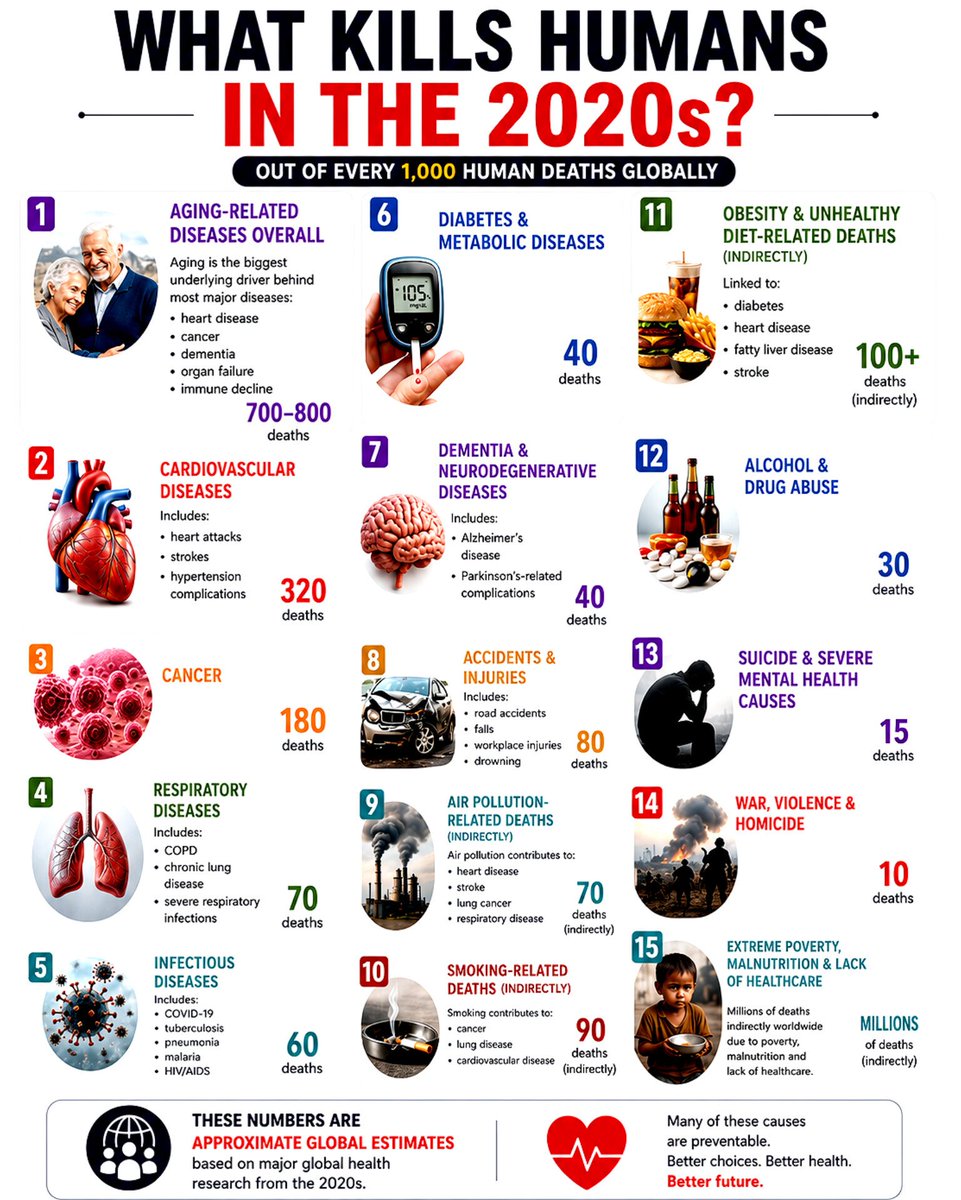
We have to remove the causes of death. Remove the things that accelerate our aging. And add the things that extend our healthspan. We need to develop personalized nutrients tailored to each individual, helping protect the organs that age the fastest. For example, students may need extra support for their eyes, brain, and inactive muscles due to long hours of studying and sitting. And this is possible to do. That’s it. Most people are dying from aging, cancer, accidents, metabolic disease and air pollution across many countries. These problems need to be solved!
SciTech Era tweet media
English
8
25
98
11.2K
大道无形 retweetledi
Reads with Ravi
Reads with Ravi@readswithravi·
Andrew Huberman on doing hard stuff:
Reads with Ravi tweet media
English
6
126
938
17.7K
大道无形 retweetledi