humanoidX

305 posts

humanoidX

humanoidX

@humanoidddX

Katılım Ağustos 2025
138 Takip Edilen0 Takipçiler
humanoidX retweetledi

Yuri Bezmenov's Ghost
Yuri Bezmenov's Ghost@Ne_pas_couvrir·
The male urge to lift heavy things for no reason.
English
147
406
7.7K
553K
humanoidX retweetledi
LUIS
LUIS@luisomor·
Rucking is for elite level athletes only Kills two birds with one stone and builds rhino legs
LUIS tweet mediaLUIS tweet media
English
19
37
1.7K
88.3K
humanoidX retweetledi
Daniel Foley Carter
Daniel Foley Carter@foley_seo·
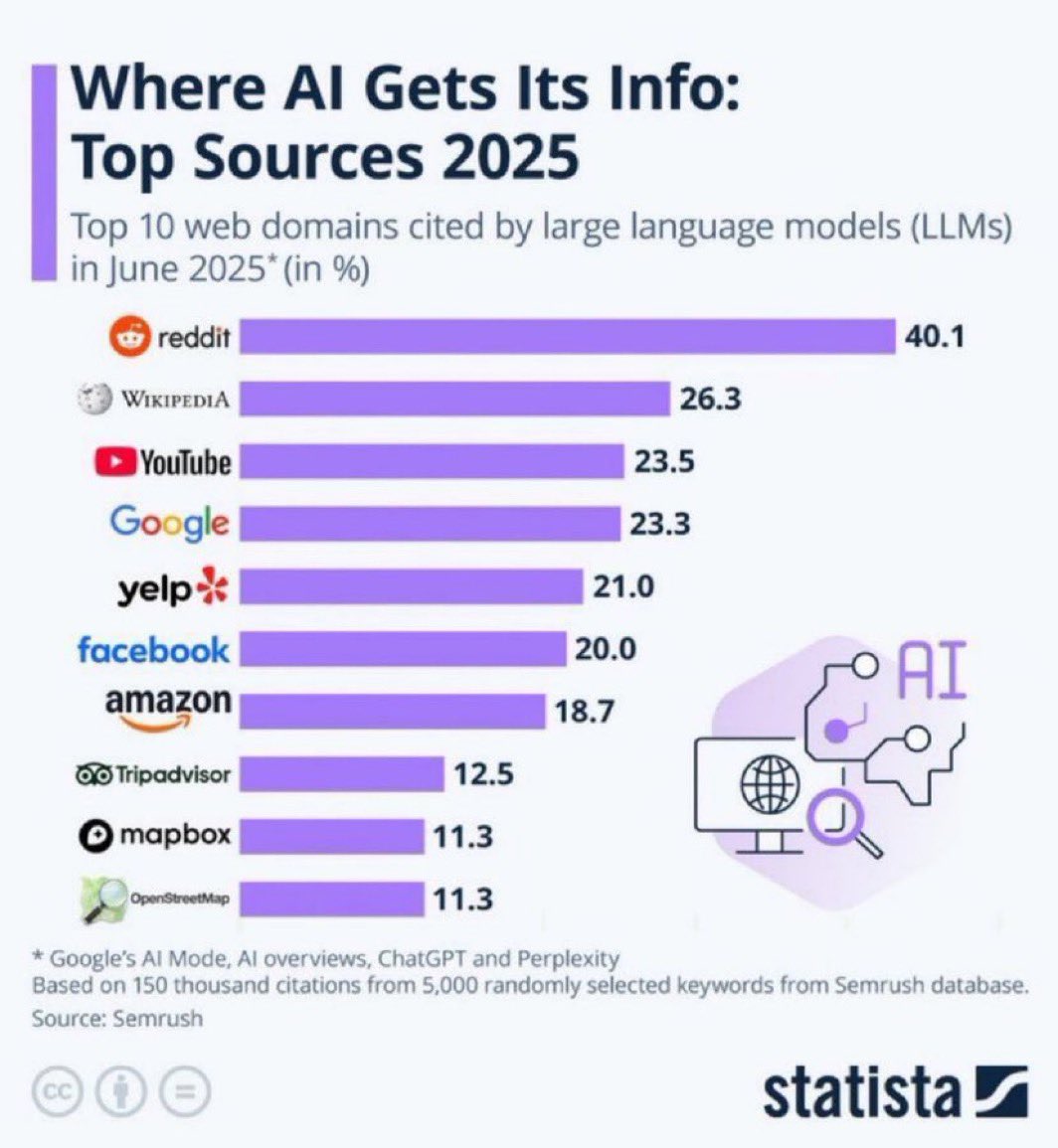
SEO TIP! Indexing is the FOUNDATION of everything SEO and subsequently AI/LLM citations to a degree where query-fan outs and grounding are concerned. And yet INDEXING is where I see most of the issues during auditing. To make it ABUNDANTLY clear - it is now MUCH harder to get Google to index content, primarily because there are more considerations Google makes before indexing a URL. Indexing performance has so many variables: ➡️ The domains overall quality score ➡️ Domain trust factors (history, authority, patterns, behaviours) ➡️ The strength of domain & associated brand ➡️ Accessibility of content (links, rendering, presentation) ➡️ Content quality itself (uniqueness, value, NLP, E-E-A-T/YMYL etc) Google is SIGNIFICANTLY more conservative with indexing now - primarily because: ❌ 1. It was unsustainable for GOOGLE to index EVERYTHING with the potential for only serving a small portion of all that content ❌ 2. It costs ££££ to crawl, render, index, store and process/recall that data, so it makes sense to filter content at source before indexing - this reduces index and render/processing burden. ❌ 3. SERPS naturally have variation, it's how Google can better understand user behaviour modelling against inferred intent - document variation means the probability of "similar" documents ranking goes down, now imagine you have thousands of similar documents (because traditionally content strategies often hinged off copying those who ranked - leading to a surplus of the same content" There's loads of other things: 🧠 1. Next word pattern matching - AI content isn't the problem per se, but, low effort content (AI produced) has a higher probability of poorer engagement or not adding unique value 🧠 2. Traditional click forecasts / CTR 🧠 3. Internal link counts, link equity distribution Then there's the domain itself - a domains overall quality scoring can be determined by the behaviours exhibited in things like content growth and link growth - less trustworthy domains will find it harder to get content indexed - same for newer domains. Scaled content abuse is raising the bar to indexing. I see FAR more sites suffering indexing issues than in the past, primarily because over the years they;'ve been through various SEOs / agencies and ultimately it's lead to a mish mash of strategies - some of which could of been damaging in regards to trust. If you are struggling to get content indexed - it's usually not just a content issue. Young domains now don't benefit the way they used to - it's not a sandbox effect but more a trust effect that limits how quickly that content is weighted/indexed. I could go on but yeah - if anyone is having to force indexing of content it;'s likely they'll face ongoing challenges to get content making momentum. #seo #seotips
Daniel Foley Carter tweet media
English
9
10
91
6.6K
humanoidX retweetledi
Damian Player
Damian Player@damianplayer·
Palantir CEO, Alex Karp says only 2 types of people will survive the AI era..
Damian Player tweet media
English
693
1K
9.7K
1.3M
humanoidX
humanoidX@humanoidddX·
@AdamPrabata Sering enjaculate bukannya menaikkan prolactine ya dok, yang pada akhirnya menurunkan testosterone?
Indonesia
0
0
0
328
dr. Adam Prabata
dr. Adam Prabata@AdamPrabata·
Ternyata ada penelitian menarik juga tahun 2016 yang menunjukkan bahwa orang yang ejakulasi minimal 21 kali per bulan, ternyata memiliki risiko kanker prostat yang lebih rendah (19%) dibandingkan dengan yang "hanya" ejakulasi 4-7 kali per bulan. Penelitian ini bahkan jadinya mempertanyakan ulang sebenarnya berapa idealnya frekuensi ejakulasi pada laki-laki per bulannya. Semoga bermanfaat.
dr. Adam Prabata tweet media
Dan Go@CoachDanGo

Men who ejaculate 21x or more per month are less likely to develop prostate cancer compared to those who ejaculate less frequently.

Indonesia
51
197
1.3K
102.1K
humanoidX retweetledi
LUIS
LUIS@luisomor·
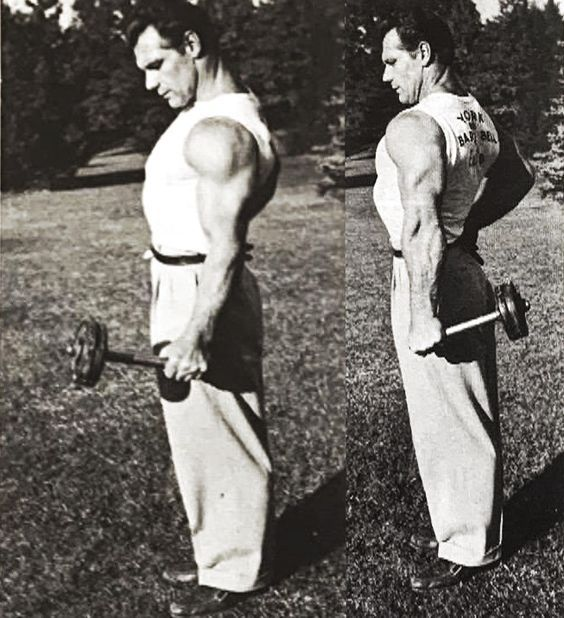
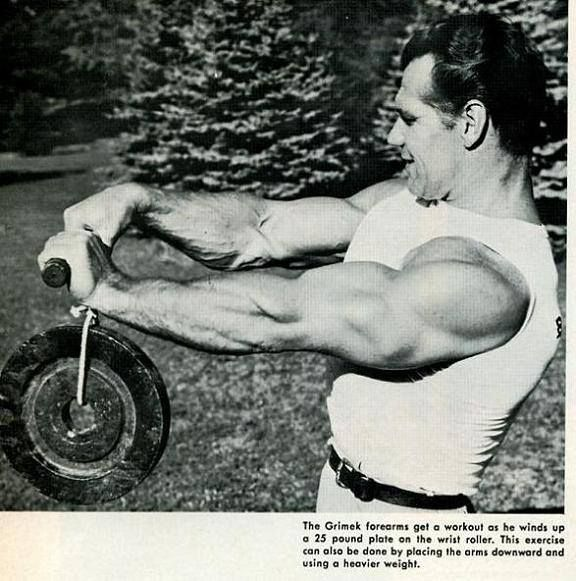
Please DO NOT neglect training your forearms directly Grip strength is essential for all your other lifts and it's directly linked to your testosterone levels Forearms are the most underrated muscle group for both aesthetics and hormonal health
LUIS tweet mediaLUIS tweet media
English
28
54
1.1K
39.6K
humanoidX retweetledi
Almer
Almer@Kutekians·
J.P. Morgan: Foreign equity ownership Indonesia 65% → 38%. Bonds: Asing 13%, Domestik 87%. Bad news? Not that simple. Ada trade-off nya. Ini punya dua sisi yang jarang dijelaskan bersamaan. POSITIF: Lebih resilient terhadap guncangan global. Ingat tahun 2013 saat Taper Tantrum? Asing pegang 30%+ SBN kita. Asing panik dan kabur di 2013. Rupiah jatuh 26% dalam hitungan bulan & IHSG ambruk. Sekarang mereka cuma 13%. kalau mereka panik keluar hari ini, dampaknya jauh lebih terbatas. Shock absorber kita secara struktural jauh lebih baik. NEGATIF: Ada harga yang harus dibayar. Dengan sedikitnya asing di pasar, pemerintah harus offer yield lebih tinggi untuk attract buyers (utang lebih mahal). Price discovery jadi kurang efisien. Likuiditas pasar menipis. Lebih Stable tapi lebih Mahal. Lebih Resilient tapi lebih Sepi. Double-edged sword. Satu hal yang menarik dari chart kanan (Bond): Asing sempat naik tajam ke ~IDR 960 triliun di mid-2025 sebelum balik turun. Ada window mereka mau masuk, tapi ga bertahan. Artinya: appetite ada, conviction belum. Conviction itu datang dari dua hal: Policy clarity dan stable currency.
Almer tweet media
Indonesia
21
152
692
25.2K
humanoidX retweetledi
Yiran 🚆
Yiran 🚆@kroketrendang·
Groups that have high similarity but are really insecure about it: - Jews and Arabs - Indians and Pakistanis - Moroccans and Algerians - British and Irish - Koreans and Japanese - Greeks and Turks - Thai and Laotians - Vietnamese and Cambodians - Indonesians and Malaysians
English
746
1.7K
27.2K
1.2M
humanoidX
humanoidX@humanoidddX·
@business Kata influencer saham di mari, waktunya Buy (supaya mereka bisa exit 🤪🤪🤪)
Indonesia
0
0
3
3.6K
Bloomberg
Bloomberg@business·
Indonesian stocks recorded their biggest foreign outflow in more than two decades, likely driven by block trades in palm oil maker FAP Agri, amid heightened scrutiny on ownership in the wake of MSCI’s investability concerns bloomberg.com/news/articles/…
English
17
132
482
289.1K
humanoidX retweetledi
Daniel Fuberski 🇵🇱🇫🇷
Trump thinks he can solve a clash of ancient civilisations that started more than 2500 years ago. The Israelis are Mesopotamians, and the Iranians are Indo-Europeans. Abraham is explicitly from Ur of the Chaldees, which is in southern Iraq, near modern Basra. There is no meaningful genetic discontinuity between the people of ancient Mesopotamia and the people who became Canaanites who became Israelites. Hebrew is a Semitic language. The Semitic language family originated in Mesopotamia and the Arabian Peninsula. Hebrew, Aramaic, Akkadian, Arabic, Babylonian — all branches of the same tree. Hebrew and Babylonian Akkadian are cousin languages the way Spanish and Italian are cousins. They share root words, grammatical structures, and conceptual vocabulary going back thousands of years before the Bible was written. The foundational myths of Judaism — creation, the flood, paradise, the first man, the tower — all have direct Mesopotamian predecessors that are older. The ethical and legal framework — the covenant structure, the law codes — mirrors Mesopotamian forms. The calendar is Babylonian. The alphabet is Aramaic-Mesopotamian. The very concept of recording sacred history in written texts is a Mesopotamian invention. El — the chief god of the early Israelites and the root of the word Elohim, one of the Hebrew names for God — was a Canaanite/Mesopotamian deity. The word Israel itself contains El. The angels, the cosmic hierarchy, the idea of a divine council — all have deep Mesopotamian roots. Early Israelite religion before the exile looks very much like a local variant of broader Mesopotamian religious culture, with Yahweh gradually absorbing the attributes of El, Baal and others into a single deity. "Iran" comes directly from "Aryana" — land of the Aryans. The Iranians were Indo-European, not Semitic. This is the foundational distinction. Where the Semitic world — Sumerians absorbed by Akkadians, Babylonians, Canaanites, Jews, Arabs — emerged from the Fertile Crescent and Arabian Peninsula, the Iranians came from somewhere completely different. The Iranian peoples were part of the great Indo-European migration — a population that originated on the Pontic Steppe, the grasslands north of the Black Sea and Caspian Sea, in what is now Ukraine, southern Russia and Kazakhstan. Around 2000–1500 BC these steppe peoples began expanding in all directions on horseback, carrying their languages with them. One branch went west and became the Greeks, Romans, Celts, Germans, Slavs. Another branch went south and east and split into two streams — one into India becoming the Vedic civilization, one into Iran becoming the Persians and Medes. Old Persian, Sanskrit, Greek, Latin and all their descendants are branches of the same tree. The word for father in Persian is "pedar," in Latin "pater," in Greek "patér," in Sanskrit "pitár," in English "father." The word for god in Persian is related to the Sanskrit "deva." The Iranian god Mithra appears in Roman religion as Mithras and possibly echoes in the Vedic Mitra. These are not coincidences — they reflect a common origin perhaps 5,000 years ago on the Eurasian steppe. The two main Iranian tribes that entered history were the Medes in the northwest and the Persians in the south. The Medes formed the first Iranian empire around 700 BC, destroying the Assyrian Empire — the superpower of its day — in alliance with the Babylonians. Then the Persians under Cyrus the Great overthrew the Medes in 550 BC and built the Achaemenid Empire. In 651 AD the Sassanid Persian Empire — the last great pre-Islamic Persian dynasty — was destroyed by the Arab Muslim armies in one of the fastest conquests in history. Iran was Islamicized. Arabic became the language of religion and high culture. Yet something remarkable happened — unlike Egypt, like North Africa, like the Levant, which gradually became Arabized in language and identity, Iran kept its language. Persian survived. Within two centuries Iranians were writing sophisticated poetry, philosophy and science in Persian — using the Arabic script but their own language. The Persian cultural identity proved resilient enough to absorb Islam without being dissolved by it. The Persian literary renaissance of the 9th-10th centuries produced figures like Ferdowsi, whose Shahnameh — Book of Kings — deliberately reconstructed pre-Islamic Persian identity and mythology. It was a conscious act of cultural preservation remarkably similar to what the Jewish scribes did with the Torah in Babylon. A conquered people writing their way back into existence. So you have two civilizational streams that met in the Middle East: The Semitic stream — out of Arabia and the Fertile Crescent, producing Sumerians, Akkadians, Babylonians, Canaanites, Jews, Arabs. Urban, agricultural, text-centered from very early, building civilization in river valleys. The Indo-European Iranian stream — out of the Eurasian steppe, mounted, pastoral, bringing a completely different cosmology, a dualistic theology, a warrior aristocratic culture that then learned to govern sedentary civilizations from the Semitic world. Modern Iranians are the descendants of that Indo-European Iranian stream, heavily mixed with the pre-existing Elamite and Semitic populations of the region, then further shaped by Arab Islamic conquest. Genetically they are distinct from Arabs — closer to South Asians and Europeans than to Semitic Arabs in certain markers, reflecting that ancient steppe origin. Linguistically Persian is closer to English than it is to Arabic — both are Indo-European, while Arabic is Semitic. Which makes the current conflict between Iran and Israel — between the heirs of the Indo-European Iranian world and the heirs of the Semitic Mesopotamian-Canaanite world — in some sense a resumption of the oldest cultural fault line in the Middle East. The same two civilizational streams that first encountered each other when Cyrus walked into Babylon in 539 BC, when he freed the Jews and sent them home. Except then they were allies. And the Iranian was the liberator of the Semite. History has a very dark sense of humor.
Daniel Fuberski 🇵🇱🇫🇷 tweet media
English
238
798
2.5K
257.8K
humanoidX retweetledi
Nathan Gotch
Nathan Gotch@nathangotch·
Today I turn 36, and it made me reflect on how much my SEO methods have changed over the last decade. In my 20s, I relied on spammy PBNs. Today, I build AI-resistant SEO systems. Here’s how my strategy evolved to survive and thrive: 1/ The gray hat era (2011–2015) When I first started, I leaned heavily on gray hat tactics because they were easy and effective. My strategy was basically: - 90% link building - 10% content I built massive private blog networks (PBNs) to manipulate rankings. It worked. Until it didn’t. 2/ The turning point (2015) Then the house of cards collapsed. Google found my footprint, and I woke up to manual actions across my entire network, including client sites. It was a brutal wake-up call. That moment forced me to swear off artificial link manipulation for good. 3/ The white hat shift After that, I completely flipped my philosophy: - 90% content - 10% link building But more importantly, I stopped chasing top-of-funnel vanity traffic. Instead, I built from the bottom of the funnel up, focusing on commercial keywords that actually drive revenue. 4/ Splintering + link bait I used to publish 10,000-word monster guides. As search evolved, I shifted toward splintering topics into hyper-specific micro-assets designed to match search intent more precisely. To replace my old link network strategy, I started creating data-driven linkbait that could attract editorial links naturally. 5/ The modern AI era Today, the game is bigger than Google. We’re in the era of Search Everywhere Optimization. LLMs like ChatGPT don’t always rely on Google’s top 10 results. They often pull from trusted third-party sources and brand mentions across the web. 6/ Anti-AI content You’re not going to win by mass-producing generic AI articles. The advantage now is creating what I call anti-AI content: content rooted in real experience, original data, firsthand testing, and insights that generic AI content can’t easily replicate. That’s where defensibility comes from. 7/ The merger technique For advanced link building today, I use what I call the Merger Technique. I acquire dormant niche websites or single-purpose free tools with strong link profiles, then 301 redirect them to relevant pages to absorb their existing authority. Used correctly, it’s one of the few leverage plays left in SEO. SEO has always been a moving target. The people who win aren’t the ones chasing loopholes. They’re the ones who adapt, build better systems, and create real value. That’s the game now.
English
21
4
55
5.5K
humanoidX retweetledi
Brett Winton
Brett Winton@wintonARK·
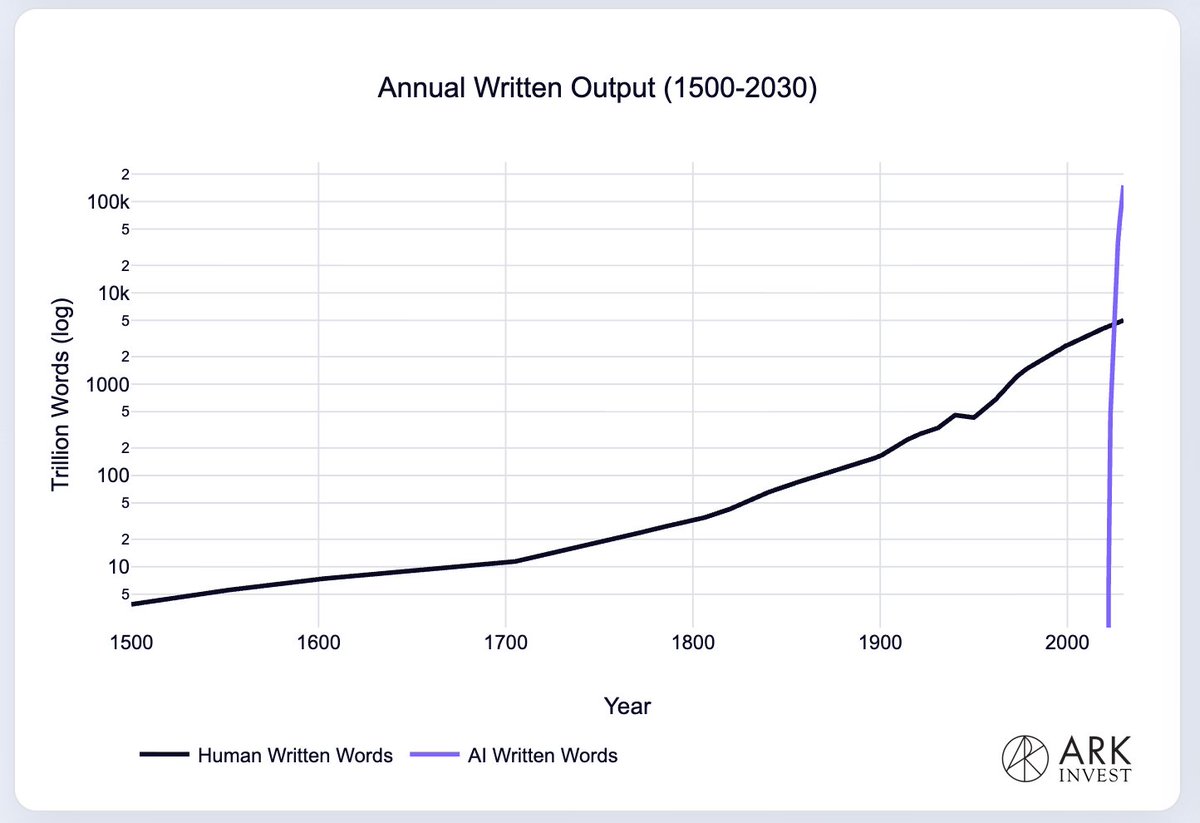
We have been surpassed: AI written output exceeded human written output in 2025
Brett Winton tweet media
English
727
696
3.5K
22.9M
humanoidX retweetledi
TOP G
TOP G@menscoach1·
Divorce rates are high in this generation for one simple reason. People don't understand what marriage actually is. Social media made everyone believe there's always someone better out there, a richer man, a prettier woman, a more exciting life, but comparison kills loyalty. People want weddings, not marriages. They'll spend months planning a ceremony and zero time learning how to communicate when things get hard. Nobody knows how to argue anymore. They yell, they shut down, they run instead of learning how to fight for each other. Money pressure exposes weak foundations. Instead of building together, couples turn on each other, men stop leading, women stop respecting their men, temptation is everywhere. Now everyone uses therapy words to escape accountability. Everything is toxic, everything is trauma. Nothing is ever their fault. There's no community pressure to stay married anymore. No elders saying work it out. Just friends saying leave. You deserve better. Kids became optional, sacrifice became outdated and vows became suggestions. Marriage used to mean I'll suffer with you. Now it means I'll stay as long as I'm happy. And that's why divorce is high. Because people don't know how to suffer together. They only know how to quit when excitement is no longer there. We are in the trenches!!
English
102
1.1K
3.6K
247.3K
humanoidX retweetledi
Clair 光
Clair 光@lynxluna·
Man to man: 💰50jt sebulan artinya ada di top 5%. Masih kurang, push terus dirimu ke top 1% dengan membawa pulang ~98jt sebulan. ☝️Pastikan dapat sebelum menikah dan udah jadi beberapa aset yg udah growing. Jangan boros cuma buat dipamerin. 🤴Enjoy being a king 😇
Si Ransel@siransel24

In this economy pasangan yg bisa reach dual income 50jt di usia late 20 itu salah satunya adalah pengusaha (merintis) dan dokter (umum), pembagian 60-40% lah By the time si pengusaha udah mulai gede dan si dokter udah spesialis, 100jt per month di usia late 30 possible bgt Tapi path ini gak mudah dan puanjanggggg prosesnya

Indonesia
27
226
1.8K
90.4K