"I was in South Africa for a wedding when the impeachment of Obasa commenced. I was confused when I returned. I saw my colleagues signing and I signed too thinking the order was from the presidency until the president called us to return the speaker which we did." — Desmond Elliot
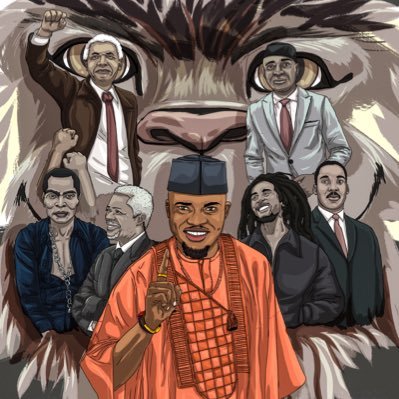
Rotimi Amechi, bold and courageous.
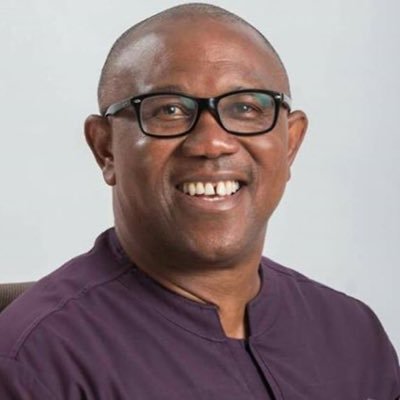
Peter Obi, calm and calculative.
Nelson wike, loud and arrogant.
Atiku, old and selfish.
El Rufia, smart and crafty
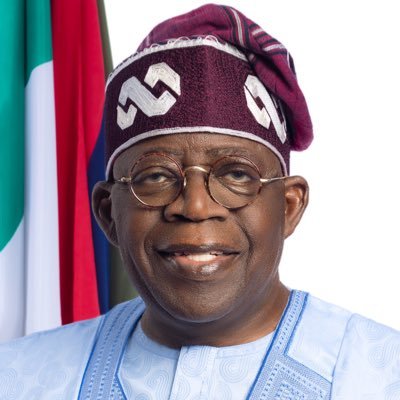
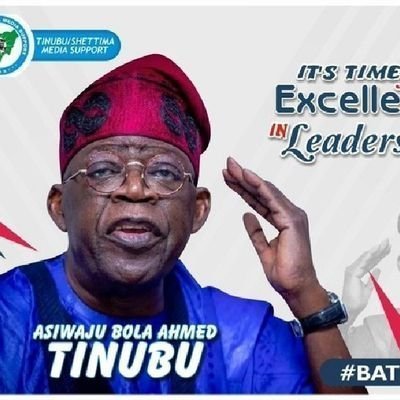
Tinubu?
Peter Obi is someone who definitely reads the instruction manual for any new appliance before he starts using it and will keep the receipt and warranty should in case his children need it.
The man is just too detailed. He’d make such a fine leader.
It’s my birthday! 🎉
Another year of gratitude, growth, and appreciation. I’m truly thankful to God for His grace, protection, and countless blessings through every season of my life.
Thank you Lord for all You have done for me — for the wins, the lessons, the strength, and the gift of life. Here’s to a new chapter filled with purpose, peace, and greater things ahead. ❤️
And of course… I’ll gladly be expecting gifts from my well-wishers today too. 😄🎁
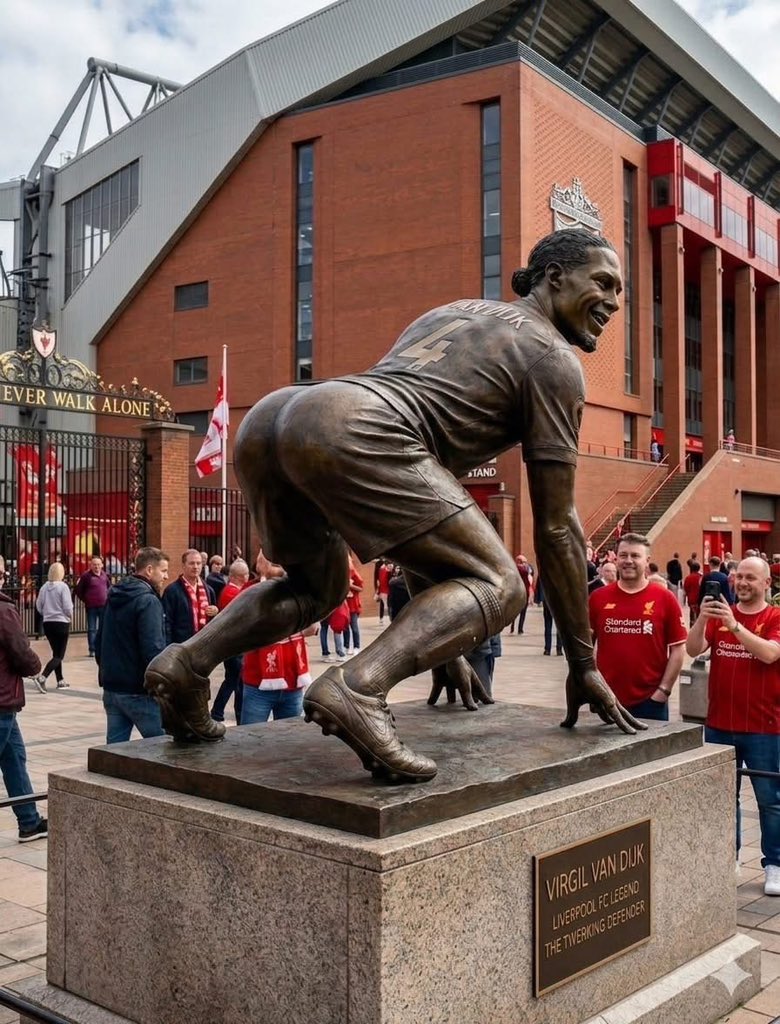
I’m an Arsenal fan, but I don’t want us winning the league tonight through Man City vs Bournemouth at the Vitality 😅 It wouldn’t feel fully earned. I’m hoping City win 0-3, then we beat Crystal Palace ourselves to be crowned.
That would feel far more special.
Thoughts?
@HarmlessHQ Obi is a very calm person, half of the nonsense he witnessed in those old politician and remained focused, many of them can't take half of it.
As Atiku tell Amaechi say he doesn't do zoning, Amaechi wan mad 😂
Amaechi now met David Mark and asked him why should someone who doesn't do zoning demand for a consensus ticket.
David Mark tried to calm Amaechi down, Amaechi stormed out from the meeting.
Rushed to the media and informed the entire country that Atiku is unelectable.
But I thought this people are in a coalition.
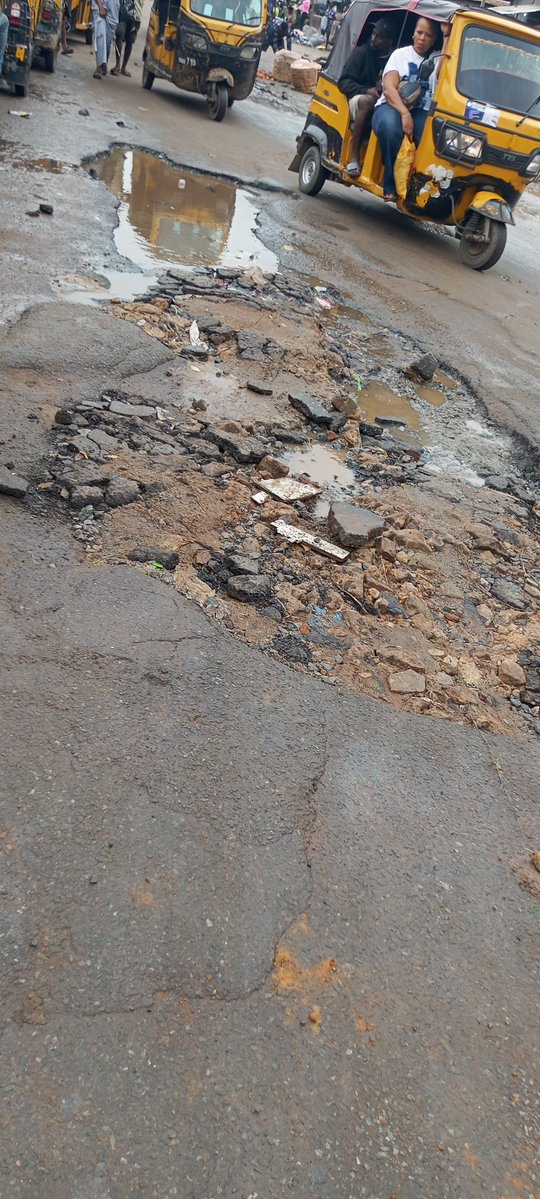
This is Obodo-Ukwu road in Okpoko, Ogbaru Onitsha, Anambra State.
Soludo did this road just last year September and after doing it he went to Channels Television and told the world that he has turned Okpoko to Dubai. Now look at the road this morning.
Debt Servicing, Borrowing, and Nigeria’s Fiscal Priorities
During his recent foreign tour, President Bola Ahmed Tinubu stated that Nigeria will spend about $11.6 billion on debt servicing, a figure that should concern anyone interested in the country’s economic future and long-term development.
There is nothing inherently wrong with borrowing when it is guided by prudence and directed toward productive investment. Countries such as Japan, the United Kingdom, the United States, the United Arab Emirates, Singapore, and Indonesia are all heavily indebted, yet their borrowings are largely channelled into education, healthcare, infrastructure, and innovation - sectors that generate long-term economic returns and sustain repayment capacity. As a result, despite high debt levels, their obligations remain more manageable because they are tied to measurable productivity.
Nigeria’s situation, however, is markedly different. A huge proportion of past borrowing has been directed toward consumption, with limited visible or sustainable developmental outcomes to justify the scale of indebtedness.
It is also important to note that a huge portion of the debt currently being serviced was accumulated under the Tinubu administration itself, while borrowing has continued at a significant pace. The administration’s recent external borrowing alone includes about $6 billion (from First Abu Dhabi Bank in the UAE—$5 billion, and UK Export Finance via Citibank London—$1 billion), a further $1.25 billion under consideration from the World Bank, and an additional $516 million arranged through Deutsche Bank, bringing the latest known external loan commitments to roughly $7.8 billion. In addition, domestic borrowing through monthly bond issuances continues to add to the overall debt stock.
Against this backdrop, Nigeria’s 2026 budget shows that health is ₦2.46 trillion, education is ₦2.56 trillion, and poverty alleviation is ₦865 billion, giving a combined total of about ₦5.885 trillion for these three critical sectors. By comparison, debt servicing at about $11.6 billion (approximately ₦17–₦18 trillion, depending on exchange rate assumptions) is almost three times higher than the total allocation to health, education, and social protection combined. This imbalance highlights a troubling fiscal reality in which debt obligations increasingly crowd out investment in human capital and poverty reduction. Moreover, even within the limited allocations to these sectors, funds may not be fully released, and a significant portion of what is eventually released could be misappropriated.
Ultimately, the central issue is not borrowing itself, but whether borrowed funds are being converted into measurable productivity, inclusive growth, and improved living standards. Without this, debt servicing shifts from being a temporary fiscal obligation to a long-term structural burden that constrains development and deepens economic vulnerability.
A New Nigeria is POssible. -PO
2GR-FE 3.5L V6 Engine Import from Canada to Naija!
My people, if you need strong **Toyota 2GR-FE 3.5L V6** engine, I dey import fresh low-mileage ones straight from Canada! This engine na beast — reliable well well.
**Cars wey use this exact 2GR-FE engine (perfect for swap):**
- Toyota Camry V6 (2007-2017) — very common for our side!
- Toyota Avalon (2005-2018)
- Toyota Highlander (2008-2016)
- Toyota RAV4 V6 (2006-2012)
- Toyota Venza (2009-2016)
- Lexus ES 350 (2007-2018)
- Lexus RX 350 (2007-2015)
Who need 2GR-FE engine for Camry, Highlander, ES350 or RX350? for price please Whatapp @ 08092300681
Thanks.
💪🇨🇦➡️🇳🇬
#NaijaMechanics#ToyotaNaija#2GRFE#EngineImport#Camry#Highlander#LexusNaija#CanadaToNaija
State visits by Leaders are not tourism, and diplomacy is not a fashion parade. Every foreign trip undertaken by a government must deliver measurable benefits to the people, including investments, technology transfer, trade agreements, factory expansion, industrial partnerships, and job creation.
During President Trump’s recent visit to China, the American delegation reportedly included a few top government officials, and many of the biggest figures in global business and technology:
Consequently, huge trade deals worth several billion dollars including about 200 Boeing orders were achieved.
The list of the entourage included
1. Donald J. Trump – President of the United States
2. Marco Rubio – Secretary of State
3. Pete Hegseth – Secretary of Defence
4. Elon Musk – CEO, Tesla & SpaceX
5. Jensen Huang – CEO, Nvidia
6. Tim Cook – CEO, Apple
7. Larry Fink – CEO, BlackRock
8. Stephen Schwarzman – CEO, Blackstone
9. Kelly Ortberg – CEO, Boeing
10. Brian Sikes – CEO, Cargill
11. Jane Fraser – CEO, Citigroup
12. Larry Culp – CEO, General Electric
13. David Solomon – CEO, Goldman Sachs
14. Sanjay Mehrotra – CEO, Micron Technology
15.Cristiano Amon – CEO, Qualcomm
16. Dina P. McCormick – President of Meta
17. Ryan McInerney – CEO, Visa
18. Michael Miebach – President, Mastercard
19. Jim Anderson – CEO, Coherent
20. Jacob Thaysen – CEO, Illumina
That is how serious nations approach diplomacy, by aligning foreign policy with economic expansion, industrial growth, innovation, and national productivity.
I hope that lessons can be learned from these recent visits comparing them with the President of Nigeria’s recent state visit to the United Kingdom.
A large entourage of politicians, aides, and government officials travelled, yet Nigerians are still asking a simple question: what exactly did Nigeria bring home?
Which factories are coming to Nigeria?
What power, technology, manufacturing, agricultural, or industrial agreements were secured?
How many direct jobs will this visit create for Nigerian youths?
What investments were attracted?
What measurable economic outcomes can the ordinary Nigerian point to?
The delegation reportedly included:
1. President Bola Tinubu
2. Senator (Mrs) Tinubu
3.12 governors
4.9 ministers
5.7 members of the National Assembly
6. Over 20 senior State House staff
7. Over 30 security personnel
8. Over 10 domestic staff
9. Several supporters and associates
It is not enough to ride horses, wear matching uniforms, attend royal banquets, and release glossy photographs. Symbolism without substance cannot feed hungry citizens.
Today, Nigeria is in decline, battling serious insecurity, food insecurity, unemployment, a weakened naira, declining industrial productivity, and worsening poverty.
At a time when millions of Nigerians struggle daily to afford food and survive economic hardship, every kobo spent on foreign trips must produce tangible national value: investments, factories, jobs, exports, infrastructure, and economic opportunities.
Nigeria needs leadership that is focused less on optics and more on productivity; less on ceremony and more on measurable economic results.
A New Nigeria is POssible. -PO