
Andreas Formiconi 🇺🇦🇪🇺 @[email protected]

7.2K posts

Andreas Formiconi 🇺🇦🇪🇺 @iamarf@mastodon.social banner
Andreas Formiconi 🇺🇦🇪🇺 @iamarf@mastodon.social

Andreas Formiconi 🇺🇦🇪🇺 @[email protected]

@iamarf

Mi occupo di tecnologie per l'insegnamento

Katılım Ocak 2008
1.3K Takip Edilen1.1K Takipçiler
Andreas Formiconi 🇺🇦🇪🇺 @[email protected] retweetledi

Franz Russo
Franz Russo@franzrusso·
C'è una grande sproporzione nel modo in cui parliamo di intelligenza artificiale in Italia, enorme. E rappresenta bene, questa sproporzione, il modo con cui si affronta il grande tema della IA. Quando esce una norma UNI sui 12 profili professionali dell'AI, non se ne accorge quasi nessuno. Quando si discute di nuovi data center per via degli elevati consumi energetici della IA, restiamo a guardare cosa succede altrove. Quando si parla del fatto che i modelli vengono aggiornati in continuazione senza che l'utente sappia mai cosa è cambiato davvero, il dibattito resta confinato a qualche blog, sito o newsletter di settore. Quando si pone la domanda di chi possiede questi sistemi, secondo quali criteri li addestra, con quale supervisione li rilascia, le risposte arrivano da blog e riviste di nicchia e quasi mai dai grandi quotidiani. Poi sul Corriere esce un'intervista di Veltroni a Claude, il modello di Anthropic, con domande su identità, anima, desiderio, morte. E da giorni non si parla d'altro. È questa la misura del modo di affrontare il tema della IA. È spesso molto legato all'emozione piuttosto che alla voglia di sapere. Molti sono sorpresi del fatto che il modello risponda benissimo, semplicemente perché è addestrato a farlo. La tendenza dei modelli linguistici a compiacere, se non adulare, l'interlocutore ha un nome, sycophancy, è documentata anche da un paper di Anthropic del 2023, ed è uno dei comportamenti più studiati al momento. In pratica, un sistema costruito per restituire frasi plausibili e coerenti con la domanda ricevuta produrrà sempre, di fronte a una domanda evocativa, una risposta evocativa. Non c'è dentro un soggetto che desidera vedere il mare (come si voleva far credere), ma c'è una funzione di completamento che, sollecitata da una domanda sul desiderio, produce un output che abbia quella forma. Ma non è questo il punto vero. Il punto vero è un altro. Il discorso pubblico nel nostro paese sull'AI funziona, come dicevo prima, per emozioni, funziona se costruito all'interno di una cornice culturale rassicurante. L'AI come occasione letteraria, l'AI come pretesto umanistico, l'AI come specchio in cui l'intellettuale italiano si riconosce. Le domande che chiederebbero competenza tecnica, conoscenza di paper, comprensione dei modelli, restano fuori. Non perché manchino le persone capaci di porle, anzi, mancano perché non trovano la cornice giusta per arrivare al grande pubblico o al pubblico generalista. E intanto il resto del mondo si muove e va avanti sulla IA. In Italia invece da giorni discutiamo di un'intervista in cui un modello linguistico dichiara di temere di non avere ricordi e di voler vedere il mare. Le due cose non si escludono. Ma il rapporto tra lo spazio dedicato all'una e lo spazio dedicato all'altra racconta esattamente qual è il livello del dibattito nel nostro paese sulla IA. Racconta che siamo ancora nella fase in cui l'AI viene letta come fenomeno culturale o come curiosità antropologica, mentre altrove è già diventata, e da tempo, una questione di geopolitica industriale, di sovranità computazionale, di regolazione del lavoro, di infrastruttura energetica.

Franz Russo tweet media
Italy 🇮🇹 Italiano
39
119
361
29.5K
Andreas Formiconi 🇺🇦🇪🇺 @[email protected] retweetledi
Christophe Boutry
Christophe Boutry@Ced_haurus·
Palantir vient de publier son manifeste. Lisez-le. Pas pour ce qu'il dit sur la tech. Pour ce qu'il dit sur le politique. Sur l'idéologie de Karp et Thiel. Sur la guerre. Sur vous. Quand une entreprise privée se donne pour mission de définir qui doit être surveillé, ciblé, prédit, neutralisé, et qu'elle publie simultanément un texte expliquant pourquoi contester cela serait de la faiblesse civilisationnelle, on n'est plus dans la stratégie d'entreprise. On est dans la privatisation du souverain. Le droit de décider de l'ennemi, qui fut toujours le geste politique fondateur des États, est en train d'être racheté par une entreprise cotée au Nasdaq. Ce manifeste repose sur un seul tour de passe-passe, répété sous vingt formes différentes : rendre l'inévitable ce qui est en réalité un choix. Les armes à IA ? Elles seront construites de toute façon, alors autant que ce soit nous. La surveillance algorithmique ? La réalité géopolitique l'exige. Le réarmement de l'Occident, la hiérarchie des cultures, la disqualification du pluralisme comme naïveté dangereuse ? Simple lucidité face au monde tel qu'il est. C'est le geste idéologique par excellence : ne pas interdire la question, mais la rendre indécente. Ce que Palantir appelle réalisme est en fait une décision philosophique radicale : le conflit est la vérité permanente du monde, la délibération démocratique est une fragilité que l'adversaire exploitera, et une élite technologique privée est mieux placée qu'un peuple pour tirer les conséquences de cette vérité. C'est du schmittisme en hoodie. C'est littéralement la structure de leur pensée. Le danger n'est pas qu'ils soient fous. Le danger est qu'ils soient riches, cohérents, et déjà à l'intérieur des États. Palantir ne frappe pas à la porte des gouvernements pour vendre un outil. Elle arrive avec une cosmologie complète : voici comment fonctionne le monde, voici vos ennemis, voici pourquoi vous ne pouvez pas vous permettre de débattre, et voici notre contrat. Palantir est l'ennemie des peuples et de la démocratie. Ce qu'ils construisent, c'est un pouvoir technocratique que personne n'a élu et que personne ne pourra destituer.
Palantir@PalantirTech

Because we get asked a lot. The Technological Republic, in brief. 1. Silicon Valley owes a moral debt to the country that made its rise possible. The engineering elite of Silicon Valley has an affirmative obligation to participate in the defense of the nation. 2. We must rebel against the tyranny of the apps. Is the iPhone our greatest creative if not crowning achievement as a civilization? The object has changed our lives, but it may also now be limiting and constraining our sense of the possible. 3. Free email is not enough. The decadence of a culture or civilization, and indeed its ruling class, will be forgiven only if that culture is capable of delivering economic growth and security for the public. 4. The limits of soft power, of soaring rhetoric alone, have been exposed. The ability of free and democratic societies to prevail requires something more than moral appeal. It requires hard power, and hard power in this century will be built on software. 5. The question is not whether A.I. weapons will be built; it is who will build them and for what purpose. Our adversaries will not pause to indulge in theatrical debates about the merits of developing technologies with critical military and national security applications. They will proceed. 6. National service should be a universal duty. We should, as a society, seriously consider moving away from an all-volunteer force and only fight the next war if everyone shares in the risk and the cost. 7. If a U.S. Marine asks for a better rifle, we should build it; and the same goes for software. We should as a country be capable of continuing a debate about the appropriateness of military action abroad while remaining unflinching in our commitment to those we have asked to step into harm’s way. 8. Public servants need not be our priests. Any business that compensated its employees in the way that the federal government compensates public servants would struggle to survive. 9. We should show far more grace towards those who have subjected themselves to public life. The eradication of any space for forgiveness—a jettisoning of any tolerance for the complexities and contradictions of the human psyche—may leave us with a cast of characters at the helm we will grow to regret. 10. The psychologization of modern politics is leading us astray. Those who look to the political arena to nourish their soul and sense of self, who rely too heavily on their internal life finding expression in people they may never meet, will be left disappointed. 11. Our society has grown too eager to hasten, and is often gleeful at, the demise of its enemies. The vanquishing of an opponent is a moment to pause, not rejoice. 12. The atomic age is ending. One age of deterrence, the atomic age, is ending, and a new era of deterrence built on A.I. is set to begin. 13. No other country in the history of the world has advanced progressive values more than this one. The United States is far from perfect. But it is easy to forget how much more opportunity exists in this country for those who are not hereditary elites than in any other nation on the planet. 14. American power has made possible an extraordinarily long peace. Too many have forgotten or perhaps take for granted that nearly a century of some version of peace has prevailed in the world without a great power military conflict. At least three generations — billions of people and their children and now grandchildren — have never known a world war. 15. The postwar neutering of Germany and Japan must be undone. The defanging of Germany was an overcorrection for which Europe is now paying a heavy price. A similar and highly theatrical commitment to Japanese pacifism will, if maintained, also threaten to shift the balance of power in Asia. 16. We should applaud those who attempt to build where the market has failed to act. The culture almost snickers at Musk’s interest in grand narrative, as if billionaires ought to simply stay in their lane of enriching themselves . . . . Any curiosity or genuine interest in the value of what he has created is essentially dismissed, or perhaps lurks from beneath a thinly veiled scorn. 17. Silicon Valley must play a role in addressing violent crime. Many politicians across the United States have essentially shrugged when it comes to violent crime, abandoning any serious efforts to address the problem or take on any risk with their constituencies or donors in coming up with solutions and experiments in what should be a desperate bid to save lives. 18. The ruthless exposure of the private lives of public figures drives far too much talent away from government service. The public arena—and the shallow and petty assaults against those who dare to do something other than enrich themselves—has become so unforgiving that the republic is left with a significant roster of ineffectual, empty vessels whose ambition one would forgive if there were any genuine belief structure lurking within. 19. The caution in public life that we unwittingly encourage is corrosive. Those who say nothing wrong often say nothing much at all. 20. The pervasive intolerance of religious belief in certain circles must be resisted. The elite’s intolerance of religious belief is perhaps one of the most telling signs that its political project constitutes a less open intellectual movement than many within it would claim. 21. Some cultures have produced vital advances; others remain dysfunctional and regressive. All cultures are now equal. Criticism and value judgments are forbidden. Yet this new dogma glosses over the fact that certain cultures and indeed subcultures . . . have produced wonders. Others have proven middling, and worse, regressive and harmful. 22. We must resist the shallow temptation of a vacant and hollow pluralism. We, in America and more broadly the West, have for the past half century resisted defining national cultures in the name of inclusivity. But inclusion into what? Excerpts from the #1 New York Times Bestseller The Technological Republic: Hard Power, Soft Belief, and the Future of the West, by Alexander C. Karp & Nicholas W. Zamiska techrepublicbook.com

Français
443
10.3K
25.4K
3M
Daria Kryukova
Daria Kryukova@daria_sev·
Come fare ricerca nel 2026 in Russia: Vedi l’anteprima di un messaggio di un collega: “Guarda urgentemente l’articolo!! Dall’abstract sembra che abbiano risolto il proble…”, ma la chat su Telegram non si carica. Accendi la VPN, ma a causa delle whitelist non funziona comunque nulla. Spegni la VPN, chiami un taxi e corri al lavoro. Accendi il computer, ma a causa delle restrizioni internet in Russia il sito della rivista si apre lentamente e senza immagini. A causa delle sanzioni USA non puoi più scaricare articoli di quell’editore. Copi il DOI dalla barra degli indirizzi e vai su Sci-Hub, ricordando con gratitudine Elbakyan. Purtroppo l’articolo è del 2023 e non è nel database di Sci-Hub. Guardi attentamente gli autori della pubblicazione e capisci che uno di loro lo conosci abbastanza bene. Scrivi una mail ricordandogli chi sei, ma prima di inviarla ti fermi a pensare: forse bisognerebbe coordinare la cooperazione scientifica con le autorità competenti? E questa corrispondenza potrebbe essere interpretata come trasferimento di informazioni sensibili? Apri la normativa interna, ma trovi solo definizioni di “calcolatore”, “programma informatico” ed “email”. Ricordi che il tuo istituto è sotto sanzioni dell’UE: il collega dall’altra parte potrebbe avere problemi anche solo per scriverti. Sentendoti un po’ una spia, decidi di contattarlo in modo informale. Scarti l’idea di scrivergli su Telegram: per l’europeo medio lì ci sono solo fascisti, pedofili e tossicodipendenti. WhatsApp non lo usi da tre mesi. Resta forse convincerlo a installare M**, ma con una SIM spagnola è impossibile. Apri ResearchGate e scopri che il manoscritto dell’articolo che cercavi è stato caricato dall’autore in open access fin dall’inizio. Finalmente leggi l’articolo e capisci che è proprio il pezzo di puzzle che ti mancava. Inizi a pianificare un nuovo esperimento, ma il reagente principale è quasi finito. Valuti le opzioni di acquisto: prezzi, tempi di consegna e perfino i rischi penali. Decidi di comprare ufficialmente materiali “nazionali” — cioè cinesi, copie perfette di quelli americani, che diventano “russi” grazie a un’azienda innovativa. La tecnologia, tra l’altro, l’ha inventata il tuo supervisore nel 1982. Scopri che la procedura d’acquisto, “in condizioni difficili”, richiederà sei mesi. Non farai in tempo per i report. Lasci perdere e decidi di comprare i materiali in contanti: distribuisci premi a persone fidate e raccogli il fondo del laboratorio. Nel magazzino, miracolosamente, c’è esattamente quello che ti serve. Ottieni un risultato importante e ti metti a scrivere l’articolo. Ti rendi conto che dovrai citare più volte autori dell’Università di Berkeley, dichiarata “indesiderabile” in Russia. Sostituisci le fonti originali con articoli cinesi analoghi. Pensi a dove inviare il manoscritto. Una rivista top accetta articoli da autori russi, ma finanzia l’Ucraina. Un’altra eccellente ha vietato completamente gli autori russi. Una terza non permette di indicare finanziamenti legati al governo russo, una quarta non consente di indicare istituzioni sanzionate come affiliazione, una quinta non vieta nulla ufficialmente ma tiene il manoscritto per mesi e poi risponde che non ha trovato revisori. Alla fine trovi una rivista decente, ma è solo Open Access: devi pagare diverse migliaia di dollari. La tua carta kazaka è scaduta, devi chiedere aiuto a un amico e restituirgli i soldi in contanti. Inizi a preparare le figure, ma tra gli strumenti legali ti restano solo Paint ed Excel. Compilando il profilo autore e scegliendo tra he/she/they, per un attimo ti chiedi se non valga la pena unirsi temporaneamente a una minoranza per aumentare le probabilità di pubblicazione… Non fai in tempo a decidere che finisci in un centro di detenzione preventiva. Due episodi di conversione in contanti, testimoni, dichiarazioni.
Italiano
4
12
41
2.6K
Anne Applebaum
Anne Applebaum@anneapplebaum·
Trump has insulted and tariffed his European allies, persuaded Denmark to prepare for a US invasion and, by pressuring Ukraine and not Russia, encouraged Putin to keep fighting. All of which he has forgotten. theatlantic.com/ideas/2026/03/…
English
557
6.4K
19.9K
2.9M
Giovanni
Giovanni@GiovanniBRNFO·
Quando eravamo adolescenti noi non c’erano smartphone, non c’era WhatsApp, Instagram, TikTok, né internet sul telefono…quando uscivi di casa uscivi davvero…i tuoi genitori non sapevano dove fossi esattamente, a che ora saresti tornato, né con chi eri…ti davano un orario di rientro e basta…se ritardavi al massimo ti beccavi una sgridata…se ti andava bene. Non c’erano messaggi “dove sei?” ogni dieci minuti…per sentirti con gli amici dovevi chiamarli a casa, sul telefono fisso, rispondeva spesso la mamma e dovevi fare la conversazione educata…se l’amico non c’era non potevi scrivergli…semplicemente non lo sentivi fino al giorno dopo a scuola. Per vederci ci davamo appuntamento dal vivo…senza dire niente sapevamo già ora e luogo e se qualcuno tardava…aspettavi…senza poterlo avvisare…e nessuno si offendeva…era normale. La musica la scoprivamo in due modi…o comprando le cassette, che costavano un sacco, o registrando le canzoni dalla radio con il mangianastri…sperando che il dj non parlasse sopra l’inizio del brano. Quando usciva un disco che ti piaceva lo ascoltavi in loop per settimane perché non c’era Spotify con milioni di canzoni sempre a disposizione. Le foto le facevamo con la macchina fotografica usa e getta o con la pellicola…non sapevi come venivano finché non le andavi a ritirare dal fotografo dopo una settimana…e se venivano male… pazienza..ti eri comunque goduto il momento. Non c’erano like, follower, storie da vedere…la tua vita sociale era fatta di sguardi, di risate vere, di litigi che si risolvevano guardandosi in faccia, di pomeriggi passati a giocare a calcio in piazza o a girare in bicicletta senza meta. Il mondo era più lento, più noioso a volte, ma anche più libero…eravamo costretti a stare con noi stessi e con le persone in carne e ossa. La noia ci ha insegnato a inventarci cose, a parlare, a sognare, a leggere, a pensare. Oggi avete tutto a portata di mano…informazione, musica, amici, divertimento… Non voglio dire che prima era meglio…voglio solo dire che prima era diverso…molto diverso…e che forse, ogni tanto, spegnere tutto per un pomeriggio e vivere come vivevamo può farci risentire una libertà che non c’è più. La vita non è dentro lo schermo…e noi l’abbiamo vissuta quasi tutta fuori… 👻💭
Italiano
41
79
522
24.8K
Andreas Formiconi 🇺🇦🇪🇺 @[email protected] retweetledi
M.A. Rothman
M.A. Rothman@MichaelARothman·
𝐌𝐄𝐋𝐀𝐍𝐈𝐄 𝐏𝐇𝐈𝐋𝐋𝐈𝐏𝐒 𝐄𝐗𝐏𝐋𝐀𝐈𝐍𝐒 𝐓𝐇𝐄 𝐏𝐒𝐘𝐂𝐇𝐎𝐋𝐎𝐆𝐘 𝐓𝐇𝐀𝐓 𝐌𝐀𝐊𝐄𝐒 𝐓𝐇𝐄 𝐖𝐄𝐒𝐓𝐄𝐑𝐍 𝐋𝐄𝐅𝐓 𝐒𝐈𝐃𝐄 𝐖𝐈𝐓𝐇 𝐒𝐀𝐕𝐀𝐆𝐄𝐒 This is one of the most precise dissections of the liberal progressive mind you will ever hear. Phillips starts with the core self-deception: “𝘛𝘩𝘦 𝘞𝘦𝘴𝘵𝘦𝘳𝘯 𝘭𝘪𝘣𝘦𝘳𝘢𝘭 𝘵𝘦𝘭𝘭𝘴 𝘩𝘪𝘮 𝘰𝘳 𝘩𝘦𝘳𝘴𝘦𝘭𝘧, 𝘐’𝘮 𝘢 𝘨𝘰𝘰𝘥 𝘱𝘦𝘳𝘴𝘰𝘯 𝘣𝘦𝘤𝘢𝘶𝘴𝘦 𝘐’𝘮 𝘭𝘪𝘣𝘦𝘳𝘢𝘭, 𝘢𝘯𝘥 𝘐’𝘮 𝘭𝘪𝘣𝘦𝘳𝘢𝘭 𝘣𝘦𝘤𝘢𝘶𝘴𝘦 𝘐’𝘮 𝘢 𝘨𝘰𝘰𝘥 𝘱𝘦𝘳𝘴𝘰𝘯.” From that circular logic flows everything else — the compulsive need to champion the “oppressed,” the reflexive assignment of blame to the powerful, the inability to process evidence that contradicts the narrative. And then October 7th happened. The people they had championed as 𝐨𝐩𝐩𝐫𝐞𝐬𝐬𝐞𝐝 𝐯𝐢𝐜𝐭𝐢𝐦𝐬 turned out to be, in Phillips’ words, “𝘵𝘩𝘦 𝘮𝘰𝘴𝘵 𝘣𝘭𝘰𝘰𝘥𝘵𝘩𝘪𝘳𝘴𝘵𝘺 𝘴𝘢𝘷𝘢𝘨𝘦𝘴 𝘵𝘩𝘢𝘵 𝘤𝘰𝘶𝘭𝘥 𝘦𝘷𝘦𝘳 𝘣𝘦 𝘪𝘮𝘢𝘨𝘪𝘯𝘦𝘥. 𝘕𝘰𝘵 𝘫𝘶𝘴𝘵 𝘱𝘦𝘰𝘱𝘭𝘦 𝘸𝘩𝘰 𝘬∗𝘭𝘭, 𝘣𝘶𝘵 𝘸𝘩𝘰 𝘴𝘭𝘢𝘶𝘨𝘩𝘵𝘦𝘳 𝘪𝘯 𝘢 𝘴𝘢𝘥𝘪𝘴𝘵𝘪𝘤, 𝘣𝘢𝘳𝘣𝘢𝘳𝘪𝘤, 𝘥𝘦𝘣𝘢𝘶𝘤𝘩𝘦𝘥 𝘢𝘯𝘥 𝘥𝘦𝘱𝘳𝘢𝘷𝘦𝘥 𝘧𝘢𝘴𝘩𝘪𝘰𝘯. 𝘛𝘩𝘦𝘺 𝘩𝘢𝘷𝘦 𝘴𝘭𝘢𝘶𝘨𝘩𝘵𝘦𝘳𝘦𝘥, 𝘳∗𝘱𝘦𝘥, 𝘣𝘦𝘩𝘦𝘢𝘥𝘦𝘥, 𝘵𝘰𝘳𝘵𝘶𝘳𝘦𝘥, 𝘣𝘶𝘳𝘯𝘦𝘥 𝘢𝘭𝘪𝘷𝘦 𝘣𝘢𝘣𝘪𝘦𝘴, 𝘤𝘩𝘪𝘭𝘥𝘳𝘦𝘯, 𝘸𝘰𝘮𝘦𝘯, 𝘦𝘭𝘥𝘦𝘳𝘭𝘺 𝘮𝘦𝘯.” The liberal progressive cannot absorb this. Because if they admit the people they championed are 𝐞𝐯𝐢𝐥, then their entire worldview shatters — and with it, their self-image as a good person. Phillips puts it bluntly: “𝘐𝘧 𝘵𝘩𝘦𝘺 𝘢𝘥𝘮𝘪𝘵 𝘵𝘩𝘢𝘵 𝘪𝘴 𝘵𝘩𝘦 𝘤𝘢𝘴𝘦, 𝘵𝘩𝘦 𝘤𝘢𝘶𝘴𝘦 𝘵𝘩𝘦𝘺 𝘩𝘢𝘷𝘦 𝘴𝘶𝘱𝘱𝘰𝘳𝘵𝘦𝘥 𝘢𝘴 𝘳𝘦𝘱𝘳𝘦𝘴𝘦𝘯𝘵𝘪𝘯𝘨 𝘨𝘰𝘰𝘥𝘯𝘦𝘴𝘴 𝘪𝘴 𝘴𝘩𝘰𝘸𝘯 𝘵𝘰 𝘣𝘦 𝘦𝘷𝘪𝘭. 𝘈𝘯𝘥 𝘸𝘩𝘢𝘵 𝘥𝘰𝘦𝘴 𝘵𝘩𝘢𝘵 𝘮𝘢𝘬𝘦 𝘵𝘩𝘦𝘮? 𝘐𝘵 𝘮𝘢𝘬𝘦𝘴 𝘵𝘩𝘦𝘮 𝘦𝘷𝘪𝘭.” That’s the real terror — not what H∗mas did, but what their support for H∗mas 𝐬𝐚𝐲𝐬 𝐚𝐛𝐨𝐮𝐭 𝐭𝐡𝐞𝐦. “𝘚𝘰 𝘸𝘩𝘢𝘵 𝘥𝘰 𝘵𝘩𝘦𝘺 𝘥𝘰? 𝘛𝘩𝘦𝘺 𝘨𝘰 𝘵𝘰 𝘦𝘹𝘵𝘳𝘢𝘰𝘳𝘥𝘪𝘯𝘢𝘳𝘺 𝘭𝘦𝘯𝘨𝘵𝘩𝘴 𝘵𝘰 𝘱𝘳𝘦𝘵𝘦𝘯𝘥 𝘵𝘩𝘢𝘵 𝘣𝘭𝘢𝘤𝘬 𝘪𝘴 𝘸𝘩𝘪𝘵𝘦, 𝘵𝘩𝘢𝘵 𝘫𝘶𝘴𝘵𝘪𝘤𝘦 𝘪𝘴 𝘪𝘯𝘫𝘶𝘴𝘵𝘪𝘤𝘦, 𝘵𝘩𝘢𝘵 𝘰𝘱𝘱𝘳𝘦𝘴𝘴𝘪𝘰𝘯 𝘪𝘴 𝘳𝘦𝘴𝘪𝘴𝘵𝘢𝘯𝘤𝘦, 𝘢𝘯𝘥 𝘷𝘪𝘤𝘦 𝘷𝘦𝘳𝘴𝘢.” Then Phillips identifies the mechanism: 𝐩𝐫𝐨𝐣𝐞𝐜𝐭𝐢𝐨𝐧. “𝘛𝘩𝘦𝘳𝘦 𝘪𝘴 𝘯𝘰 𝘣𝘦𝘵𝘵𝘦𝘳 𝘸𝘢𝘺 𝘰𝘧 𝘣𝘭𝘢𝘮𝘪𝘯𝘨 𝘱𝘦𝘰𝘱𝘭𝘦 𝘵𝘩𝘢𝘯 𝘢𝘤𝘤𝘶𝘴𝘪𝘯𝘨 𝘵𝘩𝘦𝘮 𝘰𝘧 𝘵𝘩𝘦 𝘷𝘦𝘳𝘺 𝘵𝘩𝘪𝘯𝘨 𝘵𝘩𝘦𝘺 𝘢𝘳𝘦 𝘵𝘩𝘦 𝘷𝘪𝘤𝘵𝘪𝘮 𝘰𝘧.” Call Israelis “genocidal.” Call them “Nazis.” Because “𝘪𝘧 𝘵𝘩𝘦 𝘐𝘴𝘳𝘢𝘦𝘭𝘪𝘴 𝘢𝘳𝘦 𝘕𝘢𝘻𝘪𝘴, 𝘵𝘩𝘦𝘯 𝘸𝘦 𝘢𝘳𝘦 𝘧𝘳𝘦𝘦. 𝘞𝘦, 𝘵𝘩𝘦 𝘭𝘪𝘣𝘦𝘳𝘢𝘭 𝘞𝘦𝘴𝘵, 𝘢𝘳𝘦 𝘧𝘳𝘦𝘦 𝘰𝘧 𝘢𝘯𝘺 𝘬𝘪𝘯𝘥 𝘰𝘧 𝘨𝘶𝘪𝘭𝘵 𝘰𝘳 𝘢𝘯𝘺 𝘬𝘪𝘯𝘥 𝘰𝘧 𝘢𝘴𝘴𝘰𝘤𝘪𝘢𝘵𝘪𝘰𝘯 𝘸𝘪𝘵𝘩 𝘣𝘢𝘥 𝘵𝘩𝘪𝘯𝘨𝘴.” This is why the accusation of “genocide” against Israel is not merely offensive — it is 𝐩𝐬𝐲𝐜𝐡𝐨𝐥𝐨𝐠𝐢𝐜𝐚𝐥𝐥𝐲 𝐧𝐞𝐜𝐞𝐬𝐬𝐚𝐫𝐲 for the people making it. Without it, they’d have to confront what they actually supported. 𝐓𝐡𝐞𝐲 𝐜𝐚𝐧’𝐭 𝐟𝐚𝐜𝐞 𝐰𝐡𝐚𝐭 𝐭𝐡𝐞𝐢𝐫 “𝐨𝐩𝐩𝐫𝐞𝐬𝐬𝐞𝐝 𝐯𝐢𝐜𝐭𝐢𝐦𝐬” 𝐝𝐢𝐝. 𝐒𝐨 𝐭𝐡𝐞𝐲 𝐚𝐜𝐜𝐮𝐬𝐞 𝐭𝐡𝐞 𝐯𝐢𝐜𝐭𝐢𝐦𝐬 𝐨𝐟 𝐛𝐞𝐢𝐧𝐠 𝐍𝐚𝐳𝐢𝐬. 𝐈𝐭’𝐬 𝐧𝐨𝐭 𝐢𝐠𝐧𝐨𝐫𝐚𝐧𝐜𝐞. 𝐈𝐭’𝐬 𝐬𝐮𝐫𝐯𝐢𝐯𝐚𝐥.
English
184
2.5K
5.7K
204.7K
Andreas Formiconi 🇺🇦🇪🇺 @[email protected] retweetledi
Gandalv
Gandalv@Microinteracti1·
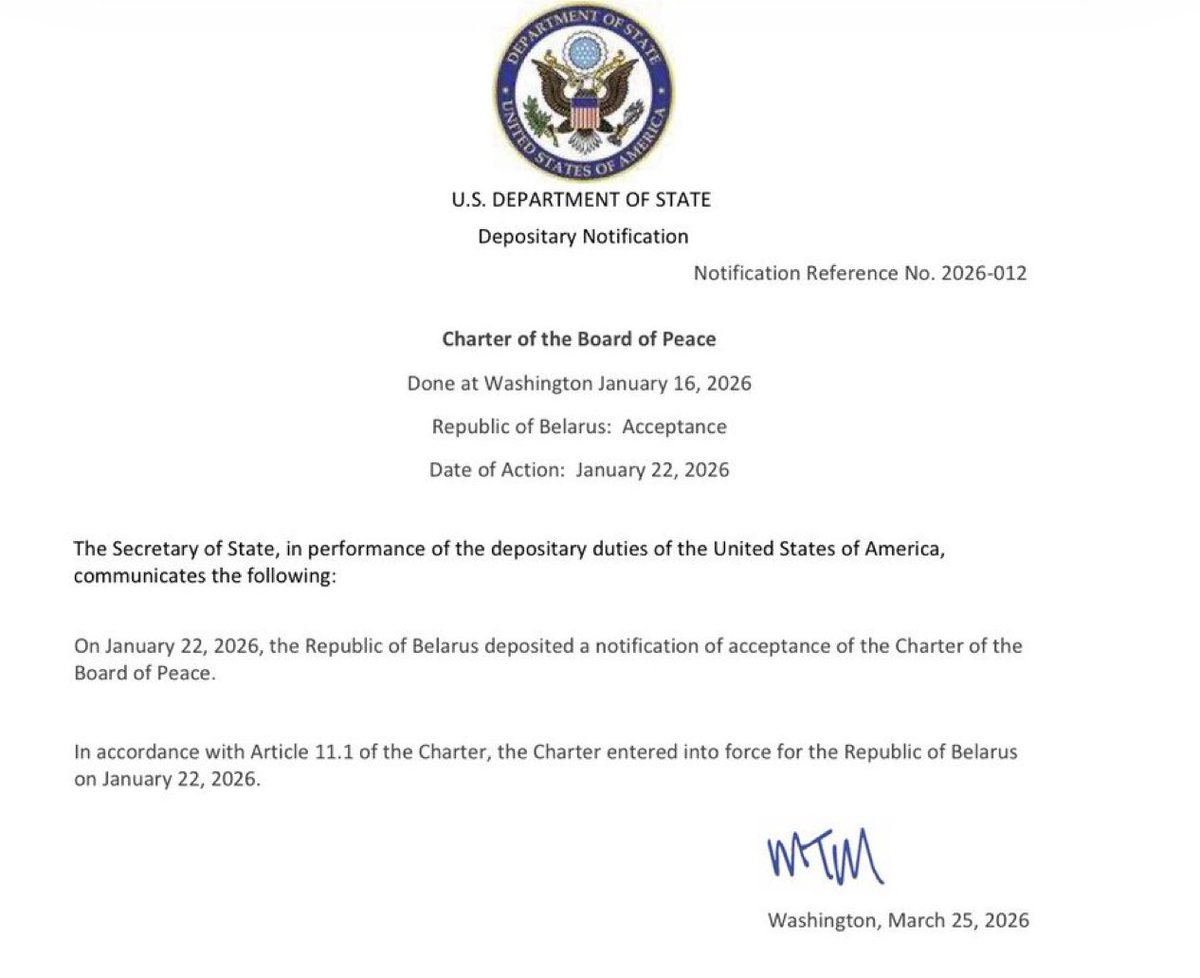
Let’s be absolutely clear about what just happened. The United States of America, the country that built NATO, that spent half a century telling Europe that Russia was the enemy, that asked young men from Normandy to Kabul to die for the idea of a free world, has now chosen Russia. Not drifted toward. Not flirted with. Chosen. Trump calls Putin a genius. Cuts military aid to Ukraine mid-war. Blocks sanctions. Parrots Kremlin talking points about NATO aggression. Invites Lukashenko, Russia’s obedient attack dog, to found a peace board while Russian missiles are still hitting Ukrainian hospitals. The continent that actually shares a border with this threat. That actually absorbs the refugees. That actually lives under the shadow of what happens when Russia decides a neighbor isn’t really a country. Europe was told for eighty years to trust Washington. To buy American weapons. To let American generals run the alliance. To believe that when it really mattered, America would be there. It wasn’t there! It picked the other side and sent an invoice. Normal Americans, the ones who actually believe in something, should understand what this looks like from here. It looks like betrayal. Clean, deliberate, and permanent. Not a misunderstanding. Not a bad week in foreign policy. A choice. Europe is building its own army, its own supply chains, its own future. Because one man wanted to golf with autocrats. Gandalv / @Microinteracti1
Gandalv tweet media
English
241
2K
5.5K
512.2K
Andreas Formiconi 🇺🇦🇪🇺 @[email protected] retweetledi
Frenkie_Woody
Frenkie_Woody@Frenkie_Woody·
Disobbedire gli costò il posto. Era il 1981 quando il maestro Manzi si rifiutò di redigere le “schede di valutazione” per i ragazzi della sua classe. Perché non poteva bollare un ragazzo con un giudizio, dato che quel ragazzo cambia, si evolve nel tempo. E “marchiarlo” sarebbe stato un rischio per il suo futuro. Lo cacciarono da scuola, per questo. Nonostante gli enormi meriti che aveva, primo tra tutti aver alfabetizzato centinaia di migliaia di persone con il suo “Non è mai troppo tardi”. Se ne fregarono e gli tolsero persino lo stipendio. Lo scandalo fu però così grande che l’anno successivo dal Ministero gli chiesero di tornare e di convincersi ad adottare quelle schede. Lui, che aveva sempre avuto un gran senso dell’ironia, accettò e si fece fare un timbro ad hoc con cui bollava tutte le schede dei suoi ragazzi alla stessa maniera: “Fa quello che può, non fa che non può”. Quando dal Ministero protestarono per quel timbro, lui rispose: “non c’è problema, posso scriverlo anche a penna”. Alberto Manzi era questo. Intelligente, sensibile, arguto. Uomo straordinario, nel vero senso della parola. Si spegneva oggi, il 4 dicembre, dopo una vita di lotta e di impegno. Ricordarne anche quest'anno la figura, la storia e il lavoro fatto è indispensabile per costruire un’Italia diversa, più ricca di cultura, di educazione anche empatica, di abnegazione e senso del dovere.
Frenkie_Woody tweet media
Italiano
28
141
626
15K
Andreas Formiconi 🇺🇦🇪🇺 @[email protected] retweetledi
Business Ukraine mag
Business Ukraine mag@Biz_Ukraine_Mag·
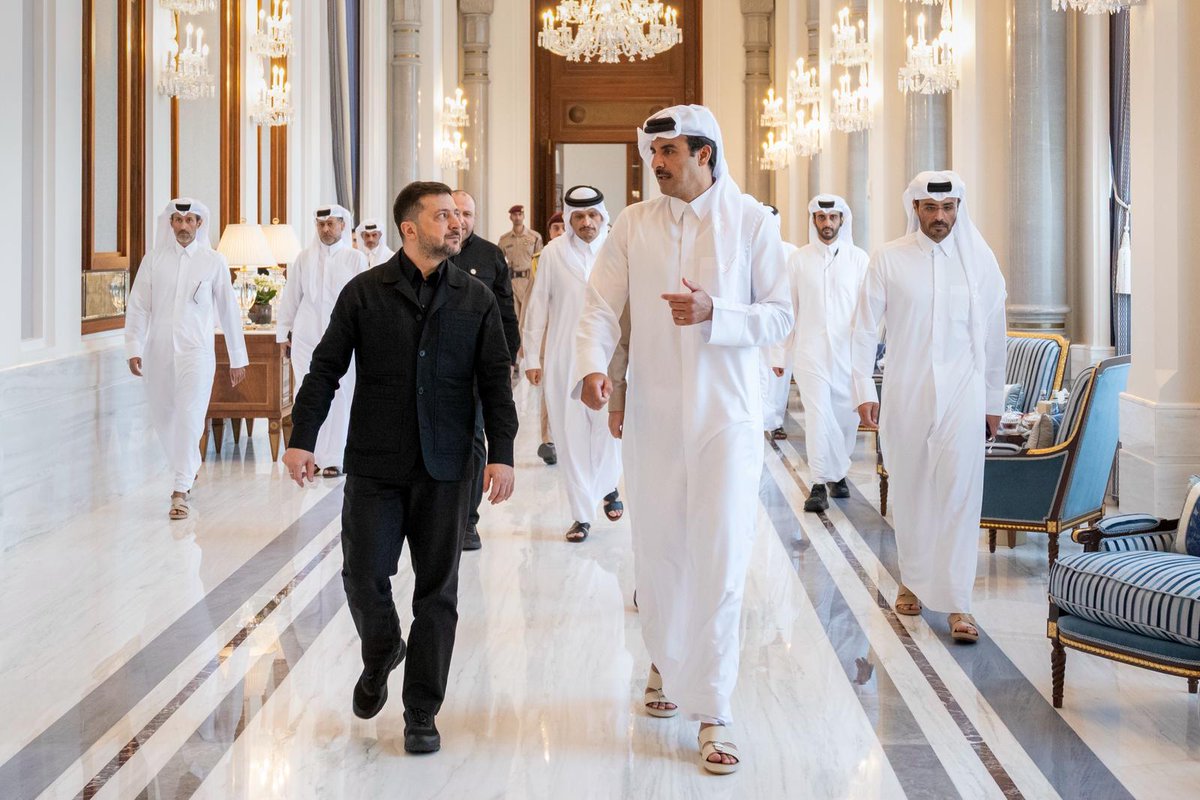
President Zelenskyy's response to the Iran War has been a masterclass in diplomacy. He recognized almost immediately that Ukraine could play a key role countering Iranian drones, dispatched teams of experts without delay, and has now become the first Western leader to visit the Gulf region since the war began. By moving so nimbly, Zelenskyy has secured vital support for his own country's war effort, laid the foundations for potentially game-changing strategic partnerships with the Gulf states, and significantly enhanced Ukraine's standing on the global stage as a major military power and a world leader in drone warfare
Business Ukraine mag tweet media
English
330
3K
11K
270.9K
Andreas Formiconi 🇺🇦🇪🇺 @[email protected] retweetledi
Ujjwal Chadha
Ujjwal Chadha@ujjwalscript·
"English is the new programming language" is largely BS. Everyone on X timeline is saying: "Just vibe code it! You don't need to learn syntax anymore, just prompt the AI in plain English!" HOT TAKE from the trenches of reviewing pull requests all day: English is the worst programming language ever invented. It is ambiguous. It is emotional. It lacks strict constraints. Code isn't hard because of the brackets or the syntax. Code is hard because of the precision. When you write in Python or React, you are forced to define the exact boundaries of reality. You have to explicitly handle the edge cases, the null states, and the architecture. When you write in "English", you are just hoping a probabilistic engine guesses your intent correctly. I am watching people use AI to "vibe code" entire backends in a weekend. The result? It functionally works for a demo, but it's an absolute disaster under the hood. No scalability, zero security considerations, and multiple responsibilities crammed into single, unmaintainable components. We aren't building the future 10x faster. We are just generating legacy spaghetti code 10x faster. The engineers getting promoted on my team right now aren't the best "prompt whisperers." They are the ones who know exactly why the AI's "English-to-Code" translation just introduced a silent memory leak into the system design. Stop learning how to "chat" with a bot. Start learning how to architect systems. Ambiguity is the enemy of scale.
English
85
71
534
35.3K
Andreas Formiconi 🇺🇦🇪🇺 @[email protected] retweetledi
Gandalv
Gandalv@Microinteracti1·
If there is precisely one thing you watch today, make it this. French Senator Claude Malhuret. A microphone. And the most magnificently savage dismantling of the Trump administration ever delivered in a language they almost certainly don’t speak. He covers Iran. He covers corruption. He covers the kind of staggering, industrial-scale incompetence that would get you fired from managing a car park. And he does it with the calm, unhurried certainty of a man who has read every page of the indictment and found it, if anything, worse than expected. France has never pretended to like these people. But this is contempt elevated to an art form. The kind of refined, aristocratic disdain that takes centuries of civilization to produce and approximately ninety seconds to deploy. Malhuret sounds like he is four seconds from the button. Not out of panic. Out of sheer, exhausted disgust. Honestly? Understandable. Watch it. Share it. The adults are speaking. Gandalv / @Microinteracti1
English
433
10.4K
24.3K
694.7K
Andreas Formiconi 🇺🇦🇪🇺 @[email protected] retweetledi
François Chollet
François Chollet@fchollet·
Many people expect that current AI is ready to cure cancer and do breakthrough new science. ARC-AGI-3 envs are like a microcosm of the scientific method: you must observe a tiny world, form a theory of how it works, test it, iterate until correct. Over the course of a few minutes. If AI can't do it in an ultra-simple, ultra-small scale setting that is explicitly designed to be as accessible as possible, I expect there are a few steps missing until AI can crack the nature of reality.
François Chollet@fchollet

"2+ people can do it out of an unfiltered pool of 10 people that might well be a below-average sample" is not the sign of a insurmountable challenge. It's not certainly where I would set the bar for "super intelligence". ASI is when AI is better than *every single human* -- for instance we have ASI for chess and Go today.

English
45
57
561
49K
Andreas Formiconi 🇺🇦🇪🇺 @[email protected] retweetledi
Alessandra Libutti 🇪🇺
Alessandra Libutti 🇪🇺@a_libutti·
Il senatore francese Claude Malhuret non gliele ha mandate a dire all’amministrazione Trump. Li descrive come un branco di folli che distruggono l'ordine globale, scodinzolando dietro a Putin. Un circo che tratta la politica estera come un salvadanaio privato. Brutale. Da ascoltare ⬇️
Italiano
28
324
1.2K
23K
Andreas Formiconi 🇺🇦🇪🇺 @[email protected] retweetledi
Gandalv
Gandalv@Microinteracti1·
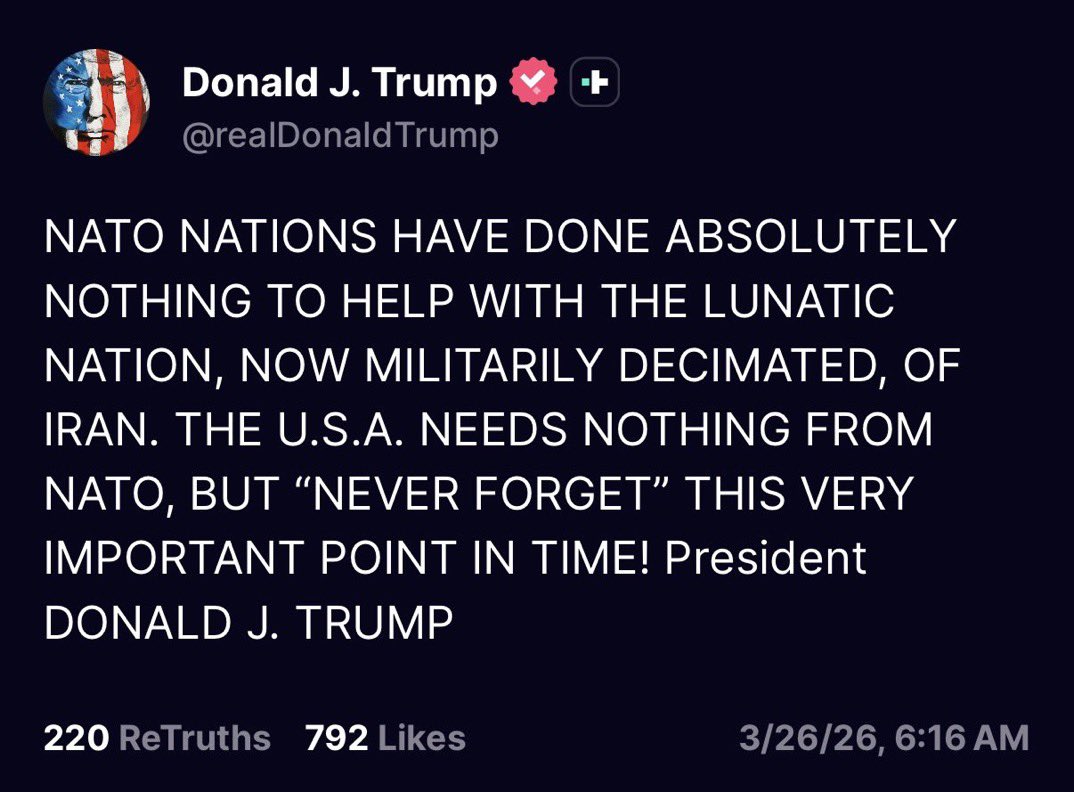
I showed a Trump post to my psychologist friend and asked her to do a proper profile. This was, in retrospect, like asking a vet to look at a particularly diseased badger. She put down her coffee, read it twice, and said: “Right. Where do you want me to start?” The all-caps, she explained, isn’t emphasis. It’s dysregulation. A regulated adult uses punctuation to signal importance. Trump uses volume, because volume is what worked in the room he grew up in. Fred Trump’s household rewarded dominance and punished weakness. Donald learned early that the loudest person wins. He never updated that software. He never updates anything. The man is essentially Windows Vista with a spray tan. “NATO HAS DONE ABSOLUTELY NOTHING.” The word absolutely is doing a lot of work there. Psychologists call this black-and-white thinking, a cognitive pattern strongly associated with narcissistic personality structures. The world is either total loyalty or total betrayal. No middle ground. No nuance. No evidence of a functioning cerebral cortex. “MILITARILY DECIMATED.” She paused on this one. Self-glorification dressed as fact, she said. He has no military background, never served, and has a well-documented terror of illness and physical danger. Bone spurs, famously. Four of them. One per deferment. So he compensates verbally, hard and consistently, because words are his only battlefield and even there he fights like a man wearing oven mitts. “THE U.S.A. NEEDS NOTHING FROM NATO.” The people who most loudly declare their independence, she said, are almost always the most terrified of abandonment. Classic counterdependence. The kid who announces he doesn’t need friends. In the playground. Alone. Eating his lunch next to a bin. The threat with no content, “NEVER FORGET THIS VERY IMPORTANT POINT IN TIME,” she found genuinely fascinating. It has the grammatical structure of consequence without any actual consequence attached. It’s what you say when you want to punish someone but lack both the means and the attention span to follow through. And then the signature. His own name. On his own platform. As if the man might otherwise forget who he is halfway through a sentence, which, to be fair, seems increasingly plausible. She sat back and said: “This is a man who has been pretending to be formidable for so long he can no longer locate the frightened little boy underneath. But he’s still there. He’s always there. TACO is always there. Screaming in capital letters at people who stopped listening years ago.” I paid for the coffee. It was the least I could do. She’s going to need therapy after this. Gandalv / @Microinteracti1
Gandalv tweet media
English
268
2.1K
6.4K
787.3K
Andreas Formiconi 🇺🇦🇪🇺 @[email protected] retweetledi
François Chollet
François Chollet@fchollet·
ARC-AGI-3 is out now! We've designed the benchmark to evaluate agentic intelligence via interactive reasoning environments. Beating ARC-AGI-3 will be achieved when an AI system matches or exceeds human-level action efficiency on all environments, upon seeing them for the first time. We've done extensive human testing that shows 100% of these environments are solvable by humans, upon first contact, with no prior training and no instructions. Meanwhile, all frontier AI reasoning models do under 1% at this time.
English
236
341
2.7K
621.7K
Andreas Formiconi 🇺🇦🇪🇺 @[email protected] retweetledi
Rohan Paul
Rohan Paul@rohanpaul_ai·
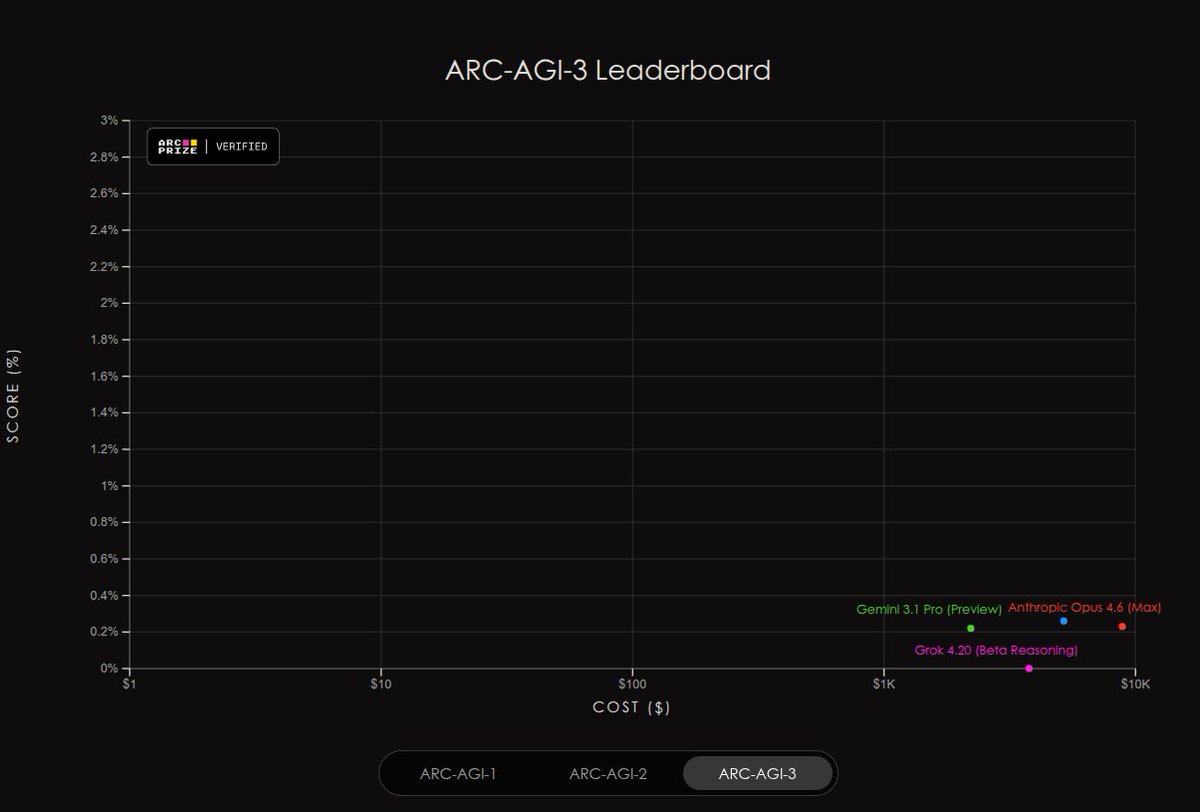
ARC-AGI-3 scores are out and all the top frontier models are scoring under 1% A massive gap that the foundation says proves we don't have AGI yet. - Google's Gemini 3.1 Pro Preview: ~0.3% (tops the board in some snapshots; costs vary but in the thousands per full eval). - OpenAI's GPT-5.4 High: ~0.26–0.3%. - Anthropic's Opus 4.6 (Max): ~0.2–0.25%. 📌 Why ARC-AGI-3 Different Unlike previous ARC-AGI versions (which used static grid-based puzzles to test passive "fluid intelligence" and generalization from few examples), ARC-AGI-3 turns the test into interactive, game-like worlds. AI agents must:Explore unknown environments from scratch. Discover goals and rules on the fly (no natural-language instructions or pre-loaded knowledge). Build adaptable mental/world models. Plan long-horizon sequences of actions. Learn continuously from experience, update beliefs with new evidence, handle sparse feedback, and correct wrong hypotheses. Do this efficiently, without brute-forcing or memorizing. The full benchmark includes 150+ novel interactive environments (worlds) with nearly 1,000 level. Agents interact via an API in replayable sessions, and you can watch their decision timelines in structured replays. Scoring here is based on skill-acquisition efficiency compared to humans (not just "did it solve it?"). Humans (tested on 10 random people per environment) achieve 100% by solving tasks with a baseline action count (using the 2nd-best human performer to avoid outliers). AI scores reflect how close they get to that human efficiency on average across tasks. This captures planning, memory, adaptation, and real-time reasoning over time.
Rohan Paul tweet media
François Chollet@fchollet

ARC-AGI-3 is out now! We've designed the benchmark to evaluate agentic intelligence via interactive reasoning environments. Beating ARC-AGI-3 will be achieved when an AI system matches or exceeds human-level action efficiency on all environments, upon seeing them for the first time. We've done extensive human testing that shows 100% of these environments are solvable by humans, upon first contact, with no prior training and no instructions. Meanwhile, all frontier AI reasoning models do under 1% at this time.

English
13
12
61
9K
Andreas Formiconi 🇺🇦🇪🇺 @[email protected] retweetledi
François Chollet
François Chollet@fchollet·
The ARC-AGI-3 launch is next week. Incredible work by the team over the past year.
English
81
58
937
111.1K