Ishaan Ansari
169 posts

Ishaan Ansari
@iamihansari
AI • Software Engineering • Distributed Systems
Katılım Şubat 2016
1K Takip Edilen42 Takipçiler
Sabitlenmiş Tweet

it took 1 intern 3 months of continuous work, but eventually, a quantization method that beat every other algo in the market, including @nvidia's official modelopt
to explain why this matters, i ask for exactly 69 seconds of your attention (275 words @ avg reading speed of 238 wpm):
frontier models (like glm52) are huge (~0.8T params). as released, each parameter takes 2 bytes (bf16), so overall size is about 1.6 tb
a b200 has 180gb of memory. a node of 8 gives you 1.44 tb, barely fits weights, much less activations / kv cache
must quantize the model (reduce the size of each individual parameters) to serve. fp8 quantization means each parameter takes 1 byte (fits in 0.8 tb), fp4 takes 1/2 a byte (fits in 0.4 tb)
cutting the model to a quarter its original size is necessary for it to run a) cheap b) fast, and every lab serving models does this.
but, quantization lobotomizes the model if not done correctly (this is why you see people complain about @AnthropicAI nerfing claude or @OpenAI nerfing codex)
there are currently several algorithms (like Nvidia's official model-opt) that attempt to figure how to quantize a model with the least amount of damage.
they find the redundant layers that can be slashed, and sensitive/important layers that need to stay in full-precision.
these algo's have two drawbacks:
1) they take a long time to run
2) they quite often result in a sub-optimal configuration
for the past 3 months, a research (and, as always, waterloo) intern on our model perf team (@the_joshua_hill) came up with a new quant algorithm.
it consistently finds the optimal configuration:
a) in less time than SOTA
b) with more aggressive quant than SOTA
c) scoring higher on benchmarks than SOTA
achieving just one of the above is a feat on its own.
all three...excited for the paper to come out this week


Joshua Hill@the_joshua_hill
Some teaser results for a new quantization method we've been cooking up🧑🍳 GLM 5.2 is getting even faster
English

New purchase.
Bought “ How to build a spitfire” for hubby. I have to read for him to tell the story.
“The midnight train” is from the same author of midnight library. Lady at the bookstore cash counter said - her daughter loved it.
“The librarian” - because the bottom line of this book is - how joy of reading can change the life (will see)


English


@mayukh_panja So what do you suggest shall some go for master’s or wait for the right opportunity to relocate?
English

Unpopular opinion: If you're an ambitious professional, your obsession with "reading more" is a trap.
We are constantly sold a lie that reading more is the ultimate habit for successful people. Yet, in the rush to consume volume, you often end up collecting titles rather than acquiring wisdom. The fact of the matter is that your mind only retains a fraction of the knowledge by the time you reach the last page of any book.
This isn't for people who read to be entertained. This is for people who read to act upon it consciously.
When you stop obsessing over book counts and start re-reading the same high-impact texts, something shifts. You stop forgetting, and you start articulating ideas without missing the essence of what the author was trying to convey. You start taking action on autopilot because the wisdom is finally hardwired into your brain.
Don't map out a massive reading list. You don't need a complete path.
Just take the first step: Pick the ONE book that solves your biggest current problem, or that you think aligns with your future self, and commit to reading it a second time.
English


~ Two Cents
- Understanding the scale of the system is also crucial here to make a feasible retrieval system. As your corpus grows, the infra. cost of storing, indexing, and updating those vectors goes up significantly. The trade-off extends beyond retrieval metrics into system constraints, especially with memory-intensive indices like HNSW.
- Implementing preprocessing filters like MinHash/LSH for deduplication, semantic outlier removal, and document structure normalization preserves index sparsity, stabilizes query latency, and ensures that the computational cost of vector maintenance scales predictably with actual information gain.
Prateek Chhikara@pckraftwerk
One lesson from building retrieval systems - adding more documents doesn't always improve performance. If your corpus contains duplicates, outdated information, noisy chunks, or inconsistent formatting, retrieval quality can actually get worse. Relevant documents get pushed lower in the rankings, hurting metrics like MRR and Recall@k. Sometimes the best way to improve a retrieval system isn't adding more data, rather cleaning the data you already have.
English

- Students who are looking to build open-source contributions credentials are encouraged to open an issue to detail their approach before implementing a feature
- Follow the constraints outlined in CONTRIBUTING.md and start here:
github.com/Ishaan-Ansari/…
English

Although not a big fan of Vibe coding, I still decided to quench my curiosity with @emergentlabs
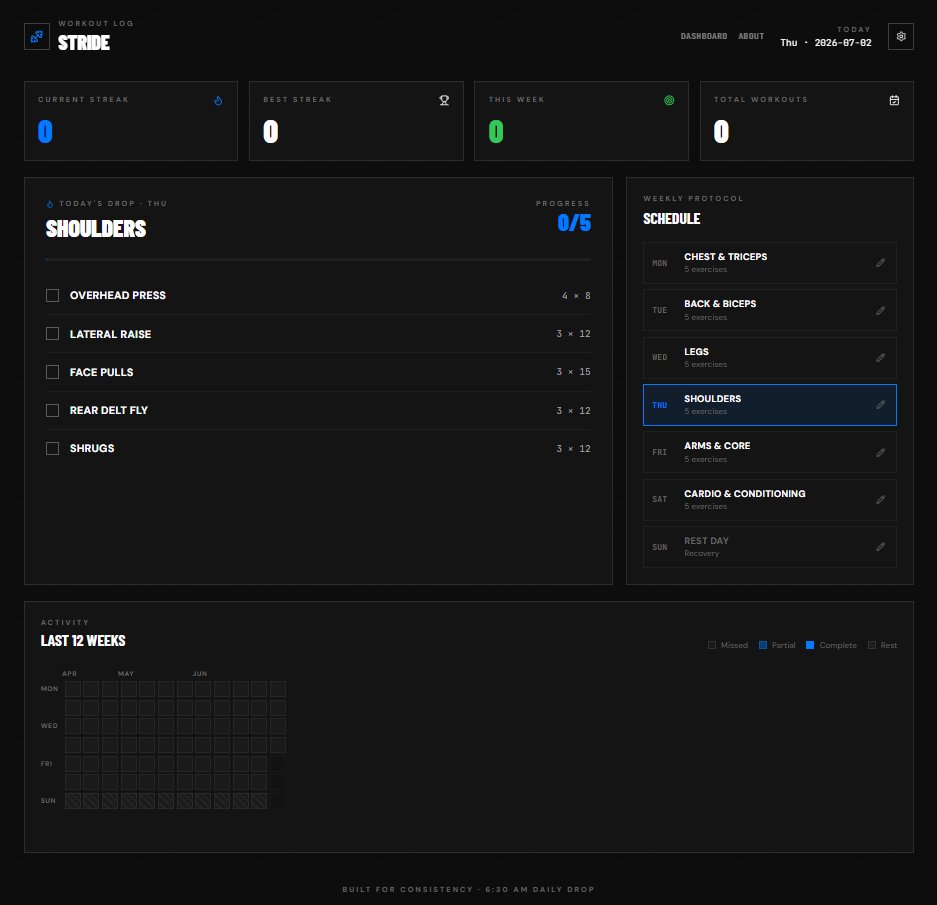
- Just shipped Stride, which delivers your day's exercises like a daily mission briefing. Mon–Sat workouts, Sunday rest, streak tracking that respects rest days, and a 12-week activity heatmap
Features
- Streak Algorithm: Walks backwards from today to calculate streaks. Protected rest days (Sundays) are skipped
- Automated Drops: An APScheduler cron job runs at 06:30 server time, triggering the @resend to deliver the day's payload as a styled HTML email
-Data Visualization: Incorporates a 12-week GitHub-style heatmap that renders complete, partial, missed, and rest cells
Roadmap
- Dynamic scheduler honoring reminder_time setting
- Per-exercise weight tracking + progress graphs
- Telegram bot integration for daily plan sharing
- Pre-built program templates (PPL, 5x5, Upper/Lower)
- Personal record (PR) tracker
- Rest timer
- Export progress to CSV/PDF
- Multi-user auth
Open Source & Developer Contributions
- The project is fully open source. Now inviting developers to contribute and optimize the build.
- To set up your local environment, review the container configurations, schema validations, and PR workflows outlined directly within README.md and CONTRIBUTING.md.
- Fork the repository, test your endpoints end-to-end via Swagger or curl, and ship tight code!

English

@PoojanShah6380 Always good to see more research-focused folks in this space!
English

Hi Everyone, introducing myself here :
- Joining @MistralAI as an AI Scientist
- Just graduated from @cseiitd, where I worked on large-scale clustering algorithms with provable theoretical guarantees, published @icmlconf 2026
- Also worked on quantum and quantum-inspired algorithms for clustering, published @iclr_conf 2025
- Much of my work explores how structural assumptions can break through worst-case computational barriers
- Had a great time exploring stuff: training vaes for SSL @WadhwaniAI and designing quantum crypto primitives @quantumlah
- Outside research I play tabla, try to pick up languages and read about anthropology, science, history and social history
- In highschool I did lots of physics
- Check out my website: poojancshah.github.io, feedback appreciated
Planning to share random technical and non-technical stuff here. Always happy to talk about research !
English
Ishaan Ansari retweetledi

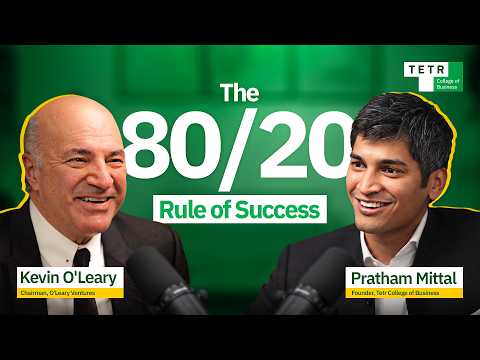
I was recently listening to Kevin O'Leary:
He discussed the signal-to-noise ratio of leaders like Steve Jobs and Elon Musk, which is beyond >90%
It clearly explains why the rest of the business world sounds so loud.
Ishaan Ansari@iamihansari
The goal is to increase the "SIGNAL" and reduce the "NOISE"
English