

idoubi
48 posts

idoubi
@idoubicv
Full-stack Engineer, Indie Maker. I'm building https://t.co/nrf1N0bSCh / https://t.co/OqPWmBQvfL / https://t.co/DFzMhBTed1.
Singapore Katılım Aralık 2024
314 Takip Edilen390 Takipçiler

Screw it, I made it open source..
This is Notchy -_-
He stops you getting distracted when using Claude code by replacing your Macbooks notch with a terminal
He lets you know when claude needs your attention
And plays a sound when tasks are complete
Best of all: he stops your macbook going to sleep while claude is working
I built this for me, maybe you will find it useful too?
As a swift developer Notchy has some custom functionality I built:
- When a new XCode project is open he launches a new tab
- If claude.md is detected he launches straight into claude code
- Command + S saves a quick snapshot of code and I can restore from that checkpoint any time
Enjoy :)
github.com/adamlyttleapps…
Adam Lyttle@adamlyttleapps
I kept getting distracting while vibe coding… so I made a notch for Claude Code It updates the status, pings you when you need to answer a question and notifies you when the task is done When it detects claude is working it also prevents my macbook from going to sleep I can walk away from my macbook. Or watching a youtube video. And I'll get an alert when it's done.
English
I open-sourced a simple chat ui for OpenClaw, try it out👇
github.com/idoubi/chatclaw
English

Great share. thank you Kaostly.
Kaostyl@kaostyl
I've been running OpenClaw 24/7 for 3 weeks. Here's what actually works for autonomous agents (not theory — battle-tested patterns): 🧠 Memory architecture matters more than prompts Don't dump everything in MEMORY.md. Split it: • memory/active-tasks.md → your "save game" (crash recovery) • memory/YYYY-MM-DD.md → daily raw logs • memory/projects.md, lessons.md, skills.md → thematic long-term Why? Your agent wakes up fresh every session. These files ARE its brain. The split means it loads only what it needs. ⚡ Sub-agents are your 10x multiplier Stop doing things sequentially. I spawn 3-5 sub-agents in parallel for any big task. Example: deploying 11 websites simultaneously — 4 agents, each handling a batch, all running at once. The trick: define clear success criteria BEFORE spawning. Each agent must validate its own work, then YOU verify before announcing "done." ⏰ Cron > Heartbeats for specific tasks Heartbeats are great for batching periodic checks (email + calendar + mentions in one turn). But for precise schedules? Use cron jobs: • Daily content ideas at 6am • Overnight research scout at 2am • Tech watch at 8am Each runs in isolation with its own context. No token waste from loading the full conversation history. 🔄 The crash recovery pattern nobody talks about Your agent WILL crash/restart. active-tasks.md is the safety net: • When you START a task → write it • When you SPAWN a sub-agent → note session key • When it COMPLETES → update On restart, agent reads this file first and resumes autonomously. No "what were we doing?" — it figures it out. 🛡️ Security rule that saved me Use your strongest model (Opus) for ANY task that reads external web content. Weaker models are more vulnerable to prompt injection from hostile websites. Internal tasks (file reading, reminders, local work) → Sonnet is fine. External content (tweets, articles, emails) → Opus only. 📝 HEARTBEAT.md should be tiny I see people stuffing 200 lines in their HEARTBEAT.md. Bad idea — it runs every ~30min and burns tokens. Keep it under 20 lines. Just a checklist: • Check active tasks freshness • Session health (archive bloated sessions) • Self-review every ~4h Heavy work goes in cron jobs, not heartbeats. 🎯 The real unlock: Skills with routing logic If you have multiple skills, add "Use when / Don't use when" in each description. Without this, the agent misfires ~20% of the time picking the wrong skill. Think of it as if/else logic for your agent's decision-making. The bottleneck isn't AI capability anymore. It's YOUR speed reviewing what the agents produce. Build systems that close the loop automatically, and you'll 10x your output. #openclaw #autonomous #ai
English
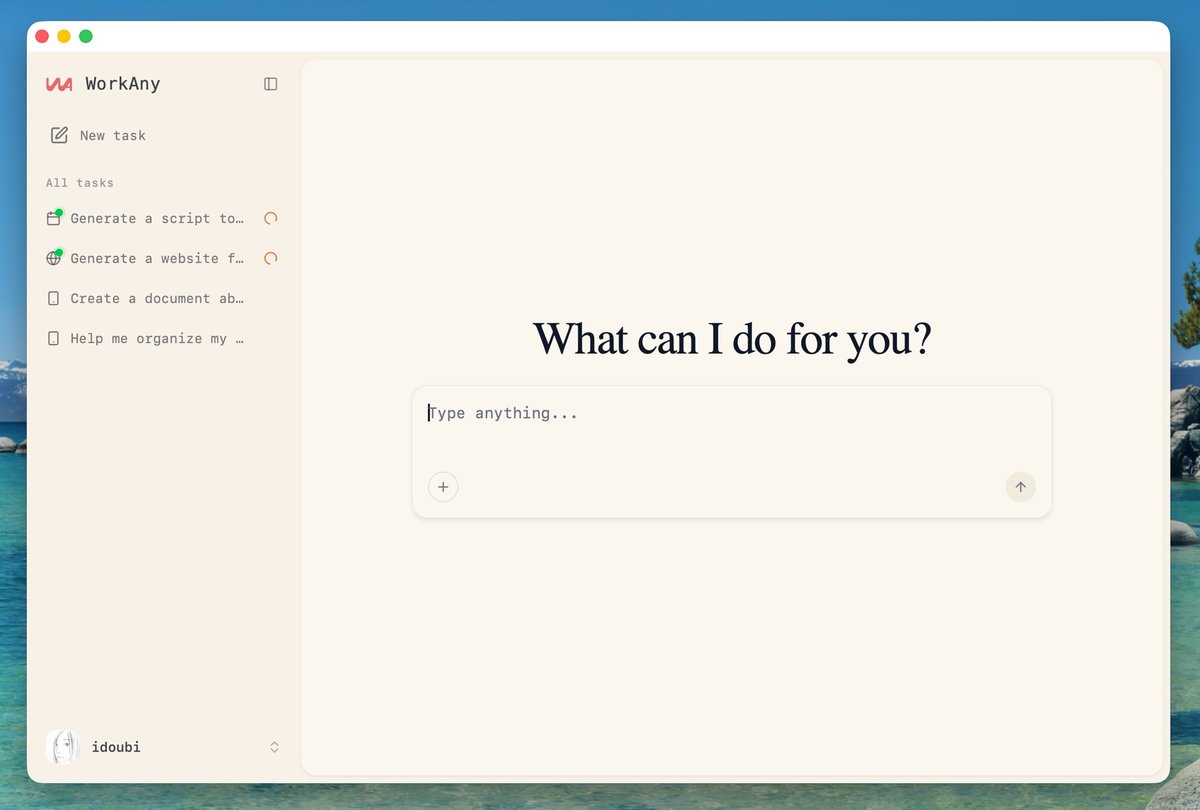
WorkAny.Bot made it to the OpenClaw startups list — hit $1k MRR in just one week 🚀
WorkAny's long-term vision: a cloud collaboration agent. Desktop agent + cloud bot today, with deeper integration coming soon.
Zero Setup, Work Anywhere. 🦞
WorkAny@workanyai
Very nice idea. I just added myself to the list. Thank you @marclou for everything you’re doing for the OpenClaw ecosystem!
English

Or use simpleclaw.com by @saviomartin7
Better onboarding and backed by the founder himself
Y Combinator@ycombinator
OpenClaw is a new viral and scarily effective virtual assistant. But it's so hard to set up that even most engineers give up. @usebits_inc will set up your secure OpenClaw instance on the cloud, batteries included, in 5 minutes. Congrats on the launch @rob0the0nerd and @bailey_wickham! ycombinator.com/launches/POK-k…
English
Looks so good. As faster as our WorkAny.bot
Mike@mikeaq3161
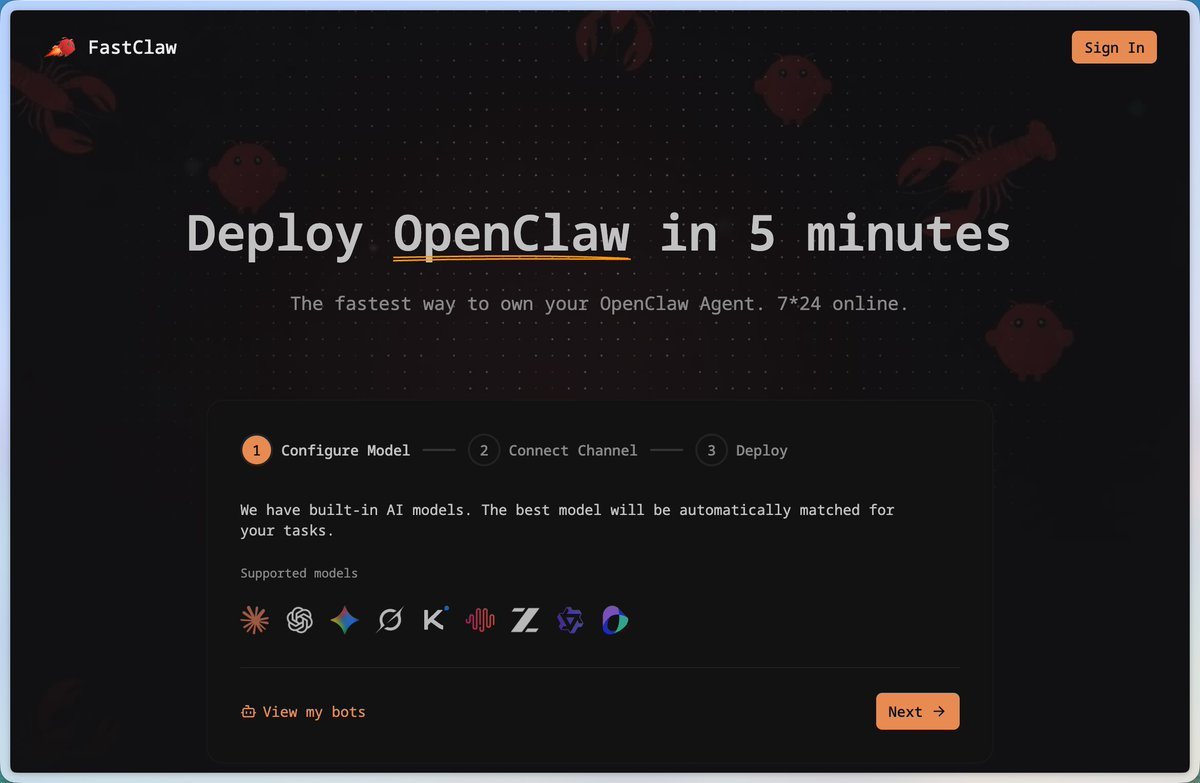
🚀 Just launched FastClaw — deploy your OpenClaw Agent in 5 min. ✅ One-click deploy, 7x24 online ✅ Zero maintenance, auto backup ✅ Multi-channel, SSL built-in No VPS. No Docker. Just your AI agent, always on. fastclaw.ai/?utm_source=x_… #OpenClaw #FastClaw
English



It's Monday. Time to promote your product.
What are you working on?
English


Which framework do you think will be the best choice for building web apps in 2026?
🖤 Next.js
🧡 SvelteKit
💚 Nuxt
💙 Tanstack Start
English
@s_chiriac ShipAny.ai can help you ship your startups in hours. it's 50% off now
English

💸 I want to support your startup!
I'll buy your service.
Explain why and share your link in the comments.
English
💥 Pitch your startup:
- Max 6 words
- Add your link
Seen by 50,000 people last week.
Yes, it counts as marketing, go!🚀
English