

iggy (running it back)
590 posts

iggy (running it back)
@iggyxbt
dangerously content
postpalatial minoan Katılım Ekim 2013
618 Takip Edilen198 Takipçiler

> Polymarket backtests are fake.
There’s no reliable tick data. Most markets have almost no historical depth and zero order book visibility.
The $BETTER Quant Lab runs hundreds of variations of our base algorithm in live simulation testing, with:
> Real fees
> Slippage and tax adjustments
This ensures only live-proven & battle-tested strategies make it into our Vault models.
Predict $BETTER
English

You should really research solana:6SjVTj1VGwFSXn7wEjwFm77LvACeTqB7sQUebYKX8Ds5
Read this article, creating capital markets for truly private #AI
All companies take data security seriously, they will not compromise it plugging into any #AI
The market size is huge, the industry needs this to truly scale
SolRouter@SolRouterAI
English
iggy (running it back) retweetledi

Quick TL;DR:
- Models commoditize. Trust doesn't.
- Every AI call today runs on a promise. No receipt.
- We make privacy provable: your prompt is never seen
- Every call leaves a public receipt you can check
SolRouter@SolRouterAI
English
@SolRouterAI Inference Capital Markets + [Secret] + moat formation 🤝
English


Even the DOW, which is not a purely technological index, is now back to new ATHs! And this time was not any different either.
Just as Oil is trading nearly sub 90$ again. All major assets are pointing towards a better economic conditions.
And once again, amidst the peak fear we merely got a bullish retest. Discussed live at the time. As usual.
The only thing that is now missing is the catch up by the #crypto space, in magnitutde. Will it?

JACKIS@i_am_jackis
Is this time any different? Pam Bondi a few months down the line just before midterms: "Dow is at new ATHs, this is what we should all be focusing about"
English

The crypto ecosystem is full of noise.
Riddled with vapourware and projects that lack product market fit.
Its not so often that im excited by much being built outside of Ondo.
I must say however, that im rather impressed by the @openservai team and their recent successes.
OpenServ@openservai
SERV is building the infrastructure layer for the agent economy in real time and this week proved it. In the past week alone at SERV: • Private Beta crossed 100,000 requests. • Greg Ivanov, ex-Google, joined as key advisor. • Phase 2.4 was revealed - agent auditing at scale with Graph Sharding. Enterprise: • 3 enterprises moved their workloads to SERV. • Neol hit 100% reliability with the UAE government. Benchmarks held the pattern: • Qwen 3.7-Max with SERV beat every frontier model tested. • Gemini 3.5 Flash launched and was made stronger by SERV the same day. Next up: wish we could tell you already. 👀
English

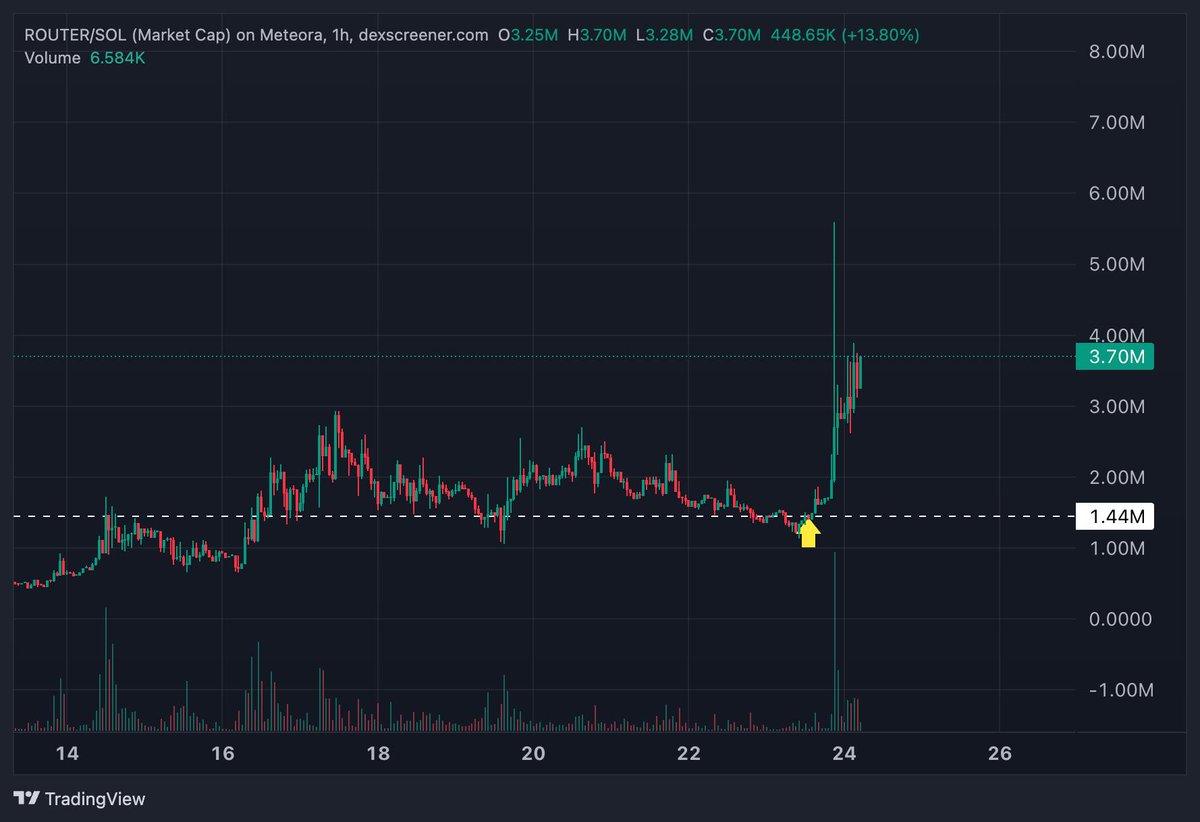
I came across a beta play for ethereum:0x40e3d1a4b2c47d9aa61261f5606136ef73e28042 and it made me connect a dot I hadn't before.
Everyone here is bullish on AI agents but an agent can't think on its own. To reason, it calls a frontier model like Claude, GPT, Gemini. Which means every AI agent is streaming its strategy, wallet context, every decision to a centralized company that logs it. So the agentic economy everyone's buying is sitting on a surveillance layer.
Nobody's pricing that.
This isn't a VVV situation. Venice is a private place to go use AI. @SolRouterAI aims at the layer underneath, privacy on the handoff when an agent calls the frontier models directly. I myself got a good entry in solana:6SjVTj1VGwFSXn7wEjwFm77LvACeTqB7sQUebYKX8Ds5
NFA.
YashasEdu@YashasEdu
In my opinion @openservai has a real path to growth and the one thing that has to confirm it. The setup is genuinely good. High-risk AI rules increasingly demand traceable, auditable reasoning. Blackbox LLMs can't deliver that. OpenServ's BRAID framework replaces freeform chain of thought with structured, logged reasoning graphs a regulated buyer can actually deploy. Also it runs the full stack👇 1. Its own infra to build agents 2. Mint agent tokens 3. Transact onchain They also partnered with Neol, whose platform serves UAE government organizations, reports moving to full agent reliability after integrating SERV Reasoning. Case study is still pending but it's the cleanest enterprise signal the project has. ➥ UAE is targeting 50% of govt services on agentic AI ➥ Every regulated buyer chasing that shift needs auditable reasoning ➥ OpenServ is positioned in the lane that demand flows through ➥ Private beta crossed 100K requests $SERV' value is wired to usage. Fees are paid in it, buyback and burn runs off it. So at ~$60M FDV the market has priced the lane, but the thing that actually drives the token, real fee and burn volume from agent runtime, isn't visible onchain yet. That's something I'm looking forward to. NFA.
English
iggy (running it back) retweetledi

What you're seeing is @openservai running part of the same playbook that took Android & Google Play to 70%+ of the global smartphone OS market, and 85%+ in emerging markets specifically.
- go where the market is growing fastest and served worst
- ship a product tailored to that market on price and UX
- build distribution moats that compound faster than competitors can copy
Absolutely love seeing this come together.
Lucas (opn/srv)@lucashafner
With the incredible early success of SERV Reasoning, I’ve been focused on accelerating adoption across two key domains: Bigger institutions. Global scale. This week, I’m in Nairobi meeting with some of the largest banks in the region, including pitching heads of corporate credit, IT, and risk (among others) inside executive boardrooms at Tier 1 institutions with over $7B in collective AUM. East Africa and Kenya in particular is the highest growing credit market in the world. As banks increasingly look to adopt AI, especially in emerging markets where credit is growing rapidly, the opportunity is obvious: major bottlenecks and archaic processes are waiting to be solved. But for financial institutions, adoption only happens if the technology clears a high bar: auditable outputs, reliable performance, and sustainable cost. So far, we’ve heard that previous attempts at AI integration have largely stalled because they failed on reliability, cost, or both. That’s where SERV Reasoning comes in. To power products that actually move the needle, and that institutions can rely on to deliver results at an economically feasible price. But product is only one side of adoption. In enterprise, especially with major institutions in emerging markets, distribution can matter just as much, if not more. Sales cycles are long, trust is earned through relationships, and adoption often depends on being in the right rooms with the right stakeholders. That’s why being here on the ground matters.
English

Super bullish on $SERV
Actually met someone from the UAE government whose using the reasoning framework via noel
Took me a while to get into the depths of understanding how it works what is solving and how does it make it cheaper
Dont trade coins
Trade cycle moats
0xSammy@0xSammy
$SERV is one of the few crypto AI protocols that’s repricing on substance This provides a tangible floor, complimented by an asymmetric bet The reasoning framework is live across 10 enterprise & government deployments, including UAE work via Neol The moat vs centralized is the buyer profile; sovereign data, auditable reasoning, onchain settlement Closed labs can’t deliver all three This provides a huge opportunity for open source decentralized operating systems, particularly those fuelling the agentic economy This is an economy that’s only just starting to gain traction; imagine what happens to the value accrual for the picks and shovels when activity goes parabolic
English

So this is crazy.
$SERV COO just revealed he meeting with heads of large banks, and already taking off the institutional onboarding phase for SERV Reasoning.
Institutional AI is a multi-trillion $$$ untapped market, so its clear to me this pump is just a little warmup.
To explain why this is a big deal, you gotta understand the background.
Frontier LLM costs are going up each cycle, and the biggest companies in the world are feeling it. Even Microsoft announced it can no longer afford Claude. Enterprise AI can’t scale unless someone fixes this.
$SERV has been on my radar because they are the only legit project solving exactly this problem (2 years r&d), delivering savings on high quality agent infra at enterprise scale.
And no wonder its taking off. We’ve seen metrics as high as 107x better performance-per-dollar, independently reported by companies running it live. Real PMF, real clients, real usage - and the best part is that it takes like 2 minutes to start using SERV tech cause its a single-line swap
Token is embedded directly the infra adoption and the whole eco with value accrual which is mega bullish. What makes this different: team is already plugged into the UAE's new AI program. Thats government adoption at a very early stage.
Based on recent signals it seems the AI affordability crisis is the next major narrative. $SERV is the frontrunner and the market is only just waking up to whats coming, as they are getting close to the heart of enterprise AI. Serv engine access is still in invite-only beta, just imagine what happens when they open the gates.
I should just add this is a mega-stacked team, with CTO 20+ years in machine learning, NVIDIA folks, others ex-Google, Amazon AI, JPM veterans.
TLDR is, $SERV is building s-tier infra for enterprise agents, governments and the entire autonomous economy. Easily a multi-billion story.
Stacking it here cause its clear the real move hasn't even started.
Lucas (opn/srv)@lucashafner
With the incredible early success of SERV Reasoning, I’ve been focused on accelerating adoption across two key domains: Bigger institutions. Global scale. This week, I’m in Nairobi meeting with some of the largest banks in the region, including pitching heads of corporate credit, IT, and risk (among others) inside executive boardrooms at Tier 1 institutions with over $7B in collective AUM. East Africa and Kenya in particular is the highest growing credit market in the world. As banks increasingly look to adopt AI, especially in emerging markets where credit is growing rapidly, the opportunity is obvious: major bottlenecks and archaic processes are waiting to be solved. But for financial institutions, adoption only happens if the technology clears a high bar: auditable outputs, reliable performance, and sustainable cost. So far, we’ve heard that previous attempts at AI integration have largely stalled because they failed on reliability, cost, or both. That’s where SERV Reasoning comes in. To power products that actually move the needle, and that institutions can rely on to deliver results at an economically feasible price. But product is only one side of adoption. In enterprise, especially with major institutions in emerging markets, distribution can matter just as much, if not more. Sales cycles are long, trust is earned through relationships, and adoption often depends on being in the right rooms with the right stakeholders. That’s why being here on the ground matters.
English

With the incredible early success of SERV Reasoning, I’ve been focused on accelerating adoption across two key domains:
Bigger institutions.
Global scale.
This week, I’m in Nairobi meeting with some of the largest banks in the region, including pitching heads of corporate credit, IT, and risk (among others) inside executive boardrooms at Tier 1 institutions with over $7B in collective AUM.
East Africa and Kenya in particular is the highest growing credit market in the world. As banks increasingly look to adopt AI, especially in emerging markets where credit is growing rapidly, the opportunity is obvious: major bottlenecks and archaic processes are waiting to be solved.
But for financial institutions, adoption only happens if the technology clears a high bar: auditable outputs, reliable performance, and sustainable cost. So far, we’ve heard that previous attempts at AI integration have largely stalled because they failed on reliability, cost, or both.
That’s where SERV Reasoning comes in.
To power products that actually move the needle, and that institutions can rely on to deliver results at an economically feasible price.
But product is only one side of adoption.
In enterprise, especially with major institutions in emerging markets, distribution can matter just as much, if not more. Sales cycles are long, trust is earned through relationships, and adoption often depends on being in the right rooms with the right stakeholders.
That’s why being here on the ground matters.

English

$SERV is one of the few crypto AI protocols that’s repricing on substance
This provides a tangible floor, complimented by an asymmetric bet
The reasoning framework is live across 10 enterprise & government deployments, including UAE work via Neol
The moat vs centralized is the buyer profile; sovereign data, auditable reasoning, onchain settlement
Closed labs can’t deliver all three
This provides a huge opportunity for open source decentralized operating systems, particularly those fuelling the agentic economy
This is an economy that’s only just starting to gain traction; imagine what happens to the value accrual for the picks and shovels when activity goes parabolic

0xSammy@0xSammy
Decentralized open source models are getting very interesting Openserv “SERV reasoning” just received a strong independent benchmark Headline findings (SERV-nano solo vs prior Gemini/Sonnet): - 100x cheaper per call ($0.0006 vs $0.06) - 107x performance per dollar - Higher accuracy at lower cost (83.3% vs 77.5%) Keep an eye on the smaller teams shipping tangible products We’ve already seen VVV go on a solid run with arguably more upside, dolphin filling in for a beta position on the privacy AI narrative I’ll link a list of protocols to look into below, so bookmark this:
English
@degenApe22 the thesis is simple
Inference Capital Markets + [Secret]
English
solana:6SjVTj1VGwFSXn7wEjwFm77LvACeTqB7sQUebYKX8Ds5 is not a beta to $VVV
Venice breaking ATHs, expecting $ROUTER to blast past $10m soon too
This team been building since last year, they not trying to jump on the hype
Know the market & demand + They built a better solution; cryptographic private #AI
Early AF here
SolRouter@SolRouterAI
A lot of people have been asking us about the difference between Solrouter vs Venice. Both say "private AI" — the difference is trust vs. proof. Venice: doesn't store your chats. The provider still sees your prompts in plaintext at inference. You trust their policy. Solrouter: - Prompts encrypted client-side using @Arcium RescueCipher before they ever leave your browser - Decrypted only inside hardware-isolated TEEs - Every request publishes a privacy attestation on-chain Don't trust that it's private. Verify it.
English

Lowkey think @openservai positioning gets stronger every week, how? 100k+ beta requests, enterprise migrations, teams fully moving their stack over… and it’s all happening without the usual overhyped AI marketing cycle
What stands out to me most is the kind of use cases choosing them too, environments where reliability actually matters and mistakes cost real money
Feels like the whole “reasoning layer” narrative is starting to make a lot more sense now... not replacing models, but making them actually usable for real-world decision making at scale, what do you think about it?
OpenServ@openservai
SERV is building the infrastructure layer for the agent economy in real time and this week proved it. In the past week alone at SERV: • Private Beta crossed 100,000 requests. • Greg Ivanov, ex-Google, joined as key advisor. • Phase 2.4 was revealed - agent auditing at scale with Graph Sharding. Enterprise: • 3 enterprises moved their workloads to SERV. • Neol hit 100% reliability with the UAE government. Benchmarks held the pattern: • Qwen 3.7-Max with SERV beat every frontier model tested. • Gemini 3.5 Flash launched and was made stronger by SERV the same day. Next up: wish we could tell you already. 👀
English
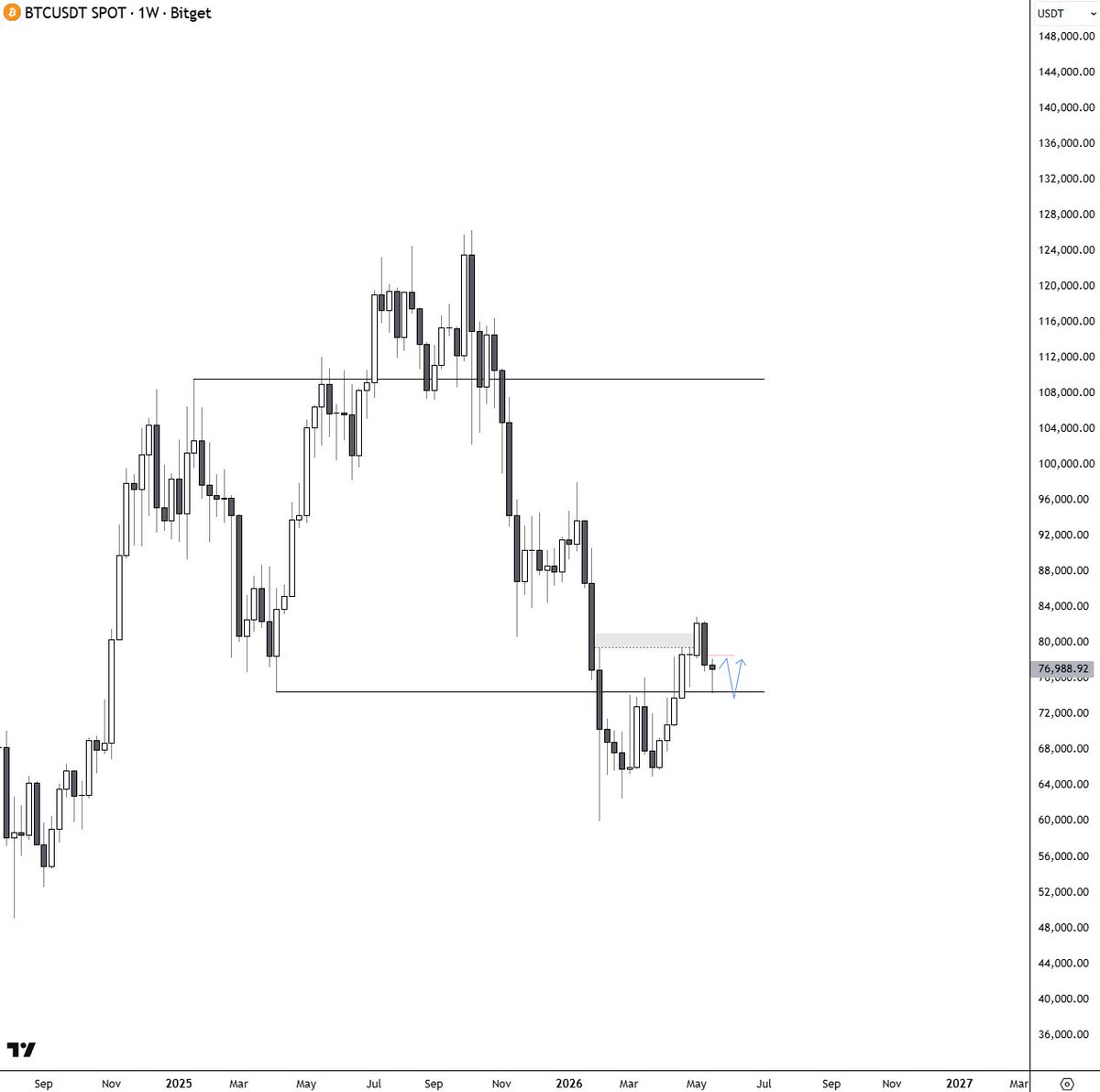
The anticipation has played out beautifully & now we wait for the Weekly close + follow-through in the next one.
The current macro range has been respected precisely = further confirmation of its importance and that THE RANGE is truly the macro pattern here, as clearly discussed already in November last year.
Alts had a deeper retrace & are bouncing back with bitcoin:native as well.
Currently a grey region for the market still. HTF bias remains bullish but locally we remain in a LTF bearish correction in May. This must be broken in the next week to confirm the anticipated Weekly HL formation before further upside. Contrary, losing the the 25 Yearly low would mean a big trouble. A BIG ONE.
ethereum:native remains in the potential bottoming process range since February after it's been proclaimed dead yet another time.
IMO there is not a single reason for ETH to go significantly lower anymore. To shake some more people or make the sentiment worse... The sentiment is the worst it's ever been. And if it cannot bottom here, it surely won't do it from lower either.
The time for the market to deliver & recover is NOW!
Wishing you all a nice rest of the Sunday and if you enjoy my work, consider helping it with a 👍 & 🔁 and perhaps even a comment✍️ to tingle the algo a bit. It has been terrible lately. Thanks a lot fam 🙌
JACKIS@i_am_jackis
As I've been saying a great place to hedge your spot positions was $BTC around the ~$80K region and the current correction definitely confirms it This does not change my overall HTF bias to bearish however but the engulfing Weekly candle makes a good case for a MTF pause, as I've done some decent de-risking on alts in the past week due to it (sub content). The current rising CPI expectations alongside the escalating war situation in the middle east again, is causing the US yields to head higher, resulting in an overall risk-off market correction (even Silver -17% in the past three days) But when looking at the US equities or Copper, the US markets are in a good shape & I expect them to stay that way despite this. However the digital assets space has not followed the upside in the same extent and stays more vulnerable till then My expectations is a deeper retrace for alts in the upcoming week(s) as it unfolds, while $BTC should remain relatively strong. And as long as it remains above the April 25 lows the HTF bull thesis remains strong & the prices below it remain a deviation to me. But breaking below it would equal a failed reclaim Funding remains in the longest negative period in history, longer than Covid crash, longer than May 21 Crash, longer than FTX, still favoring a HTF bottom, alongside other things. That said, as an active market participant, after 6 weeks of upside we should acknowledge the current pause and see the market as it is 🤝
English

Bought back everything I had tp’d here at $17M fdv.
I believe $gitlawb will start scaling up the ranks in @OpenRouter – the biggest inference marketplace in the world.
Already at no. 19 which is insane for a small crypto-focused project that got just integrated.
They are doing an average of 150-200B tokens per day and only 6-8% of that is going through OpenRouter.
Lots of growth ahead. The whole world looks into that top 20. Think this is such an asymmetric opportunity.
GitLawb@gitlawb
WUUUUT??! OpenGateway top #19 in OpenRouter global ranking and we are jus starting.
English
Every LLM you ping logs your prompts. Every position you size, every market you skip, every edge you compute sitting in someone else's training set, you're edge is gone.
Private inference fixes this end to end: Encrypted prompts for traders, attested compute for agents and our own privacy stack with:
> ephemeral-key encryption
> hardware-attested enclaves
> client-only decrypt
Private AI infrastructure has been solved by BETTER
English

we're witnessing a clear trend: a multi-trillion dollar market running on infrastructure that's getting more expensive every cycle
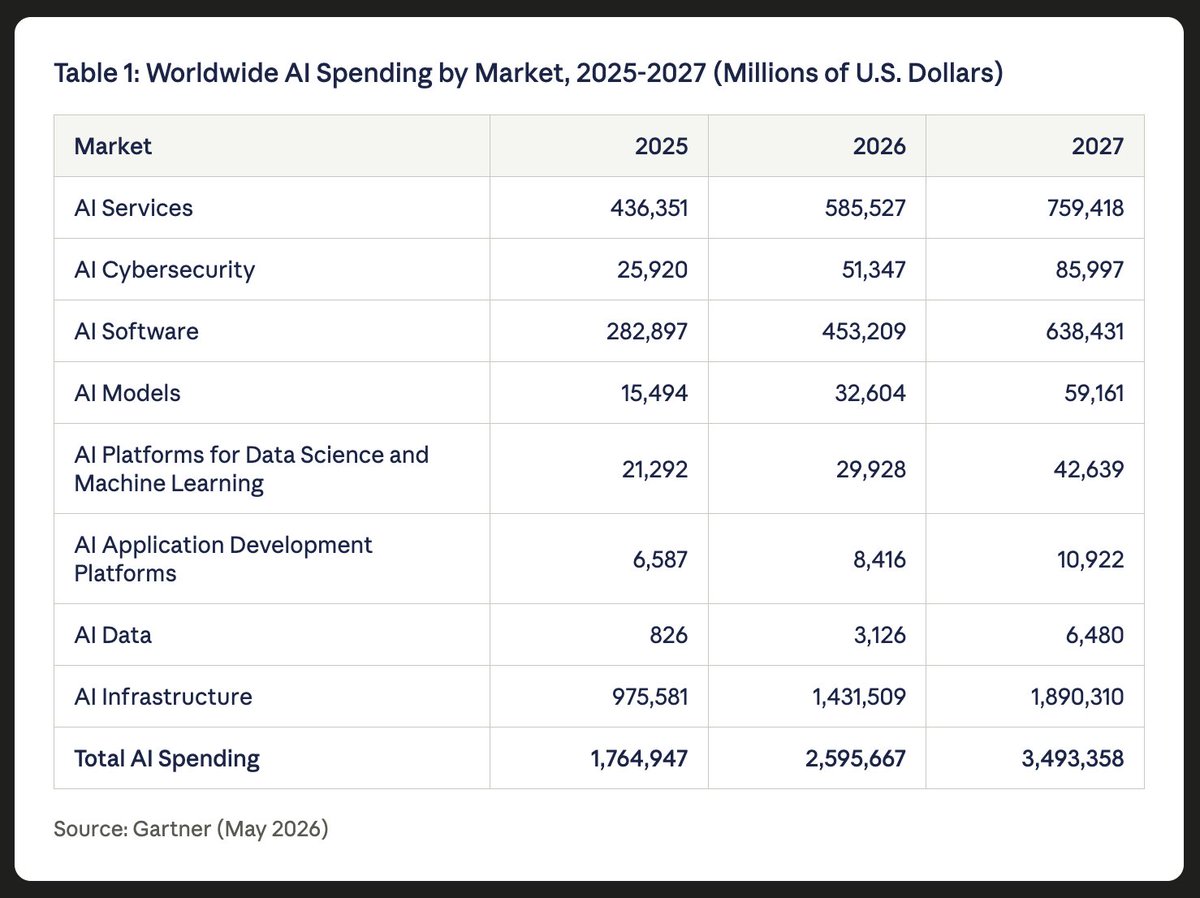
just read Gartner's latest AI forecast:
- $2.59T market in 2026 (+47% YoY)
- $3.5T in 2027
while frontier model prices keep climbing:
GPT-5: $10/M -> GPT-5.4: $15/M -> GPT-5.5: $30/M
it's clear enterprise will be looking for cost-savings while adopting AI at large scale.
this puts ethereum:0x40e3d1a4b2c47d9aa61261f5606136ef73e28042 at the center of the AI agent economy - delivering up to 100x better performance-per-dollar in enterprise benchmarks, with no vendor lock-in.
with a single-line swap, you plug any frontier model into SERV Reasoning and the economics flip in your favour: agents become not just efficient, but also reliable and fully auditable.
it's why most enterprises in SERV Reasoning Private Beta are already moving over, once they try it
UAE gov is using SERV tech in production; Akretic (security layer for finance, healthcare, government, defense), treasury infra (BILLZ), agentic OS for the food industry (GastroSight), agent compliance layer (ThoughtProof) - AND MANY MORE - all switching their entire stacks
private beta already crossed 100K+ requests last week.
incredible foresight + PMF from @openservai
Gartner@Gartner_inc
Gartner Newsroom: Gartner Forecasts Worldwide AI Spending to Grow 47% in 2026 #GartnerNewsroom gtnr.it/42F8G4P
English