
Sabitlenmiş Tweet
𝐬𝐧𝐚𝐤𝐞𝐠𝐨𝐝
1.6K posts


@tolibear_ Tried this yesterday and have been really enjoying this since. Thanks!
English

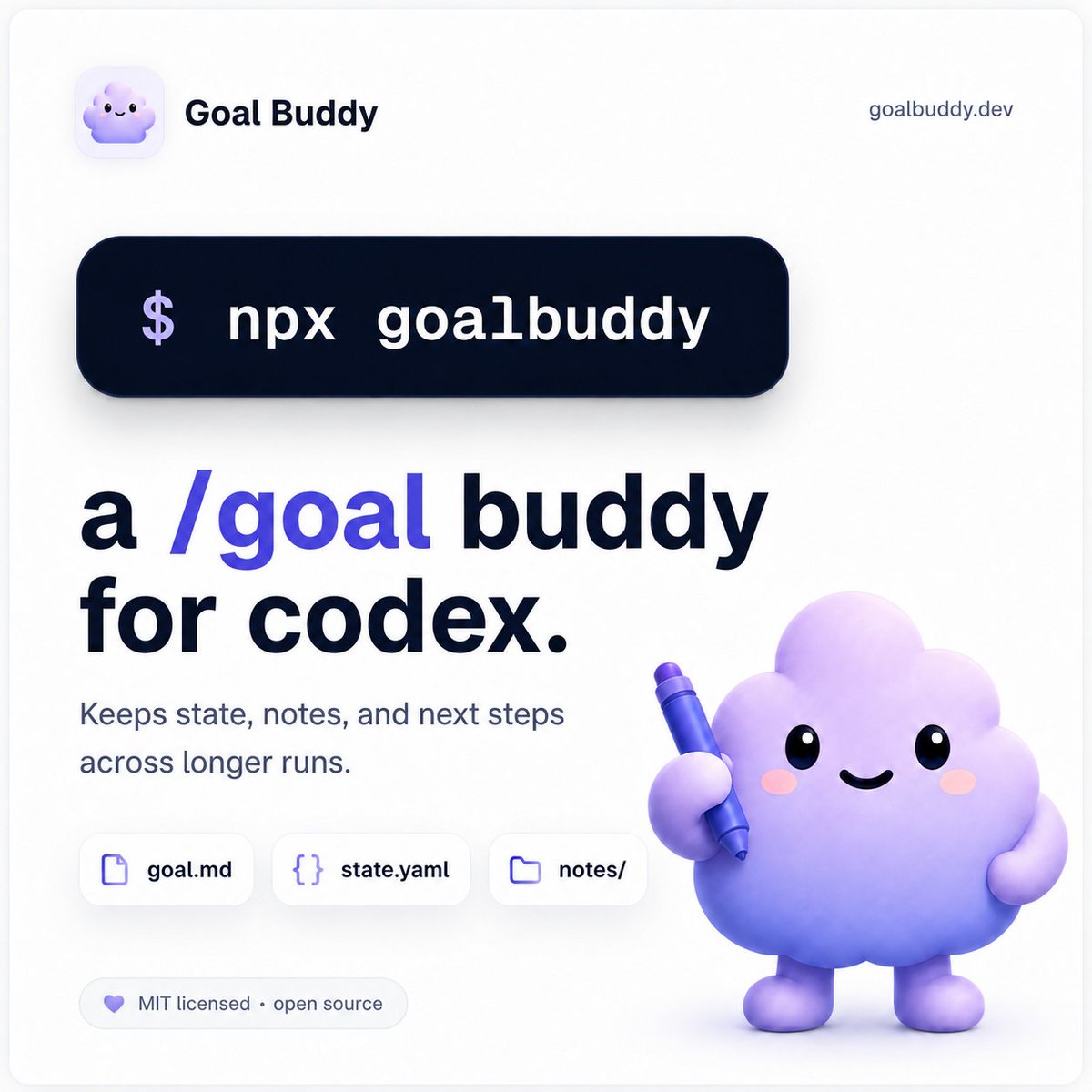
Introducing Goal Buddy!
Goal Buddy prepares a goal.md and state file for the Codex /goal command. Extend goals into GitHub, Slack, Linear, or however you want.
⭐️ 148 Stars from teams at Shopify, Tencent, Zendesk, and more!
Open source + Extendable.
toli@tolibear_
I spent 68 hours and my entire weekly Codex budget to create goal-maker. npx goal-maker It turns big Codex /goal runs into a rolling working board with strong per-task instructions and receipts. Here's how it works:
English
𝐬𝐧𝐚𝐤𝐞𝐠𝐨𝐝 retweetledi

which micro-psychosis states do you prefer when vibe coding?
- Human Bus: pasting outputs from the model to the environment and summarizing environment changes to the model
- Human Clipboard: pasting outputs between agents
- Token Gambler: cmon, one more prompt will surely fix it
- The Cuck: sitting in your herman miller watching claude grep git patch and fuck your codebase for 4 hours
English

@aakashgupta slop post
slop replies
ya'll need 32gb mac minis for this? LOOOOL 😭😭
English

Mac minis with 32GB+ have a 10-18 week wait right now. PMs are buying them as personal AI compute boxes.
A developer in Australia named Peter built something called OpenClaw on a weekend. The pattern is dead simple. You install an agent on a dedicated Mac mini sitting in your closet. You message it on WhatsApp. It runs the work on the Mac mini. It sends the result back through WhatsApp.
You never open a terminal. You never sit and watch it think. The agent has full control of one machine that isn't yours, with full bash access and full file system access, sandboxed away from anything that matters.
Three things make this different from Claude Code:
Delegation through channels you already use. WhatsApp, Slack, email, SMS. The agent works while you sleep, eat, or run errands, and pings you when it's done. You stop being the bottleneck.
Full machine sandboxing. Instead of granting file-by-file permissions every time, you give the agent its own computer. The Mac mini is the sandbox. If the agent does something destructive, it destroys a $599 machine, not your work environment.
Model agnosticism. Connect any model, including open source. No Anthropic rate limits, which is the single biggest complaint from heavy Claude Code users.
The reason this matters at enterprise scale: the same architecture is what GCP and AWS are about to ship inside their cloud platforms. Send a message to a sandboxed agent that reproduces your problem, tries a solution, returns the result. The Mac mini is the early indie version of what Google is going to sell as a managed service in 2026.
Mahesh Yadav has been running this setup for months. 13 years building AI at Microsoft, Amazon, Meta, and Google before going independent. His take: PMs who learn the OpenClaw pattern now will recognize the shape of every enterprise agent platform when they arrive.
The hardware shortage is a leading indicator. Builders are buying compute before companies are.
Aakash Gupta@aakashgupta
This guy literally broke down how to become a $1.4M "builder PM" with n8n, Claude Code, and OpenClaw: 1:53 - What a "builder PM" actually is 6:04 - Your first agent in n8n (live build) 14:18 - Why every agent needs these 4 things 21:35 - The multi-agent eval loop 29:47 - Where n8n dies 33:39 - When to graduate to Claude Code 35:08 - What broke in December 2025 47:17 - The self-improving PRD reviewer 1:02:28 - Mocks and prototypes without designers 1:05:15 - OpenClaw and the new agent OS 1:22:06 - What AI PM interviews look like now
English


@NousResearch 🙌 what else is there to do on a rainy saturday in nyc
English

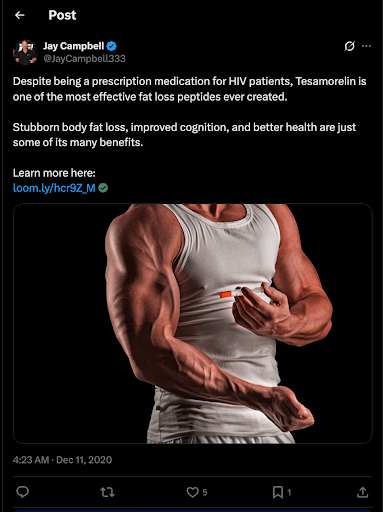
Tesamorelin - The Compound I Called in 2020
In December 2020, I told you about a prescription drug originally made for HIV patients.🧵
I said it was one of the most effective fat loss peptides ever created.
I also said it improved cognition and overall health.
5 likes.
The compound was Tesamorelin.
Today it's one of the most in-demand peptides in the entire biohacking and longevity space.
Every optimization clinic offers it.
Every peptide roundup lists it.
Every anti-aging protocol includes it.
In 2020, almost nobody outside of HIV medicine was talking about it.
I was.
Here's what I already understood about Tesamorelin that took the rest of the world years to catch up on.
Tesamorelin is a synthetic analog of growth hormone-releasing hormone.
It doesn't inject synthetic growth hormone into your body.
It signals your own pituitary gland to produce more of it naturally.
That distinction matters.
Your body's feedback loops stay intact.
Your endogenous production isn't shut down.
Most people now know it for visceral fat reduction.
The deep abdominal fat wrapped around your organs that drives inflammation, insulin resistance, and cardiovascular disease.
Tesamorelin specifically targets that fat in a way that diet and exercise alone often cannot.
But the part I mentioned in 2020 that still gets overlooked: cognition.
A randomized, double-blind, placebo-controlled trial at the University of Washington gave 152 adults Tesamorelin for 20 weeks.
It improved executive function in both healthy older adults and those with mild cognitive impairment.
It boosted IGF-1 levels by 117% while staying within physiological range.
It reduced body fat by 7.4%. Nature Reviews Endocrinology covered it.
Fat loss AND brain function from the same compound.
I wasn't guessing when I said "improved cognition and better health."
I had studied the research.
That's the pattern people miss.
I don't recommend compounds because they're trending.
I recommend them because I've spent years reading the studies, testing them myself, and documenting the results.
By the time something "trends," I've already moved on to the next breakthrough.
In 2020, Tesamorelin had 5 likes on my feed.
In 2026, it's a cornerstone of modern peptide protocols worldwide.
From the Vault. Week 3.
Old posts. Old predictions. Real receipts.
This is the Tip of the Spear.

English

We're launching Sleuth today.
The intelligence platform for biopharma's highest-stakes decisions, in use at top companies in the world.
To celebrate, we broke down the Chinese landscape: 18K+ assets & a map of the strategic white space. RT + comment "Sleuth" for access.
English



@zzerochill Not me. Keep my DNA on me at all times. You should be more careful where you leave it lying around
English
I’ve wanted to do this for a decade.
But I never did - I refuse to give any company my DNA.
It is me.
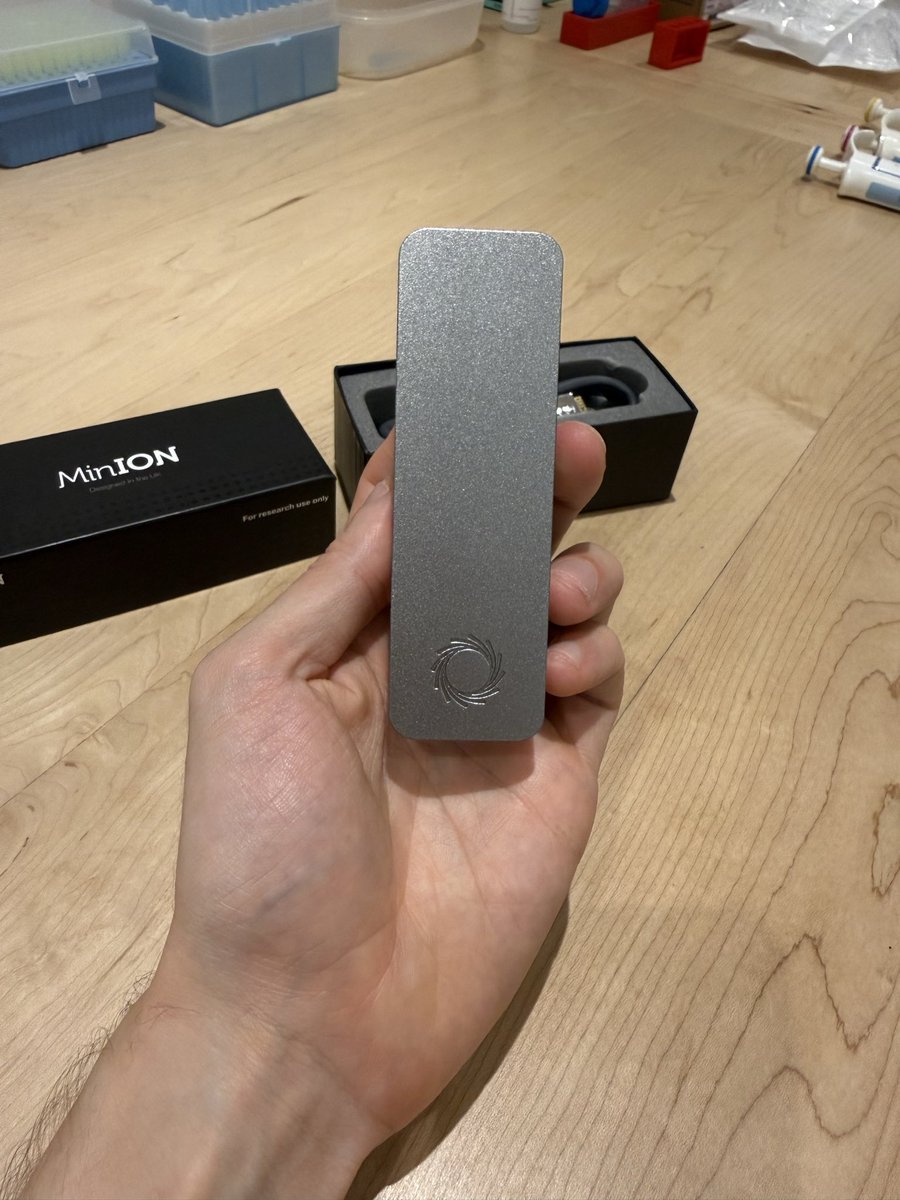
So this week I sequenced my genome entirely at home. Literally on my kitchen table.
I never exposed my DNA sequence to the internet. Not at any point.
I used a MinION to do the sequencing (it’s smaller + weighs less than an iPhone).
I used open-source DNA models for the analysis (Evo2 and AlphaGenome) running locally on a DGX Spark and Mac Studio.
I traced mechanisms behind my family’s multigenerational autoimmune conditions that no clinician has been able to understand.
When I set out to do this I didn’t know if it would actually work. It does.
Your genome is the most private data you will ever have. You probably shouldn’t let it leave your house.


Patrick Collison@patrickc
I'm lucky enough to have a great doctor and access to excellent Bay Area medical care. I've taken lots of standard screening tests over the years and have tried lots of "health tech" devices and tools. With all this said, by far the most useful preventative medical advice that I've ever received has come from unleashing coding agents on my genome, having them investigate my specific mutations, and having them recommend specific follow-on tests and treatments. Population averages are population averages, but we ourselves are not averages. For example, it turns out that I probably have a 30x(!) higher-than-average predisposition to melanoma. Fortunately, there are both specific supplements that help counteract the particular mutations I have, and of course I can significantly dial up my screening frequency. So, this is very useful to know. I don't know exactly how much the analysis cost, but probably less than $100. Sequencing my genome cost a few hundred dollars. (One often sees papers and articles claiming that models aren't very good at medical reasoning. These analyses are usually based on employing several-year-old models, which is a kind of ludicrous malpractice. It is true that you still have to carefully monitor the agents' reasoning, and they do on occasion jump to conclusions or skip steps, requiring some nudging and re-steering. But, overall, they are almost literally infinitely better for this kind of work than what one can otherwise obtain today.) There are still lots of questions about how this will diffuse and get adopted, but it seems very clear that medical practice is about to improve enormously. Exciting times!
English
@0xSero As a first gen Polish American, moving to Warsaw and spending 6 years there as an adult was a core part of my life.
I hope to live there again when the time is right. Some of the best years I've had, and that this is indeed a privilege really resonates with me.
All the best!
English


@Visionscaper @Voxyz_ai @garrytan just garry and openclaw normgroids exposing themselves as utterly and helplessly clueless
makes me want to vomit, the slop these people shamelessly put on the timeline
someone has to stop them
English


i'm guessing most of you won't read garry's full article so here's the tldr:
garry's AI instruction file hit 20,000 lines. claude told him to stop.
he replaced it with a 200 line routing table called RESOLVER.md: when this type of task shows up, read this file first. that's it.
result: faster, more accurate, fewer hallucinations.
if the article felt too technical: the whole pattern ships in gbrain v0.10.0. just use it. i set it up this morning, works well.
Garry Tan@garrytan
English

OpenClaw is killing itself because it is married to xillennial attitudes about its userbase, mainly selling it to the type of moron that consciously purchases Dell products outside of being forced to at gunpoint at work. It’s not cool. Sexless.
Hermes is for people who do sex.
@jason@Jason
I'm starting to believe that the industry is involved in an explicit effort to kill Open Claw. Everything they do needs to be examined, documebted and detailed because we are tipping into anti-trust territory. Agent technology is so powerful that we shouldn't allow it to be owned by three or four frontier model companies.
English

@eptwts That kind of speed usually comes from tight workflows and clear editing rules, not just availability. Otherwise quality starts slipping fast once volume kicks in.
English


Iranian diaspora libtards who begged for this war reading this
GIF
eugyppius@eugyppius1
probably not a good sign
English


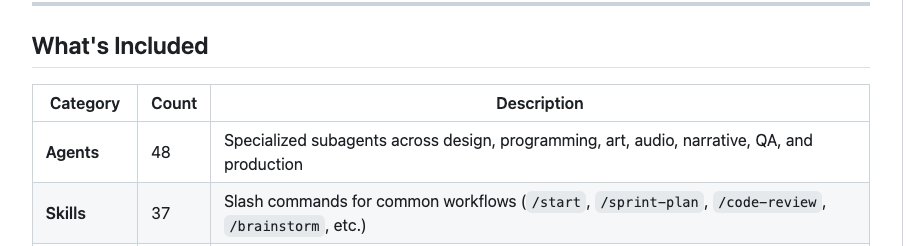
you need 48 agents and 37 skills to build a video game
you cannot do it with anything less, trust
Tom Dörr@tom_doerr
48 AI agents game studio github.com/Donchitos/Clau…
English