Searching for the Obvious

10.6K posts

Searching for the Obvious

Searching for the Obvious

@imran220557

The World Katılım Mart 2009
375 Takip Edilen541 Takipçiler
Searching for the Obvious retweetledi
Rehan Javed 🤫
Rehan Javed 🤫@rehanjawed·
Including Ke Generation Fleet Pakistan has 39,591 MW of installed capacity. Last year we sold only 111,467 GWh — down 10.6% from the 2022 peak. At just 52% production from these plants including hydel and nuclear , existing plants already cover our entire 2035 Ismo projected demand of 180,605 GWh. IGCEP still wants to build to 62,657 MW. That creates a surplus of 148,720 GWh — more than we sell today —which means more capacity payments that consumers pay for but never use. ISMO's own document warns this will make tariffs "touch the highest numbers, making it unaffordable." No new capacity is needed. Use what we have first. Capacity payments is 52 percent of tariff today , it should be 25 percent which should be the new focus before installing any new generation.
Rehan Javed 🤫 tweet media
English
0
2
1
150
Searching for the Obvious retweetledi
fasih
fasih@therealfasih·
The Prime Minister has spoken of a Charter of Economy—a long-term framework meant to give investors policy consistency and predictability. It is an admirable aspiration. But the problem is more immediate: the call is coming from inside the house. The same political leadership that commissioned Pakistan’s LNG terminals remains in office today. Yet the petroleum minister has described these contracts as “flawed” and potentially “mala fide,” while questioning whether LNG is even required. At the same time, the power minister has publicly credited the arrival of LNG cargoes with ending the latest spell of load-shedding after a month-long disruption in supply.
English
2
3
6
2K
Searching for the Obvious retweetledi
Fahd Husain
Fahd Husain@Fahdhusain·
Federal Minister for Energy (Petroleum Division) @AliPervaiz450 joins me on the show and explains on map plans for Pakistan’s oil supply options. Very interesting indeed! :)
English
80
265
1.3K
120.7K
Searching for the Obvious retweetledi
Yousuf Nazar
Yousuf Nazar@YousufNazar·
The report leans heavily on the term “crack spread,” but uses it in a way that obscures more than it explains. A crack spread is a global benchmark indicator, not a realised margin. Yet it is being invoked as if it represents what Pakistani refineries should be earning. That is misleading. A refinery’s actual margin is what remains after freight, insurance, duties, yield losses, energy costs, and operational inefficiencies. None of that is captured in a headline crack spread. So when the article contrasts a “notional” $41.5 with a “market” $60, it is not comparing like with like—it is comparing a regulated pricing input with a gross international indicator. It becomes even more problematic when elevated international diesel prices are used as a reference point. Pakistan refines roughly 70% of its diesel locally. Comparing local realisations with temporarily inflated global diesel benchmarks—driven by tight supply or geopolitical risk—does not establish a loss. It simply imports volatility into the narrative. If the claim is that refineries are losing money, then the burden is simple: show the realised net margin, not a theoretical spread. Otherwise, the argument rests on substituting a benchmark for reality. Once you strip that away, the real question is clear: are margins actually negative after all costs, or merely lower than what refineries became accustomed to under the previous formula which ignored the fact Pakistan refines 70% of diesel locally? thenews.pk/print/1413319-…
English
0
2
10
1.1K
Searching for the Obvious retweetledi
Ali Pervaiz Malik
Ali Pervaiz Malik@AliPervaiz450·
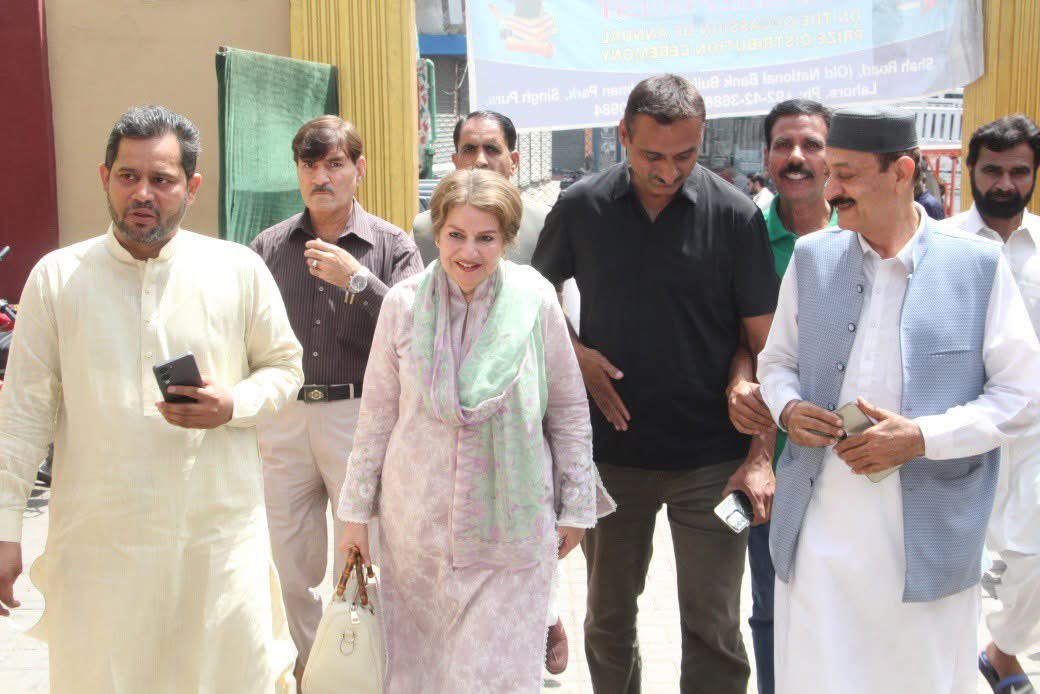
یوسی 126: بیگم شائستہ پرویز ملک کی بی ایس ایم ایجوکیشن سکول میں منعقدہ تقریب تقسیم انعامات میں شرکت
Ali Pervaiz Malik tweet mediaAli Pervaiz Malik tweet mediaAli Pervaiz Malik tweet mediaAli Pervaiz Malik tweet media
اردو
1
2
19
504
Searching for the Obvious retweetledi
Rehan Javed 🤫
Rehan Javed 🤫@rehanjawed·
@akleghari genuine appreciation for moving swiftly to end load-shedding after the LNG cargo arrival and hydel increase. Well thought management of resources resulted in shielding consumers from costlier diesel generation during the shortage deserves credit. That said, three respectful requests for your urgent attention: 1️⃣ North-South Transmission Constraint: Sir, this remains the single biggest structural bottleneck in our power sector — cheap southern generation continues to be stranded while the north relies on expensive fuel. Resolving this would be a defining legacy. 2️⃣ Furnace Oil Surplus → FCA Relief: Furnace oil consumption ran well above reference during the crisis. Consumers would deeply appreciate if the resulting surplus levy collected is passed on as a discount in the upcoming FCA, rather than absorbed silently. 3️⃣ Revise the Indigenous Gas Allocation Policy: Sir, with spot RLNG landing at $17.99–$18.88/mmBtu, future FCAs face serious upward pressure. The gas allocation policy must be revisited — and power plants moved to Priority #1 for indigenous natural gas. This single reform would meaningfully dilute the impact of expensive RLNG on consumer tariffs. You've shown the will to act, Sir. These three steps would convert short-term relief into lasting reform. 🇵🇰 #Pakistan #Energy #PowerSector #FCA LNG supplies arrive, load-shedding ends: Leghari - Business Recorder share.google/i4hEVta6CYJzjE… @NEPRA5
English
0
1
5
203
Searching for the Obvious retweetledi
fasih
fasih@therealfasih·
LNG terminals are infrastructure, not suppliers of gas. The total cost of capacity from both terminals is about 2% of the LNG procured through them over their 15-year terms. Through fuel substitution, Pakistan saves multiples of what it pays in capacity charges and it earns multiples more in economic activity. Pakistan has secured attractive term contracts with LNG suppliers on the back of these terminals. Both terminals are available and working. Policy, planning, and the system may have failed. Infrastructure has not. The facts are undeniable. thenews.pk/print/1411738-…
English
1
4
8
1.2K
Searching for the Obvious retweetledi
fasih
fasih@therealfasih·
Pakistan has already earned back every penny it has paid to both terminals through fuel savings alone. The State Bank of Pakistan, citing NEPRA data, found that from FY2017-FY2020, Pakistan generated 72,755GWh of electricity from LNG at a cost of Rs. 666.3 billion, and that the same electricity from furnace oil would have cost Rs. 900 billion. This is a saving of Rs. 234 billion. This is up to FY2020 only. This does not include what exchequer gains in taxes. The facts are undeniable.
English
2
3
5
1.5K
Searching for the Obvious retweetledi
Awais Leghari
Awais Leghari@akleghari·
لوڈ مینجمنٹ کے خاتمے کے متعلق وفاقی وزیر توانائی سردار اویس احمد خان لغاری کا اہم پیغام: الحمدللہ، ایل این جی کی بروقت فراہمی کے بعد ملک میں بجلی کی لوڈ مینجمنٹ کا خاتمہ کر دیا گیا ہے۔ حالیہ دنوں میں گیس کی کمی کے باعث محدود وقت کے لیے لوڈ شیڈنگ کرنا پڑی، تاہم حکومت نے ذمہ دارانہ فیصلے کرتے ہوئے مہنگی بجلی سے عوام کو بچانے کو ترجیح دی۔ پن بجلی کی پیداوار میں نمایاں اضافہ ہوا ہے اور اب یہ 6000 میگاواٹ تک پہنچ چکی ہے، جبکہ نظام کی بہتری کے لیے بروقت اقدامات کیے گئے ہیں۔ وزارت توانائی عوام کو یقین دلاتی ہے کہ مستقبل میں بھی بجلی کی بلا تعطل فراہمی کو یقینی بنانے اور قیمتوں کو قابو میں رکھنے کے لیے ہر ممکن اقدامات جاری رہیں گے۔
اردو
114
121
313
21.1K
Searching for the Obvious
Searching for the Obvious@imran220557·
Incorrect number stated ; it is lower
farrukh saleem@SaleemFarrukh

$538,535 per day. Who will stop the meter? Pakistan’s LNG system carries a fixed cost that does not sleep. Every single day, $538,535 leaves the system -- whether gas flows or not. Over a decade, that has crossed $1.6 billion. The payments go to terminal operators at Port Qasim, Karachi, for floating regasification units that convert imported LNG into pipeline gas. Cold truth: This is not a fuel bill. This is a capacity bill. Colder truth: The ships can sit idle. The cheques do not. On March 4, Qatar invoked force majeure. LNG cargoes stopped -- Pakistan’s payments did not. At roughly $16 million a month, Pakistan continued to pay for terminals with nothing to regasify. Imagine: Pakistan cannot feed the 44.7 per cent of its population that survives below the poverty line. Imagine: Pakistan cannot fully fund the defence equipment its armed forces need to protect the country’s borders. Imagine: Pakistan goes to the IMF with a begging bowl every few years, negotiating humiliating conditions just to keep the lights on. Imagine: Every single day, without fail, Pakistan finds $538,535 to pay for ships that are not moving, vessels that are not working, and gas that is not flowing. So, who will stop the meter? The present government says the contracts, as signed, carry no force majeure protection for Pakistan. Fact: Tools exist. They are simply not being used. Ogra, the Oil and Gas Regulatory Authority, has the power to review and revise the tariff structure for both terminals. No gas flowing means no service rendered. A regulator worth its name would have opened that proceeding on March 5. Two operators. One port. Guaranteed dollar returns whether or not a single cubic foot of gas moves. Is that a market -- or a cartel dressed in contractual language? The Competition Commission of Pakistan (CCP) has the mandate to investigate exactly this kind of arrangement. The question is why it hasn’t. Why has parliament become a spectator in this? The Public Accounts Committee has the authority to call for a fresh forensic audit of the original contract awards -- how they were structured, why force majeure relief was explicitly excluded for Pakistan but not for the operators, and whether the contracts were designed, from the outset, to ensure that all risk flowed in one direction. Why has the Parliament become a spectator in this? Every day this question goes unanswered costs Pakistan $538,535. Someone decided to start this meter. Someone has the power to stop it. The people deserve to know who -- and why they haven’t.

English
0
0
1
57