Inanimate

14 posts

Inanimate banner
Inanimate

Inanimate

@inanimate_tech

Tech to augment your environment & increase your agency.

London, UK Katılım Ekim 2025
2 Takip Edilen186 Takipçiler
Sabitlenmiş Tweet
Inanimate
Inanimate@inanimate_tech·
Hello World! We are @inanimate_tech. + We see a future of Universal Ambient Intelligence. + We believe in togetherness. + We are building technology to augment your environment and increase your agency. Follow our journey: news.inanimate.tech/subscribe
English
2
0
2
1.1K
Inanimate retweetledi
Matt Webb 🌸🌼 genmon.fyi
wired up the accel/gyro to the Resident sandbox 10 points to whoever makes the first m5stick app that does iBeer
English
2
3
26
1.7K
Inanimate retweetledi
Matt Webb 🌸🌼 genmon.fyi
Part of the thesis at @inanimate_tech is agents are beginning to act in the real world, and to do that well they need to be able to run code Like, our personal AIs can now drive my desktop apps. Why can't they drive the products in my office and home too? Why can't I vibe code a whole generative personal app that makes use of all the electronics around me? It's hard to see how we reach that future: Smart home protocols are too limited and too high latency. At the other end of the spectrum, imagine I could get my agent to re-write the firmware of all my devices for whatever purpose I have a dozen times a day -- is that going to be reliable? Or safe? We open sourced our answer to this today... it's called Resident. Resident is a code sandbox for ESP32 devices. It's aimed at device developers, and it lets them bring infinite reprogrammability to their devices for all their end users. (We love ESP32: it's a unique microcontroller family as it is used equally by makers, new hardware startups, and in mass production. Plus it has on-board wi-fi and a great ecosystem.) Sandboxes let you expose only the capabilities you choose -- and then the code can do anything. Once the developer adds the sandbox, it goes like this: - User says their intent - The agent reads the device capabilities doc: what IO does it have? What are its characteristics? - Then the agent writes code... - ...pushes the code to the device... (we provide a back-end server and websocket connectivity) - ...and the code runs in the on-device Resident sandbox. Boom, hot reload device functionality 💥 We've been using Resident for the last couple of months for prototyping new products and new use cases. It'll be at the heart of the experience for our future products. What we've learnt already is that infinite reprogrammability is powerful... but weird! It changes product archetypes fundamentally. We're going to have to figure out this new world together. Which is why we're sharing Resident for anyone to use. It comes with the same stack of agent skills that we use to quickly bring up new device prototypes and craft new apps for them. We're looking forward to sharing as we build, and would love for you to get involved too. 👉 Resident resident.inanimate.tech - Learn about integrating Resident (compatible with esp-idf and Arduino for prototyping) - Get the agent skills to create and push new sandbox apps - Try it instantly using the browser-based simulator 👉 More... We believe that on-device sandboxes are a foundational primitive for AI irl. I go deep on this topic on my blog interconnected.org/home/2026/05/2… Here's the GitHub — I'd love it if you gave us a star 🤩 github.com/inanimate-tech…
GIF
English
5
7
82
18.8K
Inanimate retweetledi
Daniel Fogg
Daniel Fogg@danielfogg·
Newsletters are awesome. I read a lot of them. @genmon writes a legendary one. Still one of the best ways to build a community. So we’ve started one @inanimate_tech called Lab Notes. 📨 Subscribe > news.inanimate.tech/subscribe 🧪 Lab Notes is a record of our work as we build and ship Inanimate. It’s an update on what we are working on, plus what influences, informs, and inspires us. We’re starting off with a classic format. A done list + likes and links. Come with us, as we build a British Sony for the AI Era!
English
0
1
4
1.2K
Inanimate retweetledi
Matt Webb 🌸🌼 genmon.fyi
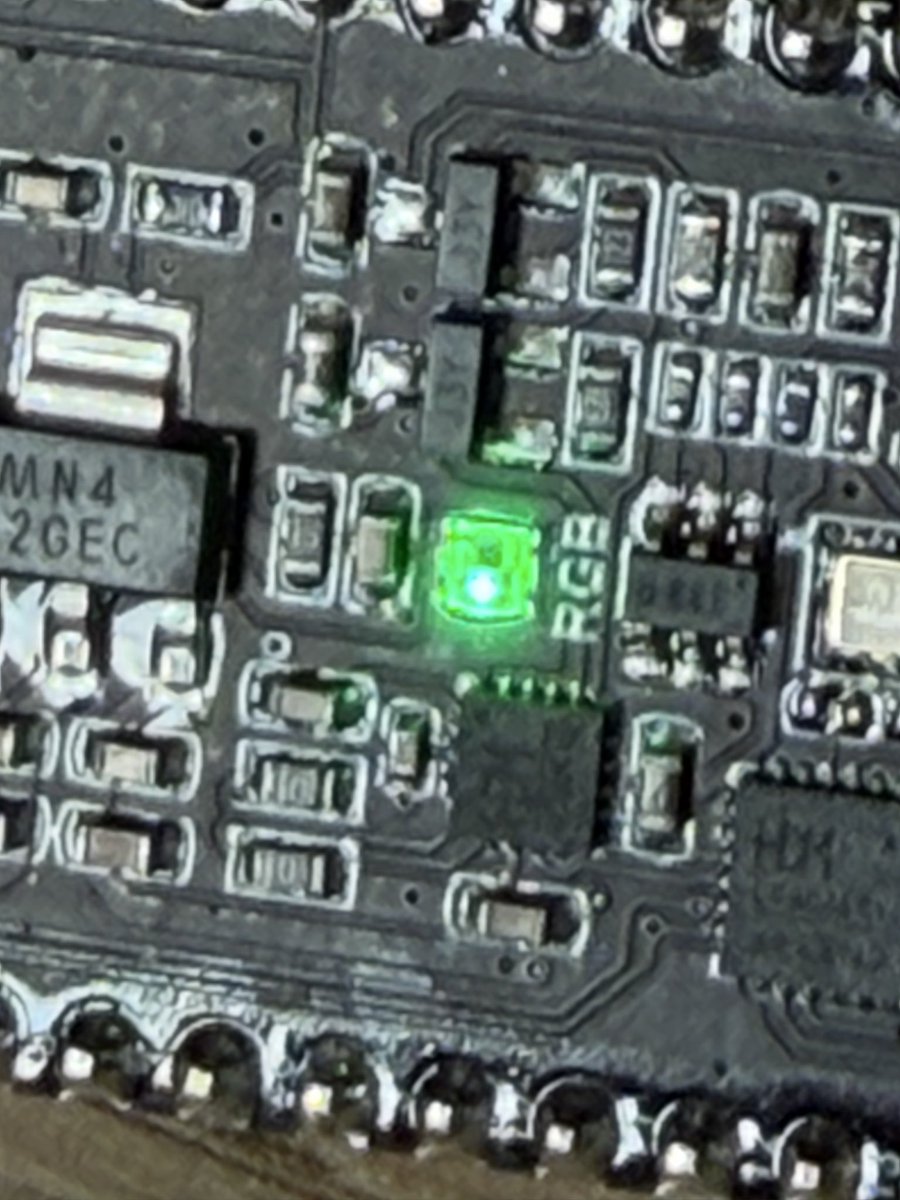
That this pixel is green is the fulfilment of a hunch and an initial proof of concept from last year, actualised this morning, and it is SO UNDERWHELMING to look at haha but the fact that it works is going to dominate my waking hours for the next few years. Marking the moment
Matt Webb 🌸🌼 genmon.fyi tweet media
English
5
1
16
1.3K
Inanimate retweetledi
Matt Webb 🌸🌼 genmon.fyi
there are two visions of the future of computing: cyborgs and rooms cyborgs = augmented self. AI glasses, brain-computer interfaces... the personal computer paradigm rooms = augmented environment. from smart speakers to dynamicland. ambient computing! interconnected.org/home/2025/10/1…
English
1
2
14
3.1K
Inanimate retweetledi
Daniel Fogg
Daniel Fogg@danielfogg·
I’ve been working on something new and exciting — and it’s time to share a little. Introducing: @inanimate_tech. Using AI in daily life feels incredible. It helps with deeper research, faster code, cleaner design, better writing, and so much more. But to access these powerful models, we still rely on software and devices built for an old paradigm of computing. Browsers — introduced in the 90s — were designed for the read–write web. Smartphone apps — born in the 00s — were made for a mobile, social world, not for AI. We’ve invented a god, and then trapped it in a box. We need something better. Enter: the third device. Beyond personal computers and smartphones, third devices are AI-native hardware that create radically better interfaces between humans and AI. The dominant vision for third devices today is the Augmented Self: glasses, pins, pendants, wristbands, rings. Personal, wearable, intimate. Some are gaining traction - but the social norms aren’t yet settled. We have a different vision. What if, instead of augmenting the individual, we augment the environment? Instead of changing the user, we change the space around them. This is the Augmented Environment. Wait, what? By using common sensors in everyday devices, applying intelligence “too cheap to meter,” and leaning on conversational computing (starting with voice), we can give ordinary spaces extraordinary capabilities. Rooms become computers you can walk into -and walk away from. Environments where intelligence is ambient. Room-scale, multi-user, multi-modal. Present, collaborative, conversational agentic capabilities for any space. No more typing to chatbots. So this is what we’re building: devices and a platform to make this real. Affordable, scalable technology that gives people new agency over their world -tech available for consumers to buy, and a platform for partners to build on. If we get this right, we can help shape the future of computing. Make it more real, more social, more human. Really? Yes. We’ve invented some radical new technology - and the prototypes are wild. We can’t wait to show you more. We — because I’m extremely lucky to be building this with my co-founder, the inimitable Matt Webb (@genmon). Matt is a deep thinker, a brilliant inventor, and has an extreme bias for action. I genuinely believe he is one of the most exciting technologists working today. We’ve also been helped by so many people already. Huge thanks to everyone who has provided connections, feedback, and support to get us this far. Thank you! So: Hello, World! This is @inanimate_tech // inanimate.tech An interface for intelligence to augment spaces — not faces. 😊
English
2
2
9
1.3K