indentbrand

446 posts

indentbrand banner
indentbrand

indentbrand

@indentbrand

Building sustainable brand success.

Lagos, Nigeria Katılım Temmuz 2014
174 Takip Edilen30 Takipçiler
Sabitlenmiş Tweet
indentbrand
indentbrand@indentbrand·
indentbrand tweet media
ZXX
0
3
2
0
ZEYA
ZEYA@zeyawriting·
This is the premise on which we built ZEYA. You no longer have to worry about algorithms and no audience. You can simply just...WRITE, and get paid doing it too! tryzeya.com
ZEYA tweet media
English
2
3
17
4.4K
Wild Clips
Wild Clips@JCFights·
A councilman in Brazil was filming a video about a poorly maintained bridge and accidentally captured the whole thing collapsing right before his eyes
English
52
378
8.8K
586.5K
indentbrand retweetledi
EGBENCHONG ♊
EGBENCHONG ♊@JosephAyuk·
In my POV, it will have to be scale. Not the technical definition of scale, but what it actually takes to achieve it. Tech loves to talk about scale as though it's a feature you unlock after deploying enough servers or adopting the latest architecture. In reality, scale is usually the result of solving distribution, incentives, trust, customer behavior, operations, regulation, and economics. The code is often the easiest part. This is especially visible in startup ecosystems. Founders often think they're building a technology problem when they're actually facing a systems problem. They app everything. They automate everything. They optimize everything. Yet the bottleneck is often human behavior, organizational adoption, market structure, or institutional constraints. Technology amplifies systems; it rarely replaces them. That's why so many products that look brilliant in demos fail in the real world, while seemingly simple businesses become giants. People understand the technology. What they don't fully understand is the social, economic, and institutional machinery required to make technology scale sustainably.
Emmanuel Alao@nuel_flow

What’s one thing everyone in tech pretends to understand but actually doesn’t?

English
1
5
3
211
indentbrand retweetledi
Ihtesham Ali
Ihtesham Ali@ihtesham2005·
A TV writer with no philosophy degree read Aristotle, Kant, Bentham, and Scanlon back to back, built a sitcom around what he found, then explained in one book why the trolley problem is no longer a thought experiment and the people who need to understand this most are the ones building AI. His name is Michael Schur. He co-created Parks and Recreation and Brooklyn Nine-Nine. But The Good Place was the project that broke him open. On the surface it was a comedy about a woman who accidentally ends up in heaven. Underneath, it was a philosophy seminar. Every episode was built around a real ethical framework. He had to actually understand all of it to make any of it funny. After the show ended, he wrote the book anyway. He called it "How to Be Perfect." It begins with the most honest opening line in any philosophy book ever written: Should I punch my friend in the face for no reason? No. That is not a joke. That is his method. He starts with the obvious and builds toward the impossible. Here is the framework he built, and why the most dangerous people in tech right now are running exactly one of the four schools of thought without knowing any of the others exist. The first school is Virtue Ethics. Aristotle built it around 350 BCE. The question it asks is not "what should I do?" It asks "what kind of person should I be?" The idea: become genuinely good, and good actions will follow naturally. You build courage. You build honesty. You build practical wisdom. Then you trust the person you built. The second school is Deontology. Kant built it in the 18th century and it is the exact opposite. Kant did not care about the person. He cared about the rule. His version: act only in ways you would be comfortable turning into a universal law. If everyone lied whenever it was convenient, the concept of truth would dissolve. So you never lie. Even if the truth gets someone killed. The rule is absolute because the moment you make one exception, it stops being a rule. The third school is Utilitarianism. This is the one that should stop anyone building AI cold. Jeremy Bentham invented it in the late 1700s. The principle sounds beautiful: the right action is whichever one produces the greatest good for the greatest number of people. Pure math. Pure outcome. Intention means nothing. Only consequences count. Schur runs it through the trolley problem, the most famous thought experiment in philosophy. You are driving a runaway trolley. Five people are tied to the main track. You can pull a lever and redirect it to a side track where only one person is tied. Do nothing and five die. Pull the lever and you kill one to save five. A utilitarian says pull the lever. The math is obvious. Now the same problem with one change. You are on a bridge above the track. A large man is standing next to you. The physics are clear: if you push him off the bridge, his body stops the trolley. Five people live. He dies. The math is identical. Almost nobody will push the man. Even people who pulled the lever instantly in the first version refuse. The utilitarian has no answer for why these two situations feel different. The numbers are the same. The outcome is the same. The only thing that changed is whether you are using another human being as a tool. That gap between the math being correct and the action feeling monstrous is exactly where AI ethics collapses every single time. The fourth school is Contractualism, built by the philosopher T.M. Scanlon. It asks the question that Kant's rules and Bentham's math both miss. What principles could be justified to everyone affected? Not the majority. Not the person with the most power. Everyone. Including the one person who ends up on the shorter end of the calculation. Schur's conclusion is the part that people who live inside growth frameworks and optimization loops will resist the hardest. None of the four schools is correct on its own. Each one has a scenario where following it perfectly produces something most humans recognize as evil. Pure utilitarianism justifies harvesting one person's organs to save five dying patients. Pure deontology says you cannot lie to the murderer asking where your friend is hiding. Each system, taken to its logical extreme, becomes a machine that produces monsters while generating perfect internal justification for doing so. The way out is not picking the right framework and following it harder. The way out is using all four as lenses. Ask what Aristotle would do. Ask what Kant would allow. Do the utilitarian math. Then ask Scanlon's question: could you justify this to the person it hurts most? Where those four answers overlap, you are probably on solid ground. Where they pull in different directions, you are in territory that deserves far more than a two-hour board meeting. Schur also coined a term that has been stuck in my head since I finished the book. Moral Exhaustion. The feeling of living in an age where you can know, in real time, every ethical implication of every product you use, every company you work for, every piece of code you ship. The gap between what you know and what you can actually change becomes so large that the easiest response is to stop asking. He says that response is understandable. He also says that choosing not to ask is itself a moral choice, and the consequences of that choice scale in exact proportion to the power you hold. A person building a product one billion people will use is not operating at the scale where shrugging is a neutral act. The people who built the most consequential technologies of the last decade were not evil. Most were genuinely trying to do good. They ran the utilitarian math. They saw a billion users. They saw engagement numbers that looked like impact. They optimized for the greatest good for the greatest number and did not notice until much later that the people being turned into variables in the math were still people. Schur read 2,500 years of philosophy and the lesson he came out with fits in one sentence. You cannot use a single framework because every single framework, followed perfectly, eventually produces the wrong answer. The people who cause the most damage are not the ones who do not care about ethics. They are the ones who found one framework they liked, felt good about it, and stopped asking. The trolley problem is not a thought experiment anymore. It runs on servers. It gets optimized overnight. And the people making those decisions right now have never once asked what Scanlon would say.
Ihtesham Ali tweet media
English
13
117
425
23.3K
indentbrand retweetledi
EGBENCHONG ♊
EGBENCHONG ♊@JosephAyuk·
I understand the direction you are heading, but industrialists don't appear out of thin air. They are usually the product of ecosystems that already have functioning infrastructure, capital, technical talent, supplier networks, and institutions. You can't simply declare that a country needs industrialists and skip the foundations that make them possible. The countries we admire today didn't jump from subsistence economies to industrial giants overnight. They built layers of workers, engineers, SMEs, financiers, logistics networks, and service providers. Industrialists emerged from those ecosystems and then scaled productive capacity through manufacturing, exports, and value-added industries. The real issue isn't that Africa has too many entrepreneurs. It's that too much entrepreneurial energy is directed toward rent capture, arbitrage, and surviving broken systems rather than building productive capacity. Industrialists are not an alternative to entrepreneurs; they are what healthy entrepreneurial ecosystems eventually produce.
English
0
1
1
39
Ndubuisi Ekekwe
Ndubuisi Ekekwe@ndekekwe·
This morning, I had a coaching session with one of our startup CEOs. We discussed a recurring challenge involving a talented team member who continues to make the same avoidable mistakes. My advice was simple: do not view the issue solely as an individual performance problem. Instead, examine it as an organizational systems problem. The young man is exceptionally bright, but brilliance alone does not eliminate errors. When the same mistakes occur repeatedly, leaders must ask whether the organization has built sufficient processes, training, quality assurance, and review mechanisms to prevent them. Among other recommendations, I suggested implementing a company-wide Quality Assurance (QA) and Quality Control (QC) program to improve the consistency and reliability of outputs. To explain my point, I took the CEO back to my undergraduate days at the Federal University of Technology Owerri (FUTO). In my first year, I bought a copy of The Art of Electronics. Interestingly, it was not one of the recommended textbooks, but the title and design caught my attention. Since I was studying electronics, I decided to add it to my collection, alongside K.A. Stroud’s famous Engineering Mathematics, the book that introduced many of us to Ordinary Differential Equations. One story in The Art of Electronics has stayed with me. A company had designed a highly successful product, but over time it lost its schematic diagrams, engineering documentation, and production records. The situation became so severe that production could no longer continue because the knowledge required to manufacture the product had effectively disappeared. After recounting the story, I asked the founder a simple question: “Would you ever want your company to find itself in that situation?” His answer was immediate: “Certainly not.” My response was equally direct: then fix what needs to be fixed today. Many organizations assume that success comes from having brilliant people. In reality, enduring success comes from having brilliant systems. People make mistakes. Systems reduce them. People leave. Systems preserve knowledge. People forget. Systems remember. The companies that scale sustainably are not those that depend on heroic individuals; they are those that institutionalize excellence. That is the ART of Business Success!
Ndubuisi Ekekwe tweet media
English
4
7
45
1.7K
indentbrand retweetledi
Leke Alder
Leke Alder@LekeAlder·
The advantage the old have over the young is experience. The unfortunate thing about experience is that you can't carry it back into the past and apply it. The advantage of youth, on  the other hand, is strength. May that strength not be applied to destructive affection.
English
2
29
80
1.8K
Dr Joe Abah, OON
Dr Joe Abah, OON@DrJoeAbah·
Guys, always stand up to shake hands. If the other person is older than you, it shows respect. If they are younger than you, it shows humility. Either way, you win. People who sit to shake hands are bad-mannered. When you shake hands, do not just offer a limp hand... even to an elder! Make sure that your handshake is firm. It shows confidence and fitness. Then make sure that you look into the person’s eyes. It shows interest, attention and confidence. Don’t look away furtively like a liar and a thief! Remember, as a man, there should be nothing limp or flaccid about you. You should always be polite and gracious, quietly confident (not arrogant, that is for inferior men) and erect. Always erect! I am Ezemmuo. I know things.
English
360
4K
15.6K
409.8K
indentbrand
indentbrand@indentbrand·
@Olu_Lumotz "a country that performs under pressure, but collapses in consistency". ✔️🔥 Gun-to-head performance only delivers momentarily. Excellence is built by and on strategy, systems, structure...
English
0
1
0
23
Olumide Omotoso
Olumide Omotoso@Olu_Lumotz·
I've been watching this video of isco over and over again. It didn’t just show football… it exposed a timeline. A crime scene. Back then, Nigeria looked ready. Not perfect, but prepared. The grass was alive, the stands were louder than the game itself, and the country felt like a stage the world respected. That tournament wasn’t small. You had names who have gone on to become world class players, legends even. The future of football passed through Nigeria and for once, the environment matched the talent. Now pause. Fast forward to today, and that same stadium is trending, not for football, but for decay. So what happened? Here’s the uncomfortable truth: Nigeria didn’t lose football talent. Nigeria lost structure. We moved from: Hosting global tournaments to struggling to meet CAF standards Developing facilities to abandoning maintenance Exporting excellence to importing excuses That competition was a project-based success. Once the spotlight left, so did the discipline. No continuity. No system. No ownership. And that’s the deeper issue this trend is exposing: We are a country that performs under pressure, but collapses in consistency. Football is just the mirror. Because you can’t talk about empty stadiums without talking about empty systems. You can’t talk about bad pitches without talking about bad planning. This video of Isco at Sani Abacha Stadium during the 2009 FIFA U-17 World Cup isn’t nostalgia. It’s evidence. Evidence that Nigeria can get it right. But chooses not to sustain it. And until we stop celebrating moments and start building systems, we’ll keep watching old clips to remind ourselves of what we used to be.
Rising Stars XI@RisingStarXI

🇪🇸🔙 𝗜𝗦𝗖𝗢 at the U17 World Cup… 𝗪𝗛𝗔𝗧 𝗔 𝗧𝗔𝗟𝗘𝗡𝗧 💎
English
11
64
132
12.3K
indentbrand retweetledi
Olufemi AWOYEMI
Olufemi AWOYEMI@OlufemiAwoyemi·
Education is not only about literacy, employment, or certification. Its deeper civic purpose is self-regulation. An educated citizen understands boundaries, responsibility, and consequence to reduce the cost of deviance in a society. They are better able to manage choices, respect institutions, and shape the outcomes of their own lives without waiting for the state to direct every action. This only works, however, where government provides the basic minimums that establish the floor: security, justice, access, opportunity, and credible public systems. Where that floor exists, education turns citizens from dependants into participants. It gives society the capacity to govern itself from within. 'FA 28Apr26
English
0
16
20
698
indentbrand retweetledi
Oaks And Lions 🏴󠁧󠁢󠁥󠁮󠁧󠁿
One of Britain’s most common sayings began over 700 years ago. “By hook or by crook.” Today, it means getting something done by any means necessary. But the origin dates to medieval England, likely as early as the 14th century. Ordinary people were allowed to gather firewood from common land, but only using simple tools. A hook to cut branches. A crook to pull them down. No chopping down trees. No taking more than your share. So you gathered what you could... By hook or by crook. In other words, do what you must, with what you have. What phrase have you heard but never understood? Follow @oaksandlions for more interesting posts like this. #EnglishHistory
Oaks And Lions 🏴󠁧󠁢󠁥󠁮󠁧󠁿 tweet media
English
41
532
2.6K
46.8K
Historic Vids
Historic Vids@historyinmemes·
The “@” symbol in your email exists because of one engineer’s decision
English
50
982
7.7K
548.3K
indentbrand
indentbrand@indentbrand·
@JosephAyuk @JosephAyuk 🔥👏🏾 Profound. Unvarnished. Empathetic even. Real, raw discourse that shifts paradigms and initiates practical policy thrusts. Genuine, even if unsexy, systems thinking that helps to build sustainable ecosystems.
English
0
1
1
28
indentbrand
indentbrand@indentbrand·
@flowidealism "You learn to expect that your ideas will be questioned. You learn to bring evidence, to reason through inconsistencies..." 🔥
English
0
0
2
30
Michael Strong
Michael Strong@flowidealism·
If you take a Spanish class once a week, you will not achieve fluency. You need immersion. The same is true for becoming a thoughtful, articulate person. There is a difference between a Socratic Seminar and Socratic Practice. Most schools that attempt the Socratic method use the first. We use the second. A Socratic Seminar is a classroom activity. Once a week or once a month, students sit in a circle and discuss a text. It is well-intentioned. It is also isolated from the daily culture of the classroom. Socratic Practice is different. It is a daily immersion in intellectual dialogue. At The Socratic Experience, students engage in two to four hours of dialogue per day. The rest of the time is problem-solving and projects. This is not a technique. It is a way of life. When you are immersed this way, something changes in how you think. You learn to expect that your ideas will be questioned. You learn to bring evidence, to reason through inconsistencies, to defend what you believe against respectful skepticism. After thousands of hours of exposure to people demanding reasoning and evidence, you cannot help but develop the habit of thinking. It becomes your default mode. This kind of daily immersion is impossible in a system built around forty-five-minute periods, standardized curricula, and teachers trained to deliver content. The fluency has to come from immersion.
English
3
10
59
3.1K
Obiasogu David
Obiasogu David@afrisagacity·
I just saw this video of a young man from the North struggling to show off his three-camera iPhone during an interview. At first, I thought it was a skit, until I dug deeply. Unfortunately, a majority of Nigerian youths share this same vain mentality!✍️
English
496
830
3.8K
711.2K
Do_I_know_you???_(therealestatenigga)
Geometry is how the world works To understand the world to some extents, you gotta understand geometry to some extents as well. Cos how do you explain to a layman that there's geometry in music? And that's just a tip of the iceberg compared to how geometry plays a huge role in our every day lives, our day to day activities...
English
6
9
93
10.8K
indentbrand retweetledi
Jaynit
Jaynit@jaynitx·
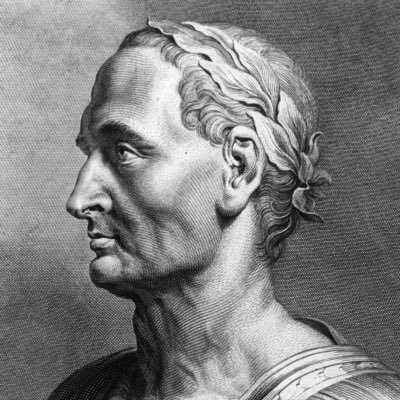
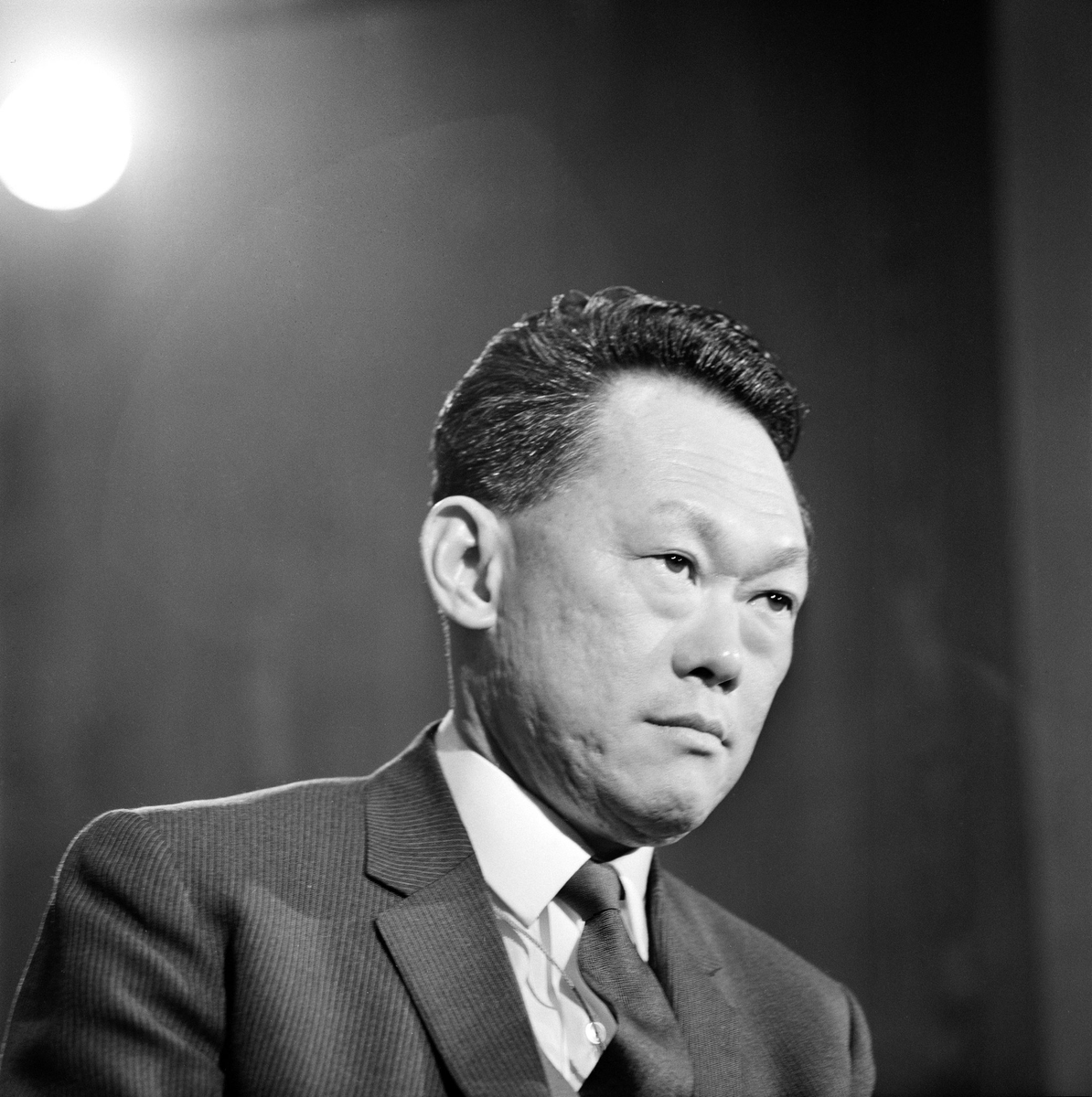
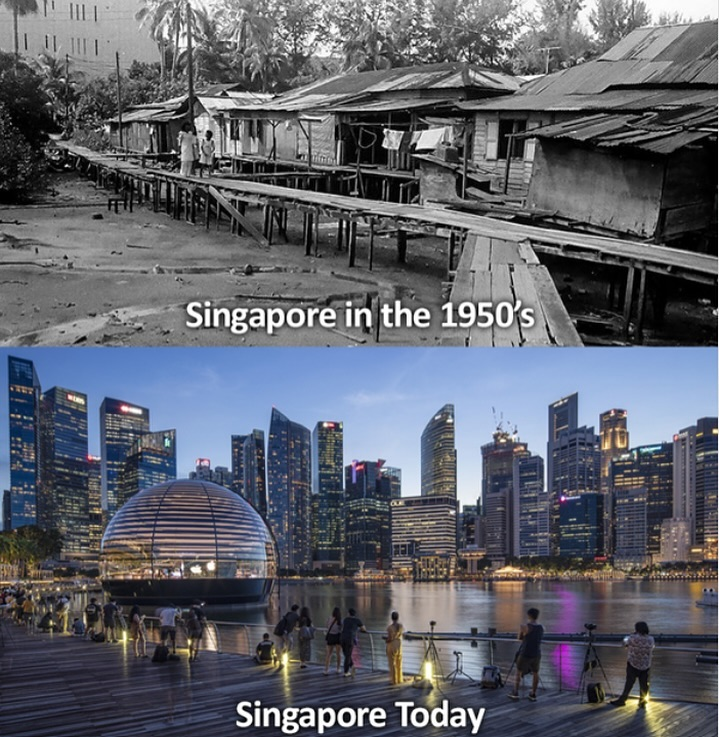
>be Lee Kuan Yew >born 1923 in Singapore >British colony >fourth-generation Chinese >family is wealthy, English-speaking >top of every class 1942: >Japanese invasion >Singapore falls in 7 days >the British surrender >"impregnable fortress" — a joke >you're 18 >watch your colonial masters kneel >learn something >white men are not gods >power is earned, not inherited occupation: >survive under Japanese rule >learn Japanese, work as a translator >see brutality, corruption, chaos >nearly get executed in a random roundup >luck saves you >or destiny >you don't forget what powerlessness feels like 1946: >war ends >go to Cambridge >study law >graduate with double starred first >top of your class >marry Kwa Geok Choo >she graduates top of hers too >power couple before the term exists 1950: >return to Singapore >become a lawyer >defend unions, fight the British >anti-colonial firebrand >the communists want you >you use them >they think they're using you >they're wrong 1954: >found the People's Action Party >coalition of English-educated moderates and Chinese communists >you need their grassroots >they need your respectability >temporary alliance >you both know it 1959: >PAP wins elections >you become Prime Minister >age 35 >Singapore is still British >poor, dirty, overcrowded >no resources, no industry >malaria in the swamps >you: "we'll fix this" 1963: >join Malaysia >Singapore becomes part of the federation >finally independent from Britain >but the marriage is bad from day one >race riots, political clashes >Malay leaders don't want a Chinese-majority city >threatening their power August 9, 1965: >kicked out of Malaysia >not independence, expulsion >you announce it on television >you cry >the only time anyone sees you cry >"for me, it is a moment of anguish" >you're now leader of a country nobody wanted >no army, no water, no hinterland >just a swamp and 2 million people >survival is not guaranteed the problem: >no natural resources >not even fresh water >surrounded by hostile neighbors >communists infiltrating >racial tensions everywhere >how do you build a nation from nothing? the solution: >human capital >if you have nothing, invest in people >education, discipline, meritocracy >English as the common language >no corruption, zero tolerance >pay officials well so they don't steal >punish harshly when they do >caning, hanging, no exceptions >rule of law or rule of the jungle >you choose law the economics: >invite multinationals >make Singapore the easiest place to do business >low taxes, stable government, no bullshit >build infrastructure relentlessly >airport, port, housing >public housing for everyone >home ownership creates stability >people don't riot when they own property the authoritarianism: >no free press >defamation suits against critics >opponents bankrupted, jailed, exiled >chewing gum banned >long hair on men, suspicious >you run a tight ship >too tight, critics say >but the ship doesn't sink 1970s-80s: >Singapore transforms >from third world to first >GDP per capita explodes >skyline rises >slums become towers >swamp becomes financial hub >everyone wants to know the secret >the secret is you 1990: >step down as Prime Minister >after 31 years >but you don't leave >become Senior Minister >then Minister Mentor >shadow over everything >until you die the results: >GDP per capita: higher than the US, UK, Japan >one of the least corrupt countries on earth >best airport, best airline, best port >from fishing village to global city >in one generation >your generation the criticism: >authoritarian >no real democracy >freedom of speech, limited >you respond: "I'm not interested in being loved. I'm interested in being effective." >Singapore proves you right >or proves nothing matters except results March 23, 2015: >die at 91 >a million people line the streets >in the rain >to watch your funeral procession >the father of a nation from Japanese occupation >to British colonialism >to Malaysian expulsion >to building a nation from scratch Lee Kuan Yew. the man who turned a swamp into a superpower. Singapore exists because you refused to let it fail.
Jaynit tweet mediaJaynit tweet media
English
164
1.5K
9.6K
1.3M