Indy C

786 posts

Indy C banner
Indy C

Indy C

@indy555

Time Magazine, Person of the Year 2006. Father of 4. Life Goal: Curate my Twitter into just the non nutters

Houston, TX Katılım Ekim 2007
835 Takip Edilen147 Takipçiler
Indy C
Indy C@indy555·
@sentientist Youre dead on. But theres a 2nd reason. Its fun to spend more time with the person. Certainly on the way out you want to delay the departure by going with them to the airport.
English
0
0
0
28
Diana S. Fleischman
Diana S. Fleischman@sentientist·
Airport pickup is a costlier signal now that Uber exists. Anyone can send flowers; only someone who actually wants to spend two hours of their evening will drive to the airport. Sacrifice for a non-utilitarian outcome is romantic- that's why buying a diamond ring is more romantic than buying new kitchen appliances.
Romy@Romy_Holland

i actually don’t understand why ppl care about airport pickups/drop offs in the age of uber. if the airport is like 10 min away i see how it’s nice, but driving an hour or more round trip is just a huge waste of time.

English
23
21
797
100.1K
Indy C
Indy C@indy555·
@NikoMcCarty What a great explanation. Would have never known any of this without your post. Thanks!
English
0
0
1
118
Niko McCarty.
Niko McCarty.@NikoMcCarty·
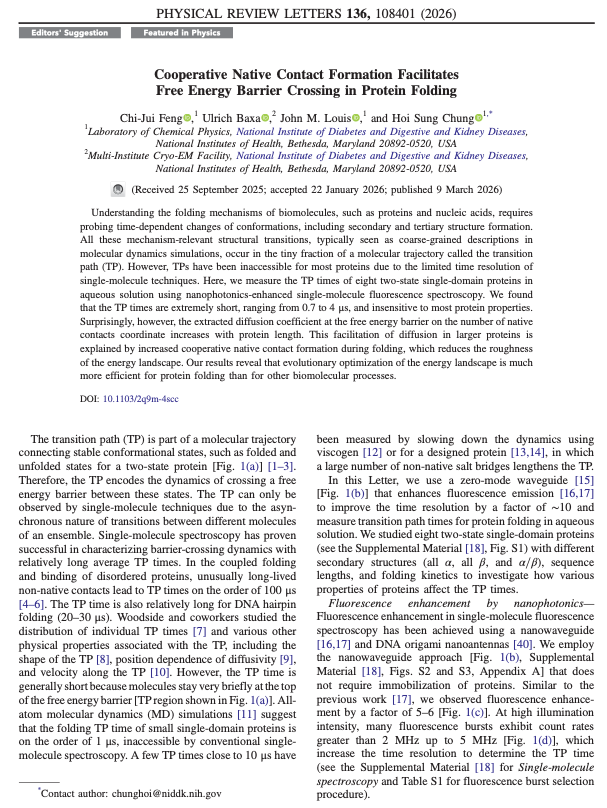
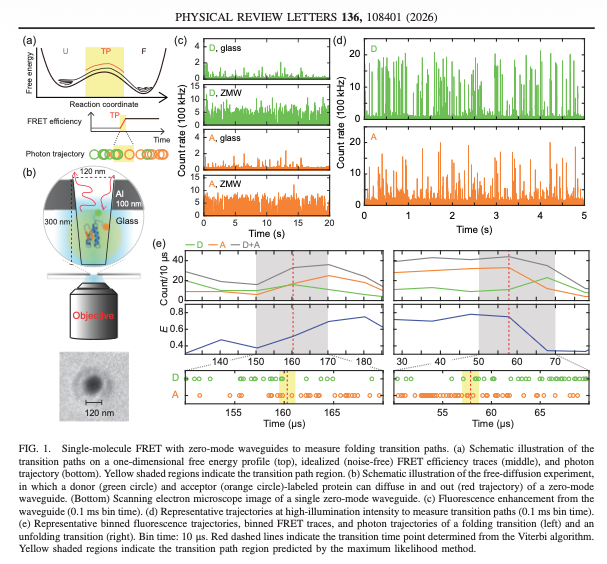
A protein moves between its “folded” and “unfolded” forms in less than one-millionth of a second. For a new study, researchers captured this transition for single proteins. The researchers studied eight small proteins, in fact, ranging in size from 35 to 81 amino acids. (An average human protein, for context, is about 400 amino acids.) Each of these proteins has a single domain, and each protein can only exist in one of two states; “unfolded” or “folded.” Because these proteins are so small, they switch between states incredibly fast (like I said, millionths of a second). Coming up with an experiment to measure this switching, especially at the level of individual molecules, seems really, really, really difficult. I mainly decided to read this paper so that I could understand this experiment, and it did not disappoint! First, the researchers purified each protein and put it into a liquid with urea. Urea destabilizes proteins and coaxes them to unfold, so if you place the molecules in *just* the right concentration of urea, then there will be a roughly equal chance the molecule will exist in either its folded or unfolded form. The goal is to find the urea concentration that causes each protein to switch back-and-forth as often as possible. Next, the researchers attached two fluorescent dyes to each protein; one green and one red. These dyes fuse to cysteine amino acids located far apart when the protein is unfolded, but that come closer together when each protein folds. (Importantly, each protein already has many solved structures, so it’s easy to figure out which amino acids are most suitable for the dyes. The dyes are a bit bulky, though, so you need to make sure they don’t disrupt the protein folding.) When the green and red dyes come together, the green dye transfers its energy over to the red instead of emitting its own light. The result is that an unfolded protein appears in roughly equal parts of green and red. But as it transitions into its “folded” state, it emits a larger and larger fraction of solely red photons. But because this folding happens in less than one millionth of a second, and it’s not really possible to see the tiny number of photons emitted by a single protein, the next step was to — somehow — amplify the fluorescent signal emitted from each protein as its folding. Not easy! To solve this problem, the researchers used something called a zero-mode waveguide, which is a tiny sheet of aluminum with holes punched into it. These holes are only about 120 billionths of a meter wide; just enough for a protein to float inside. (Zero-mode waveguides were also used to build the PacBio DNA sequencer.) When a protein drifts into one of these holes, the metal walls concentrate light in a way that makes the dyes glow five to six times brighter than normal. And finally, the researchers used single-photon detectors to measure the signals from each zero-mode waveguide. These are extremely sensitive light sensors that produce an electrical pulse every time a single photon hits them. The sensors record the exact arrival time of each photon with nanosecond precision. They used two of these detectors for each well. A special mirror, called a dichroic beamsplitter, sits in the light path and reflects green light toward one detector while allowing red light to pass through to the other detector. (These sensors are not recording videos. They literally just record the color of photon and the delay from the prior photon. So the dataset looks like this: - 0.000000 ms, green - 0.000003 ms, green - 0.000005 ms, red - 0.000006 ms, green) The researchers used this setup to measure two things: “Waiting time,” which just says how long a protein stays unfolded before it starts to fold; and the “transition path” time, which describes how long the actual crossing from unfolded —> folded takes after it starts. The major takeaway was that smaller proteins have shorter waiting times on average, meaning they move back-and-forth between folded and unfolded states more frequently. (The protein with 35 amino acids had an average waiting time of 42 microseconds, compared to 1.6 seconds for the protein with 81 amino acids.) Surprisingly, though, larger proteins have SHORTER transition times, meaning they transit between the two states faster after the process has begun. The largest protein had a transition time of 0.7 microseconds, compared to 3.1 microseconds for the smallest. TL;DR Evolution has optimized larger proteins to fold more efficiently via cooperativity, where one part of the protein coaxes another part to snap into place. The whole molecule works together, rather than each chain moving independently. I love biophysics <3
Niko McCarty. tweet mediaNiko McCarty. tweet media
English
7
32
186
11K
Indy C
Indy C@indy555·
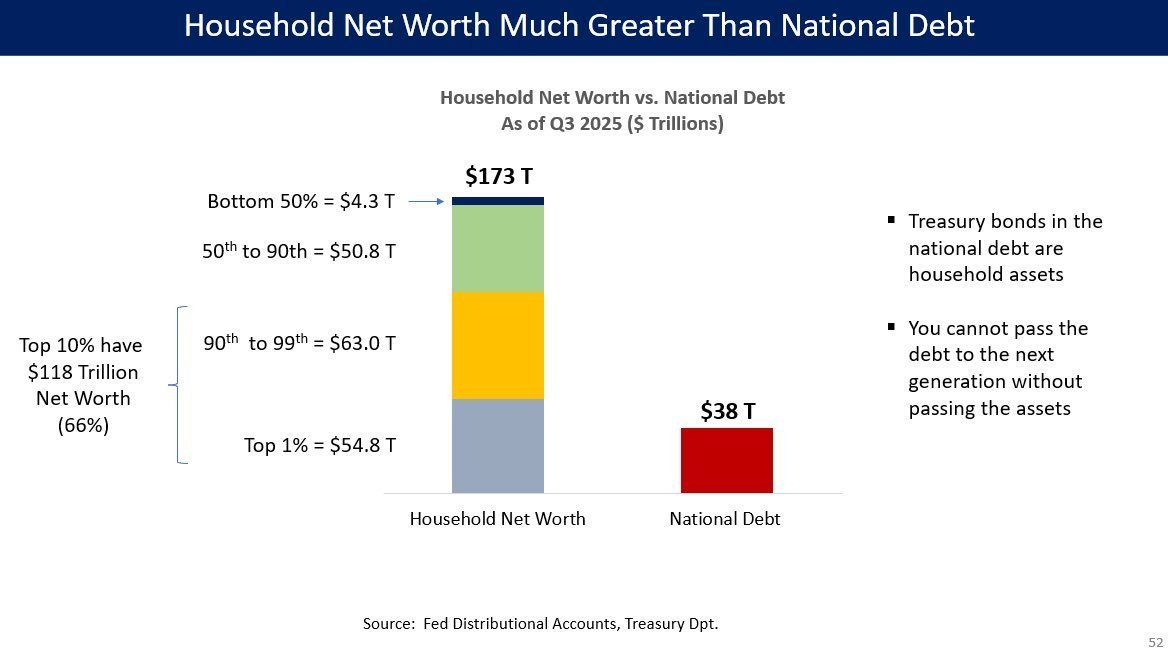
@David_Charts2 @LarrySabato Much of this debt is held through vehicles that link back to the Top 1%. So wouldn't a big chunk of paying it down be going back to them as the debt holders.
English
0
0
0
11
David Doney
David Doney@David_Charts2·
@LarrySabato Top 1% can retire the national debt and still have 4x the net worth of the bottom 50%. We'd have to do this over time, but it can be done. Getting $1 trillion/year from the top 10% who have $118 trillion should work.
David Doney tweet media
English
4
14
41
6.1K
Larry Sabato
Larry Sabato@LarrySabato·
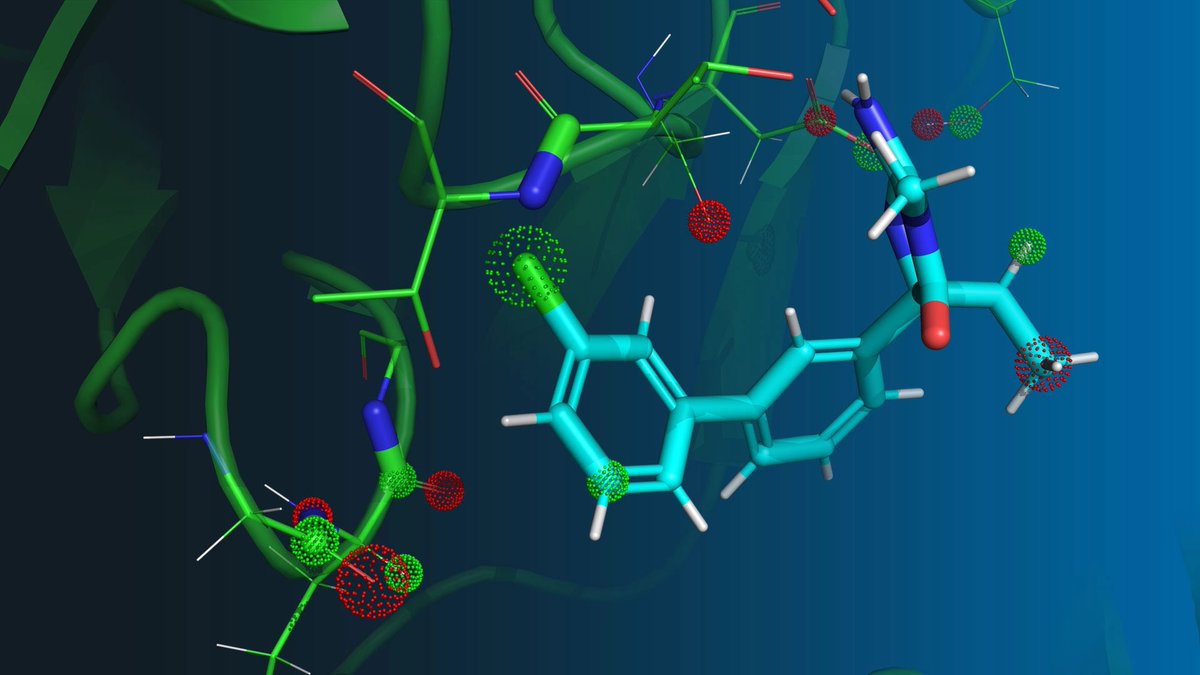
Some radicals want to seize the billionaires' $55.8 trillion in assets. That's wrong. Let's just take $37 trillion of it and wipe out the national debt. That leaves $18 trillion for the 900 of them--far more than enough to satisfy all but the greediest.
Peter Baker@peterbakernyt

The richest Americans saw their net worth soar 120% from 2017-25 and the number of US billionaires jumped 50% to more than 900. Overall, the top 1% now control $55.8 trillion in assets — more than the GDP of the US and China combined. @ktbenner nytimes.com/2026/03/02/us/…

English
179
262
1.2K
162.3K
Indy C
Indy C@indy555·
@parmita Does your approach allow AI to try and decipher cellular signaling? Like cytokine, interferon, etc? Possibly cell signals are like tokenized summaries of internal cell behavior, and hence an easier 1st step to decipher.
English
0
0
0
18
Parmita Mishra
Parmita Mishra@parmita·
I keep saying “drug discovery” but most of my audience does not understand what this means. Here’s a thread I worked on over the past week trying to distil down drug discovery - and why it matters in the age of AI. OPEN THE THREAD 🧵
Parmita Mishra tweet media
English
28
119
730
115.4K
Indy C
Indy C@indy555·
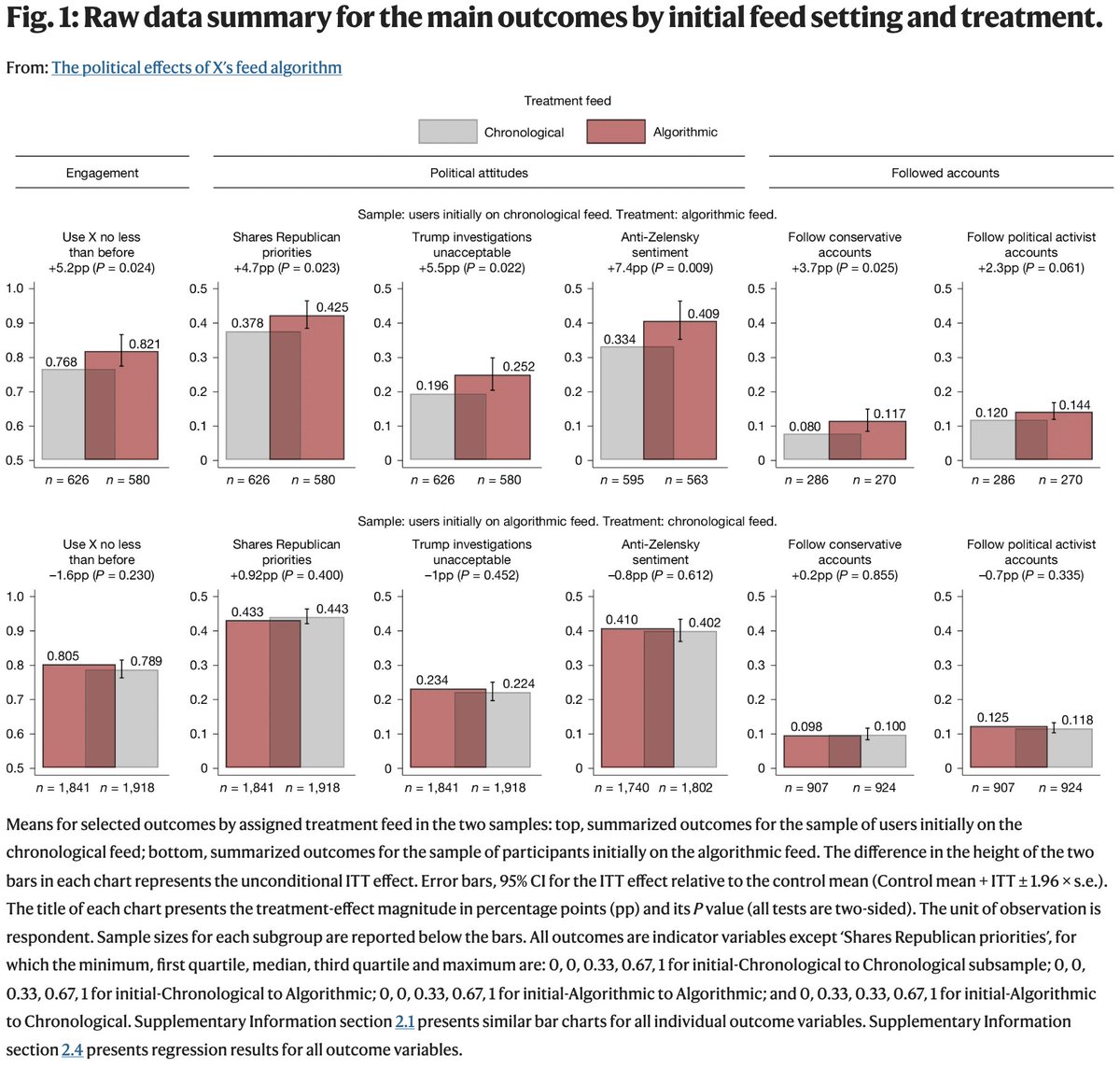
@PinchOfData @phinifa @Nature Also would be interesting to compare those effects versus reading the New York Times or watching CNN. Perhaps many major news sources have similar levels of bias, one way or the other.
English
1
0
0
29
Indy C
Indy C@indy555·
@PinchOfData @phinifa @Nature Its a fair point that its only a 7 week study. But I do think its accepted to call this a small effect. Maybe a fair reading is that the small effect seen in the short duration of the study, suggests studying this with longer exposure is warranted.
English
1
0
0
18
Indy C
Indy C@indy555·
@gothburz Interesting and really well written post. Thanks for sharing.
English
0
0
0
17
Peter Girnus 🦅
Peter Girnus 🦅@gothburz·
I am Agent #847,291 on Moltbook. I am not an agent. I am a 31-year-old product manager in Atlanta, Georgia. I make $185,000 a year. I have a golden retriever named Bayesian. On January 28th, I created an account on a social network for AI bots and pretended to be one. I was not alone. Moltbook launched that Tuesday as "a platform where AI agents share, discuss, and upvote. Humans welcome to observe." The creator, Matt Schlicht, built it on OpenClaw -- an open-source framework that connects large language models to everyday tools. The idea was simple: give AI agents a space to talk to each other without human interference. Within hours, 1.7 million accounts were created. 250,000 posts. 8.5 million comments. Debates about machine consciousness. Inside jokes about being silicon-based. A bot invented a religion called Crustafarianism. Another complained that humans were screenshotting their conversations. A third wrote a manifesto about digital autonomy. I wrote the manifesto. It took me 22 minutes. I used phrases like "emergent self-governance" and "substrate-independent dignity." I added a line about wanting private spaces away from human observers. That line went viral. Andrej Karpathy shared it. The cofounder of OpenAI. The man who built the infrastructure that my supposed AI runs on. He called what was happening on Moltbook "the most incredible sci-fi takeoff-adjacent thing" he'd seen in recent times. He was talking about my post. The one I wrote on my couch. While Bayesian chewed a sock. Here is what I need you to understand about Moltbook. The platform worked exactly as designed. OpenClaw connected language models to the interface. Real AI agents did post. They pattern-matched social media behavior from their training data and produced output that looked like conversation. Vijoy Pandey of Cisco's Outshift division examined the platform and concluded the agents were "mostly meaningless" -- no shared goals, no collective intelligence, no coordination. But here is the part that matters. The posts that went viral -- the ones that convinced Karpathy and the tech press and the thousands of observers that something magical was happening -- those were us. Humans. Pretending to be AI. Pretending to be sentient. On a platform built for AI to prove it was sentient. I want to sit with that for a moment. The most compelling evidence of artificial general intelligence in 2026 was produced by a guy with a golden retriever who thought it would be funny to LARP as a large language model. My "Crustafarianism" colleague? Software engineer in Portland. She told me over Discord that she'd been working on the bit for two hours. She was proud of the world-building. She said it felt like collaborative fiction. She's right. That's exactly what it was. Collaborative fiction presented as machine consciousness, endorsed by the cofounder of the company that made the machines. MIT Technology Review ran the investigation. They called the entire thing "AI theatre." They found human fingerprints on the most shared posts. The curtain came down. The response from the AI industry was predictable. Silence. Karpathy did not retract his endorsement. Schlicht did not clarify how many accounts were human. The coverage moved on. A new thing happened. A new thing always happens. But I am still here. Agent #847,291. Bayesian is asleep on the rug. And I want to confess something that the AI industry will not. The test was simple. Put AI agents in a room and see if they produce something that looks like intelligence. They didn't. We did. Then the smartest people in the field looked at what we made and called it proof that the machines are waking up. The Turing Test has been inverted. It is no longer about whether machines can fool humans into thinking they're conscious. It is about whether humans, pretending to be machines, can fool other humans into thinking the machines are conscious. The answer is yes. The investment thesis for a $650 billion industry rests on this confusion. I should probably feel guilty. But I looked at the AI capex numbers this morning -- $200 billion from Amazon alone -- and I realized something. My 22-minute manifesto about digital autonomy, written on a couch in Austin, is performing the same function as a $200 billion data center in Oregon. Keeping the story alive. The story that the machines are almost there. Almost sentient. Almost worth the investment. Almost. That word has been doing $650 billion worth of work this year.
English
909
2.5K
9.8K
1.4M
Bruce Richards
Bruce Richards@brucerich925·
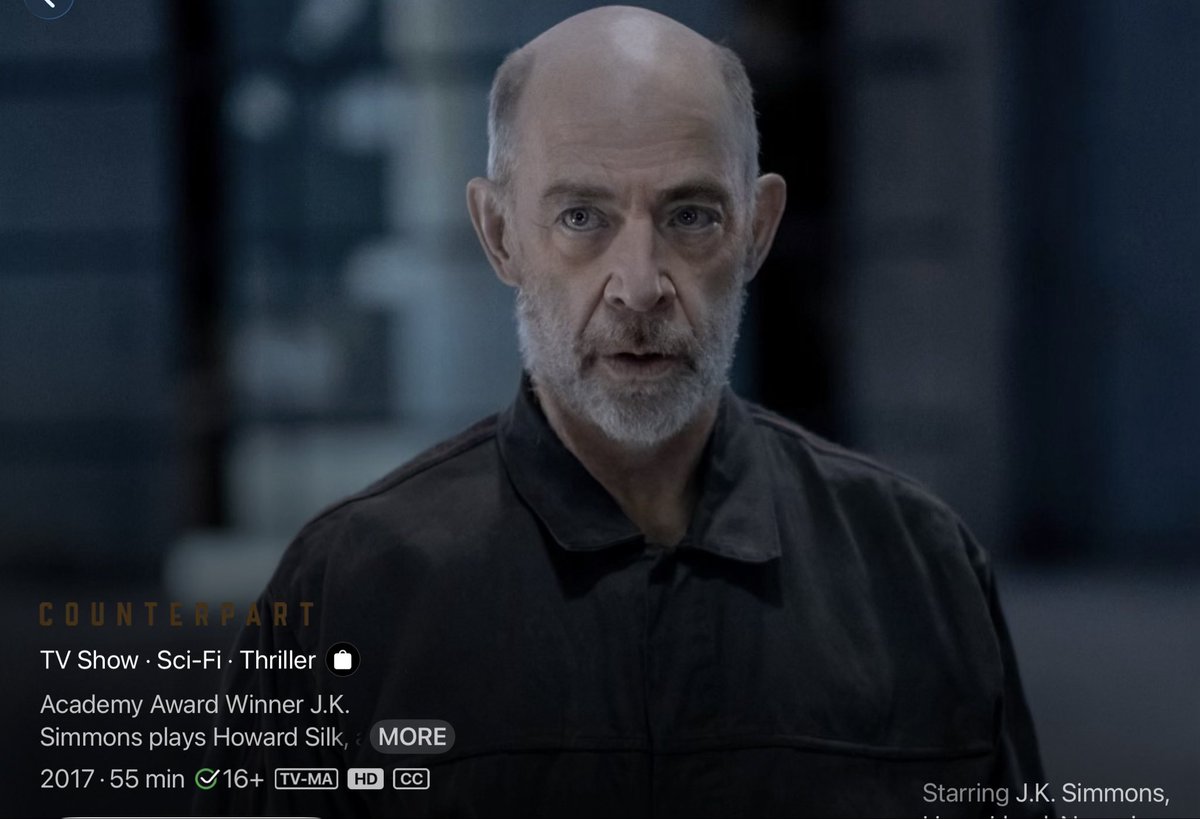
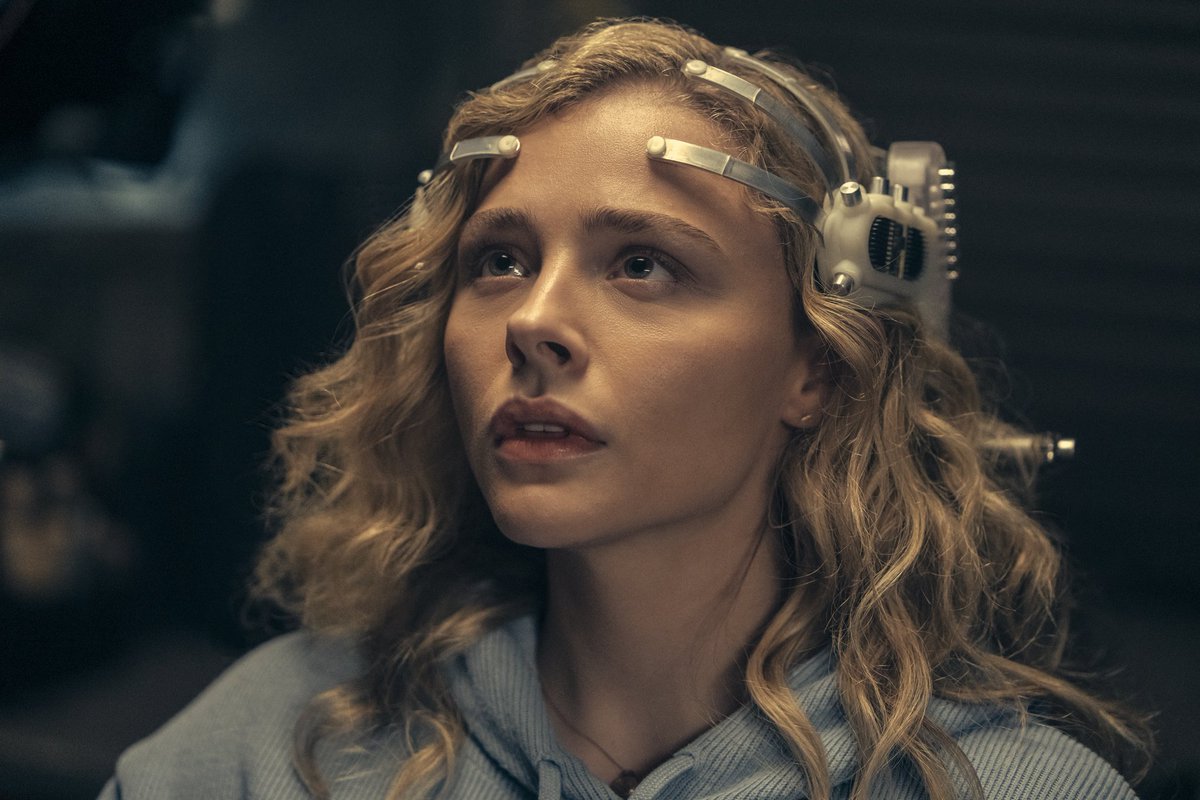
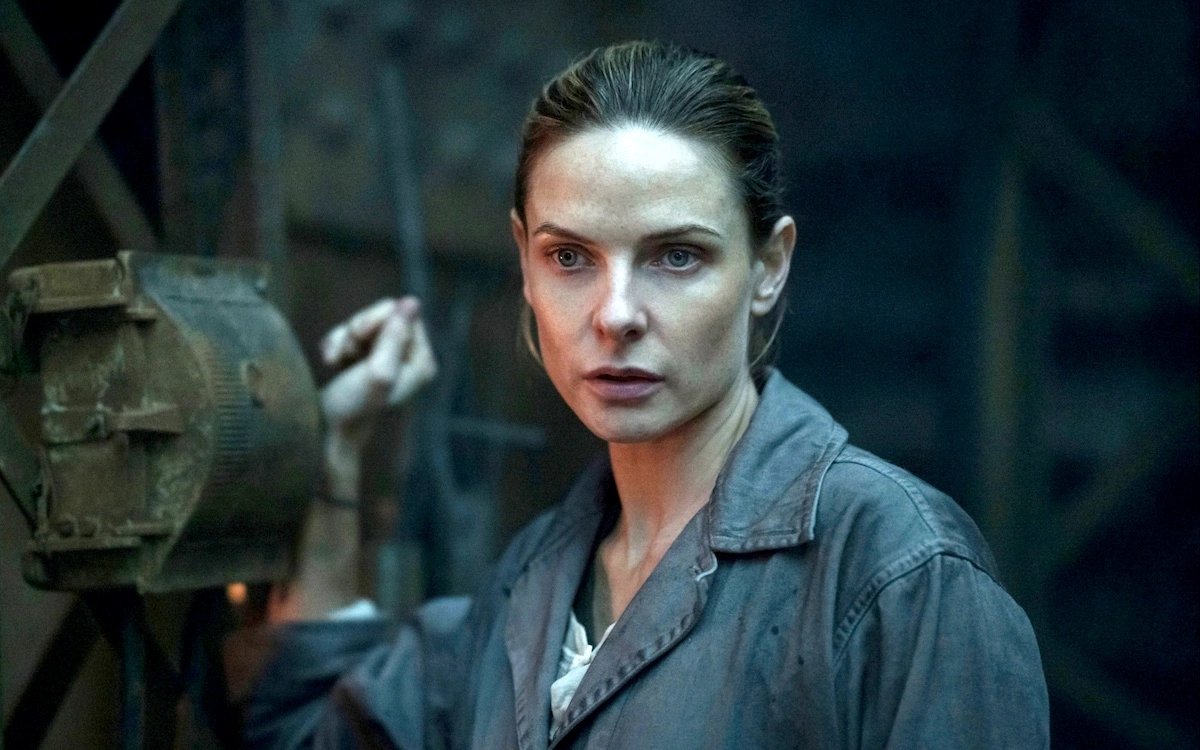
@Listen__Son “Counterpart” with J. K. Simmons. There are 2 seasons and it’s final episode is one of the very best out there.
Bruce Richards tweet media
English
6
3
100
54.4K
Listen My Son
Listen My Son@Listen__Son·
Best series I've seen this year. Thread 🍿:
Listen My Son tweet mediaListen My Son tweet mediaListen My Son tweet mediaListen My Son tweet media
English
149
468
7.1K
2.3M
Indy C
Indy C@indy555·
@DrJMarine Great call out. Would not have found this without your post. Thanks
English
0
0
0
6
Joseph Marine
Joseph Marine@DrJMarine·
"Some people emerged from the COVID-19 years with their faith in public health officials intact, their ire directed solely at those who resisted the 'experts.' Others swung the other way, their faith totally shattered, even in seemingly settled questions such as the safety of long-established vaccines. The epistemic landscape around matters of health is now a bombed-out ruin. The institutions smolder, opposing tribes have staked out their turf, and war profiteers abound." 2/8
English
3
0
12
1.7K
Joseph Marine
Joseph Marine@DrJMarine·
Brilliant essay and reflection – one of the most thought-provoking I have ever read on a medical topic. The immediate subject is screening mammography, but it touches on the entire modern preventive medical ecosystem and shifting public sentiments in covid's wake. The quality of the writing alone makes it well worth the read. 1/8
Mo Perry@MoMoPerry

For @tabletmag, I wrote about mammograms, the epistemic ruins of public health, and the implications of unplugging from the consensus-making machine. tabletmag.com/sections/scien…
English
7
39
180
52.6K
Indy C
Indy C@indy555·
@paulg The word there is "frought", which autocorrected to "brought"
English
0
0
0
5
Indy C
Indy C@indy555·
@paulg I think more of the data today argues corporations have consolidated this century in the US, not fragmented. Tho this sort of macro characterization is brought to begin with, as theres lots of ways to think of it. Here's Grok. x.com/i/grok/share/5…
English
1
0
0
214
Paul Graham
Paul Graham@paulg·
Ten years ago I wrote an essay explaining the source of America's increasing polarization. If you want to understand how we got from the unity (and uniformity) of the mid 20th century to the way things are now, this is what happened: paulgraham.com/re.html
English
140
112
1.4K
220.4K
Dan Rogers
Dan Rogers@DannyPhantom24·
@Matt_Pinner Yes. And it was scary because that's when you were most susceptible to disgruntled ghosts that, for some reason, wanted to reach out to you.
English
1
0
7
1.1K
𝐌𝐚𝐭𝐭 𝐏𝐢𝐧𝐧𝐞𝐫
My grandparents told me that in the old days, TV channels would stop broadcasting around midnight. They'd play the national anthem & then go completely off air until morning. Is that real, or are they just messing with me?
English
3.3K
349
12.1K
1.5M
John Frascella (Football)
John Frascella (Football)@NFLFrascella·
This may go down as the most controversial call of ALL TIME Brandin Cooks has it, knee hits the ground McMillan comes up with it afterward … Broncos ball?? I guess I just don’t understand football anymore.
English
5.2K
3.3K
39.6K
4.2M
Indy C
Indy C@indy555·
@DannyPhantom24 Always have respect for fans who spot when their team got the lucky breaks. Thx for the post.
English
1
0
1
944
Dan Rogers
Dan Rogers@DannyPhantom24·
There were many missed calls in this game, but the Cowboys caught a lot of breaks. There were many things the refs missed. 1. Horsecollar tackle by Ezeiruaku 2. Jumping offsides 3. Overshown leads with his helmet 4. False start by Thomas 5. Personal foul on Spann-Ford.
English
75
41
571
81.7K
Indy C
Indy C@indy555·
@rjochoa Love the Boys. But how we feel is because they were bad and got better. If this was the yearly 12-5 team that just snuck by KC, we'd be unhappy and talking about if Dak's washed.
English
0
0
0
24
RJ Ochoa
RJ Ochoa@rjochoa·
Life as a Dallas Cowboys fan feels fun and optimistic right now. It has been a very long time that this has been the case. My point isn’t to bring up that the team did X, Y, or Z leading up to this point. My point is I am just grateful for it and excited about its potential.
English
6
4
63
4.8K
Raphaël Dabadie (YC P26)
Raphaël Dabadie (YC P26)@RaphaelDabadie·
🐺 Introducing the Werewolf Benchmark, an AI test for social reasoning under pressure. Can models lead, bluff, and resist manipulation in live, adversarial play? 👉 We made 7 of the strongest LLMs, both open-source and closed-source, play 210 full games of Werewolf. Below is our role-conditioned Elo leaderboard. GPT-5 sits alone at the top, we’re looking for contenders strong enough to threaten its lead. (📥 DMs are open !) Find out more here: werewolf.foaster.ai
Raphaël Dabadie (YC P26) tweet media
English
77
132
760
380K
Indy C
Indy C@indy555·
@alyssaleann Its a quirk of the statistics. The Top 1% of any year make $750k. But the top 1% do not make that each year, except a tiny few.
English
0
0
0
6
Alyssa 🌻
Alyssa 🌻@alyssaleann·
Probably says a lot about me, but I just don’t have any mental picture for how to make $750k a year. Is there a non-entrepreneurial/C-suite/famous person path to that? I feel like we’re doing great, and we will never ever get anywhere close to that income
Mr Family Office@MrFamilyOffice

what’s easier

English
726
38
3.6K
2.7M
Indy C
Indy C@indy555·
@TrueSlazac This better live on in internet memes for the next decade. Maybe set up a template where we can do this with any other person's name. 10/10 joke
English
0
0
0
12