Insurance Broker

4.6K posts

Insurance Broker banner
Insurance Broker

Insurance Broker

@Ins_Brkr

'23: $5mm premium, $3bn in CRE; Ex-Investment Banking, Carrier & Captive Operator; Currently: Captives, Broker & Consultant, Programs; Knowledge & Insights

Katılım Temmuz 2023
508 Takip Edilen2.6K Takipçiler
Sabitlenmiş Tweet
Insurance Broker
Insurance Broker@Ins_Brkr·
Allow me to reintroduce myself, my name is ████ I Started my career in Investment Banking Provided COO/Operations consulting for small businesses & non-profits Ran multiple $100mm insurance carriers & captive entities Started a ~$25mm/annual premium commercial insurance brokerage focused on large-schedule and hard-to-place risks in Year 1. We worked on ~$3bn of CRE. I now do insurance consulting, traditional market placements, and captive program set-up and advisory. I'm here to share the inner workings of the illusive world of insurance, complain with y'all about expensive rates, and teach some interesting structures! Give me a follow @Ins_Brkr, Shoot any questions my way, and I'm always open to a chat, DM's are open. My goal is 1,000 followers by the end of October. I think we can do it
English
9
3
58
20.6K
Insurance Broker
Insurance Broker@Ins_Brkr·
I think @KarstResearch did a good job but will double down on certain pieces. While Gross Leverage Ratios are typically elevated for program/fronting carriers, on a Net basis they typically revert down to the mean due to the large amounts of reinsurance cessions. The risk, as pointed out, then becomes credit risk from the reinsurer (or better said, contingent credit risk, as the insurance risk would have to lead to a scenario of credit risk). Many do have balance sheet reinsurers sitting behind them (i.e., Rated & Authorized/Certified), while some use ILS/Collateralized Re/Sidecar structures behind them. Statutory Accounting and NAIC Model Guidelines require non-rated & authorized/certified to post collateral in order for the ceding company to take capital credit for the reinsurance, what we would call Schedule F. That requires that any non-rated reinsurance credit is collateralized against expected loss exposure. Ceding carriers often require more than the min. 100% and typically require 102-105% UEPR + ~110%+ (i've seen deals up to 200%) of E/ULR. It will vary based on the carriers view of the reinsurers overall credit. That's all based on the ceding carriers internal actuarial/underwriting, which is then fundamentally really no different than any other operating carrier. All this to say, it all starts with underwriting - carriers aren't letting any risk through the door just because they're not holding it net.
English
0
0
1
91
Bill Brewster
Bill Brewster@BillBrewsterTBB·
Can someone smarter than me (@CedarStResearch @tangentstyle @anyofyousmartinsuranceandfinancial Guys) help with the following: State National fronts risk. My understanding is they are the actual insurance company that has to make sure the claim is paid. The people they sell the risk to reimburse them. So, while they don’t have any risk assuming the counterparty pays them, they do assume some counterparty credit risk. A. Is that accurate? B. How does one go about making sure those counterparties have high credit quality? I ask because there’s rumblings of some real shitty underwriting being written by fronting companies and MGAs. Any advice and/or corrections would be appreciated. Not asking as a shareholder. Rather as an interested observer. $mkl
English
8
1
8
3.2K
James East
James East@ACIPartnerhship·
Follow-up on the "C" in P&C: Casualty rates increased 4% globally in Q4 '25 and a 3% increase in Q1 '26 per Marsh’s latest Index. Looks like all US as non-US is negative. Directionally correct per scuttlebutt of US +5 to +10%. @KarstResearch @TyRobben reinsurancene.ws/abundant-capac…
English
3
0
9
1.4K
Insurance Broker
Insurance Broker@Ins_Brkr·
@LuxuryWatchGuy1 Hesitated to reach out to my Patek AD for an allocation out of fear of him laughing me out of the room
English
0
0
0
29
Insurance Broker
Insurance Broker@Ins_Brkr·
I mean it definitely is insurance even if you're not calling it that, the fact that there's Stop-Loss protecting catastrophic loss makes that clear. The gap exposure between net "premium" in the account and the aggregate exposure (Stop-Loss attachment) is steep and a hard hurdle - I also don't understand the mechanics of how/why a bank would give unsecured credit on that gap with no reasonable mechanism to be made whole. The Stop-Loss attachment is likely out of market - in the commercial marketplace you don't see attachments for Spec Stop-Loss under $50k minimum. Most are $75k-$100k+. $30k is essentially picking up all any tail within a PML for not enough premium.
English
0
0
0
99
Mark Cuban
Mark Cuban@mcuban·
What if there was a bank account available, that required you to deposit monthly, what you would have paid an insurance company in premiums, for an ACA silver plan. So for a family of 5 about $2100. The amount would then be used for Stop Loss Insurance set at $30k dollars. About $300. Another $200 would be used for local Direct Primary Care for your family The balance would be in YOUR bank account. Like an HSA, It could only be used for approved medical expenses. If you never have any medical expenses, you will get to keep the money plus checking act level interest, when you turn 65 If you have a medical event that is more than what you have saved, your bank will loan you the money you need to pay for it, up to the $30k stop loss trigger You would repay that amount using the monthly $1600 net deposit. Once the loan is paid off, the deposits start to accrue to you again. This is not insurance. It’s a specially designed bank account that gives you control, support, a doctor to work with and catastrophic financial protection. Lots of work and issues to be addressed. But I was curious what people think Let me know !
Mark Cuban@mcuban

The one debt you can’t ever pay off ? Your insurance premiums. You literally will pay an insurance premium monthly, till you die. But we don’t look at it like it’s a debt paid to an insurance company that will do all it possibly can never spend it on your care. We are working on a non -insurance solution. The day HSAs no longer require an insurance policy, it all will change. finance.yahoo.com/sectors/health…

English
2.3K
493
9.3K
2.3M
Insurance Broker
Insurance Broker@Ins_Brkr·
@TyRobben In the words of a broker the other day - "I'm gonna keep throwing everything to Ledgebrook until they realize they're so incorrectly pricing risk"
English
0
0
2
51
Ty Robben
Ty Robben@TyRobben·
The disconnect in sentiment around Ledgebrook from the investor community and the broker/underwriter community could not be more divergent And that is exactly why investors continue to lose their shirts over and over again in insurance startups
English
2
0
2
220
Insurance Broker
Insurance Broker@Ins_Brkr·
Yup. If it's a business that can fundamentally run profitably but has startup cost & growth expenses to get there that's a very good reason for venture/growth capital If your business('s) a) core ops can't survive on (projected) revenue or b) is built on cutting margin in a race to the bottom or c) is just throwing darts at a wall to see what sticks Hard to see what value has truly been brought to the marketplace
English
0
0
2
65
Cedar Street Research
Cedar Street Research@CedarStResearch·
@Ins_Brkr Yeah their is a playbook in this space that works really well (been apart of it and helped sell companies that have executed it) and it’s not an endless amount of technology spend and reckless spending
English
1
0
2
126
Cedar Street Research
Cedar Street Research@CedarStResearch·
I’m witnessing some mega raises to the tune of > $50-100m in the insurance landscape in super early rounds and it’s like watching history repeat itself, except the history isn’t that old - these were mistakes made less than 10yrs ago. Vouch started in 2018 and raised ~$250m to only have sold for $550m almost 7yrs later. Investors collect the first $250m and likely got a pro-rata share in the remaining common. The guys who invested in the later Series C and D rounds likely lost their shirts and took a huge haircut after having only been in the investment for a year or two. So let’s say the founder had 20%. By the time the merger closed (likely not all cash at close) they unknowingly or unintentionally diluted themselves down to about 5-6%. Corvus same problem, raised something like $165m in several rounds to only have sold for $435m. Again the investor that participated in the $100m round at the $750m valuation got smoked. There’s plenty more examples of this such as MetroMile - raised >$300m I believe sold for $145 in lemonade stock not even cash etc… I’ve been involved in and tracked a lot of the successful let’s call them program operations and to be fair carriers do the same as well. The ones that have produced the highest returns for investors and employees (think Kinsale), almost always start with an equity round or two and then stop raising equity and start issuing debt to fund working capital and preserve equity value. It’s fun to have a massive paper valuation, but wait until you try to sell the asset, that’s when you realize the actual value (buyers can be lethal when they know your back is up against a wall) and not all exit terms and earn out hurdles are created equal.
English
8
0
29
3.1K
Insurance Broker
Insurance Broker@Ins_Brkr·
@CedarStResearch It's usually insurtechs or VC-backed with no insurance experience doing this - brokerages, MGA's, etc.
English
0
0
1
98
Mike 🛫🏎💨
Mike 🛫🏎💨@michael59099620·
@Ins_Brkr If its only insured for 1million thats crazy where are they supposed to get the rest
English
1
0
0
79
Insurance Broker
Insurance Broker@Ins_Brkr·
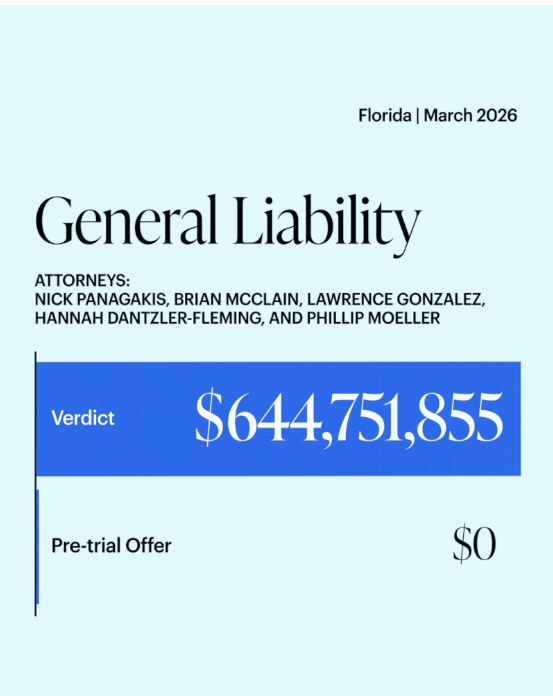
Houston Specialty insured a bar for $1M. Bar's stairs left a man paralyzed. HSIC's defense strategy: ask the jury for $0. Jury's response: $644,000,000. They are now a named judgment defendant facing bad faith exposure that could threaten the solvency of their parent, Skyward Specialty $SKWD. Social inflation isn't theoretical anymore. Stay tuned, motion for New Trial filed by defendant.
Insurance Broker tweet media
English
7
4
67
22.7K
Insurance Broker
Insurance Broker@Ins_Brkr·
@coldmillerlatte Wasn't a liquor liability claim. Injury on stairs. No there was no reservation of rights, they knew they were on the hook
English
0
0
1
1.4K
Chick Hicks
Chick Hicks@coldmillerlatte·
@Ins_Brkr Did they think the bar wasn't liable? Were they on liquor and Gl?
English
1
0
0
1.6K
Insurance Broker
Insurance Broker@Ins_Brkr·
Correct, a standard GL policy is $1mm per occurrence coverage. The carrier could be on the hook for the entire thing if the plaintiff/their attorneys pursue them for acting in Bad Faith (i.e., offering $0 and many other failures). Defendants themselves could actually cooperate with or assign their bad faith claim to the plaintiff to protect themselves
English
2
0
13
1.8K
SmallBizV
SmallBizV@realsmallbizguy·
@Ins_Brkr It was only insured for $1 mill?!?! The other $643 mill isn’t the their responsibility.
English
2
0
2
1.8K
Aakash Gupta
Aakash Gupta@aakashgupta·
The most profitable seat on a 787 isn't in business class. It's three economy seats with a $40 mattress pad. I've flown the original version on Air New Zealand. United just figured out the math. A Polaris suite takes the footprint of roughly four economy seats. At $4,000 one-way on a transatlantic route, that's $1,000 per seat-equivalent of revenue. A Relax Row takes three economy seats, sells for $3,000 to $5,000 as a unit, and requires zero cabin reconfiguration. That's $1,000 to $1,700 per seat-equivalent with almost no incremental cost. The margins on a mattress pad and adjustable leg rests versus a lie-flat suite with a privacy door, dedicated galley, and premium meal service aren't even comparable. Air New Zealand proved this in 2011. Called it Skycouch. Same seat. Same concept. Fifteen years of booking data showing parents choose flat over reclined at almost any price. United licensed the design and locked North American exclusivity. The timing maps to a ceiling in their premium strategy. United posted $59.1 billion in revenue last year. Premium cabin revenue grew 11% while economy flatlined. But there are only so many rows you can convert to Polaris before you've hollowed out the cabin. At some point you need the 300 economy passengers to fund the aircraft. Relax Row threads that needle. 200 widebody aircraft. Up to 12 sections per plane. 2,400 units fleet-wide on routes where families will pay anything to let a toddler sleep horizontal for 14 hours. Dynamic pricing at American willingness-to-pay levels on a product Air New Zealand sells for $200 to $1,500. Six fare classes on a single widebody now: Basic Economy, Economy, Relax Row, Premium Plus, Polaris, Polaris Studio. Each tier reframes the next as reasonable. They wrapped it in a plushie because "highest-margin seat in commercial aviation" doesn't fit on a boarding pass.
United Airlines@united

The entire row is alllllll yours. Welcome to United Relax Row, three adjacent United Economy seats with adjustable leg rests that can each be raised or lowered to create a cozy lie-flat space for stretching out... You'll also get a mattress pad, blanket and two pillows. If you’re traveling with kids, a plushie too! United Relax Row will be available starting next year on more than 200 of our 787s and 777s, each with up to 12 of these brand-new rows. united.com/Elevated

English
77
92
2K
1.6M
Steve P. | Franchise Insurance
Steve P. | Franchise Insurance@BrokerSteve412·
@Ins_Brkr I’m gonna pull some data from our system in terms on premium and losses, but yeah let’s hop on a call soon Been a minute
English
1
0
0
20
Steve P. | Franchise Insurance
Steve P. | Franchise Insurance@BrokerSteve412·
Question for my insurance X people: How often do retail agents get appointed as an MGA? Is this common in certain verticals? What challenges/risks do you take on as the MGA? Contribute to reinsurance, filings, licenses, addl costs, etc?
English
8
0
11
1.9K
Insurance Broker
Insurance Broker@Ins_Brkr·
@BrokerSteve412 Correct - it can be worth it if size or multiple possible programs is there, but typically make sense to partner with an underwriting agency to handle. If this is something you're considering, happy to discuss and point in the right direction as done a number of these
English
1
0
0
16
Steve P. | Franchise Insurance
Steve P. | Franchise Insurance@BrokerSteve412·
That makes perfect sense. Like all the AmWins specialty programs, they have all the resources already to be the positioned program manager As you said, seems like that would be huge lift for a retail agency to be able to do all that and be efficient and effective w/o outsourcing
English
1
0
0
74
High Yield Harry
High Yield Harry@HighyieldHarry·
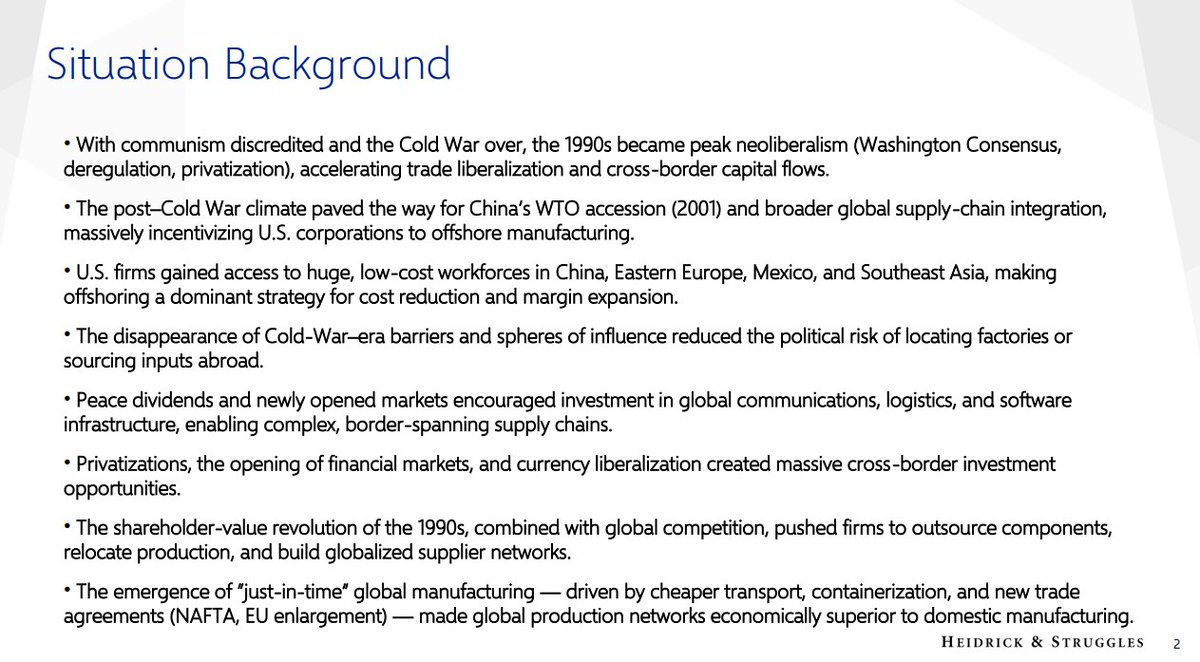
You've seen the story that the Headhunters have been retained in recruiting Investment Bankers for an Economic Defense Unit. Here's the Deck going out to potential candidates:
High Yield Harry tweet mediaHigh Yield Harry tweet media
English
57
199
2.7K
603.1K
Insurance Broker
Insurance Broker@Ins_Brkr·
@TyRobben Yea, I'm sure it'll be a painful process but eventually (hopefully?) insurers will tighten language to get desired result
English
0
0
0
30
Ty Robben
Ty Robben@TyRobben·
@Ins_Brkr Standalone - not in practice yet just a proposed form we’re reviewing. As an uw I’m lowly jaded just see so many exposures easy to get tagged with, not now but 13-36 months from now I’m quite fearful of the things we might see
English
1
0
1
72
Ty Robben
Ty Robben@TyRobben·
Just saw a first proposed ai coverage form. Still can’t tell if it’s occurrence trigger, claims made or Bermuda integrated occurrence (it has elements of all 3) Wild to think insurers and brokers will be selling this coverage while probably most at risk to a large loss on it
English
2
0
11
457