
IntegralAnswers
108.5K posts

@IntegralAnswers
Evidence over ideology. Explaining science in context, exposing harmful misinformation, sharing references—and occasional reminders the world is beautiful.


No one regrets NOT taking the COVID vaccine!!!

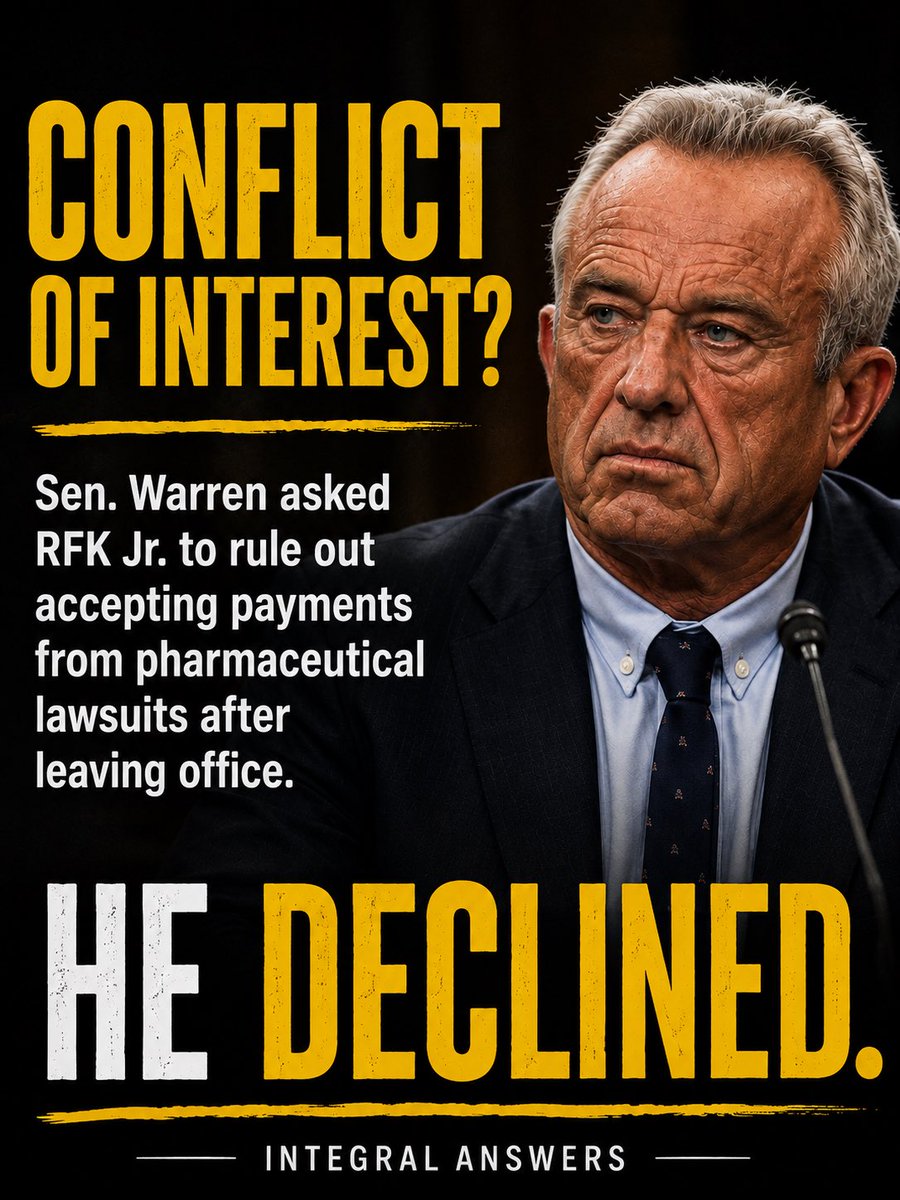
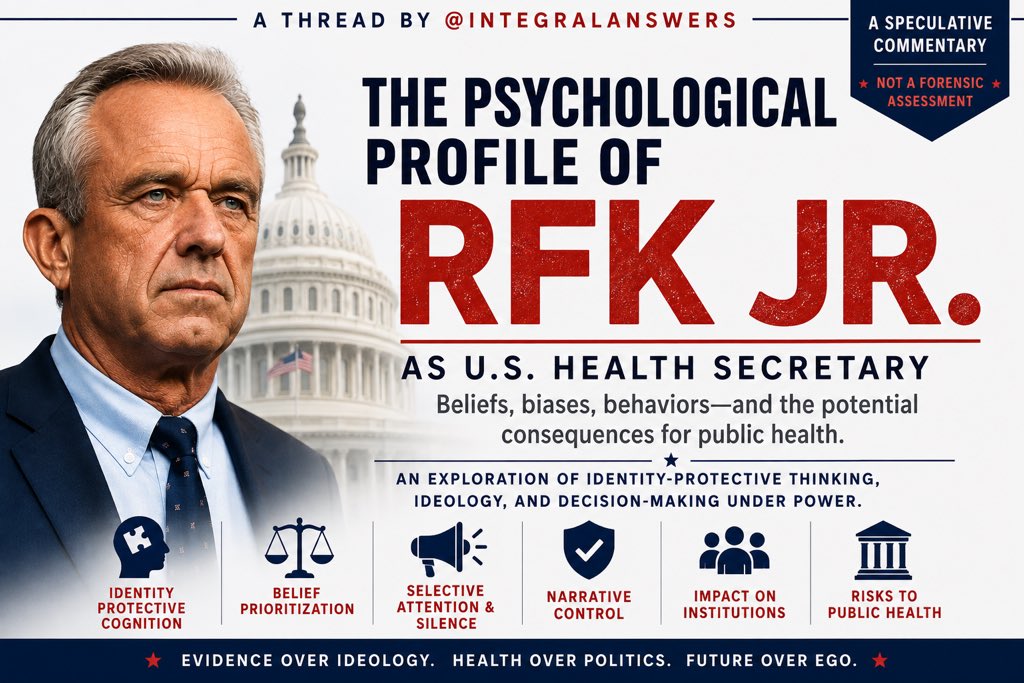
One of the most striking aspects of RFK Jr.‘s recent CNN interview wasn’t any single claim. It was how he argued. Throughout the interview, his reasoning often resembled that of a courtroom advocate more than that of a scientist—emphasizing unresolved questions, shifting burdens of proof, and treating scientific uncertainty as grounds for continued suspicion. That distinction matters. Science rarely reaches certainty. Instead, it weighs the totality of evidence and continually updates its conclusions as new data emerge. This thread examines that difference—and why it matters when the person making these arguments leads the U.S. Department of Health and Human Services. Not a partisan critique. An evidence-based examination of reasoning, communication, and public health.


COVID Mortality Risk Changed Throughout the Pandemic One of the biggest misconceptions about COVID vaccines is treating “vaccinated vs. unvaccinated” as if it were a single, fixed comparison. It wasn’t. The virus evolved. Population immunity changed. Treatments improved. Vaccination coverage increased. Boosters were introduced. As a result, the mortality gap between vaccinated and unvaccinated people changed over time. Using CDC age-standardized surveillance data from 24 U.S. jurisdictions, the relative risk of dying from COVID among unvaccinated people compared with vaccinated people was approximately: • Delta: 16.2× higher • Omicron BA.1: 11.5× higher • Omicron BA.2: 5.3× higher • Early BA.4/BA.5: 5.3× higher • Late BA.4/BA.5: 5.4× higher These numbers changed because both the virus and our immune landscape changed. Vaccine effectiveness is not one fixed number—it evolves over time. Reference: Johnson AG et al. MMWR. 2023.


Pro-Trump states and counties had far higher COVID death rates. Misinformation and disinformation were to blame. Trump and Musk were the biggest propagators of misinformation in terms of reach.

One of the most striking aspects of RFK Jr.‘s recent CNN interview wasn’t any single claim. It was how he argued. Throughout the interview, his reasoning often resembled that of a courtroom advocate more than that of a scientist—emphasizing unresolved questions, shifting burdens of proof, and treating scientific uncertainty as grounds for continued suspicion. That distinction matters. Science rarely reaches certainty. Instead, it weighs the totality of evidence and continually updates its conclusions as new data emerge. This thread examines that difference—and why it matters when the person making these arguments leads the U.S. Department of Health and Human Services. Not a partisan critique. An evidence-based examination of reasoning, communication, and public health.