Peter Jackson regrette le déclin du support physique :
« On peut toujours acheter des Blu-rays mais c’est presque devenu un produit de niche destiné aux passionnés. Comme les ventes sont faibles, les studios ne veulent plus y ajouter de bonus conséquents ou proposer des versions longues.
Nous avons passé des heures et des heures à produire des making-of pour les DVD du Seigneur des anneaux et énormément de gens m’ont remercié pour ça. Les gens regardaient ces contenus encore et encore parce qu’ils leur donnaient envie de faire des films. Tout ça a disparu aujourd’hui, et je trouve ça vraiment dommage. »
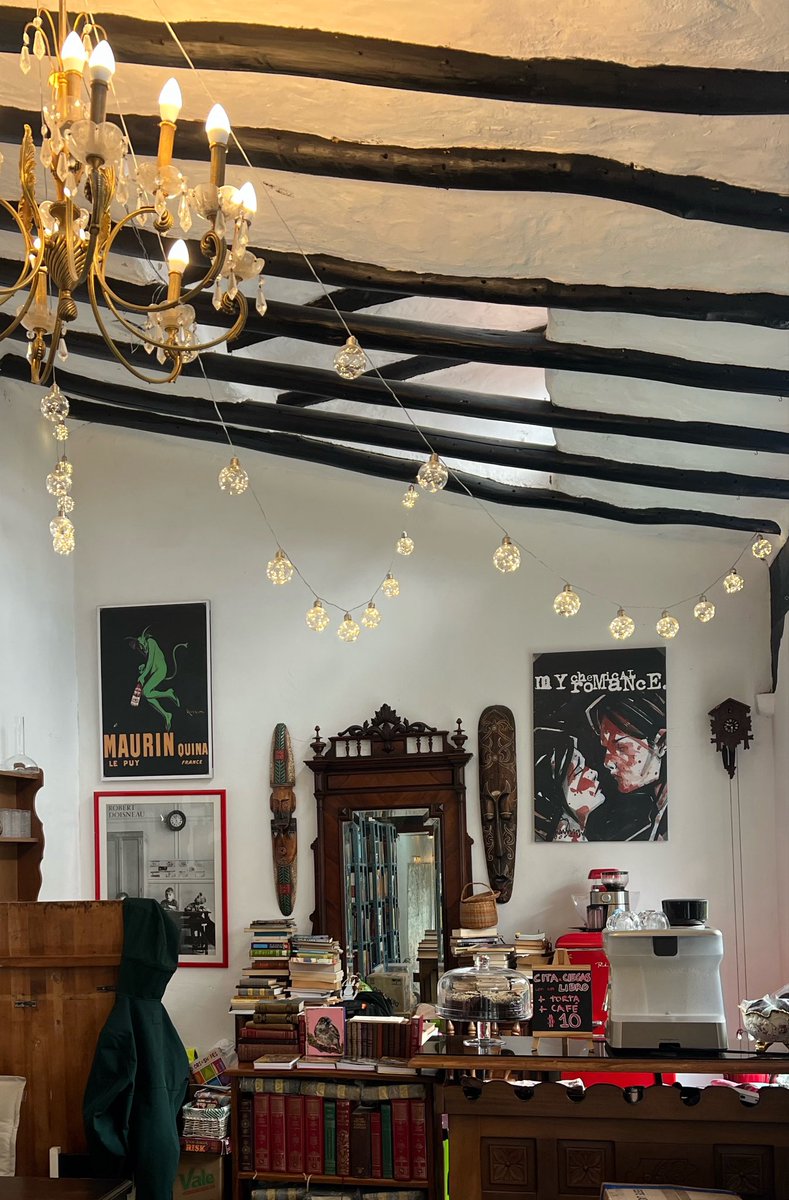
Hoy conocí la Librería El Cuervo 🐦⬛ en El Hatillo.
Los dueños son encantadores. Tienen libros nuevos y usados. Es bella, hay cafetería: chocolate, dulces, tequeños y más
-y hacen “citas a ciegas con un libro, una torta y un café por $ 10”.
Puedes conocer al 📖de tu vida. 💘
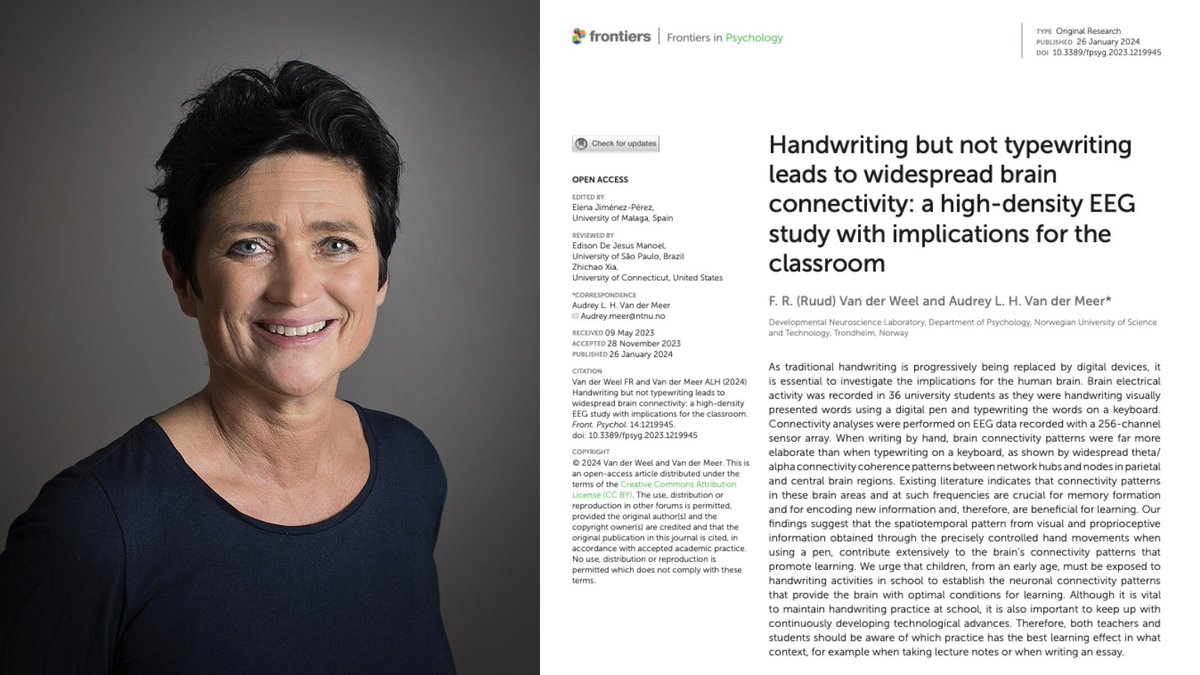
A Norwegian neuroscientist spent 20 years proving that the act of writing by hand changes the human brain in ways typing physically cannot, and almost nobody outside her field has read the paper.
Her name is Audrey van der Meer.
She runs a brain research lab in Trondheim, and the paper that closed the argument was published in 2024 in a journal called Frontiers in Psychology. The finding is brutal enough that it should have changed every classroom on Earth.
The experiment was simple. She recruited 36 university students and put each one in a cap with 256 sensors pressed against their scalp to record brain activity. Words flashed on a screen one at a time.
Sometimes the students wrote the word by hand on a touchscreen using a digital pen, and sometimes they typed the same word on a keyboard. Every neural response was recorded for the full five seconds the word stayed on screen.
Then her team looked at the part of the data most researchers had ignored for years, which is how different parts of the brain were communicating with each other during the task.
When the students wrote by hand, the brain lit up everywhere at once.
The regions responsible for memory, sensory integration, and the encoding of new information were all firing together in a coordinated pattern that spread across the entire cortex. The whole network was awake and connected.
When the same students typed the same word, that pattern collapsed almost completely.
Most of the brain went quiet, and the connections between regions that had been alive seconds earlier were nowhere to be found on the EEG.
Same word, same brain, same person, and two completely different neurological events.
The reason turned out to be something nobody had really paid attention to before her work. Writing by hand is not one motion but a sequence of thousands of tiny micro-movements coordinated with your eyes in real time, where each letter is a different shape that requires the brain to solve a slightly different spatial problem.
Your fingers, wrist, vision, and the parts of your brain that track position in space are all working together to produce one letter, then the next, then the next.
Typing throws all of that away. Every key on a keyboard requires the exact same finger motion regardless of which letter you are pressing, which means the brain has almost nothing to integrate and almost no problem to solve.
Van der Meer said it plainly in her interviews.
Pressing the same key with the same finger over and over does not stimulate the brain in any meaningful way, and she pointed out something that should scare every parent who handed their kid an iPad.
Children who learn to read and write on tablets often cannot tell letters like b and d apart, because they have never physically felt with their bodies what it takes to actually produce those letters on a page.
A decade before her, two researchers at Princeton ran the same fight using a completely different method and ended up at the same answer. Pam Mueller and Daniel Oppenheimer tested 327 students across three experiments, where half took notes on laptops with the internet disabled and half took notes by hand, before testing everyone on what they actually understood from the lectures they had watched.
The handwriting group won by a wide margin on every question that required real understanding rather than surface recall.
The reason was hiding in the transcripts of what the two groups had actually written down.
The laptop students typed almost word for word, capturing more total content but processing almost none of it as they went, while the handwriting students physically could not write fast enough to transcribe a lecture in real time, which forced them to listen carefully, decide what actually mattered, and put it in their own words on the page.
That single act of choosing what to keep was the learning itself, and the keyboard had quietly skipped the choosing and skipped the learning along with it.
Two studies. Two countries. Same answer.
Handwriting makes the brain work. Typing lets it coast.
Every note you have ever typed instead of written went into your brain through a thinner pipe. Every meeting, every book highlight, every idea you captured on your phone instead of on paper was processed at half depth.
You did not forget those things because your memory is bad. You forgot them because typing never woke the part of the brain that would have made them stick.
The fix is the thing your grandmother already knew.
Pick up a pen. Write the thing down. The slower road is the faster one.
... y soñamos. La tecnología puede intensificar estas cosas, o complicarlas mucho. Está en nuestras capacidades y en nuestras búsquedas encontrar la forma de estar mejor, ser más amables y no convertirnos en malas personas. No es precisamente la tecnología la que nos hace peores.
... tenemos la música, las películas, la literatura, las ganas de hablar con otros y tomarnos un café. Y aunque la IA pueda resumir un correo, o escribir una novela, hacer una caricatura o programar un SaaS, somos nosotros los que vivimos, nos alegramos, nos ponemos tristes...
Creo que el amor/odio que genera la IA se estudiará por años. Puede ser simplemente parte de la polarización extrema que vivimos en todos los aspectos de la vida, en estos años. Siento que es parecido a AMAR u ODIAR al Excel o al Word.
La guía Rolling Stone de #SeruGiran: un repaso por la discografía, en vivo y en estudio, de la banda que se volvió leyenda del rock argentino 👇🏽
es.rollingstone.com/arg-la-guia-ro…
Llego algo tarde a esto, vía @TheZvi , pero es molto fuerte:
“La pregunta que captó la atención del mundo fue: 7 + 2 = [_] + 6. No tiene truco; es tan fácil como parece.
La pregunta se planteó a estudiantes de Math 2, la clase de matemáticas de refuerzo de la Universidad de California en San Diego —UCSD—, que está creciendo rápidamente, y una cuarta parte de ellos la respondió mal.”
Sigo releyendo y sin poder creérmelo.
thezvi.substack.com/p/childhood-an…
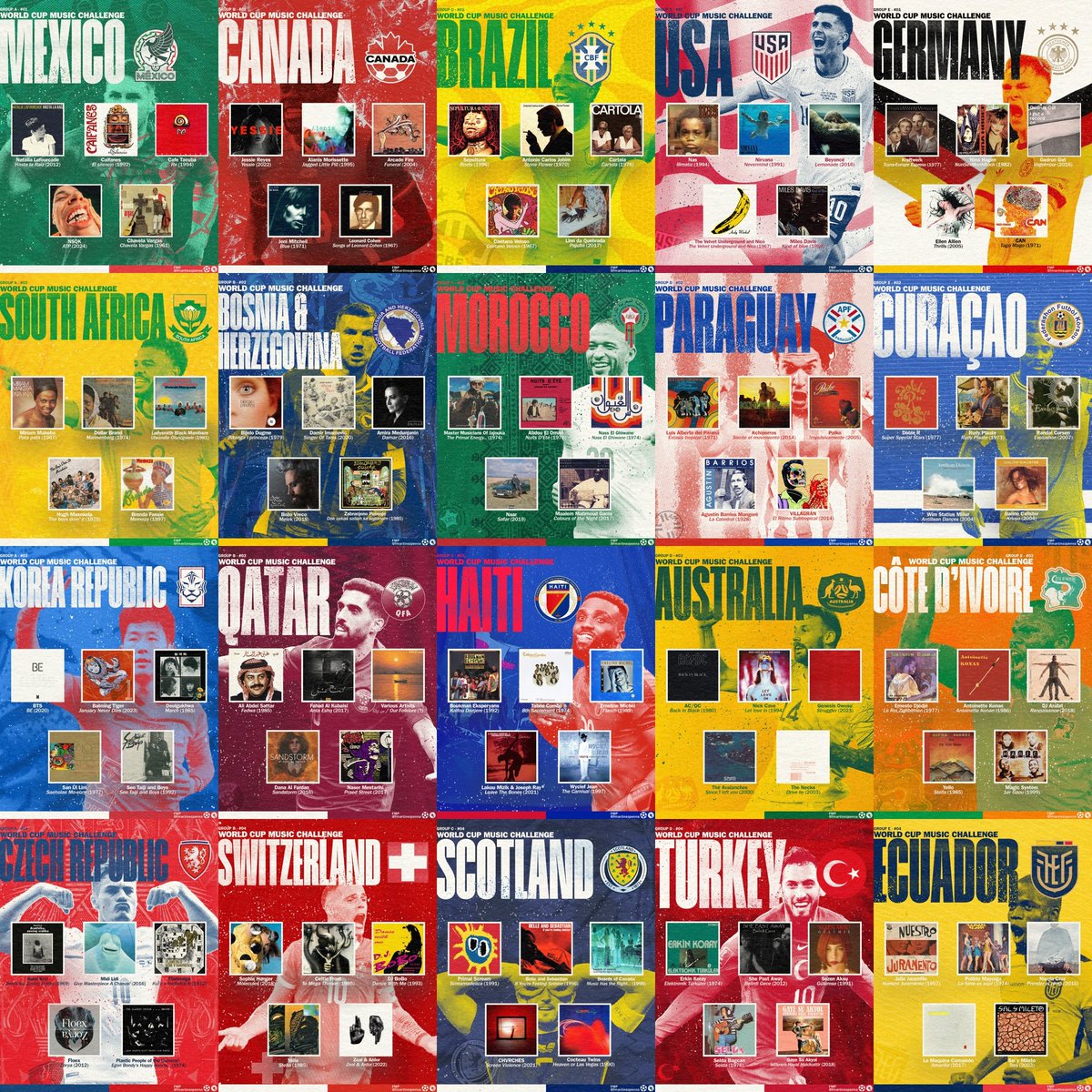
@inti En mi IG hay un reel de menos de 1 min x cada uno de los países con un resumen de esos 5 discos x equipo! Y pronto sale la playlist en Spotify! instagram.com/fmartinezpenna…