Inversion
117 posts

Inversion
@inversion_cap
We acquire profitable businesses, retain the team, modernize financial and back-office infrastructure, and hold forever.


Why does it cost $11,000 to originate a HELOC? Most industry experts would point to regulatory and compliance hurdles. After all, it's one of the few departments in FIs that keeps growing. @mcagney and @Figure proved otherwise: 45 days → 5 days to issue a HELOC ~$11,000 → $730/loan $20B+ originated, #1 non-bank HELOC When I bring this up with smart skeptics, people who aren't crypto believers and don't want to be, it's usually the moment something clicks. Doesn't hurt that Figure is now a $8B public company. At Inversion, we ask this question constantly: why does it cost X to do Y? The answer we get from industry veterans is always some version of: this is how it's always been done. Or it's regulatory. Or it's compliance. A lot of what's been accepted as fixed costs of doing business are now variable or optional with crypto. Figure proves it. We see an immense opportunity beyond HELOCs. Invert, always invert. Full breakdown by @georgecalle_ and the @inversioncap team: inversioncap.com/insights/figur…


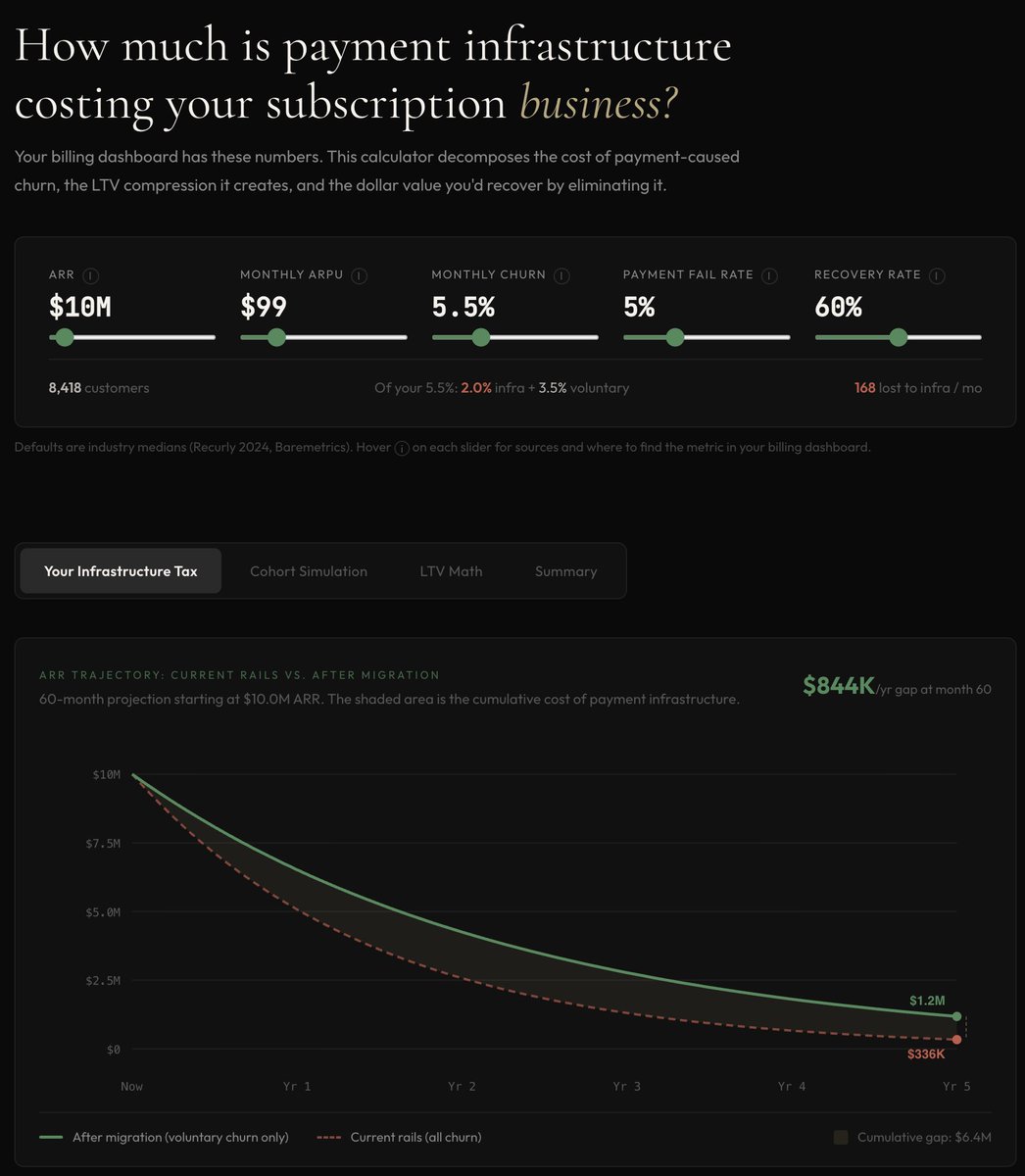
I obsess about payment infrastructure because it is a drag that shouldn't be there, and yet most accept it as a cost of doing business. Whether you're in SaaS, subscriptions, or any recurring business, payment infrastructure is a friction tax that eats into margins and unit economics. And it's about to get worse. AI is breaking the pricing model that card rails were built around. Programmatic spend requires programmatic money, and credit cards are not that. I think this goes away. It is the single most impactful lever you can pull to improve the business. I built a calculator because it's easier to show how corrosive the current payment infrastructure is to SaaS than to explain it. Full post: obviously.substack.com/p/the-friction…


Why Most Layer 1s Won’t Justify Their Valuations in 2026 (And Where the Real Upside Is) w/ @santiagoroel Crypto has built massive infrastructure. But ~90% of valuations sit at Layer 1s while <20% of revenue does. That gap matters a lot heading into 2026. Tune in to know more ⏱ TIME POINTS ⏱ 00:00 – Intro 01:48 – Key Takeaways From the L1 Valuation Debate 05:13 – Why Launch a New L1? 10:40 – Is Crypto Really Enterprise Software? 15:50 – Too Many L1s? 19:16 – Why DePIN Is Undervalued 25:36 – Bridge 25:59 – Reserve 26:25 – Crypto Regulation & the Clarity Act 32:47 – $BTC & Crypto Outlook for 2026 43:11 – Chainlink 43:32 – Final Thoughts: Where Crypto Goes Next


Every business eventually adopted the internet. Blockchain is next. ⏳ In this interview with Chris Perkins, Santiago Roel Santos explains why every business, over the next 25 years, will use blockchain the same way they adopted the internet... and this generational shift is already underway. 🌐 Watch the full interview 🎥👇 hubs.ly/Q03Y4svH0 @perkinscr97 @santiagoroel #Blockchain #CryptoAdoption #FinTech #TechnologyTrends #Investing #Web3


Yeah, I heard about that crypto stuff in 2016 but I couldn't trust their P/S ratio so I ignored it.

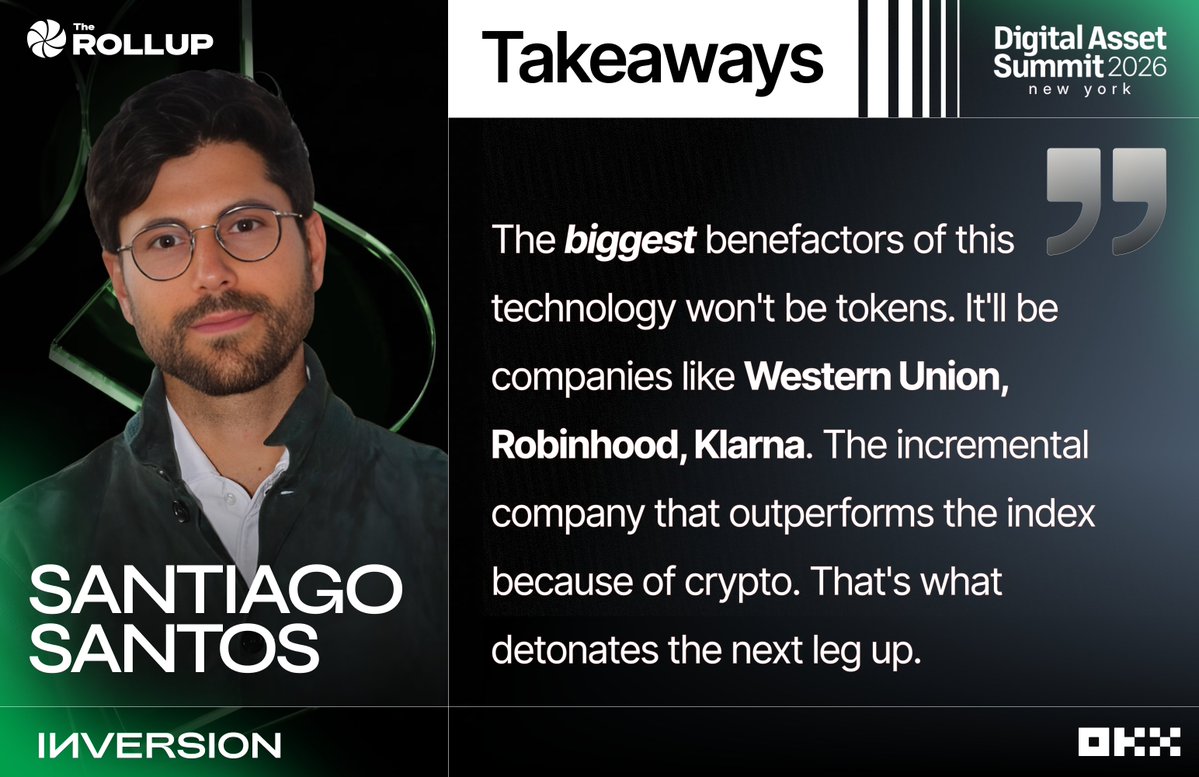
Santi says he bought a ton of Western Union stock instead of buying L1s "Western Union is trading at a 4x P/E ratio, Solana's trading at maybe 100x more"