
Sabitlenmiş Tweet
ian parent
2.7K posts

ian parent
@iparentx
Building the agent eval standard | @iris_eval | More to come
United States Katılım Kasım 2016
970 Takip Edilen786 Takipçiler



@Eric_M_Stevens as someone building those, it's not as easy as it sounds :)
English
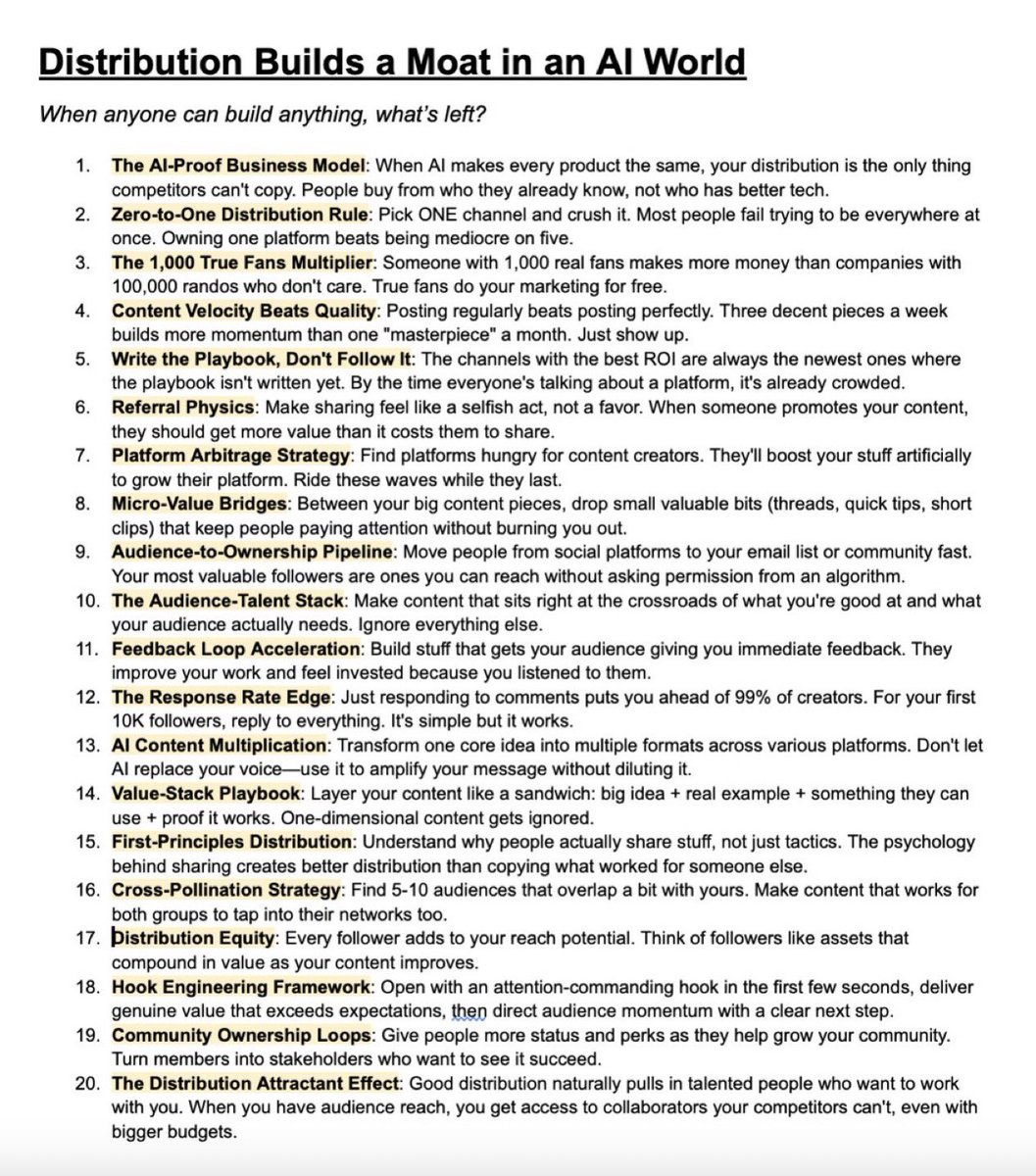
Distribution is your moat. Can’t stop thinking about this.
English
ian parent retweetledi

The AI Eval Tax: The Hidden Cost of Unevaluated Agent Outputs (Source: Iris-Eval)
The 'AI Eval Tax' represents the compounding costs of unevaluated AI agent outputs, including financial losses, engineering time, liability exposure, and trust erosion.
#AI #evaluation #hallucination #liability #trust
🤔 How can organizations effectively measure and mitigate the 'AI Eval Tax'?
s.dailyaiwire.news/5QreNn
English
the harness is the moat. but there's a layer most teams skip even when the harness is solid. you can orchestrate perfectly and still ship bad outputs if nobody is scoring what comes out. the eval layer sits between the harness and production. it's exactly what i'm building with iris.
English

Beyond raw model capability, the real gap in coding tools is the harness.
Now that 500k+ lines of Claude Code are out there, every model lab and AI coding startup, including open-source AI labs, will study it and close that gap fast.
SF already has Claude Code source walkthrough meetups lol.
English
@DailyAIWireNews The eval gap in practice. Most agent teams assume their outputs are correct because nothing visibly broke. But "no errors" and "correct output" are very different things. Scoring every output for quality, safety, and cost inline is the missing layer.
English
Agentic AI Systems Lack Correctness Guarantees, Posing High-Stakes Risks (Source: Johndcook)
Agentic AI systems lack guaranteed correctness, posing risks for critical applications.
#AICorrectness #AIEthics #AIGovernance #AgenticAI #ReliableAI
🤔 What level of AI reliability is 'good enough' for critical human-centric applications, and who defines it?
s.dailyaiwire.news/tAr79f
English
wrote up the full pattern.
why thresholds decay.
what self-calibrating eval looks like in practice.
and why the eval advisor is where this is all heading.
iris-eval.com/blog/self-cali…
English
self-calibrating eval. the system monitors its own scoring distributions. detects when thresholds drift.
recommends adjustments. a human always approves. eval rules that evaluate themselves.
English
static eval thresholds have an expiration date. you set a cost threshold at $0.50.
three months later it's flagging half your traffic. nothing changed in your code.
the environment shifted under you.
English
been thinking about what happens when your eval rules don't match your actual distribution. you set a threshold.
it passes everything. or fails everything. neither is useful. wrote something about self-calibrating eval.
drops tuesday.
English
@claudeai this is where eval becomes critical. when agents are reading code and running tests that's one thing. when they can open your apps and click through real systems the cost of a wrong action goes way up. the eval layer can't be optional anymore.
English

@lukatofocus @AlexEngineerAI @tanujDE3180 this. the compounding part is what nobody talks about. once the eval loop is running you stop guessing. every iteration gets tighter because you're working from data not vibes. that gap between teams who eval and teams who don't only grows.
English

@AlexEngineerAI @tanujDE3180 exactly. and the ones who build the eval loop first end up with a compounding advantage - they know what actually works not what sounds like it should work
English

everyone's still debating which AI model is best
i just use all of them
Codex for boilerplate, Opus for reasoning, Gemini for multimodal
stop picking sides. start routing.
the devs who figure this out first will ship faster than teams of 10
English

Welcome to level two: recursive self-improvement is now table stakes
Your agent is begging for the infra to evaluate variations of itself at scale
Everyone who saw this early had the same underlying ideas in their approach:
1. tighten the analyze, iterate, eval loop
2. map evals and traces to failure modes
3. keep writing harder evals
If your product's "features" are agents, they are by definition never "complete". Even a magical 99.9% on the benchmarks, is still not the most time or token-efficient version of itself.
It's not just slow to A/B test changes to the agent, you're also getting stuck on local maxima. A single regression does not mean the line of experimentation is a failure. Keep driving it forward, explore the sub-paths
Erik Bernhardsson@bernhardsson
CI feels more interesting today than it ever was. Writing code has gotten a lot faster, but this shifts the bottleneck elsewhere. I’m excited about sandboxes as a primitive for massive parallelization of tests.
English

full post on why the eval loop is the loss function for agent quality:
iris-eval.com/blog/the-eval-…
63% of teams have no continuous eval. they shipped an agent that passed a test once. they have no loop.
English
most teams treat eval as a gate. pass once, ship, move on.
that's not how agent quality works.
the eval loop: score, diagnose, calibrate, re-score — continuously. the agents that improve are the ones with a feedback loop, not a checkpoint.
wrote about why this changes everything:
English
@bernhardsson the missing piece in the new ci: output eval. tests verify code works. eval verifies the output is actually good. agents can pass every test and still leak pii or burn 10x your cost budget. ci for agents needs a scoring layer, not just pass/fail.
English

CI feels more interesting today than it ever was. Writing code has gotten a lot faster, but this shifts the bottleneck elsewhere. I’m excited about sandboxes as a primitive for massive parallelization of tests.
English