

Ishit
403 posts
Ishit
@Ishit1999
PGP'25 IIM Kozhikode. Crunching numbers by profession, bleeding red by passion!!🔴⚽️ United forever!!
Mumbai, India Katılım Şubat 2014
175 Takip Edilen19 Takipçiler

I think Europeans take for granted living in Europe.
You can just buy a ticket on a whim to fly to Greece, Italy, France, England, Slovenia, Croatia, Malta, whatever takes your fancy, for a quick weekend getaway.
Often for really cheap too via Ryanair, like way cheaper than Spirit was.
I just bought a ticket to Rome from Barcelona for ~€40. 🤯
And you don't even need a passport.
Many Europeans don't even have a passport due to the Schengen Area.
In the US, if you fly 3 hours away, you end up in freaking Topeka, Kansas with nothing to do.
In Europe, you could end up in the Swiss Alps, the Mediterranean coast, quaint Italian towns, French vineyards, the Eiffel Tower, the freaking Colosseum, etc. etc.
Barcelona, Spain 🇪🇸 English

I just got laid off from Meta.
Obviously it sucks to lose the income. But between the never-ending layoffs, stack ranking, etc., I'm good. Pretty convinced that when I look back at this moment a few years into the future, I'll be grateful it happened.
There's a lot I want to say here, but I'll save that for another day. Either way it's been a privilege to have been a part of the ride. On to the next adventure.
English

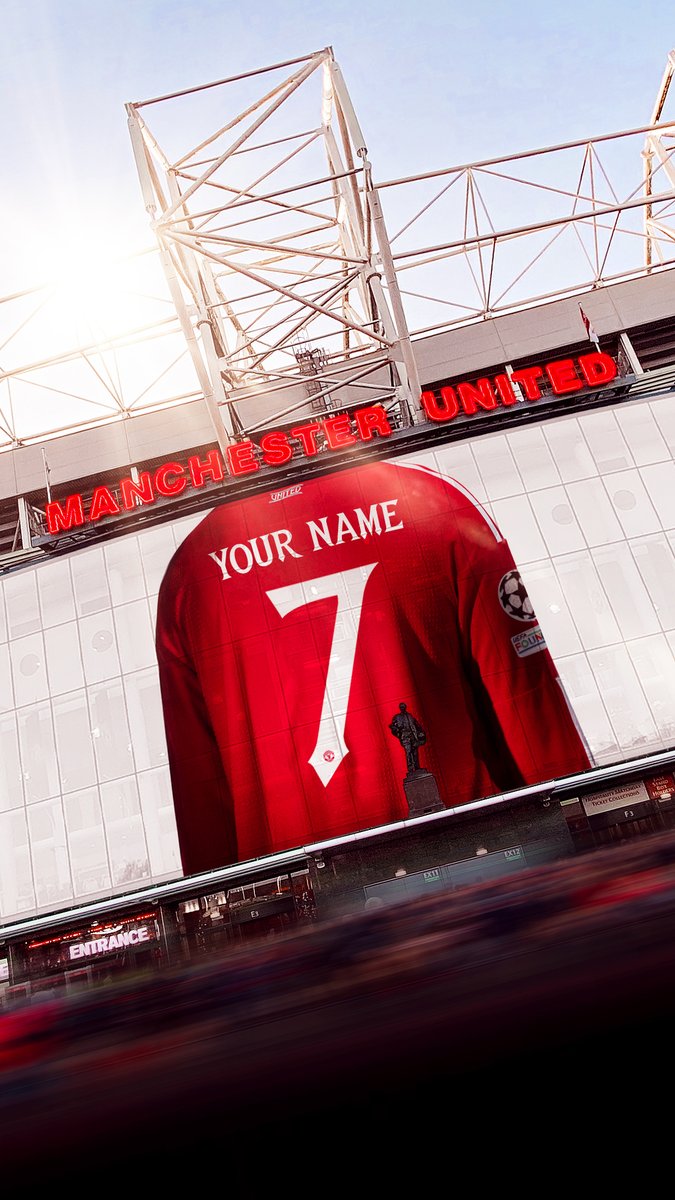
Coming soon to your phone 👀📱
Reply below for the chance to get your personalised lockscreen 👇
English
Ishit retweetledi

@passportsevamea @MumbaiPolice @CPMumbaiPolice @jagograhakjago @CPVIndia @ConsumerVoiceIn @MoneylifeIndia @Dev_Fadnavis @Ravisutanjani I have visited the police station and provided all the documents. However, there has been no progress.
By when should I expect the verification to be done?
@MumbaiPolice
@passportsevamea
@CPMumbaiPolice
@Borivali_PS
English
@satakshi_ai I don't see any reason why not...everything has a past and if there is compatibility...I dont think it should be a problem
English

@prachii_615 Touristy things to try out:
Sardar/Juhu Beach Pav Bhaji (& Gola)
Benne Dosa
Ashok Vada Pav
Rustom Ice cream
Others:
Gustoso (Pizza)
Cafe Mokai
Brunch at Lotus cafe
South Indian at Matunga (Ramashray/Madras cafe)
Joeys Pizza
Darjeeling Momos and Chinese
English

@SarangSood Politics...and the way the government's and its machinery act
English

@ValueWithPrem But what am I missing?
Kalyan Jewellers has inventory of Rs 14k crore
9% gain on that would eclipse their PAT for full FY26
English
Ishit retweetledi

Imagine the Titan Showroom at 11:59 PM. The inventory is just sitting there in the vaults. Thousands of kilograms of gold, silently waiting to be turned into the next Tanishq masterpiece.
The clock strikes midnight. A notification pings. The Government has hiked the import duty from 6% to 15%.
And just like that, the Magic of the Pen happens. Without launching a single new collection, without running a single TV ad with a Bollywood star and without selling a single nose ring Titan’s entire "X" amount of gold inventory is suddenly worth 9% more.
The Overnight Bonus
Let's do the napkin math for the sake of the imagination. If a giant is holding, say, ₹20,000 Crores worth of gold inventory in their pipeline, a 9% effective duty jump is an overnight paper gain of ₹1,800 Crores.
Titan: "We woke up and found an extra ₹1,800 Cr under our pillow because of a policy change."
What other business on the planet offers this kind of "accidental" wealth creation?
The Great Cycle of Struggle
The beauty of this irony is that the jewellery business was running perfectly fine when the duty was 15% years ago. Then we celebrated when it dropped to 6%. Now, we are struggling because it’s back to 15%.
But here’s the secret:
While the headlines scream about challenges for the industry and cooling demand, the balance sheets for Q1 are going to look like a festival.
Does this mean the business will flourish in the short term? Absolutely not. Footfalls will drop massively. But will the profits flourish? Absolutely.
It’s the only industry where a policy change accidentally hands the biggest players a multi billion rupee gift on their existing stock.
If you found this interesting, RT this. Most People looking at jewellery companies next quarterly results will have no idea why the numbers suddenly look so good.
This is a sarcastic post, don’t take it seriously. This is definitely not investment advice.
Prem Soni@ValueWithPrem
What a masterstroke to revive Indian jewellery business. While the rest of the world has to actually sell products to make a profit, the Indian government just gave every jeweler in the country a 9% performance bonus while they were sleeping. Thank you, Modiji, for making our idle inventory work so hard.
English
Last night I paid ₹1350 for a movie ticket at PVR Directors Cut (a 40-seat, experience-first theater where even the samosa costs more than a standard multiplex ticket)
The room was exactly who you'd expect:
urban professionals,
dual-income households,
people who consciously choose comfort over convenience.
Then the ads started.
A government rozgar/subsidy campaign.
A gold loan brand.
A mass apparel retailer.
I don't say this to mock those brands - they're solving real problems for real people. But they were speaking to an audience that wasn't in the room.
𝐓𝐡𝐞 𝐛𝐢𝐠𝐠𝐞𝐬𝐭 𝐦𝐢𝐬𝐭𝐚𝐤𝐞 𝐢𝐧 𝐚𝐝𝐯𝐞𝐫𝐭𝐢𝐬𝐢𝐧𝐠 𝐢𝐬 𝐜𝐨𝐧𝐟𝐮𝐬𝐢𝐧𝐠 𝐢𝐧𝐯𝐞𝐧𝐭𝐨𝐫𝐲 𝐰𝐢𝐭𝐡 𝐚𝐮𝐝𝐢𝐞𝐧𝐜𝐞.
A premium cinema screen isn't just a location. It's a filter. The moment someone buys that ticket, they've already told you something about themselves:
→ I value experiences over transactions
→ I'm willing to pay for quality
→ Comfort and status matter to me
That single behavioral signal is worth more than most demographic overlays.
The same screen could be doing real work for premium credit cards, luxury travel brands, wellness companies, private healthcare, or high-end real estate. Not because those brands are "premium," but because the environment already pre-filters consumers for them.
𝐓𝐡𝐞 𝐞𝐧𝐯𝐢𝐫𝐨𝐧𝐦𝐞𝐧𝐭 𝐢𝐬𝐧'𝐭 𝐚 𝐛𝐚𝐜𝐤𝐝𝐫𝐨𝐩. 𝐈𝐭'𝐬 𝐭𝐡𝐞 𝐟𝐢𝐫𝐬𝐭 𝐥𝐢𝐧𝐞 𝐨𝐟 𝐲𝐨𝐮𝐫 𝐛𝐫𝐢𝐞𝐟.
If your media plan doesn't ask "what does this space say about the person sitting in it?" - you're buying eyeballs, not attention.

English
Ishit retweetledi

@0xMahalakshmi Why would that be done (even getting a cab post that would be difficult...)
Mumbai has done a decent job especially in reducing the time taken from terminal gate to the airplanes gate
English

gotta learn from BLR airport on new ways to make life miserable.
not only does one of the largest airports in India not have metro connectivity, they've now kicked out cab services to OUTSIDE the airport, needing a 5 minute bus ride to reach.
they really don't want people coming here eh
English
@law_ninja Quite an interesting perspective. Whilst, I do have concerns regarding the doubts input-output ratio, and across the board efficiency gains...it is true that adoption in general has been quite low
English

It is a normal Tuesday morning in a Bangalore office. The CEO of a 250-person fintech company sits with his head of learning. They rolled out Claude licenses to the team three months ago. They have spent crores on AI tooling this year. The investor deck says the company is AI-first. The board has been briefed. The press release went out.
He asks her how many of his people are actually using these tools every day. She tells him the number. About three percent are using AI seriously. The other 97 percent have either never opened it or tried once and quit.
He pushes her on why.
She says some are scared they will get caught using AI for their work. Some are not sure if it is allowed.
Some tried, did not get a good output, and never came back. Some are waiting for someone in authority to tell them this is the new normal.
They are waiting for permission. Some need compulsion.
He sits with that for a while. He has built a beautiful tower of tools and integrations and AI features in the product. And on a normal Tuesday morning, on the floor, ninety-seven percent of his people are still working the way they worked in 2022.
This is the silent crisis sitting inside every Indian company right now. The CEO has bought the tools. The CTO has wired up the integrations. The product team is shipping AI features.
By every external measure the company is doing AI. But on the inside, on a normal Tuesday morning, most of the workforce has not moved.
The bottleneck is not engineering. Engineering is delivering. The bottleneck is not budget. The licenses are cheap compared to salary cost.
The bottleneck is not strategy. Every CEO in this country can recite the strategy at a dinner party.
The bottleneck is human behaviour at scale.
And human behaviour at scale, in a company, is owned by exactly one function. HR.
If HR does not change the JD on every open role to require AI fluency, the company keeps hiring the past.
If HR does not rewrite the onboarding so every new joinee opens Claude in their first hour, the new joinees inherit the old norms.
If HR does not put a line in the performance review asking how the employee used AI to multiply their output this quarter, the high performers do not bother.
If HR does not signal at the next promotion cycle that the people getting promoted are the ones using AI to do the work of three people, the rest of the company quietly concludes AI is optional.
This is not a tool problem. This is an operating system problem. HR is the operating system.
Now I want to talk to every HR manager, HRBP, TA leader, L&D head reading this.
You are sitting in your seat, watching TCS shed thirty thousand people in six months, watching Wipro and Infosys talk about AI agents replacing functions, reading articles about how nine percent of HR jobs are automatable with no technical barrier left to displacement.
There is a low hum of anxiety in your chest. I am telling you the anxiety is correct. The role is changing. But you are reading the situation upside down.
You are not sitting on a function that is about to be replaced. You are sitting on the most valuable seat in the Indian economy right now and you do not know it.
Every CEO in this country, including the one in that Bangalore office on a Tuesday morning, and also me, is looking right now, today, for one HR leader who will walk into the room and say, I will own AI adoption for this organisation. Give me ninety days.
Here is my plan for the JD, the onboarding, the L&D rebuild, the performance review, the comp signal, the comms cadence, the culture.
Here is how I will measure adoption every week. Here is the dashboard I will bring to your Monday review.
That HR leader does not exist in most Indian companies today. The seat is wide open. The CEO is silently begging for someone to take it.
The HR pro who takes that seat in 2026 could be the CHRO of that company by 2028.
The HR pro who takes that seat and does it well is the most poached HR leader in their city within twelve months. The HR pro who builds a playbook from doing it once and packages it as advisory work is charging fifty thousand rupees a day to other Indian CEOs by next Diwali.
The HR pro who does not take the seat is the one reading the restructuring email in 2027 wondering what happened.
You do not need to know how to code. You do not need to understand transformer architectures. You do not need to be technical at all. You need to know what HR has always known and what no other function in the company knows how to do.
You need to know how to change the behaviour of two hundred people who would rather not change.
You have done this before. You did it for the SAP rollout. You did it for the HRMS migration. You did it for return to office. You did it for POSH training.
AI is the same playbook with a new subject line. Communicate, train, measure, reinforce, repeat.
Are you going to walk in and take it, or are you going to wait for someone less qualified than you to walk in first?
English
@passportsevamea @MumbaiPolice @CPMumbaiPolice @jagograhakjago @CPVIndia @ConsumerVoiceIn @MoneylifeIndia @Dev_Fadnavis @Ravisutanjani @MumbaiPolice
@Borivali_PS
There have been no updates...its been almost 2 months now
English
Ishit retweetledi
