Mouad Hadji

1.6K posts

Mouad Hadji banner
Mouad Hadji

Mouad Hadji

@itismouad

building for delivery teams when not using my film camera or chatting soccer tactics

🇫🇷🥐 → 🇺🇸🌁 Katılım Ağustos 2010
1.5K Takip Edilen452 Takipçiler
Josh Woodward
Josh Woodward@joshwoodward·
You're a power user on @GeminiApp. What else do you want to see? Top known requests: MacOS app, Projects, and Branching Chats.
English
1.4K
66
1.9K
274.7K
Mouad Hadji
Mouad Hadji@itismouad·
@Sirupsen hope you’re rocking that turbopuffer jacket haha
English
0
0
0
116
Simon Eskildsen
Simon Eskildsen@Sirupsen·
finally snow and stroller runs
Simon Eskildsen tweet media
English
4
0
66
4.6K
Mouad Hadji
Mouad Hadji@itismouad·
@trq212 @tejasmanohar @trq212 i'd love to chat with you. we've seen some cool use cases internally but would love to hear more for you about production use cases
English
0
0
0
55
Thariq
Thariq@trq212·
@tejasmanohar hi, happy to hop on a call if you're looking into using it! we've seen a lot of really great data and analytics use cases
English
3
0
6
1K
Tejas Manohar
Tejas Manohar@tejasmanohar·
who's using claude code as an agent sdk and has compared it to langchain/langgraph, DIY, etc.?
English
6
1
14
5.2K
Mouad Hadji
Mouad Hadji@itismouad·
@swyx @thesamparr what would you say to the people claiming this is a chatgpt plugin reboot ?
English
2
0
1
489
swyx 🇸🇬
swyx 🇸🇬@swyx·
i think everyone dogging on Agent Builder is missing the real impact of Apps SDK. ChatGPT finally getting serious about having an App Store is enormous if you're the right kind of founder. listen to the latest @thesamparr pod if you dont believe me. i am very hard pressed to think of another scaled team in ai infra shipping at Vercel's velocity right now looking forward to see what Cloudflare launches at Connect next week
swyx 🇸🇬 tweet media
Guillermo Rauch@rauchg

You can now ship @nextjs apps to @chatgptapp

English
15
8
117
30.3K
Mouad Hadji
Mouad Hadji@itismouad·
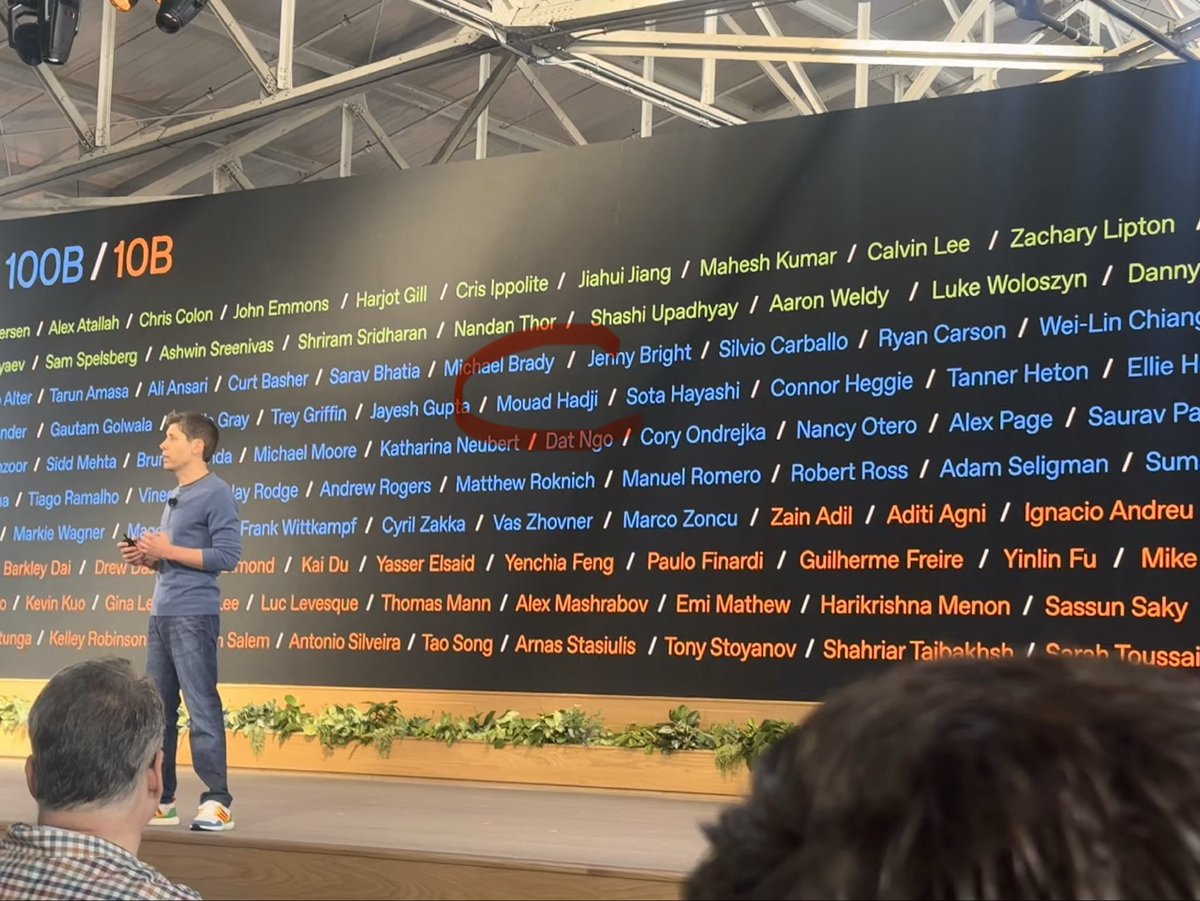
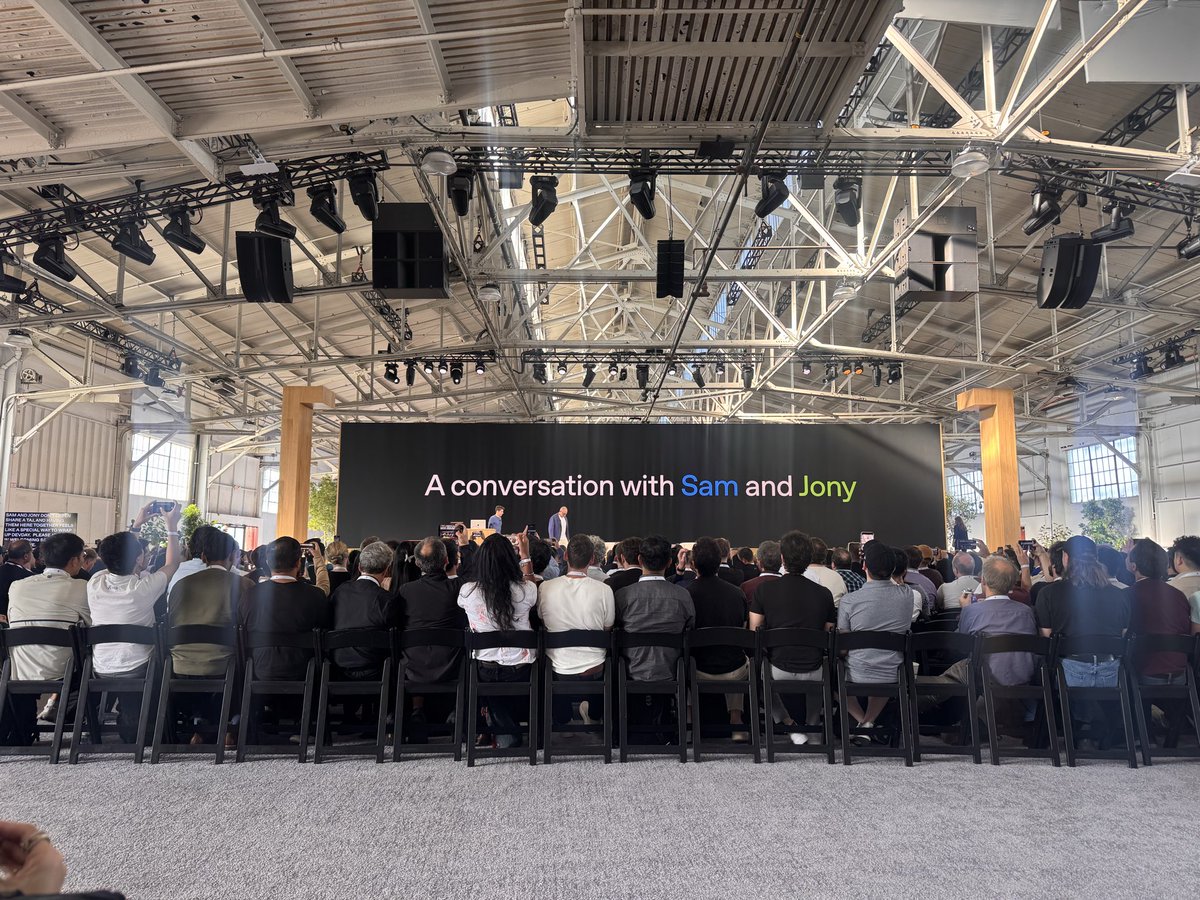
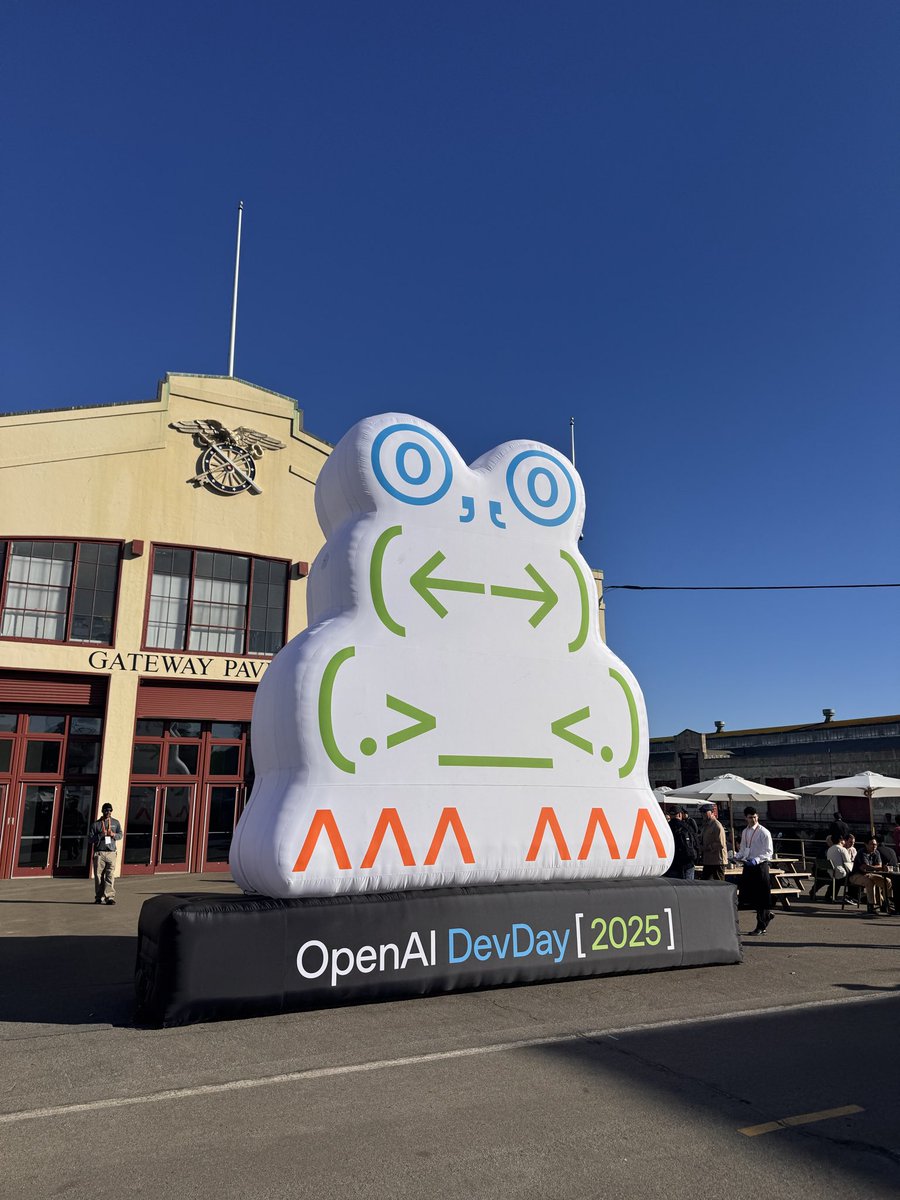
wrapped up an amazing day at @OpenAI DevDay ! not every day you see your name on sama’s slide and the legendary jony ive irl :)
Mouad Hadji tweet mediaMouad Hadji tweet mediaMouad Hadji tweet media
English
1
0
8
791
Mouad Hadji
Mouad Hadji@itismouad·
we're 30' in and we already have apps in chatgpt, an agent builder, a chat kit and an evals tookit announced... #OpenAIDevDay sheesh
English
0
0
1
251
Louis Knight-Webb
Louis Knight-Webb@tokengobbler·
In my bubble (basically means you) Dario was 100% correct?
English
37
3
375
54.5K
Mouad Hadji retweetledi
Ivan Zhao
Ivan Zhao@ivanhzhao·
Building AI enterprise software in 2025 feels like building a video game
English
25
12
298
31.7K
Mouad Hadji
Mouad Hadji@itismouad·
the best way to understand where AI is heading is by both paying attention to what @signulll and @levie are saying here and seeing that both will be true.
Aaron Levie@levie

I think there are lots of examples where generated software and UI will work on demand, in particular in a personal context when the stakes are low and it’s just a byproduct of a chat system’s response. But I would have different expectations in an enterprise context. The point of much of the software that we use in the enterprise is largely to just keep our processes on track and moving forward reliably. With high SLAs. These are some of the most foundational things to a business. How companies close their books at the end of a quarter, manage their client records, handle inventory, organize their contracts, pay their employees, build new products, and so on. For any of these workflows and data sets, you need a high degree of stable patterns in your workflows that you know will work every single time. Also, importantly, you’re paying the software vendor to think about the underlying process so you don’t have to, keep the software up-to-date with new regulations or industry trends, and so on. Most companies just simply don’t want to have to reinvent the wheel on HR, CRM, contract management, etc. And even when AI models could code these up on demand, they’ll do so just a literally differently every time, which would be quite chaotic for many of these workflows. And maintenance will be fully on you. Now, what I do agree with is that we will interact with our software in very different ways in the future. We will begin to prompt most of our software to get answers back, and we will have agents running in the background of most software doing work for us. When we interact with those agents, they will certainly frequently render interactions that are relevant to the workflows customized to us. But under the hood, there will still be deterministic systems for our core data and workflows, and that maintain the guardrails that AI agents adhere to. This is the future I’d bet on. Love this conversation,, and hope it keeps happening. Also happy for any arguments as to why I’m wrong.


English
0
0
3
522
Mouad Hadji retweetledi
Aaron Levie
Aaron Levie@levie·
I think there are lots of examples where generated software and UI will work on demand, in particular in a personal context when the stakes are low and it’s just a byproduct of a chat system’s response. But I would have different expectations in an enterprise context. The point of much of the software that we use in the enterprise is largely to just keep our processes on track and moving forward reliably. With high SLAs. These are some of the most foundational things to a business. How companies close their books at the end of a quarter, manage their client records, handle inventory, organize their contracts, pay their employees, build new products, and so on. For any of these workflows and data sets, you need a high degree of stable patterns in your workflows that you know will work every single time. Also, importantly, you’re paying the software vendor to think about the underlying process so you don’t have to, keep the software up-to-date with new regulations or industry trends, and so on. Most companies just simply don’t want to have to reinvent the wheel on HR, CRM, contract management, etc. And even when AI models could code these up on demand, they’ll do so just a literally differently every time, which would be quite chaotic for many of these workflows. And maintenance will be fully on you. Now, what I do agree with is that we will interact with our software in very different ways in the future. We will begin to prompt most of our software to get answers back, and we will have agents running in the background of most software doing work for us. When we interact with those agents, they will certainly frequently render interactions that are relevant to the workflows customized to us. But under the hood, there will still be deterministic systems for our core data and workflows, and that maintain the guardrails that AI agents adhere to. This is the future I’d bet on. Love this conversation,, and hope it keeps happening. Also happy for any arguments as to why I’m wrong.
signüll@signulll

you have to be blind at this point to not see the future. the era of traditional software, as a stable object with version numbers, roadmaps & feature sets, is pretty much gone. we’re prolly just slow to admit it. future systems will be fluid, ambient, entangled with context. e.g. you summon capabilities, no real “apps”. you speak, gesture, or hint but never have to learn a single interface again that’s not personalized for you. the end of software as we knew it is here, not near.

English
53
41
412
115.2K
Mouad Hadji
Mouad Hadji@itismouad·
I spent my Saturday (I know...) at the inaugural Agentic AI Summit hosted at UC Berkeley, and I am starting to hear the same refrain regarding the biggest hurdles for AI adoption in the enterprise. TL;DR: the real blocker isn't the AI. It's the three usual suspects : > Data: Enterprises deal with scattered, outdated, and poorly documented data. Many realize that their valuable knowledge lives in people's minds and is not documented, hence cannot be presented to AI. > Governance: As May Habib from Writer put it, with AI, "you are really trying to contain behavior vs securing a workflow." Many enterprises know their current permissions aren't ready for AI, and worse, they fear AI will make it easier to surface sensitive data. > Reliability: Drop-off across multi-step workflows is a major concern even with good data. Unacceptable for critical tasks, especially the ones taking mutative actions. My takeaways : 1) enterprises will find the most immediate success by targeting greenfield use cases 🌱 and 2) they should probably start the work of mapping how work actually gets done for a smoother transition
English
0
0
1
69
Mouad Hadji
Mouad Hadji@itismouad·
@levie the amount of tokens per task is likely to drop too as we get more efficient with reasoning
English
0
0
0
61
Dwarkesh Patel
Dwarkesh Patel@dwarkesh_sp·
It's funny how strong the causation is between time in SF and short timelines. I've been traveling for 4 weeks, and I'm now up to median year 2036 for AGI.
English
67
41
1.5K
217.5K