mod323

735 posts

mod323

mod323

@itsmod323

credit enjooyer @credifi

Katılım Eylül 2018
1.4K Takip Edilen577 Takipçiler
mod323 retweetledi
Xen
Xen@XenBH·
Personal loans take weeks at a bank. @credifi is doing it onchain in minutes using usdc and @base. Very impressive team from base batches.

English
41
19
161
16.3K
brendan
brendan@brendan_·
Trading on polymarket -> what will happen
 Trading off polymarket -> be ready no matter what happens
 Now you can create trading strategies that are prepared for all outcomes. You don’t need to wait for market resolution. Set a % threshold to move before the market moves.
English
3
3
20
1.1K
mod323
mod323@itsmod323·
@SlaterHeil the fed does send all profit (minus opex) to the treasury
English
1
0
0
46
slater
slater@SlaterHeil·
Genuine question: Why does the Fed take interest on bonds on their balance sheet? If the Fed is truly working for the government's balance sheet (they're supposed to share all profit and absorb losses), why don't we just void all interest payments from USG -> Fed on held paper?
English
2
0
1
266
mod323 retweetledi
ben weintraub (1≈1)
ben weintraub (1≈1)@bwein_·
Modern markets are fundamentally extractive We've spent three years rewiring them from scratch One core feature is everyone deploying their own bots without code or infra Here's a first look @SynchronicityHQ We're looking for strategists to test drive. Reply for early access
English
56
33
163
43.4K
mod323 retweetledi
ST0RM
ST0RM@0xStorm·
@credifi 5 click loan Gud tek Bullish onchain credit
English
0
2
9
907
mod323 retweetledi
Credifi
Credifi@credifi·
Lending is now live on Credifi for existing users with positive repayment history. Borrow for a 3-month term at a fixed 10% APR with flexible repayment options: • Equal monthly installments (principal + interest) • Interest-only payments with full principal due in the final month
English
6
8
50
7.1K
PaperImperium
PaperImperium@ImperiumPaper·
An amazing new version of this is playing out in real time in Bolivia. Several days ago, a cargo plane carrying *18 tons* of Bolivian banknotes - around $60 million in USD - crashed, raining money. Predictably, people have been scrambling to scoop up this cash as the government attempts to locate and burn it on the spot to prevent it from entering circulation via the local populace or federal authorities on the ground who might succumb to temptation. Less predictably, the Bolivian central bank has declared all notes with those serial numbers void. Swinging back to “predictably”, chaos has hit the cash market. Vendors and stores are understandably loathe to risk being passed voided banknotes that are identical except for having a serial number on a very, very long list of voided numbers. So cash is now no longer a very good medium because the invalid notes cannot be easily identified by humans. Self-custody isn’t always enough to resist censorship, example number two.
PaperImperium@ImperiumPaper

It’s worth pointing out that an unfreezable asset does no good if it can’t be spent. In 1945, Finland, who had managed to fight the Allies, the Axis, and the Communist bloc at various points in WWII, had a population sitting on piles of cash (goods were rationed during the war) and few things to buy with them. Fearing a burst of inflation similar to what the US experienced post-COVID, the Finnish authorities came up with a novel way enact financial repression on otherwise censorship resistant cash. Effective immediately, all large denomination bills were to be cut in half. The left side was still cash - worth half the face value. The right side was now a 4-year bond yielding a paltry 2%. Needless to say, Finland still suffered robust inflation (well above 2% paid). It also left bank accounts untouched, for reasons I’m not clear upon. As you know, most of the monetary base is made up of bank deposits, not physical cash. But it’s a good example of how even if the asset itself has no freeze or burn function, if those who would otherwise accept it in payment can be squeezed, you still have a problem.

English
4
5
99
10K
mod323
mod323@itsmod323·
@ImperiumPaper low cost of capital, low cost of information to underwrite, automation and speed of loan origination
English
0
0
3
125
PaperImperium
PaperImperium@ImperiumPaper·
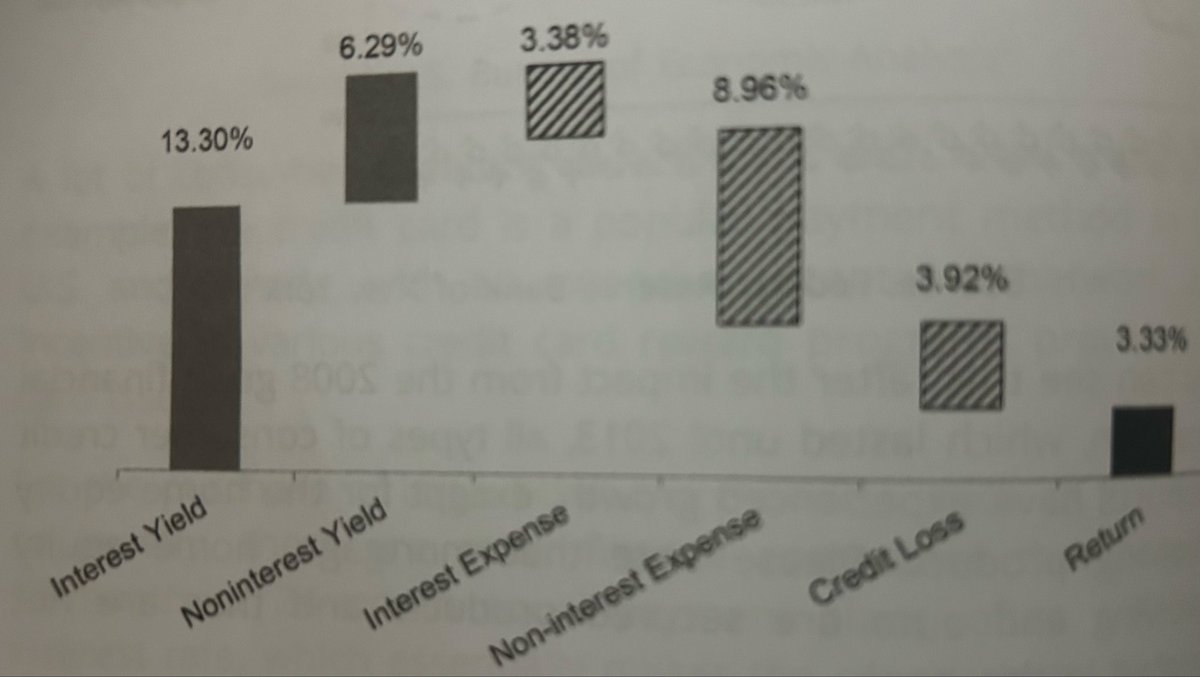
Unsecured lending is still a frontier in DeFi, but it’s an enormous opportunity. The low cost of capital onchain, coupled with the automation built into blockchains and DeFi by their very nature, should make for a competitive advantage against traditional lenders (both commercial and consumer). The missing ingredient, of course, is risk management. DeFi has generally depended upon overcollateralized lending of onchain assets to skip the trickiest parts of risk management in lending. Can a liquidator instantly dump the collateral into a DEX? Are there cheap or free flash loans available for liquidators so they don’t have to sit around with idle capital? If yes to both, list it as a supported collateral. No one cares who issued the token as long as it’s marketable and doesn’t have back doors in the token contract. That’s a bit of an oversimplification, but not by a lot. But it works. It keeps credit losses low, and recovery times effectively zero. Right now, some companies and protocols are experimenting with tokenized RWAs. These generally lack secondary market liquidity, so risk management now requires underwriting the issuer of the asset. This has been a bumpy road, but things finally seem to be on a sustainable trajectory for more collaterals being eligible for the usually-low rates found onchain. Rates are usually low, of course, because DeFi struggles to originate enough debt to satisfy the demand for lending. So inevitably unsecured lending will have to become solved problem. It’s also an enormous market. In the US alone, there was about $18T in consumer unsecured debt at the beginning of 2025. That number gets much, much larger with business lending. Personally, I think consumer unsecured lending will be sustainable onchain before business lending, simply because it’s more susceptible to the Law of Large numbers. Crypto may not be great at understanding the covenants of private credit sometimes, but it has a lot of very numerate people who can deal with a large volume of smaller, granular loans to build out a risk framework. And that risk framework is important. Let’s take a look at US credit cards to understand the economics of unsecured lending. In the screenshot, you’ll see a bar chart based on 2023 data from the Federal Reserve. As you can see, DeFi can simplify a lot of this for both sides of the deal. The non-interest yield (aka fees that everyone hates) is generally not a thing in within DeFi. The non-interest expense (back office, underwriting, recovery, compliance, etc) is also considerably smaller in DeFi. If you remove those two, you already get a much cheaper product for consumers and fatter margins in DeFi. But look at that credit loss bar. It’s about 4%. And that’s kept low by a lot of those non-interest expenses, as well as legal recourse and processes to monitor credit migration (just because someone was a good credit quality a year ago when they opened their card doesn’t mean they are today). This is where DeFi has a huge hole. It’s probably the case that the non-interest expense cannot be completely stripped out without credit loss exploding. The good news is that credit losses in this graph could actually grow quite a bit and still work financially. But these things tend towards binary outcomes, since you’re dealing with large numbers of users, and any flaw in your underwriting, monitoring, and raising/lowering credit limit methodology can blow you up. And of course there’s also just things beyond your control. A borrower on Aave can lose their job and it not affect the credit quality of the loan — it just needs plenty of collateral. So unsecured is much, much more complex, even if you design it to minimize fraud. It’s a big prize though. I suspect we’ll see at least some specialized lenders coming in to use their own loan portfolios as collateral to borrow in DeFi, but the big unlock will be finding ways to screen or filter users directly at the protocol level.
PaperImperium tweet media
English
10
3
62
13.1K
DeFi Dad ⟠ defidad.eth
DeFi Dad ⟠ defidad.eth@DeFi_Dad·
I applied to refinance a car loan with @LendingClub. They wanted 2 years of tax returns, invoices for the past year proving where my income comes from, and bank statements going back 90 days to prove income and it still wasn't enough in the end. I finally gave up and told them "You're asking me for too way too much information. My tax return is already super invasive to share but given I'm self-employed I did it. Now you want invoices to prove my income is legitimate? For someone married with a wife who has a W2, me with a credit score of 800+, a history 100% on-time payments, no derogatory mark on my credit history." If you're thinking, I must be buying something expensive, some overpriced luxury car--nope, it's just a $45k used Chevy, nothing flashy but perfect for me and the kids. I'll just borrow with DeFi even though, I was hoping to take advantage of TradFi for this. There's no way this isn't related to the lingering effects of OC 2.0.
English
44
4
117
14.4K
mod323 retweetledi
Credifi
Credifi@credifi·
4% Fixed rate. No collateral. No liquidations. No fees.
English
6
3
41
3.6K