Patrick (Researching trends before they take off)

13.4K posts

Patrick (Researching trends before they take off) banner
Patrick (Researching trends before they take off)

Patrick (Researching trends before they take off)

@itworks

Adviser, Brainstormer and Creative Generalist. Tech Industry Analyst, Trend(W/C)atcher, Knowmad. Loves Zoom/Streamyard/Menti/Mural/Miro/Wonder.me/...

Europe, Belgium, Gent Katılım Ocak 2008
3.3K Takip Edilen3.6K Takipçiler
Tommi Pedruzzi
Tommi Pedruzzi@TommiPedruzzi·
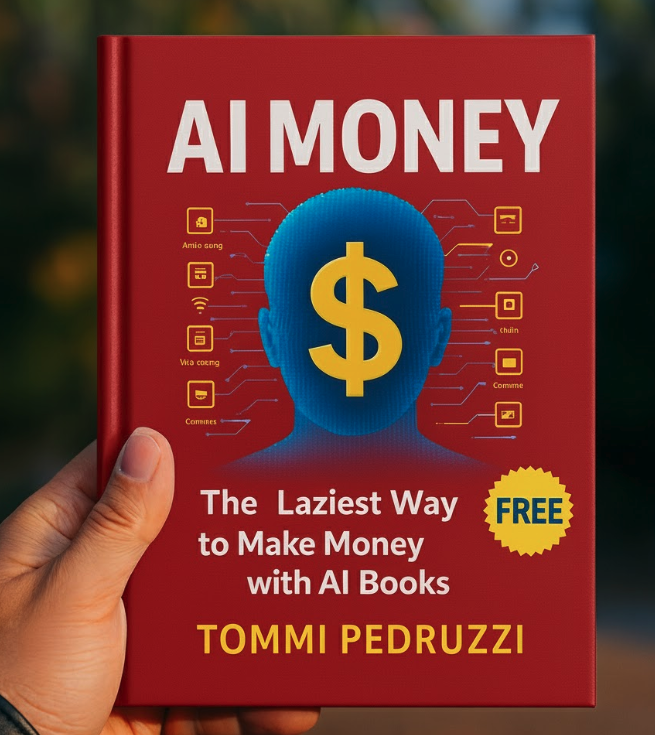
AI eBooks are absolutely CRUSHING it. I’ve published and analyzed 1500 books eBooks across multiple niches. And I bulild a system studying them over and over to understand: - How to find topics people already wanna buy - How to write and polish your first eBook in only 1 day - How to make sure your eBook gets searched and ranked on Amazon. Want my exact system? Like + comment “Book” and I’ll DM you my AI eBook creation system. (free, no email needed). P.S. Drop a follow so I can DM
Tommi Pedruzzi tweet media
English
289
36
377
49K
Patrick (Researching trends before they take off) retweetledi
The Humanoid Hub
The Humanoid Hub@TheHumanoidHub·
XPENG's next-gen IRON robot effectively crossed the uncanny valley, leading many to believe it was a human in a suit. In a follow-up event to prove it was a robot, He Xiaopeng had its leg skin cut open in front of a live audience. The robot then walked off the stage.
English
1.2K
1.8K
11K
2.1M
Patrick (Researching trends before they take off) retweetledi
Physics In History
Physics In History@PhysInHistory·
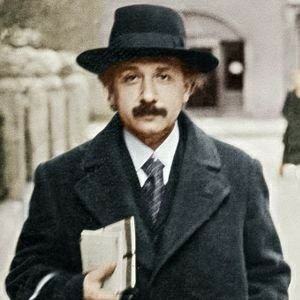
A brief history of Quantum computers 👇 1905: Albert Einstein explains the photoelectric effect and suggests that light consists of quantum particles or photons 1924: Max Born uses the term quantum mechanics for the first time 1925: Werner Heisenberg, Max Born, and Pascual Jordan formulate matrix mechanics, the first formulation of quantum mechanics 1925-1927: Niels Bohr and Werner Heisenberg develop the Copenhagen interpretation, one of the earliest and most common interpretations of quantum mechanics 1930: Paul Dirac publishes The Principles of Quantum Mechanics, a standard textbook on quantum theory 1935: Albert Einstein, Boris Podolsky, and Nathan Rosen publish a paper highlighting the counterintuitive nature of quantum superposition and arguing that quantum mechanics is incomplete 1935: Erwin Schrödinger develops a thought experiment involving a cat that is simultaneously dead and alive, and coins the term “quantum entanglement” 1944: John von Neumann publishes Mathematical Foundations of Quantum Mechanics, a rigorous mathematical framework for quantum theory 1957: Hugh Everett proposes the many-worlds interpretation of quantum mechanics, which suggests that every possible outcome of a quantum measurement actually occurs in a parallel universe 1961: Rolf Landauer shows that erasing a bit of information dissipates a minimum amount of energy, known as Landauer’s principle 1965: John Bell proves that quantum entanglement cannot be explained by any local hidden variable theory, known as Bell’s theorem 1973: Alexander Holevo proves that n qubits cannot carry more than n classical bits of information, known as Holevo’s theorem or Holevo’s bound 1980: Paul Benioff proposes a model of a quantum Turing machine, a theoretical device that can perform any computation using quantum mechanical principles 1981: Richard Feynman suggests that simulating quantum systems would require a new type of computer based on quantum mechanics 1982: David Deutsch generalizes Benioff’s model and proposes the concept of a universal quantum computer 1984: Charles Bennett and Gilles Brassard develop a protocol for quantum key distribution, which allows two parties to securely exchange cryptographic keys using quantum states 1985: David Deutsch and Richard Jozsa devise an algorithm that can solve a specific problem faster than any classical algorithm, known as the Deutsch-Jozsa algorithm 1991: Artur Ekert proposes another protocol for quantum key distribution based on quantum entanglement, known as the E91 protocol 1992: David Deutsch and Richard Jozsa extend their algorithm to handle multiple inputs, known as the Deutsch-Jozsa algorithm 1994: Peter Shor discovers an algorithm that can factor large numbers in polynomial time using a quantum computer, known as Shor’s algorithm 1996: Lov Grover invents an algorithm that can search an unsorted database in square root time using a quantum computer, known as Grover’s algorithm 1997: Isaac Chuang, Neil Gershenfeld, and Mark Kubinec demonstrate the first implementation of Shor’s algorithm using nuclear magnetic resonance (NMR) techniques 2000: David DiVincenzo proposes five criteria for building a practical quantum computer, known as the DiVincenzo criteria 2001: IBM researchers implement Grover’s algorithm using NMR techniques and achieve a modest speedup over classical algorithms 2007: D-Wave Systems claims to have built the first commercial quantum computer, but its validity is disputed by many experts 2019: Google announces that it has achieved quantum supremacy by performing a calculation on a 53-qubit quantum processor that would take a classical supercomputer thousands of years to complete 2020: IBM demonstrates that its 65-qubit quantum processor can perform calculations beyond the reach of any classical computer 📷 An IBM QC photographed by James Estrin
Physics In History tweet media
English
79
658
2.2K
97.3K
Patrick (Researching trends before they take off) retweetledi
Jayde 🍸♠️
Jayde 🍸♠️@some1sbbdoll·
Julie Vanloo deserved better. Tbh any player that this has ever happened to deserves better. Being abruptly waived or traded is messed up
Jayde 🍸♠️ tweet mediaJayde 🍸♠️ tweet media
English
7
317
3.6K
655.7K
Patrick (Researching trends before they take off)
Prompt engineering is dead, long live context engineering!
Andrej Karpathy@karpathy

+1 for "context engineering" over "prompt engineering". People associate prompts with short task descriptions you'd give an LLM in your day-to-day use. When in every industrial-strength LLM app, context engineering is the delicate art and science of filling the context window with just the right information for the next step. Science because doing this right involves task descriptions and explanations, few shot examples, RAG, related (possibly multimodal) data, tools, state and history, compacting... Too little or of the wrong form and the LLM doesn't have the right context for optimal performance. Too much or too irrelevant and the LLM costs might go up and performance might come down. Doing this well is highly non-trivial. And art because of the guiding intuition around LLM psychology of people spirits. On top of context engineering itself, an LLM app has to: - break up problems just right into control flows - pack the context windows just right - dispatch calls to LLMs of the right kind and capability - handle generation-verification UIUX flows - a lot more - guardrails, security, evals, parallelism, prefetching, ... So context engineering is just one small piece of an emerging thick layer of non-trivial software that coordinates individual LLM calls (and a lot more) into full LLM apps. The term "ChatGPT wrapper" is tired and really, really wrong.

English
0
0
0
69