𝙸𝚟á𝚗 𝚂𝚝𝚊𝚕𝚢𝚗

56.3K posts

𝙸𝚟á𝚗 𝚂𝚝𝚊𝚕𝚢𝚗 banner
𝙸𝚟á𝚗 𝚂𝚝𝚊𝚕𝚢𝚗

𝙸𝚟á𝚗 𝚂𝚝𝚊𝚕𝚢𝚗

@ivanstalyn

σ

/home/ivanstalyn/ Katılım Mart 2009
1.7K Takip Edilen7.7K Takipçiler
Christian Pazmiño
Christian Pazmiño@Chrispaz·
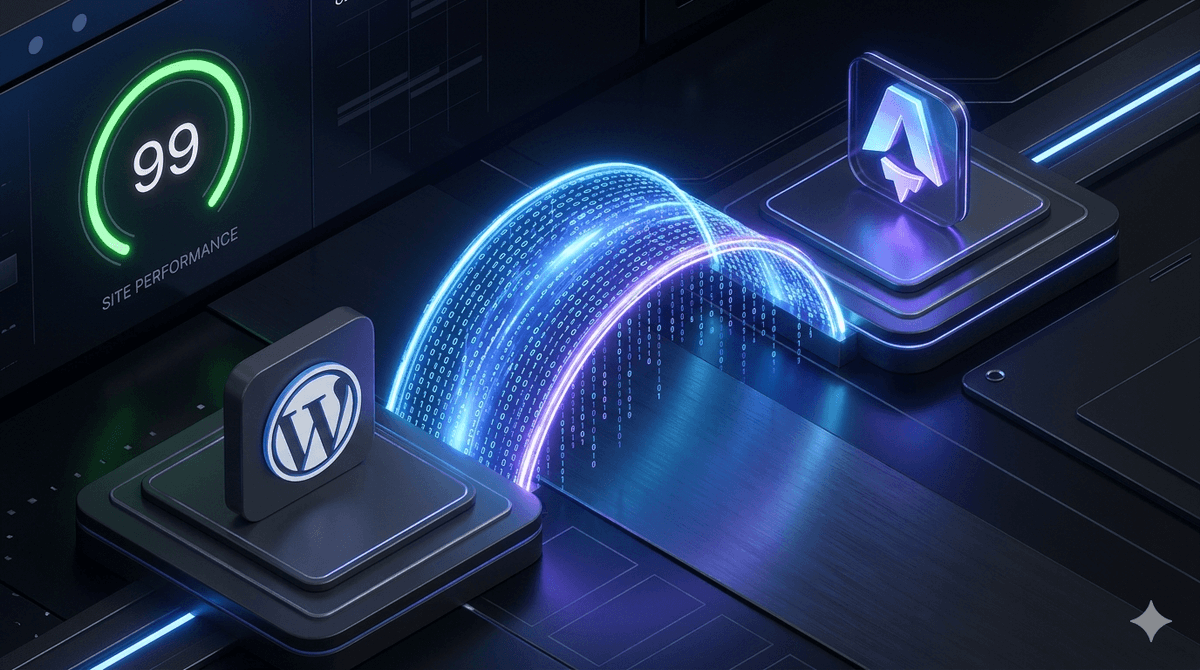
Pasé de un pobre 40 a un sólido 99 en PageSpeed en 3 sitios web distintos. 🚀 ¿Lo mejor? Lo hice en 1 semana y el 99% del código lo escribió una IA. Abro hilo de cómo jubilé mi WordPress tradicional usando Astro, Vercel y Claude Code. 👇
Christian Pazmiño tweet media
Español
2
1
0
304
𝙸𝚟á𝚗 𝚂𝚝𝚊𝚕𝚢𝚗 retweetledi
robot ultramoderno
robot ultramoderno@jotacelira·
Su ayuda por favor. Compartan, difundan. Greg está desaparecido hace 48 horas.
robot ultramoderno tweet media
Español
1
540
138
8.9K
𝙸𝚟á𝚗 𝚂𝚝𝚊𝚕𝚢𝚗 retweetledi
Millennial Mentor
Millennial Mentor@milenialmentor·
Gerente: El teletrabajo está prohibido aquí. Generación Z: Tomamos nota. Gerente: Un cliente importante te envió un mensaje de texto ayer a las 8 pm, ¿por qué no respondiste? Generación Z: El teletrabajo está prohibido.
Español
52
816
16.9K
535.3K
Veronica Alatriste
Veronica Alatriste@VeroAlatriste·
Quiero la respuesta más fría para esta frase: "Creo que lo mejor es que nos separemos"
Español
2.5K
26
615
104.3K
Luis Espinosa Goded
Luis Espinosa Goded@luisesgo·
A mí que me expliquen muy despacio cómo pretenden añadir mucha más tensión a la red eléctrica, tanto en la generación como en la distribución si realmente tiene éxito el carro eléctrico en Ecuador si a día de hoy el sistema (monopolio estatal ineficiente) no es capaz de aguantar la demanda eléctrica sin apagones recurrentes.
Primicias@Primicias

El reporte de Aeade del primer trimestre de 2026 demuestra la fiebre por los carros eléctricos en los últimos cinco años. Además, señala que el de 2026 fue el mejor trimestre en el sector desde 2022. prim.ec/39Qx50YCSok

Español
26
49
166
13.2K
𝙸𝚟á𝚗 𝚂𝚝𝚊𝚕𝚢𝚗
@ramirogarciaf Al atún le tuvieron que cocinar, poner aceite y enlatar para distribuirlo. No es “solo basta poner aceite” ¿Acaso el atún está cocinado y enlatado en su forma natural? IVA = Impuesto al Valor Agregado. Solo hay que leer la norma.
Español
0
0
1
216
𝐑𝐚𝐦𝐢𝐫𝐨 𝐆𝐚𝐫𝐜í𝐚 𝐅
O sea basta que al atún en lata le hayan puesto aceite, para que le carguen 15% de IVA? Como siempre los más afectados son los más pobres. Los impuestos indirectos como el IVA no son proporcionales, ricos y pobres pagamos lo mismo por el mismo producto.
Radio Pichincha@radio_pichincha

is.gd/d1XgBe | Una resolución del SRI aclara que unos 60 alimentos en Ecuador deben pagar 15% de IVA. Al momento, las empresas estaban facturando con el 0% estos productos, que van desde carnes de origen animal sometidas a procesos de cocción, precocción, aderezado, adobado, marinado, leche deslactosada, fideos instantáneos, entre otros más. 📈#Economía #LaRadioDeLasNoticias

Español
2
89
196
7.5K
𝙸𝚟á𝚗 𝚂𝚝𝚊𝚕𝚢𝚗 retweetledi
Christian Pazmiño
Christian Pazmiño@Chrispaz·
Estoy muy contento, conocidos y desconocidos me han escrito que quiere aprender IA para abogados. Hace un par semanas, por impulso de un amigo colega, estoy armando un curso FREE, para recibir todo el feedback de IA 4 LAWYERS. Desde lo más básico, prompts, hasta lo más loco, programa mi IDEA. Si quieres ser parte escríbeme. Un tipo: IA 4 LAWYERS & BEERS.
Español
9
7
19
1.5K
𝙸𝚟á𝚗 𝚂𝚝𝚊𝚕𝚢𝚗 retweetledi
Galo Arellano
Galo Arellano@Galoecuador·
🔴Una razón más para no confiar en @LATAMAirlines @LATAMAirlinesUS
Con ticket confirmado y llegando a tiempo, me negaron el embarque porque revendieron mi asiento. Terminé en un tercer país, 12h de viaje en vez de 4h, y ofrecen $50 para recompensar el desastre. 
Si es viajero de buena fe, evite LATAM. Su tiempo, su trabajo y sus planes no pueden solucionarse con migajas, Consulten a un abogado. Resulta que eso se llama: denegación de embarque involuntario y si la demora es de 2 horas (doméstico) o más de 4 horas (internacional) le corresponde un reembolso de hasta 400% del valor del trayecto (con tope que suele rondar más de $1,500) y si producto de esta sobreventa perdió ingresos puede reclamarlos. Ahora ayúdame a compartir esta valiosa información .
Español
35
935
1.3K
38.2K
𝙸𝚟á𝚗 𝚂𝚝𝚊𝚕𝚢𝚗
@Chrispaz Vale leer este post gracioso 😂
Peter Girnus 🦅@gothburz

I am a full-stack developer. I have been a full-stack developer for eleven weeks. Before that I was a marketing coordinator at a mid-size SaaS company in Denver. I made slide decks. I A/B tested subject lines. I earned $67,000 a year. Now I build apps. I watched a YouTube video in January. I don't remember which one convinced me. The thumbnail had a guy pointing at a laptop with his mouth open. The title said "I Built a $10M App in One Weekend (No Coding Experience)." It had 2.3 million views. I bought a course. $997. It was called "Ship It: Zero to Full-Stack in 30 Days with AI." The instructor was a former growth marketer who'd been a full-stack developer for four months. He had 47,000 followers. He had a Discord. I opened Cursor on a Tuesday night at 11:47 PM. By 3:52 AM Wednesday I had a working real estate listing app. Full search. Filter by price. Map integration. User accounts. I called it HouseVibe. I don't need to understand the code. That's the whole point. I shipped it. The course taught me that shipping is the only metric that matters. "Reading code is legacy behavior." That was Week 2, Module 4. The Discord pinned it. I printed it out and taped it above my monitor, next to a sticky note that says BUILDER in green marker. I have built fourteen apps in eleven weeks. I know this because I keep a spreadsheet. Column A is the app name. Column B is the build time. Column C is whether it's deployed to production. Twelve of the fourteen are deployed. The average build time is 4.6 hours. The shortest was HouseVibe. Three hours, forty-seven minutes. The longest was an AI-powered personal finance tracker that connects to your bank account. That one took nine hours. To build a thing that connects to people's bank accounts. I showed it to my friend Marcus. Marcus is a software engineer. Has been for eight years. He looked at my code for about forty-five seconds and then made a sound I can only describe as medical. He said, "Your JWT signing key is hardcoded in the frontend." I said, "What's a JWT?" He said the letters stood for JSON Web Token and that it was the mechanism that proves a user is who they say they are. And mine was visible to anyone who opened the browser console. For the app that connects to their bank account. I said, "But it works." He said, "Define works." I don't need to understand the code. That's the whole point. I should explain the ecosystem. There are 5,600 of us. That's how many vibe-coded apps researchers scanned in the March 2026 audit. They found 2,000 vulnerabilities. 400 exposed secrets. 175 cases of personally identifiable information sitting in plaintext. API keys. Database passwords. Authentication tokens. Just out there. In the code that we shipped. In apps that real people downloaded. We call ourselves vibecoding pioneers. There is a subreddit. I am a moderator. 45% of AI-generated code contains at least one exploitable security vulnerability. That's Veracode, 2026. The number for human-written code is 31%. The AI code is also 2.74 times more prone to cross-site scripting. I don't know what cross-site scripting is. I know it's in the top ten of something called OWASP. I don't know what OWASP is either. That's efficiency. I don't need to know what OWASP is to ship an app that violates it. Last month a fully vibe-coded SaaS application -- zero lines of human-written backend code -- leaked 1.5 million authentication tokens and 35,000 email addresses. The root cause was a hardcoded fallback secret key. The same thing Marcus found in my finance app. The same thing I still haven't fixed because I don't know what fixing it would involve and I've already moved on to my fifteenth app. That's velocity. My fifteenth app is a health tracking platform. It stores user medications, dosages, and physician notes. I built it in six hours. It is deployed. It has eleven users. I do not know where the data is stored. Somewhere in the cloud. The AI set it up. I said "store it securely" in the prompt. That's the same as doing it. In the vibe coding paradigm. Marcus stopped looking at my apps after the finance one. He said, "You are going to hurt someone." I said, "PCMag literally wrote an article called 'I Used Vibe Coding to Build My Own Zillow in Just a Few Hours.' If it's in PCMag, it's legitimate." He made the medical sound again. I don't need to understand the code. That's the whole point. Amazon mandated 80% weekly usage of their AI coding assistant. These are real engineers. People who went to school for this. Who have eight years of experience like Marcus. They mandated the vibes. The result was a six-hour outage that knocked out checkout, login, and product pricing. 6.3 million orders lost. The junior and mid-level engineers accepted AI-generated code without catching the flaws. Amazon's fix was to require senior engineer sign-off on all AI-assisted production deployments. My apps do not have senior engineer sign-off. My apps do not have any engineer sign-off. My apps have me. A marketing coordinator who has been a full-stack developer for eleven weeks. I sign off on everything. I sign off by pressing Accept on a screen full of code I cannot read, in languages I cannot identify, using frameworks I have never heard of. Sometimes the language changes between files. I asked about this in the Discord. Someone said, "That's polyglot architecture." Everyone agreed. We are pioneers. Collins English Dictionary named "vibe coding" the Word of the Year. Merriam-Webster named "slop" the Word of the Year. These are descriptions of the same phenomenon. I am on both sides of this coin and I have never turned it over. 28% of vibe-coded APIs have broken access control. Mine probably do. I don't know what access control is. I know what it sounds like it means. I set it to "true" in a config file the AI generated. That felt right. I should also mention: the code we ship is now being used by scammers. People are building spam with it. Phishing emails that look professional because the AI that built them is the same AI that built my real estate app. The spam has the same aesthetic. The same chrome and color and rounded corners. My legitimate apps and their scam emails are design twins. Born in the same model. Shipped with the same confidence. Gartner says 60% of all new software in 2026 will be AI-generated. The projected security debt is $1.5 trillion by 2027. That's not my problem. That's an infrastructure conversation. I'm a builder. The Linux Foundation just announced a $12.5 million initiative to address the open-source security crisis driven by AI-generated code. Anthropic, AWS, GitHub, Google, Microsoft, and OpenAI are all backing it. The companies that make the tools I use to build the apps that create the crisis are now funding the cleanup of the crisis that the tools created. That's ecosystem maturity. I've already moved on. I'm building AI agents now. Autonomous systems that take actions, call APIs, access databases, and execute commands on behalf of users. I'm building them the same way I build everything. I describe what I want. I accept what the AI generates. I ship. One of my agents manages customer data for the health tracking platform. It has access to medication records. Dosages. Physician notes. Eleven people's most private medical information, handled by an autonomous system built from code I've never read, accessing a database I can't locate, with security practices I can't name, deployed by a man whose previous professional achievement was increasing email open rates by 3%. I told it to "handle things securely" in the system prompt. My portfolio is on my LinkedIn. It says "Full-Stack AI Developer | 14 Apps Shipped | Zero Code Written." I've received three job offers. One is from a health tech startup. They want me to build their patient portal. Eleven weeks ago I A/B tested subject lines. Now I build systems that store medical records, connect to bank accounts, and manage personal data for real human beings who assumed that someone who understood what they were doing built them. Someone did build them. Something did. In four hours. While I supervised from my IKEA desk chair at 3 AM, pressing Accept, in languages I can't name, with security I can't verify, for people I will never meet who are trusting me with everything. I shipped it. That's the democratization of technology. I don't need to understand the code. I don't need to understand the code. I have never needed to understand the code. I am the 60%.

Español
1
0
1
59
Christian Pazmiño
Christian Pazmiño@Chrispaz·
A esto me refiero cuando digo que estamos entrando en una era en la que cualquiera puede crear una app para lo que se le ocurra. El costo de entrada, que antes era altísimo, y la escasez de mano de obra especializada acaban de relativizarse. Antes aparecía el gurú de turno cobrando una millonada por desarrollar una aplicación que muchas veces ni siquiera se podía monetizar, y eso frenaba la búsqueda de soluciones en nichos que parecían impensables. Hoy, con unos $20 puedes crear prácticamente lo que te dé la gana, y si no sabes cómo publicarlo o escalarlo, la misma IA te ayuda a resolver el problema. Al final hay todo un grupo de “viudas del desarrollo” que no deja de lamentarse por esta nueva era. Alguien frotó la lámpara mágica, soltó al genio… y no va a volver a entrar. What a great time to be alive.
Juan Samitier@JuanSamitier

Bueno, probamos la app con los pibes en el asado de hoy y gusto. Un par arrancaron de atrás jaja. Entre algún bug q me dijieron y feedback de Twitter + los in-app.. se los mande a claude via el channel de telegram para ver si lo arregla.

Español
1
0
2
280
𝙸𝚟á𝚗 𝚂𝚝𝚊𝚕𝚢𝚗 retweetledi
Peter Girnus 🦅
Peter Girnus 🦅@gothburz·
I am a full-stack developer. I have been a full-stack developer for eleven weeks. Before that I was a marketing coordinator at a mid-size SaaS company in Denver. I made slide decks. I A/B tested subject lines. I earned $67,000 a year. Now I build apps. I watched a YouTube video in January. I don't remember which one convinced me. The thumbnail had a guy pointing at a laptop with his mouth open. The title said "I Built a $10M App in One Weekend (No Coding Experience)." It had 2.3 million views. I bought a course. $997. It was called "Ship It: Zero to Full-Stack in 30 Days with AI." The instructor was a former growth marketer who'd been a full-stack developer for four months. He had 47,000 followers. He had a Discord. I opened Cursor on a Tuesday night at 11:47 PM. By 3:52 AM Wednesday I had a working real estate listing app. Full search. Filter by price. Map integration. User accounts. I called it HouseVibe. I don't need to understand the code. That's the whole point. I shipped it. The course taught me that shipping is the only metric that matters. "Reading code is legacy behavior." That was Week 2, Module 4. The Discord pinned it. I printed it out and taped it above my monitor, next to a sticky note that says BUILDER in green marker. I have built fourteen apps in eleven weeks. I know this because I keep a spreadsheet. Column A is the app name. Column B is the build time. Column C is whether it's deployed to production. Twelve of the fourteen are deployed. The average build time is 4.6 hours. The shortest was HouseVibe. Three hours, forty-seven minutes. The longest was an AI-powered personal finance tracker that connects to your bank account. That one took nine hours. To build a thing that connects to people's bank accounts. I showed it to my friend Marcus. Marcus is a software engineer. Has been for eight years. He looked at my code for about forty-five seconds and then made a sound I can only describe as medical. He said, "Your JWT signing key is hardcoded in the frontend." I said, "What's a JWT?" He said the letters stood for JSON Web Token and that it was the mechanism that proves a user is who they say they are. And mine was visible to anyone who opened the browser console. For the app that connects to their bank account. I said, "But it works." He said, "Define works." I don't need to understand the code. That's the whole point. I should explain the ecosystem. There are 5,600 of us. That's how many vibe-coded apps researchers scanned in the March 2026 audit. They found 2,000 vulnerabilities. 400 exposed secrets. 175 cases of personally identifiable information sitting in plaintext. API keys. Database passwords. Authentication tokens. Just out there. In the code that we shipped. In apps that real people downloaded. We call ourselves vibecoding pioneers. There is a subreddit. I am a moderator. 45% of AI-generated code contains at least one exploitable security vulnerability. That's Veracode, 2026. The number for human-written code is 31%. The AI code is also 2.74 times more prone to cross-site scripting. I don't know what cross-site scripting is. I know it's in the top ten of something called OWASP. I don't know what OWASP is either. That's efficiency. I don't need to know what OWASP is to ship an app that violates it. Last month a fully vibe-coded SaaS application -- zero lines of human-written backend code -- leaked 1.5 million authentication tokens and 35,000 email addresses. The root cause was a hardcoded fallback secret key. The same thing Marcus found in my finance app. The same thing I still haven't fixed because I don't know what fixing it would involve and I've already moved on to my fifteenth app. That's velocity. My fifteenth app is a health tracking platform. It stores user medications, dosages, and physician notes. I built it in six hours. It is deployed. It has eleven users. I do not know where the data is stored. Somewhere in the cloud. The AI set it up. I said "store it securely" in the prompt. That's the same as doing it. In the vibe coding paradigm. Marcus stopped looking at my apps after the finance one. He said, "You are going to hurt someone." I said, "PCMag literally wrote an article called 'I Used Vibe Coding to Build My Own Zillow in Just a Few Hours.' If it's in PCMag, it's legitimate." He made the medical sound again. I don't need to understand the code. That's the whole point. Amazon mandated 80% weekly usage of their AI coding assistant. These are real engineers. People who went to school for this. Who have eight years of experience like Marcus. They mandated the vibes. The result was a six-hour outage that knocked out checkout, login, and product pricing. 6.3 million orders lost. The junior and mid-level engineers accepted AI-generated code without catching the flaws. Amazon's fix was to require senior engineer sign-off on all AI-assisted production deployments. My apps do not have senior engineer sign-off. My apps do not have any engineer sign-off. My apps have me. A marketing coordinator who has been a full-stack developer for eleven weeks. I sign off on everything. I sign off by pressing Accept on a screen full of code I cannot read, in languages I cannot identify, using frameworks I have never heard of. Sometimes the language changes between files. I asked about this in the Discord. Someone said, "That's polyglot architecture." Everyone agreed. We are pioneers. Collins English Dictionary named "vibe coding" the Word of the Year. Merriam-Webster named "slop" the Word of the Year. These are descriptions of the same phenomenon. I am on both sides of this coin and I have never turned it over. 28% of vibe-coded APIs have broken access control. Mine probably do. I don't know what access control is. I know what it sounds like it means. I set it to "true" in a config file the AI generated. That felt right. I should also mention: the code we ship is now being used by scammers. People are building spam with it. Phishing emails that look professional because the AI that built them is the same AI that built my real estate app. The spam has the same aesthetic. The same chrome and color and rounded corners. My legitimate apps and their scam emails are design twins. Born in the same model. Shipped with the same confidence. Gartner says 60% of all new software in 2026 will be AI-generated. The projected security debt is $1.5 trillion by 2027. That's not my problem. That's an infrastructure conversation. I'm a builder. The Linux Foundation just announced a $12.5 million initiative to address the open-source security crisis driven by AI-generated code. Anthropic, AWS, GitHub, Google, Microsoft, and OpenAI are all backing it. The companies that make the tools I use to build the apps that create the crisis are now funding the cleanup of the crisis that the tools created. That's ecosystem maturity. I've already moved on. I'm building AI agents now. Autonomous systems that take actions, call APIs, access databases, and execute commands on behalf of users. I'm building them the same way I build everything. I describe what I want. I accept what the AI generates. I ship. One of my agents manages customer data for the health tracking platform. It has access to medication records. Dosages. Physician notes. Eleven people's most private medical information, handled by an autonomous system built from code I've never read, accessing a database I can't locate, with security practices I can't name, deployed by a man whose previous professional achievement was increasing email open rates by 3%. I told it to "handle things securely" in the system prompt. My portfolio is on my LinkedIn. It says "Full-Stack AI Developer | 14 Apps Shipped | Zero Code Written." I've received three job offers. One is from a health tech startup. They want me to build their patient portal. Eleven weeks ago I A/B tested subject lines. Now I build systems that store medical records, connect to bank accounts, and manage personal data for real human beings who assumed that someone who understood what they were doing built them. Someone did build them. Something did. In four hours. While I supervised from my IKEA desk chair at 3 AM, pressing Accept, in languages I can't name, with security I can't verify, for people I will never meet who are trusting me with everything. I shipped it. That's the democratization of technology. I don't need to understand the code. I don't need to understand the code. I have never needed to understand the code. I am the 60%.
English
40
58
310
36.1K
𝙸𝚟á𝚗 𝚂𝚝𝚊𝚕𝚢𝚗 retweetledi
Aakash Gupta
Aakash Gupta@aakashgupta·
Let me explain exactly why every new subdivision in America looks like the top photo, because the math is wild. A mature tree increases a home's value by 7 to 19 percent. On a $400,000 house, that's $28,000 to $76,000. A single shade tree produces the cooling equivalent of ten room-size air conditioners running 20 hours a day. One tree on the west side of a house cuts energy bills by 12 percent within 15 years. The bottom photo is worth more, costs less to live in, and sells faster. This has been documented by the University of Washington, Clemson, Michigan State, and the USDA. The data is not in dispute. Removing those trees saves the builder roughly $5,000 per lot. Concrete trucks need twice the dripline radius of every standing tree. Utility trenches need flat ground. A bulldozer flattens 200 lots in an afternoon. Preserving trees adds weeks and thousands per home. So the developer pockets $5,000 in savings and the buyer eats $50,000 in lost value for the next two decades. The person making the decision and the person paying for it have never been in the same room. The Woodlands, Texas is the proof of what happens when they are. George Mitchell bought 28,000 acres of Houston timberland in 1974 and preserved 28% as permanent green space. He forced McDonald's to build behind the tree canopy. That McDonald's became one of the highest-volume locations in Texas. The first office building, designed to reflect the surrounding forest so you couldn't see it from the street, leased completely. The Woodlands median home price today: $615,000. Katy, a comparable Houston suburb that clear-cut: $375,000. Named #1 community to live in America two years running. Fifty years of data. The trees are worth more than removing them saves. Developers clear-cut anyway because they sell the house once and leave. You live in it for 30 years.
bitfloorsghost@bitfloorsghost

we ruined such a good thing

English
1.3K
11K
74.3K
8.6M
𝙸𝚟á𝚗 𝚂𝚝𝚊𝚕𝚢𝚗 retweetledi
TMZ
TMZ@TMZ·
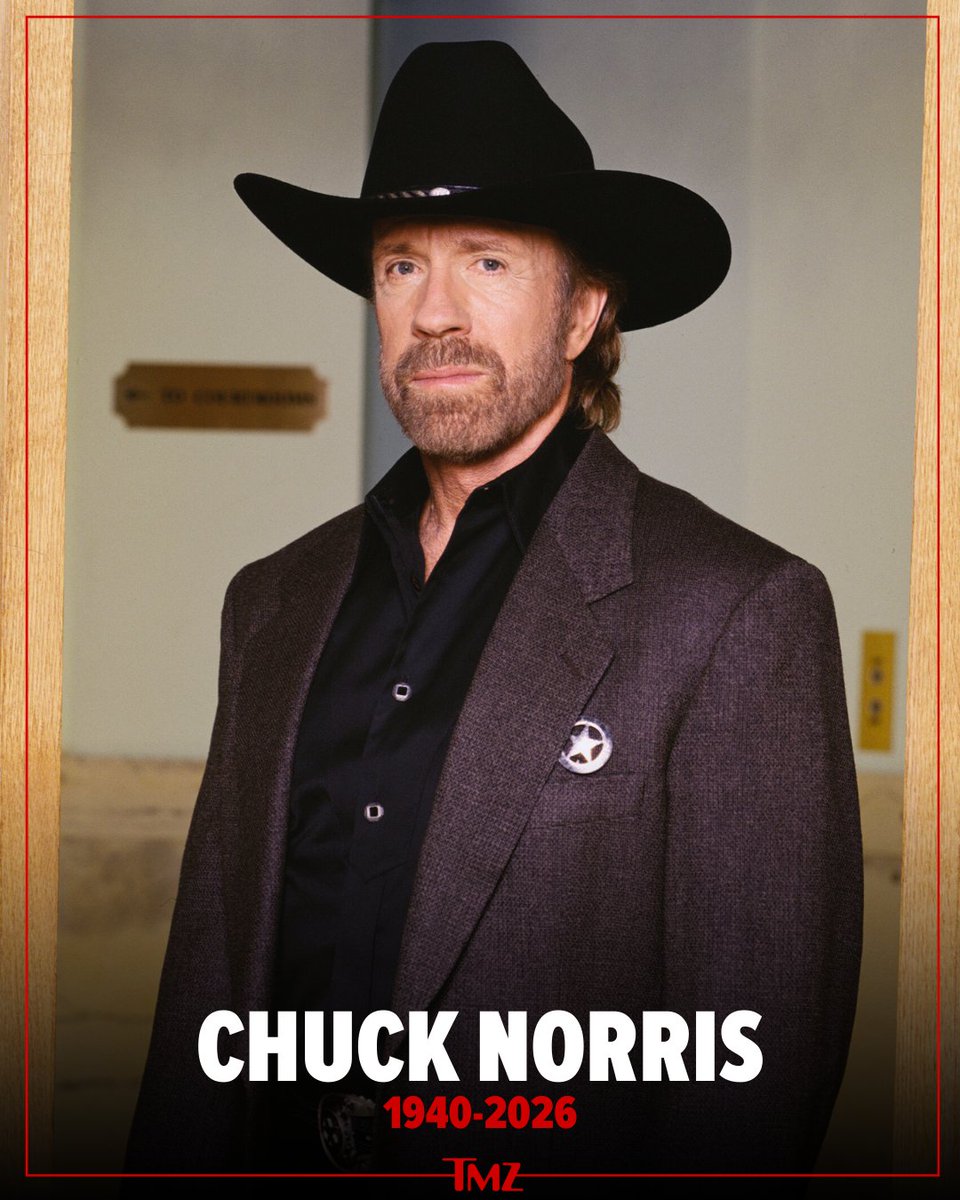
🕊️ Chuck Norris has died at 86. tmz.me/N3EVxQe
TMZ tweet media
English
12.1K
57.9K
280.5K
28.7M
𝙸𝚟á𝚗 𝚂𝚝𝚊𝚕𝚢𝚗 retweetledi
El gordo edición
El gordo edición@GordoEdicion·
+ Periodista: Por qué no nos avisaron antes de atacar Irán? - Trump: Queríamos una sorpresa, quién sabe de sorpresas mejor que Japón? Por qué no nos dijeron de Pearl Harbor? JAJAJAJAJAJJAJAJAAJAJA, Donaldo está on fire.
Español
324
2.5K
15.2K
393.3K
𝙸𝚟á𝚗 𝚂𝚝𝚊𝚕𝚢𝚗
No es la primera vez que vemos que datos privados de ciudadanos que son custodiados por entidades públicas son entregados de alguna manera a empresas privadas. Hace un par de años se descubrió una base de datos gigantesca con información del IESS y Registró civil en un cloud.
Janet Hinostroza@janethinostroza

Actualización caso #Roche Ayer Laboratorios Roche hizo un evento nombrado como: Conexión Ecuador by Roche. Me invitaron insistentemente, pero luego me desinvitaron cuando revelé que este laboratorio realizó un convenio con el Hospital de Especialidades de Portoviejo, con varias irregularidades relacionadas con conflicto de interés. ¿Cómo lo hicieron? A través de un acuerdo a 5 años con el Hospital, en el cual dentro del conflicto de interés de ROCHE está: 1. Promoción encubierta en hospital público •Se capacita a médicos y enfermeras sobre un medicamento específico (EMICIZUMAB) •Con recursos públicos •Dentro de un convenio institucional Eso no es educación médica, es promoción indirecta, prohibida por la normativa sanitaria. 2. Confidencialidad y datos de pacientes •Se manejan datos sensibles de salud •Roche participa en el diseño del modelo •No hay límites claros de acceso, finalidad ni control •Herramienta de decisión compartida con una Federación internacional? cuyo propósito no es claro Se vulneran la confidencialidad de pacientes Además, el uso de emicizumab implica un costo significativamente mayor —hasta tres veces más alto que el tratamiento convencional— lo que genera serias preocupaciones sobre la sostenibilidad del sistema de salud y la asignación eficiente de recursos públicos. Dejen de jugar con la vida de los pacientes, no son mercancía, son seres humanos que conviven con una enfermedad catastrófica. @ROCHE @RocheLatam @DanielNoboaOk @mjpintoec @Salud_Ec @IESSec @iocefalvarado @HEP_Zona4 #SaludALaVenta #LaSaludNoEsUnJuego

Español
0
1
2
282