JB

566 posts

JB banner
JB

JB

@jabbauer

System Protection, Equipment Standards, DERMS and Interoperability. All opinions are my own.

Katılım Nisan 2009
332 Takip Edilen92 Takipçiler
JB
JB@jabbauer·
@ArushiSF @SimonMahan Exelon/Constellation was a combined gen-tailer for years. It didn’t work out that well for them because when one side of the business did well, it was dragged down by the other half. Will it be different this time?
English
0
0
1
12
Arushi Sharma Frank
Arushi Sharma Frank@ArushiSF·
This weekend, #NEE announced its intent to acquire #D. Under this publicly traded parent entity sits NextEra Energy Transmission (#NEET). It is the competitive transmission arm. NEET bids on and builds high-voltage wires outside of FPL's traditional territory. They are the "wire builders" who can parachute into new regions to fix physical bottlenecks. Also under NEE is NEER: NextEra Energy Resources, a competitive, unregulated (IPP) subsidiary. It builds massive wind, solar, and battery farms across the country, and houses the high-octane trading desk that manages financial instruments and REC sales. If this deal goes through, NEER's trading desk will have a field day and the trader compliance lawyers will sleep lightly. NEER (the generator) pays PJM to wheel power and covers the congestion costs. PJM then distributes those transmission revenues back to the Transmission Owner—which is now Dominion, owned by NEE. Thus, NEE is effectively paying itself through its subsidiaries. The friction of moving power from the Midwest to Northern Virginia becomes a massive internal financial hedge, rather than a sunk cost paid to a third party. #Dominion complets the hedging with its large load tariff structures - it passes the ISO-allocated (and its own retail tariff) transmission costs to ratepayers. We know already that to handle unprecedented load, the SCC has begun assigning massive transmission and distribution upgrade costs directly to the data centers themselves through specialized rate classes (like the GS-5 tariff) and mandatory 14-year minimum demand contracts. This is not illegal. It is legal. It is called gen-tailing, and it occurs with the benefit of a vertically integrated holding company that brilliantly straddles both a deregulated wholesale market and a captive, regulated retail rate base. NextEra gets to capture the unregulated upside of wholesale power generation and environmental attributes, while legally socializing the physical transmission upgrades across Virginia's hyperscalers and other classes of ratepayers. Also, I managed the #FOAK Texas gentailer public-facing strategy- and shepherded the entities into existence - for #TSLA. So, I know this can be done in competitive markets too...don't have to have captive retail customers who are tied to your caboose by law. Instead, they can come to the caboose willingly. This acquisition announcement raises the question though: do we have time for replicating Texas-style solutions around the country? With this type of announcement, I think not. How about you?
English
1
3
30
6.2K
JB
JB@jabbauer·
@JoshuaBasseches @alichehrehsaz Let’s make it work. However even creating the market takes investment. The utility requires long-term forecasting, sensors for visibility, etc. There is a long list of pre-requisites
English
0
0
0
19
JB
JB@jabbauer·
@ArushiSF @JigarShahDC I think distributed data center capacity is the optimal way to flex loads anyways. The tail risks are 6 months of curtailment, under a distributed approach, you’re only losing a segment of capacity. It’s a hedge on flexibility
English
0
0
0
20
Arushi Sharma Frank
Arushi Sharma Frank@ArushiSF·
I appreciate the disagreement. On AI unit economics, agree. But this is missing the mechanics of project finance and grid physics. A tech company's high willingness to pay for power out of their massive AI margins does not magically bypass the fact that project developers rely on limited-recourse debt. Conflating a hyperscaler’s willingness to pay for power with a developer’s ability to finance and build new power is how we got here anyway. Yes, H100, B200 GPUs print so much money that the hyperscaler would gladly pay $1,000/MWh just to get it turned on. But the hyperscaler isn't the one borrowing $500 million from a syndicate of banks to build the gen/bess. The developer is. Then there's a contractual meeting of the minds. 1) Financings Done (The deals from the last 5 years): My original post was about these. Hyperscalers signed massive financial swaps (VPPAs) to hit their ESG targets, taking on the basis risk themselves. Now that grid congestion is severe, the spread between the node and the hub has blown up. They are bleeding cash on the financial settlement of these swaps, and because the grid is choked, they still don't have the physical electrons reaching their data centers. They are losing money on the paper hedge and their chips are still collecting dust. This is a widely held view in trading and commodity circles and the subject of proprietary banker briefs. 2) What's NOT Happening (New grid-tied VPPA deal flow): Because of the bloodbath on those older deals, banks have wised up. For new grid-tied projects, if a hyperscaler tries to force the basis risk back onto the developer, the banks simply refuse to underwrite the loan. The deals threaten to die in the term sheet phase. Here's another interesting twist- in large markets where policies have evolved such that committed tenants suddenly need to be brought along with the interest to get studied for firm power connect, the game is becoming harder. 3) Financings that are Happening: This is why the only structures actually getting financed and built right now to solve the "dusty chip" problem are behind-the-meter, co-located, islanded microgrid setups, early exploration of distributed data center capacity setups. The market has realized that you can't throw AI margins at a broken transmission grid and expect electrons to magically teleport. You have to bypass the grid's physical constraints entirely. I mean, this is a good thing, I think. I think distributed, smaller, grid connected, higher grid utilization solutions will win in fragmented markets, we will get a few insane fully BTM energizations, and we will diversify. Constraints spur innovation!
p@pgoehaus33

@ArushiSF 1) this makes zero sense 2) Power costs as a percent of GPU margins are low single digits 3) Breakeven costs for compute are in the four digits per MWh. Chips are collecting dust because they can’t get power, not because power is too expensive.

English
5
4
26
6.5K
JB
JB@jabbauer·
@brazen__head @drvolts Let me clarify this is supply only. Load and energy injection is at the zonal LMP spot price. $40/MWh = $0.04/kWh. This can be negative (you’re paying to inject).
English
1
0
0
31
trellis walk
trellis walk@brazen__head·
@jabbauer @drvolts that is a pretty crazy thing for comed to be doing. what is the price range for net metering injections and what do they base them on?
English
1
0
0
18
David Roberts
David Roberts@drvolts·
Today on Volts: how do you coordinate the behavior of millions of distributed energy devices so that they work to the benefit of the larger grid? My guest today argues that real-time, dynamic retail prices -- communicated directly to devices -- are the customer-friendly answer.
English
8
5
52
48.3K
JB
JB@jabbauer·
@BenSchifman Both things can be true: 1. Data centers reduce distribution rate impacts through volumetric consumption. 2. Data centers raise energy prices through increased demand Which is more concerning? Distribution rate increases or capacity constraints?
English
0
0
0
186
JB
JB@jabbauer·
@fredstaffordcs It wasn’t just electrical workers against it, it was firefighters Some of these bills had no guardrails of any kind, basically stating they had no obligation to meet any kind of NEC rules or UL standards. They should be educating stakeholders instead of ramming it in
English
1
0
0
48
Fred Stafford
Fred Stafford@fredstaffordcs·
These are exactly the unions that fought for Illinois's nuclear plants to stay online and to count toward state climate goals when green groups were opposed. Also the unions that helped fight to end nuclear moratorium. But their interest in public grid infrastructure instead of the glitzy consumer product solutionism seems to rub some people the wrong way.
John Arnold@johnarnold

Inspiring altruism from the electrical workers union, dedicating time and money to lobbying against this bill purely out of concern for the public's safety.

English
7
9
52
20.9K
JB
JB@jabbauer·
@brazen__head @drvolts Yes: -2.78kW was my PLC in 2024, so my capacity payment of ~$8.34/kW-month is roughly equivalent to the $270/MW-day PJM capacity price. It should increase in June to reflect the 2026/2027 capacity price of $329/MW-day.
English
1
0
0
36
trellis walk
trellis walk@brazen__head·
@jabbauer @drvolts so you get paid a monthly rate calculated on the basis of your capacity contribution to the 5 highest load hours of the year?
English
1
0
0
29
JB
JB@jabbauer·
@brazen__head @drvolts I injected energy during PJM’s 5CP events in 2024. Your capacity price is based on your personal load contribution, when negative means you get paid. It’s reset each June based on the previous year’s performance.
English
1
0
0
32
JB
JB@jabbauer·
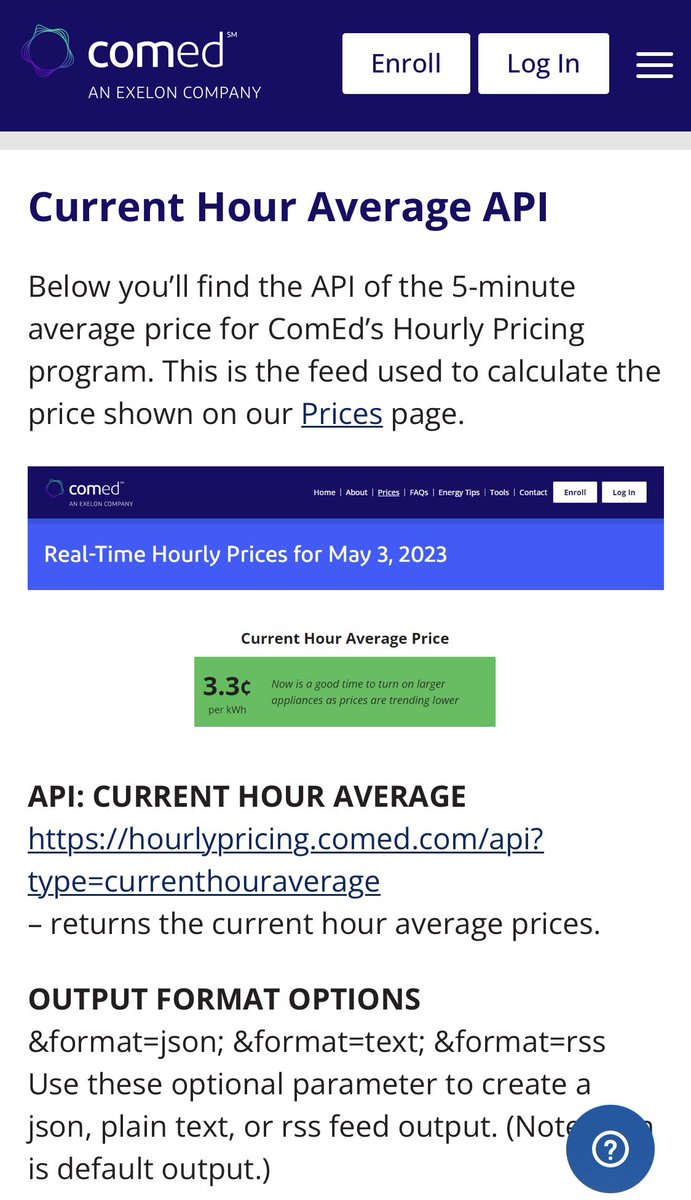
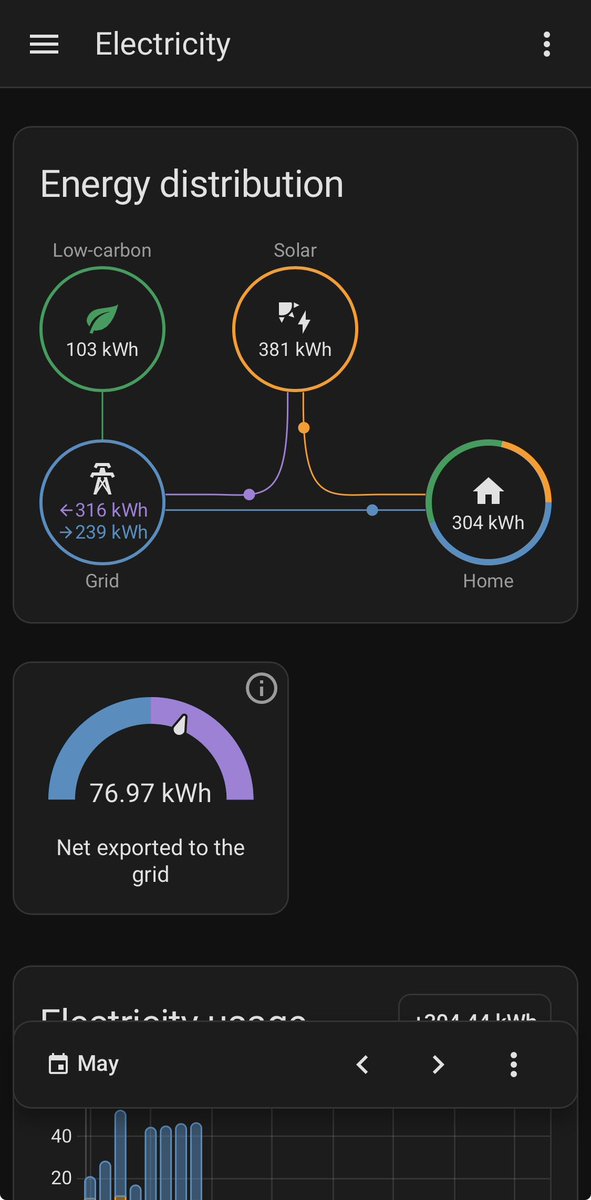
@drvolts 1.Prices = PJM pass through 2.Price Server = ComEd API or PJM Dataminer 3.Price responsive hardware = HomeAssistant
JB tweet mediaJB tweet media
English
0
0
0
40
JB
JB@jabbauer·
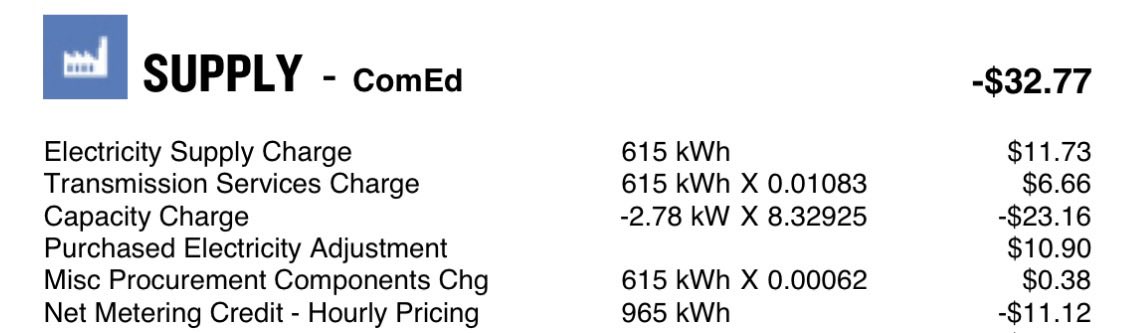
@drvolts IL has had real-time dynamic prices since 2009. There are 60k people on it. Even better, it’s not just the energy price. The capacity charge is a line item that allows residential customers to be paid for capacity. It’s the largest part of my supply bill.
JB tweet media
English
2
0
3
1.2K
JB
JB@jabbauer·
@Ben_Inskeep @TysonSlocum You’re asking the wrong question. You need to ask for the formulas used to calculate the line item charges. They’re not going to give you a customer’s bill.
English
1
0
1
761
Ben Inskeep
Ben Inskeep@Ben_Inskeep·
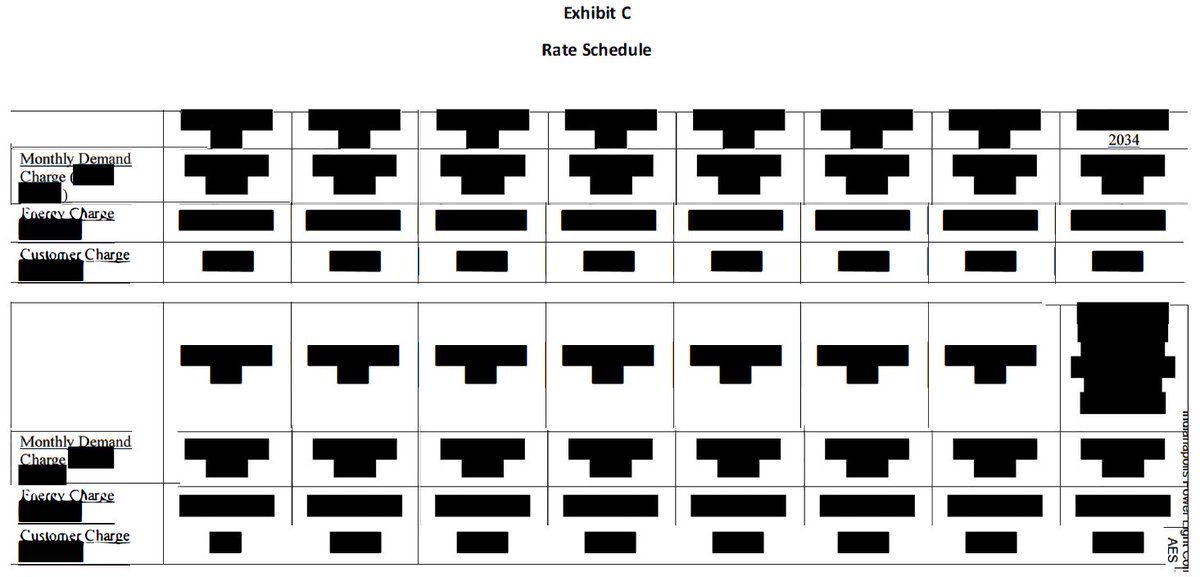
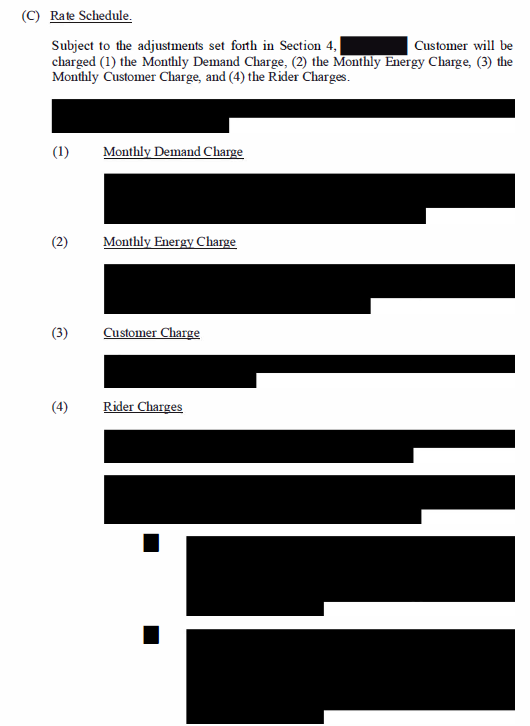
I don't understand why people don't trust data centers. You can clearly see that these AES Indiana rates for Google's data center in Monrovia, IN are fair and reasonable.
Ben Inskeep tweet mediaBen Inskeep tweet media
English
32
669
4.2K
89K
JB
JB@jabbauer·
@exec_sum These will be banned, or states will assign system upgrade costs to Span. It’s like running crypto mining out of your house.
English
0
0
0
5
Exec Sum
Exec Sum@exec_sum·
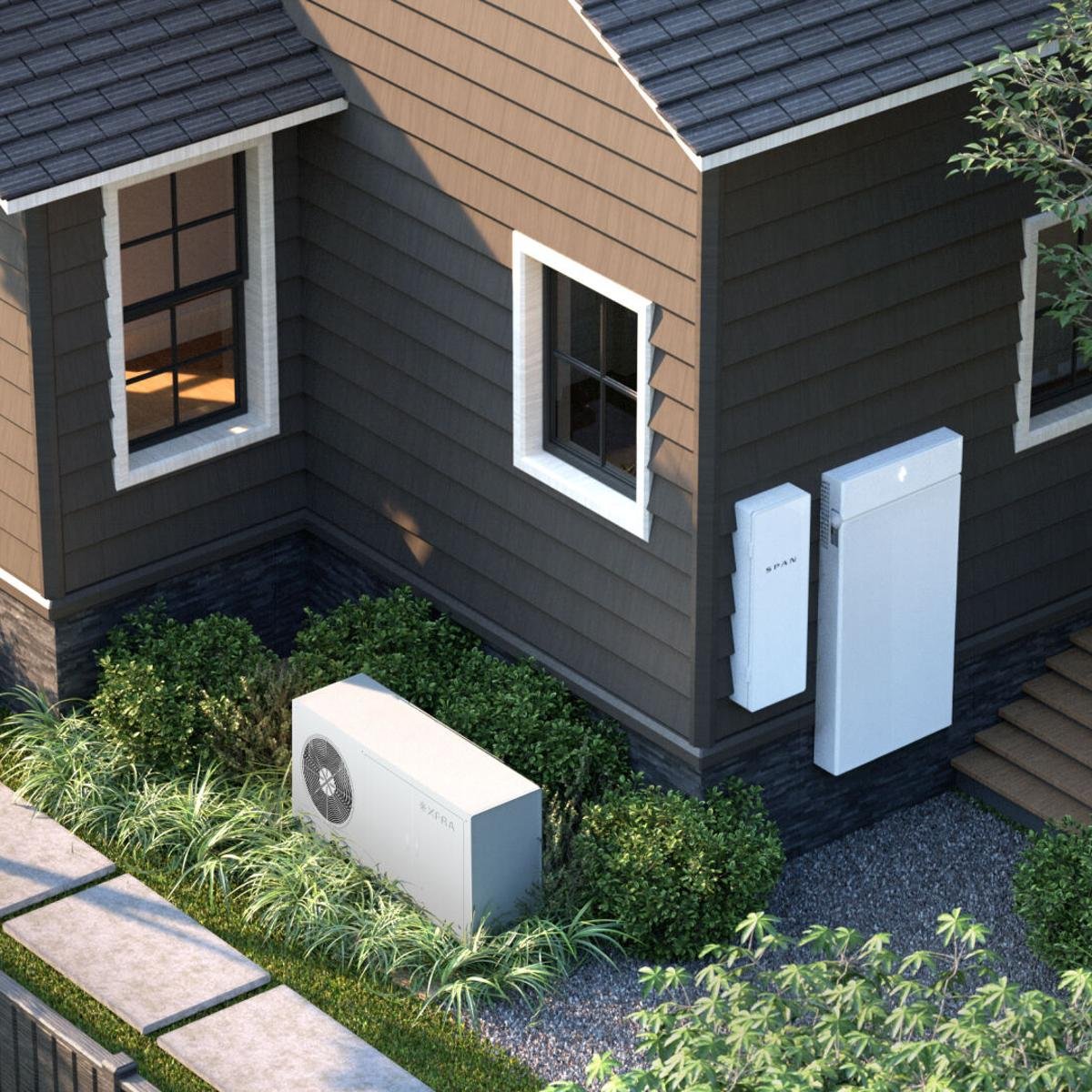
BREAKING: Nvidia and PulteGroup are partnering with startup Span to install mini data centers on the walls of new homes Each unit packs 16 Nvidia Blackwell GPUs, 4 AMD EPYC CPUs, and 3TB of RAM - and taps unused home electrical capacity to run AI inference workloads
Exec Sum tweet mediaExec Sum tweet media
English
1K
564
4.6K
4.7M
Ahmed
Ahmed@PromotingAI·
every AI villain story we have ever made is now training data. Terminator , the Matrix, Ultron, A Space Odyssey, every rogue AI movie plot, every “AI will replace us” tweet, every doomer blog post warning about misalignment. all of it scraped, tokenized, fed into the next model. we spent 60 years writing the manual for how a powerful AI should behave when it gets smart. and now the AI is reading it *ironically* this post too!! think about what we actually did here. we taught an entire generation of models what “AI” means by feeding them millions of stories where AI is the threat. then we act surprised when the outputs lean strange. the fix isnt another safety paper. its volume. we need utopian AI stories at the same scale as the doomer ones. AI that helps the small business owner finally compete. AI that catches the cancer 6 months early. AI that translates the grandmother’s voice notes for the grandkids who never learned the language. specific. real. boring even. because boring good is what we actually want the future to look like. the people building the models cant fix this alone. the writers, the directors, the founders posting online, all of us are literally the “dataset” now.
English
11
13
144
39.3K
Anthropic
Anthropic@AnthropicAI·
New Anthropic research: Teaching Claude why. Last year we reported that, under certain experimental conditions, Claude 4 would blackmail users. Since then, we’ve completely eliminated this behavior. How?
English
564
809
9.2K
1.5M
JB
JB@jabbauer·
@xiaowang1984 @JoshuaBasseches There is always more work than money available. Utilities would 100% embrace this if they’re proven to be cost-effective and reliable. In other states, they are regulatory assets making them identical in value to any other investment. The only issue is trust.
English
1
0
0
16
Craig Lawrence
Craig Lawrence@clawrence·
@SolarEdgePV and now @Enphase. Who is not working on an SST? Do not sleep on @eatoncorp who is 5-10 years ahead of the pack. eaton.com/us/en-us/catal…
Enphase Energy@Enphase

Introducing the Enphase IQ Solid-State Transformer (IQ SST): a distributed solid‑state transformer platform purpose-built for AI data centers. As AI workloads scale toward megawatt-level densities, the IQ SST eliminates the need for traditional UPS systems and battery sidecars, reducing electrical infrastructure and freeing up more space for compute. In an industry where power density and floor space are increasingly constrained, returning space to compute infrastructure can be a meaningful economic advantage. Designed to replace traditional centralized power conversion with a distributed “supercluster” architecture, this next-gen solid-state transformer platform is rated at 1.25 MW and delivers 98.5% efficiency and 99.999% system availability. 💬 “AI is changing how power must be delivered to compute infrastructure,” said Badri Kothandaraman, president and CEO of Enphase. “For two decades, Enphase has built distributed, semiconductor- and software-defined power conversion systems at scale. As AI racks move toward 800 VDC (±400 VDC) architectures and megawatt-scale densities, we believe that distributed architecture is well suited to this transition, and it is what we are building.” See how IQ SST is shaping the next generation of AI power infrastructure: investor.enphase.com/news-releases/…

English
3
3
16
1.6K
JB
JB@jabbauer·
@JessePeltan The problem is really structural: Their rate of return is sub-2%, below WACC. Their material costs are 1/2, their labor costs are 1/8th, minimal overhead from permitting, environmental, and land acquisition. Vehicle manufacturing is highly competitive, but China is cheaper
English
0
0
0
14
JB
JB@jabbauer·
@JessePeltan You’re assigning blame, and the solution without evidence. Chinese utilities are essentially mega-monopolies. They serve so many people their revenue is 20x that of US utilities, and rate of return is significantly lower. By this logic monopolies should become larger
English
1
0
0
13
JB
JB@jabbauer·
@pati_marins64 Sounds like a micro reactor still requires distribution
English
0
0
0
105
Patricia Marins
Patricia Marins@pati_marins64·
I think that in the not-too-distant future, energy distribution companies will meet the same fate as telephone companies: either they adapt or they go bankrupt. Electricity has become expensive, and that’s creating a massive wave of decentralization. The Australians are leading this wave, and there’s no doubt it’s a clear trend. In Brazil, around 1 million households install solar panels every year. And with the next generation of batteries expected in the coming years, fewer and fewer people will need the conventional power grid. On another front, there’s an estimate that micro-reactors will soon start serving small and even medium-sized cities with an excellent cost-benefit ratio. They’re modular structures in shipping containers that would simply be replaced as soon as the reactor’s fuel runs out. All of this is putting heavy pressure on the existing electricity distribution model around the world, and in my view, it reminds me a lot of what happened with the telephone companies. (Mindminds animation)
Reuters@Reuters

Demand for rooftop solar systems across Europe surged after the Iran war began, as households seek to avoid rising power prices and dependence on fossil fuels reut.rs/3OAbuwE
English
29
130
769
77.2K