
Jack Arenas

600 posts

Jack Arenas banner
Jack Arenas

Jack Arenas

@jackarenas

principal @fcollective + co-founder at @ModernLifeHQ + co-founder @Petal + co-founder @GetPrismData + go bears 🐻

Brooklyn Katılım Şubat 2012
1.2K Takip Edilen525 Takipçiler
Sabitlenmiş Tweet
Jack Arenas
Jack Arenas@jackarenas·
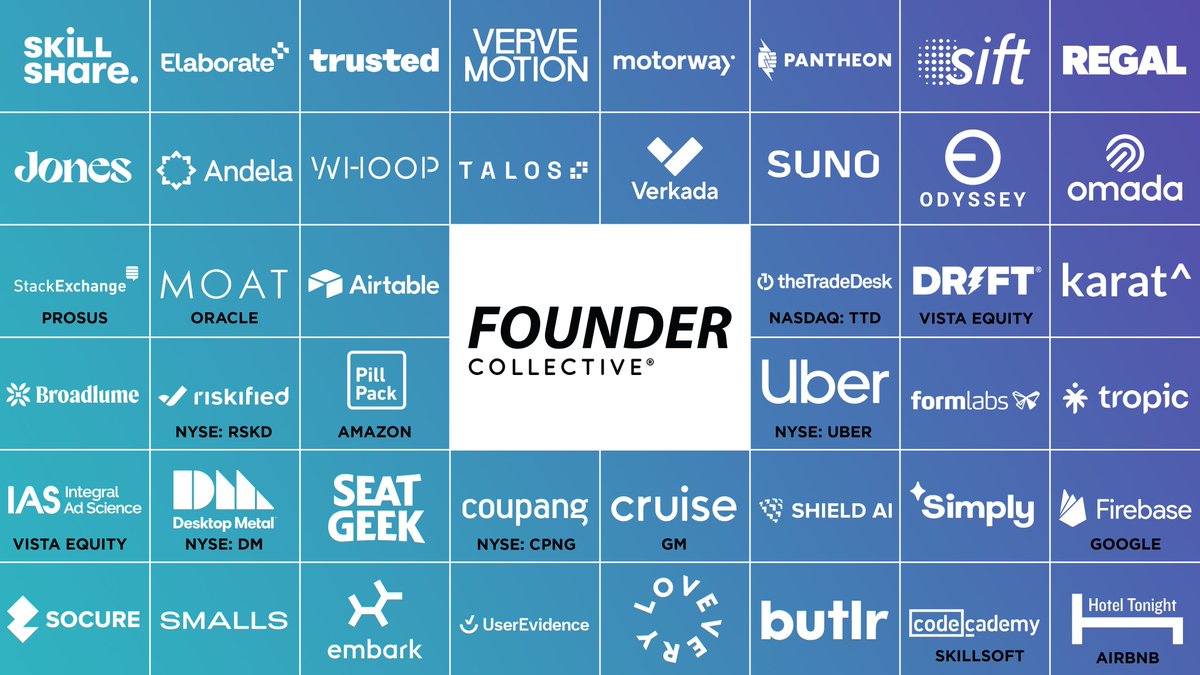
🚀 My Next Step: Joining Founder Collective After a decade of building and scaling startups, I’m excited to embark on my next chapter as a Principal at @fcollective in their NYC office. Every founder’s journey is unique, but they all share the same highs, lows, and hard-won lessons. My hope is to partner with great founders and be the investor I would have wanted during my own journey—someone who can help navigate challenges, validate bold ideas, and build lasting companies. As I step into this role, I want to share a few lessons that have shaped my approach to building—and now investing. ✂️ Measure Twice, Cut Once Early in my career as a software engineer, I fell into the classic trap of building first and asking questions later. I’d spend weeks crafting a product, only to watch it gather dust. Over time, I realized that great products don’t come from raw creativity—they come from deeply understanding the customer and their problem. Building a business isn’t about manifesting markets into existence—it’s about uncovering a real insight and executing against it with relentless focus. 🧪 Building a Business is a Series of Experiments At Petal, my first venture-backed startup, we operated in a regulated industry where “move fast and break things” wasn’t an option. We handled personal financial records, payments, and loans, all under the watchful eye of regulators and banking partners. What I learned was that speed—one of a startup’s greatest advantages—comes not from rushing, but from disciplined experimentation. Startups are a series of experiments, and the fastest way to win is to shorten the feedback loop. Quick validation prevents wasted effort and keeps you on the path to progress. 👓 Great Talent Creates Focus As a first-time founder, I tried to do it all—and for a while, I could. But as a startup scales, complexity multiplies, and focus becomes your most precious resource. I learned that hiring great talent isn’t just about skills; it’s about trust. When you bring on people you respect and empower them to own decisions, you free yourself to focus on what truly matters. For me, building that trust was one of the hardest and most rewarding parts of leadership. It’s also one of the most critical lessons I bring to my work with founders: you can’t scale yourself, but you can scale a great team. 🏭 Invention in a Legacy Industry At Modern Life, my second venture-backed startup, we worked to modernize life insurance distribution—a space steeped in myriad legacy processes. One of the most humbling lessons I’ve learned is that as a founder entering a mature industry, it’s easy to assume incumbents are slow or stuck in old ways—a classic example of the Dunning-Kruger effect at play. But the more you learn, the more you realize many systems exist for good reasons. Understanding the history and context of an industry is critical to identifying opportunities for meaningful invention—and to charting a course for the future. Now having spent over a decade building, I hope I can help founders connect dots and avoid obvious pitfalls. 🧠 Navigating Complexity At Petal, I experienced the challenges of scaling firsthand, growing from a 9x9-foot room with my cofounders to a 200-person organization. Each new hire added complexity, making alignment and focus critical. At Modern Life, we unified product, design, and engineering (PDE) into a single team to ensure shared goals and that we move quickly in product development. The trade-off was deprioritizing foundational work like tech debt, which we consciously accepted to focus on product-market fit. Scaling isn’t just about hiring—it’s about designing systems that handle complexity without losing agility. 🌅 We’re Entering a New Era, and I Couldn’t Be More Excited We’re at the beginning of a new S-curve. Advances in AI are transforming industries, creating opportunities for startups to challenge incumbents and build entirely new markets. It reminds me of the 2010s, when cloud providers and digital distribution channels like Facebook ads unlocked enormous potential for startups. Each new era brings a wave of companies that capitalize on emerging technologies in ways incumbents can’t, often due to counter-positioning. Startups can move faster and take risks incumbents can’t afford, carving out defensible positions in uncharted territory. Over the past few years, I’ve had the privilege of investing in and advising founders on their journeys. It’s been a deeply rewarding experience—both as a way to share lessons I’ve learned and to learn from other great founders about the art of company building. Having built from the ground up at Petal and Modern Life, I know how much a thoughtful, founder-first partner can mean during pivotal moments. I’m thrilled to now join the team at Founder Collective to help founders tackle big challenges and build the future—one experiment at a time.
Jack Arenas tweet media
English
3
3
37
8.9K
Jack Arenas retweetledi
Deedy
Deedy@deedydas·
The vibes in SF feel pretty frenetic right now. The divide in outcomes is the worst I've ever seen. Over the last 5yrs, a group of ~10k people - employees at Anthropic, OpenAI, xAI, Nvidia, Meta TBD, founders - have hit retirement wealth of well above $20M (back of the envelope AI estimation). Everyone outside that group feels like they can work their well-paying (but <$500k) job for their whole life and never get there. Worse yet, layoffs are in full swing. Many software engineers feel like their life's skill is no longer useful. The day to day role of most jobs has changed overnight with AI. As a result, 1. The corporate ladder looks like the wrong building to climb. Everyone's trying to align with a new set of career "paths": should I be a founder? Is it too late to join Anthropic / OpenAI? should I get into AI? what company stock will 10x next? People are demanding higher salaries and switching jobs more and more. 2. There’s a deep malaise about work (and its future). Why even work at all for “peanuts”? Will my job even exist in a few years? Many feel helpless. You hear the “permanent underclass” conversation a lot, esp from young people. It's hard to focus on doing good work when you think "man, if I joined Anthropic 2yrs ago, I could retire" 3. The mid to late middle managers feel paralyzed. Many have families and don't feel like they have the energy or network to just "start a company". They don't particularly have any AI skills. They see the writing on the wall: middle management is being hollowed out in many companies. 4. The rich aren’t particularly happy either. No one is shedding tears for them (and rightfully so). But those who have "made it" experience a profound lack of purpose too. Some have gone from <$150k to >$50M in a few years with no ramp. It flips your life plans upside down. For some, comparison is the thief of joy. For some, they escape to NYC to "live life". For others still, they start companies "just cuz", often to win status points. They never imagined that by age 30, they'd be set. I once asked a post-economic founder friend why they didn't just sell the co and they said "and do what? right now, everyone wants to talk to me. if i sell, I will only have money." I understand that many reading this scoff at the champagne problems of the valley. Society is warped in this tech bubble. What is often well-off anywhere else in the world is bang average here. Unlike many other places, tenure, intelligence and hard work can be loosely correlated with outcomes in the Bay. Living through a societally transformative gold rush in that environment can be paralyzing. "Am I in the right place? Should I move? Is there time still left? Am I gonna make it?" It psychologically torments many who have moved here in search of "success". Ironically, a frequent side effect of this torment is to spin up the very products making everyone rich in hopes that you too can vibecode your path to economic enlightenment.
English
1.2K
1.3K
16.5K
13.2M
Jack Arenas retweetledi
Mitchell Hashimoto
Mitchell Hashimoto@mitchellh·
I strongly believe there are entire companies right now under heavy AI psychosis and its impossible to have rational conversations about it with them. I can't name any specific people because they include personal friends I deeply respect, but I worry about how this plays out. I lived through the great MTBF vs MTTR (mean-time-between-failure vs. mean-time-to-recovery) reckoning of infrastructure during the transition to cloud and cloud automation. All those arguments are rearing their ugly heads again but now its... the whole software development industry (maybe the whole world, really). It's frightening, because the psychosis folks operate under an almost absolute "MTTR is all you need" mentality: "its fine to ship bugs because the agents will fix them so quickly and at a scale humans can't do!" We learned in infrastructure that MTTR is great but you can't yeet resilient systems entirely. The main issue is I don't even know how to bring this up to people I know personally, because bringing this topic up leads to immediately dismissals like "no no, it has full test coverage" or "bug reports are going down" or something, which just don't paint the whole picture. We already learned this lesson once in infrastructure: you can automate yourself into a very resilient catastrophe machine. Systems can appear healthy by local metrics while globally becoming incomprehensible. Bug reports can go down while latent risk explodes. Test coverage can rise while semantic understanding falls. Changes happens so fast that nobody notices the underlying architecture decaying. I worry.
English
514
1.9K
15.3K
1.6M
Jack Arenas
Jack Arenas@jackarenas·
@haileyhmt Have helped a few folks with O1s and similar, think the unspoken truth is that figuring out your visa situation prior to fundraising is quite important. It’s nothing against you, it just adds complexity that puts the company at risk in a way venture isn’t willing to underwrite.
English
0
0
3
663
hailey
hailey@haileyhmt·
rejected by a16z speedrun officially - citizenship asked during 1) initial application, 2) pre interview form, 3) follow up email, and 4) reconfirmed again in the final 10 min interview together with visa status - hongkongese, no visa, delware corp without china/hong kong business - told: “you’re solo founder and due to political change, we cannot fund it, but we like u/ur video” not sure if this is related to broader us-china tensions, or things like reports of china blocking the manus meta deal, but as a hongkongese faced political dramas in hong kong & just trying to build a career in the us, i unfortunately seem to be caught in the middle
hailey tweet media
English
65
6
437
57.1K
Jack Arenas
Jack Arenas@jackarenas·
@njess Agree - and honestly today probably less than 5% of tokens are creating value.
English
0
0
0
55
Hadley Harris
Hadley Harris@Hadley·
I’m just a lowly seed investor, but I don’t get Cursor at $50B. Every frontier dev I know has moved off Cursor and off IDEs entirely. Only laggards are still on it. And dev tools always move from thought leaders to laggards, never the reverse.
English
131
5
328
101.6K
Jack Arenas
Jack Arenas@jackarenas·
Hard disagree. This sounds like 2021 logic. "Pay $60M post because the signal is high"... the signal is that tier-1s FOMO'd the same deal. That's a cascade, not underwriting. Get in at $100M post, $1B exit, eat the dilution, congrats, sub-10x on your blue chip. And "these are real, underwriteable assets with identifiable paths to scale" is a wild sentence for seed. Even YC would admit the breakout companies aren't the ones leading the pack in their batch. Legibility at seed is a story we tell after the fact. Bookmark this and set a reminder for 2028. There will be many bodies. Companies that mega raise out of the gate are no more likely to succeed.
English
0
0
0
221
Jack Arenas retweetledi
doomer
doomer@uncledoomer·
guys im beginning to think theres a bubble
doomer tweet media
English
319
1.2K
19.9K
1.1M
Jared Zoneraich
Jared Zoneraich@imjaredz·
And the first episode of our ai/baking series is out! Move Fast & Bake Things.. where we bake cupcakes while talking about AI Kicking it off with my old friend @rickyrobinett. One of the real OGs of DevEx and now running developer relations at Google Cloud. Before that he ran developer community at Cloudflare and before that Twilio for about a decade. We've known each other since I was a high schooler going to hackathons. I threw together a Gemini recipe for cupcakes (of course) and we talked about the rebirth of hacker culture why his 9-year-old went from Cursor to Vim, and what it actually means to be a builder now. 0:00 – Intro & the Gemini cupcake recipe 3:02 – The hackathon boom and what's changed in 10 years 5:37 – Ricky's daughter went from Cursor to Vim at age 7 12:00 – What is a developer anymore? 13:15 – The irreducible kernel of building 19:06 – The halting problem as a weapon against your boss 22:10 – Anti-gravity browser testing 30:34 – How do you convince an AI skeptic? 35:38 – Are non-AI coders already left behind? 37:02 – From REST APIs to MCP 49:22 – Startup Bus throwback 53:52 – DevRel has always been the same two things 57:15 – Google AI Studio, Gemini CLI, and how Ricky actually works
English
15
9
50
4.8K
Jack Arenas
Jack Arenas@jackarenas·
@BillAckman @X Agree. You have the resources to set an example. Sadly, not all of us do. Fight the good fight ✊ What a grift.
English
0
0
1
223
Bill Ackman
Bill Ackman@BillAckman·
I am reaching out to the @X community for advice with the likely risk of sharing TMI. I have been sufficiently upset about the whole matter that I have lost sleep thinking about it and I am hoping that this post will enable me to get this matter off my chest. By way of background, I started a family office called TABLE about 15 years ago and hired a friend who had previously managed a family office, and years earlier, had been my personal accountant. She is someone that I trusted implicitly and consider to be a good person. The office started small, but over the last decade, the number of personnel and the cost of the office grew massively. The growth was entirely on the operational side as the investment team has remained tiny. While my investment portfolio grew substantially, the investments I had made were almost entirely passive and TABLE simply needed to account for them and meet capital calls as they came in. While TABLE purchased additional software and other systems that were supposed to improve productivity, the team kept increasing in size at a rapid rate, and the expenses continued to grow even faster. While I would periodically question the growing expenses and high staff turnover, I stayed uninvolved with the office other than a once-a-year meeting when I briefly reviewed the operations and the financials and determined bonus compensation for the President and the CFO. I spent no time with any of the other employees or the operations. The whole idea behind TABLE was that it would handle everything other than my day job so that I would have more time for my job and my family. Over the last six years, expenses ballooned even further, employee turnover accelerated, and I became concerned that all was not well at TABLE. It was time for me to take a look at what was going on. Nearly four years ago, I recruited my nephew who had recently graduated from Harvard and put him to work at Bremont, a British watchmaker, one of my only active personal investments to figure out the issues at the company and ultimately assist in executing a turnaround. He did a superb job. When he returned from the UK late last year after a few years at Bremont, I asked him to help me figure out what was going on with TABLE. When I explained to TABLE’s president what he would be doing, she became incredibly defensive, which naturally made me more concerned. My nephew went to work by first meeting with each employee to understand their roles at the company and to learn from them what ideas they had on how things could be improved. He got an earful. Our first step in helping to turn around TABLE was a reduction in force including the president and about a third of the team, retaining excellent talent that had been desperate for new leadership. Now here is where I need your advice. All but one of the employees who were terminated acted professionally and were gracious on the way out (excluding the president who had a notice period in her contract, is currently still being paid, and with whom I have not yet had a discussion). The highest compensated terminated employee other than the president, an in-house lawyer (let’s call her Ronda), told us that three months of severance was not enough and demanded two years’ severance despite having worked at the company for only two and one half years. When I learned of Ronda's request for severance, I offered to speak with her to understand what she was thinking, but she refused to do so. A few days ago, we received a threatening letter from a Silicon Valley law firm. In the letter, Ronda’s counsel suggests that her termination is part of longstanding issues of ‘harassment and gender discrimination’ – an interesting claim in light of the fact that Ronda was in charge of workplace compliance – and that her termination was due to: “unlawful, retaliatory, and harmful conduct directed towards her. Both [Ronda] and I [Ronda’s lawyer] have spoken with you about [Ronda’s] view of what a reasonable resolution would include given the circumstances. Thus far, TABLE has refused to provide any substantive response. This letter provides the last opportunity to reach a satisfactory agreement. If we cannot do so, [Ronda] will seek all appropriate relief in a court of competent jurisdiction.” The letter goes on to explain the basis for the “unsafe work environment” claim at TABLE: “In early 2026, Pershing Square’s founder Bill Ackman installed his nephew in an unidentified role at TABLE, Ackman’s family office. [His nephew]—whose only work experience had been for TABLE where he was seconded abroad for the last four years to a UK watch company held by Ackman—began appearing at TABLE’s offices and conducting interviews of employees without a clear explanation of his role or the purposes of these interviews. During this period, he made a series of inappropriate and genderbased [sic] comments to multiple employees that created an unsafe work environment. Among other things, [his nephew] made remarks about female employees’ ages (“Tell me you are nowhere near 40”), physical appearance (“Your body does not look like you have kids”), as well as intrusive questions about family planning and sexual orientation (“Who carried your son? Who will carry your next child?”). These incidents were reported to senior leadership at TABLE and Pershing Square. Rather than being addressed appropriately, the response from senior management reflected, at best, willful blindness to the inappropriateness of [his nephew]’s remarks and, at worst, tacit endorsement.” The above allegations about my nephew had previously been brought to my attention by TABLE’s president when they occurred. When I learned of them, I told the president that I would speak to him directly and encouraged her to arrange for him to get workplace sensitivity training. The president assured me that she would do so. When I spoke to my nephew, he explained what he actually had said and how his actual remarks had been received, not at all as alleged in the legal letter from Ronda’s counsel. I have also spoken to others at the lunch table who confirmed his description of the facts. In any case, he meant no harm, was simply trying to build rapport with other employees, and no one, as far as I understand, was offended. Ironically, Ronda claims in her legal letter that TABLE didn’t take HR compliance seriously, yet Ronda was in charge of HR compliance at TABLE and the person who gave my nephew his workplace sensitivity training after the alleged incidents. In any case, Ronda, as head of compliance, should have kept a record or raised an alarm if indeed there was pervasive harassment or other such problems at the company, and there is no evidence whatsoever that this is true. So why does Ronda believe she can get me to pay her nearly $2 million, i.e., two years of severance, nearly one year of severance for each of her years at the company? Well, here is where some more background would be helpful. Over the last two months, I have been consumed with a major family medical issue – one of my older daughters had a massive brain hemorrhage on February 5th and has since been making progress on her recovery – and I am in the midst of a major transaction for my company which I am executing from a hospital room office next to her . While the latter business matter is publicly known, the details of my daughter’s situation are only known to Ronda because of her role at our family office. Now, let’s get back to the subject at hand. Unfortunately, while New York and many other states have employment-at-will, there has emerged an industry of lawyers who make a living from bringing fake gender, race, LGBTQ and other discrimination employment claims in order to extract larger severance payments for terminated employees, and it needs to stop. The fake claim system succeeds because it costs little to have a lawyer send a threatening letter and nearly all of the lawyers in this field work on contingency so there is no or minimal cash cost to bring a claim. And inevitably, nearly 100% of these claims are settled because the public relations and legal costs of defending them exceed the dollar cost of the settlement. The claims are nearly always settled with a confidentiality agreement where the employee who asserts the fake claims remains anonymous and as a result, there is no reputational cost to bringing false claims. The consequences of this sleazy system (let’s call it ‘the System’) are the increased costs of doing business which is a tax on the economy and society. There are other more serious problems due to the System. Unfortunately, the existence of an industry of plaintiff firms and terminated employees willing to make these claims makes it riskier for companies to hire employees from a protected class, i.e., LGBTQ, seniors, women, people of color etc. because it is that much more reputationally damaging and expensive to be accused of racism, sexism, and/or intolerance for sexual diversity than for firing a white male as juries generally have less sympathy for white males. The System therefore increases the risk of discrimination rather than reducing it, and the people bringing these fake claims are thereby causing enormous harm to the other members of these protected classes. So what happened here? Ronda was vastly overpaid and overqualified for the job that she did at TABLE. She was paid $1.05 million plus benefits last year for her work which was largely comprised of filling out subscription agreements and overseeing an outside law firm on closing passive investments in funds and in private and venture stage companies, some compliance work, and managing the office move from one office to another. She had a very good gig as she was highly paid, only had to go into the office three days a week, and could work from anywhere during the summer. Once my nephew showed up and started to investigate what was going on, she likely concluded that there was a reasonable possibility she would be terminated, as her job was in the too-easy-and-to-good-to-be-true category. The problem was that she was not in a protected class due to her race, age or sexual identity so she had to construct the basis for a claim. While she is female and could in theory bring a gender-based discrimination claim, she reported to the president who is female and to whom she is very close, which makes it difficult for her to bring a harassment claim against her former boss. When my nephew complimented a TABLE employee at lunch about how young she looked – in response to saying she was going to her 40-year-old sister’s birthday party, he said ‘she must be your older sister’ – Ronda immediately reported it to our external HR lawyer. She thereby began building her case. The other problem for Ronda bringing a claim is that she was terminated alongside 30% of other TABLE employees as part of a restructuring so it is very difficult for her to say that she was targeted in her termination or was retaliated against. TABLE is now hiring an external fractional general counsel as that is all the company needs to process the relatively limited amount of legal work we do internally. In short, Ronda was eminently qualified and capable and did her job. She was just too much horsepower for what is largely an administrative legal role so she had to come up with something else to bring a claim. Now Ronda knew I was a good target and it was a good time to bring a claim against me. She also knew that I was under a lot of pressure because on March 4th when Ronda was terminated, my daughter had not yet emerged from consciousness, she was not yet breathing on her own, and my daughter and we were fighting for her life. I was and remain deeply engaged in her recovery while at the same time I was working on finishing the closing for the private placement round for my upcoming IPO. Ronda also knew that publicity about supposed gender discrimination and a “hostile and unsafe work environment” are not things that a CEO of a company about to go public wants to have released into the media. And she may have thought that the nearly $2 million she was asking for would be considered small in the context of the reputational damage a lawsuit could cause, regardless of the fact that two years of severance was an absurd amount for an employee who had only worked at TABLE for 30 months. She also likely considered that I wouldn’t want to embarrass my nephew by dragging him into the klieg lights when her claims emerged publicly. So, in summary, game theory would say that I would certainly settle this case, for why would I risk negative publicity at a time when I was preparing our company to go public and also risk embarrassing my nephew. Notably, she hired a Silicon Valley law firm, rather than a typical NY employment firm. This struck me as interesting as her husband works for one of the most prominent Silicon Valley venture firms whose CEO, I am sure, has no tolerance for these kinds of fake claims that sadly many venture-backed companies also have to deal with. I mention this as I suspect her husband likely has been working with her on the strategy for squeezing me as, in addition to being a computer scientist, he is a game theorist. My only advice for him is to understand more about your opponent before you launch your first move. All of the above said, gender, race, LGBTQ and other such discrimination is a real thing. Many people have been harmed and deserve compensation for this discrimination, and these companies and individuals should be punished for engaging in such behavior. Which brings me to the advice I am seeking from the X community. I am not planning to follow the typical path and settle this ‘claim.’ Rather, I am going to fight this nonsense to the end of the earth in the hope that it inspires other CEOs to do the same so we shut down this despicable behavior that is a large tax on society, employment, and the economy and contributes to workplace discrimination rather than reducing it. Do you agree or disagree that this is the right approach?
English
10.7K
1.4K
24K
11.1M
Jack Arenas
Jack Arenas@jackarenas·
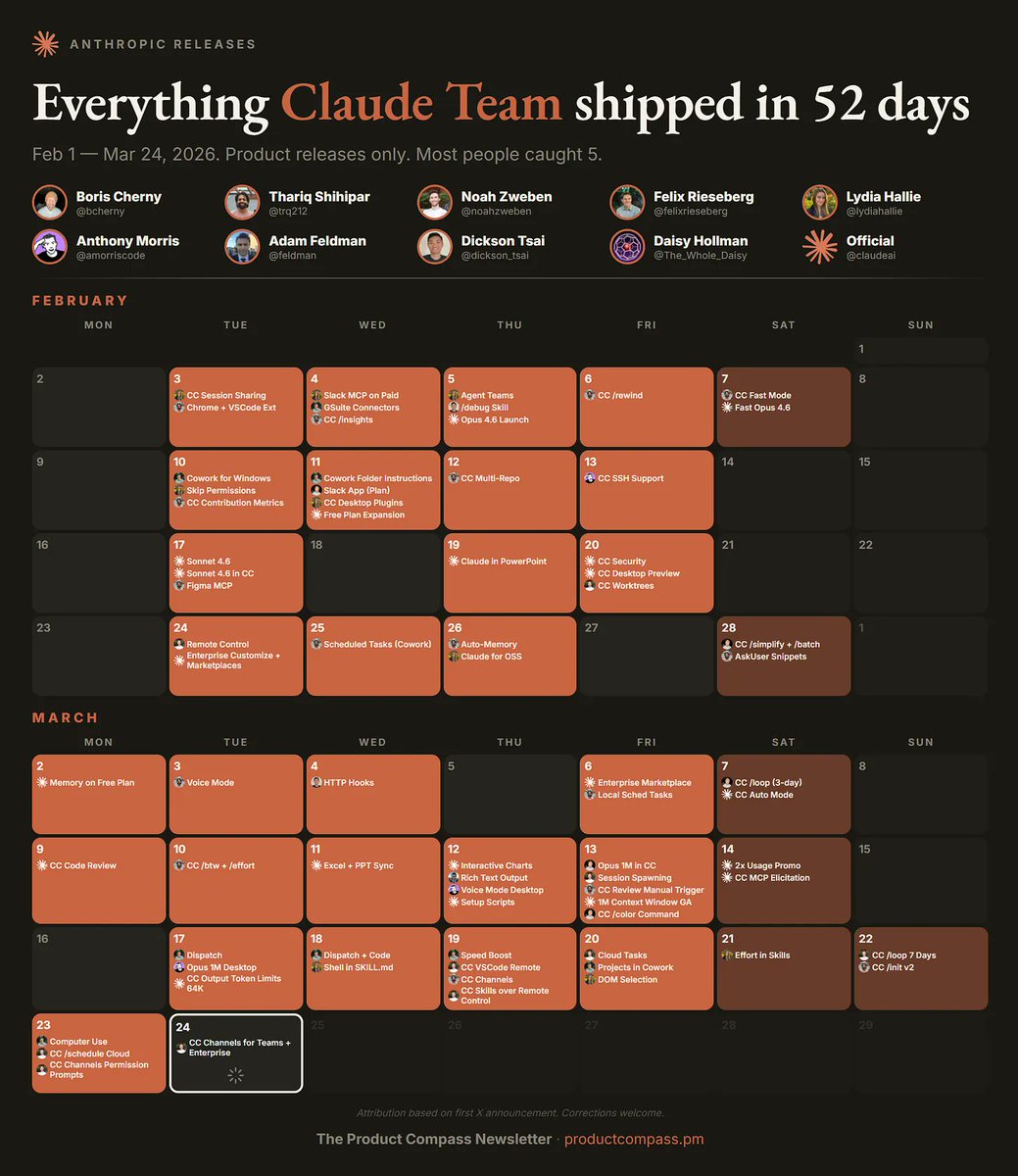
AI may have made services businesses more sexy than SaaS. SaaS puts the burden of keeping up on the customer. Services businesses keep that burden in-house. Instead of selling something that helps accomplish X, the services business can just accomplish X. Anthropic shipped 74 product releases in 52 days (thanks Paweł Huryn for the visualization). The most cracked engineers I know who use Claude Code daily aren't fully up to speed. Now imagine you're selling AI-powered SaaS to a mid-market insurance company and expecting them to keep pace with monthly releases. Good luck. When you're a tech-enabled service, you control the labor using the product. Sounds authoritarian but it's just true, you have far more control when you employ someone than when you sell to someone. You can retrain your team overnight. You can swap in a new model Tuesday, and your whole operation is running on it Wednesday. The customer never sees the changelog that usually goes to spam anyway. AI moving this quickly makes SaaS adoption a nightmare, and it's what makes services businesses more capable every single week. I may be indoctrinated.
Jack Arenas tweet media
English
0
0
1
87
Jack Arenas retweetledi
Zhengyao Jiang
Zhengyao Jiang@zhengyaojiang·
Your autoresearch needs its own Weights & Biases. We’ve turned Weco into an observability tool that lets you monitor, analyze, and share autoresearch runs. Here's what it can do: 🧵(1/4)
English
21
60
668
39.7K
Jack Arenas
Jack Arenas@jackarenas·
One Battle After Another was horrible. Couldn’t finish it. Tropish social commentary.
English
0
0
0
47
Jack Arenas
Jack Arenas@jackarenas·
Window seat passengers who stand up immediately when the seatbelt sign turns off and flood the aisle… why are you like this
English
0
0
2
51
Jack Arenas
Jack Arenas@jackarenas·
Lloyd Blankfein's incredible answer to a hypothetical. Can't wait to read Streetwise. Q. When you think back on the crisis, all the vampire squid stuff and all the criticism that was heaped on the company, is there something you wish you had done differently?” A. … If I had had perfect knowledge, I would have gone out and shorted every security instead of being flat.
English
0
0
0
84
Jack Arenas
Jack Arenas@jackarenas·
Free soloing when you have a family is selfish. Full stop. Being the GOAT doesn’t change that.
English
0
0
3
91
Jack Arenas
Jack Arenas@jackarenas·
@mitch_troy Finally someone *erm* something will read them!! Writing docs used to suck because they were so rarely used. Skills makes docs useful!
English
0
0
2
109
Mitchell Troyanovsky
Mitchell Troyanovsky@mitch_troy·
Making devs finally write docs by calling them “skills” is a great arb
English
61
252
3.8K
186.6K
Jack Arenas
Jack Arenas@jackarenas·
@lessin Technological determinism baby. Have you read Ellul's Technological Society? Think you'd enjoy if you haven't!
English
0
0
0
5
sam lessin 🏴‍☠️
Society is downstream of tech... including wealth compounding / leverage and panopticon enabled wealth taxes on illiquid assets.
English
4
5
32
7.2K
Jack Arenas
Jack Arenas@jackarenas·
@jrkelly Great piece. Now that I'm at @fcollective and visit Boston often and have an 8 month old child, I'm understanding what makes Boston great.
English
1
0
5
501