James Mushore

682 posts

James Mushore banner
James Mushore

James Mushore

@james_mushore

Katılım Mayıs 2015
379 Takip Edilen2.7K Takipçiler
James Mushore
James Mushore@james_mushore·
@baba_nyenyedzi That megalomaniac, Gidiot Gono, has a lot to answer for! He single-handedly destroyed thousands of jobs and companies, created hyperinflation through currency printing and destroyed the economy.
English
4
0
10
537
Tinashe
Tinashe@baba_nyenyedzi·
The Godfather of Indigenous Banking and Entrepreneurship in Zimbabwe. Nicholas Vingirai is brilliant in every possible way and helped many Black entrepreneurs in Zimbabwe and across Africa. He is a legend and his story needs to be heard by every Zimbabwean. It is a classic case of just how extraordinary Zimbabwean talent was and how other nations often get the very best of us while, in our own country, some of the most talented entrepreneurs were stopped dead in their tracks. I went to Nigeria after its banking crisis of 2007 and marvelled at how they retained and rejuvenated their local banks, the same banks that are now spread across the continent. Yet Zimbabwean bankers were far ahead of their time. Were it not for the glitch that reversed everything, who knows where our great indigenous banks would be today? Nigeria learnt from its earlier mistakes of targeting entrepreneurs in the early 1990s and today it has a much better appreciation of what Black entrepreneurs can do. Mawere is gone, Strive remains in exile and Zimbabwe has still not fully defined, or given permission for, entrepreneurs to thrive again as they did in the 1990s before the abrupt stop in 2004.
English
17
33
144
17.4K
James Mushore
James Mushore@james_mushore·
@KingJayZim King Jay and @PeteVowles do yourselves a favour and try the steak pies at Pemcol Bakery, Ballantyne Park Shopping Centre when you are back in Harare.
English
0
0
3
251
King Jay🇿🇼
King Jay🇿🇼@KingJayZim·
#PiePatrol #OrientalPies #Bulawayo Pepper Steak Pie. Last year I reviewed the steak and kidney pie from Bulawayo’s iconic Oriental Pies on Ninth Avenue. That one caused a stir, especially from the Surrey Pie , Marondera fans.😆😆 Fast forward to Wednesday , I got my hands on their pepper steak pie. Missed the UK’s Ambassador to Zimbabwe, Pete “Samaita” Vowles,@PeteVowles by a whisker. Turns out he had just been there minutes before me, grabbing a few pies and chicken samoosas. 😅 Now, to the business at hand on behalf of @TeamFuloZim. This pie is packed, no guesswork required. From the first bite, you meet juicy, tender beef, well-seasoned , I’m thinking with crushed peppercorns doing most of the talking. It delivers exactly what it promises. No hunting around like that disappointing Pick 'n'Pay Northend; Bulawayo steak pie I had recently, where I needed three bites to find a lonely cube of beef. Here, every bite counts. No air pockets, no zero empty spaces, solid filling throughout. The pepper doesn’t rush you. It builds and hits the palate like an echo. Around the third bite, it settles in a gentle heat that lingers . It doesn't shout. Only drawback for me is the pastry. It’s a bit pale , "anaemic" and slightly doughy. It could use more browning and a touch of gloss to get that crisp, flaky finish , especially when you compare it to the Surrey Pie out in Marondera. At US$3, though, this is excellent value. Filling, full of flavour, and satisfying. Score: 8.5/10 . @TeamFuloZim #TheKingIsAround ##HappinessIsOurBusiness
Bulawayo, Zimbabwe 🇿🇼 English
31
31
238
20.3K
James Mushore retweetledi
Hopewell Chin’ono
Hopewell Chin’ono@daddyhope·
Let me tell you one more time, God does not do politics. Dragging God into politics is not faith, it is abdication. It is an insult to invoke the divine where human responsibility is required. Politics is the domain of human beings, of citizens, of institutions, of courage, of consequence. God does great things, not politics. God does not draft constitutions, God does not amend term limits, God does not rig systems, and God does not dismantle them. Human beings do. And it is human beings who must confront, resist, organise, and defend what is theirs. Stop outsourcing civic duty to heaven while surrendering your agency on earth. Power is confronted by people, not by prayers disguised as political strategy. There is no scripture that instructs people to vote, boycott voting, support political parties, or remain politically neutral. Those are modern civic constructs that emerged thousands of years after biblical texts were written. When people ask, “What does the Bible say about voting and politics?” they are often looking for divine endorsement of political passivity or political positions they are too afraid to articulate themselves. Faith is personal. Governance is civic. Voting, constitutions, laws, and political resistance are the responsibility of citizens, not scripture. So do not hide behind religion when confronted with political responsibility. The Bible will not vote for you. The Bible will not defend your constitution. Citizens must decide, act, and take responsibility for the societies they live in.
Hopewell Chin’ono tweet media
English
59
45
169
27.2K
James Mushore retweetledi
Hopewell Chin’ono
Hopewell Chin’ono@daddyhope·
You cannot fight the mutilation of a constitution through ambiguous language, and by failing to condemn the amendments. You simply cannot, unless you are a closet supporter of those amendments. It is just good old common sense.
Hopewell Chin’ono tweet media
English
78
63
335
26K
James Mushore retweetledi
Gandalv
Gandalv@Microinteracti1·
This video should unsettle anyone who takes the United States seriously as a nation. Because it exposes something dangerous: the trivialization of the world's most consequential office. It shows how carelessly the power, credibility, and accumulated moral authority of a superpower can be squandered for a few seconds of viral attention. In any other major democracy, this behavior from a head of state would trigger a constitutional crisis. Paris would burn. Berlin would convene emergency sessions. In the Nordic countries, resignation would follow within hours. Across functioning democracies, the public, institutions, and political class would recognize this for what it is: an assault on the dignity of the state itself. Leaders are not free to perform as entertainers without consequence. National honor is not personal property, it's held in trust. But the United States is not just another country with a provocateur in charge. It is the linchpin of global order. It maintains formal alliances and security guarantees with forty to fifty nations. It underwrites the financial architecture, trade systems, and diplomatic frameworks that billions of people depend on daily. When the American president speaks—or posts—it doesn't land as satire, meme, or personal whim. It reads as a signal about what the country is becoming. American power has never relied solely on carrier strike groups or economic output. It has rested on something more fragile and more valuable: trust. The belief that beneath domestic turbulence lies institutional seriousness, predictability, and a baseline commitment to dignity. That belief is now disintegrating in real time. Millions of American companies operate globally. They negotiate multibillion-dollar contracts in environments where reputation is currency. Boardrooms in Frankfurt, Singapore, and Dubai aren't debating whether a post was clever—they're asking whether the United States remains a reliable partner. Whether agreements signed today will be honored tomorrow. Whether American leadership has devolved from institutional to purely theatrical. Consider tourism, which sustains millions of American jobs—airlines, hotels, restaurants, museums, entire regional economies. Soft power isn't an abstraction. It materializes in flight bookings, conference locations, study-abroad programs, and decades of accumulated goodwill. A quiet, decentralized boycott doesn't require government action—only a collective sense that a nation no longer respects itself. Now picture this image being studied by foreign ministers, central bank governors, defense strategists, and sovereign wealth fund managers. Picture them asking a coldly rational question: How do we write binding thirty-year agreements with a country whose public face will be this, relentlessly, for years to come? How do we plan for the long term when the tone is impulsive, mocking, and unbound by the gravity of office? This is where the real calculus begins. Trillions in foreign capital depend on confidence that America is stable, credible, and rule-governed. That confidence is now being traded for what, exactly? Applause from an online mob? A dopamine rush from manufactured outrage? Content designed to dominate the news cycle rather than serve the national interest? Every serious nation eventually confronts this choice: burn long-term credibility for short-term spectacle, or safeguard the reputation previous generations bled to build. The United States spent eighty years constructing an image of reliability, restraint, and leadership under pressure. That image wasn't born from perfection—it came from a visible commitment to standards that transcended impulse. This isn't a partisan issue. Europeans who value democratic norms recognize something ominously familiar here. Americans—Democrat and Republican alike—who believe in responsibility and restraint should see it too. Power attracts scrutiny. Leadership demands discipline. A superpower cannot behave like a reality TV contestant without paying a price. The presidency is not a personal broadcast channel. It's a symbol carried on behalf of 330 million people and countless international partners who never voted but whose lives are shaped by American decisions anyway. Every post either reinforces or erodes the idea that America can be counted on when it matters most. So the question is no longer whether this is offensive. The question is whether this is who America chooses to be: a nation that trades a century of hard-won reputation for viral moments. A country that replaces statecraft with content creation. A republic governed like a season of reality television. History offers a harsh lesson here. Great powers don't fall because enemies mock them. They collapse when they begin mocking themselves—publicly, proudly, and without grasping the cost until it's far too late. Stay connected, Follow Gandalv @Microinteracti1
English
3.1K
7.8K
27.5K
3.2M
James Mushore retweetledi
Tawanda Nyambirai
Tawanda Nyambirai@tawandan1·
How can any shareholder in Econet Wireless Zimbabwe Limited reasonably oppose a proposal for the company to move to Over-the-Counter trading, with: •a reserve price benchmarked against regional telecommunications peers, and •a company commitment to buy back up to 10% of its issued shares annually? Let’s be clear: delisting does not mean Econet becomes a private company. The company will remain public — just unlisted. Shareholders will still: •receive published financial statements, •be required to approve major corporate actions, and •enjoy full minority protections against oppressive or unfair conduct. These rights do not disappear simply because a company moves off a formal exchange. Please don’t be misled by commentary from those who do not understand basic corporate law. This proposal strengthens shareholder value and liquidity — it does not weaken shareholder protections.
English
63
57
540
253.9K
Massimo
Massimo@Rainmaker1973·
12 ft crocodile nicknamed Hannibal at the Miami zoo exhibit.
English
3
5
59
15.8K
James Mushore retweetledi
Fadzayi Mahere🇿🇼
Fadzayi Mahere🇿🇼@advocatemahere·
🔸Joining Zanu is your Constitutional right but usatiite mafuza. We don’t expect that from munhu akadzidza. Pamairova ma analysis hanty maishandisa chikoro? What changed? Give us a scholarly perspective not this Dhanyero-Sauro gobbledygook. Do principles of Economics change cause wavhizitira John I? Imika? We need new leaders.🇿🇼
English
68
174
992
76.4K
James Mushore retweetledi
⭕️Faerie ❤️
⭕️Faerie ❤️@LiquidFaerie·
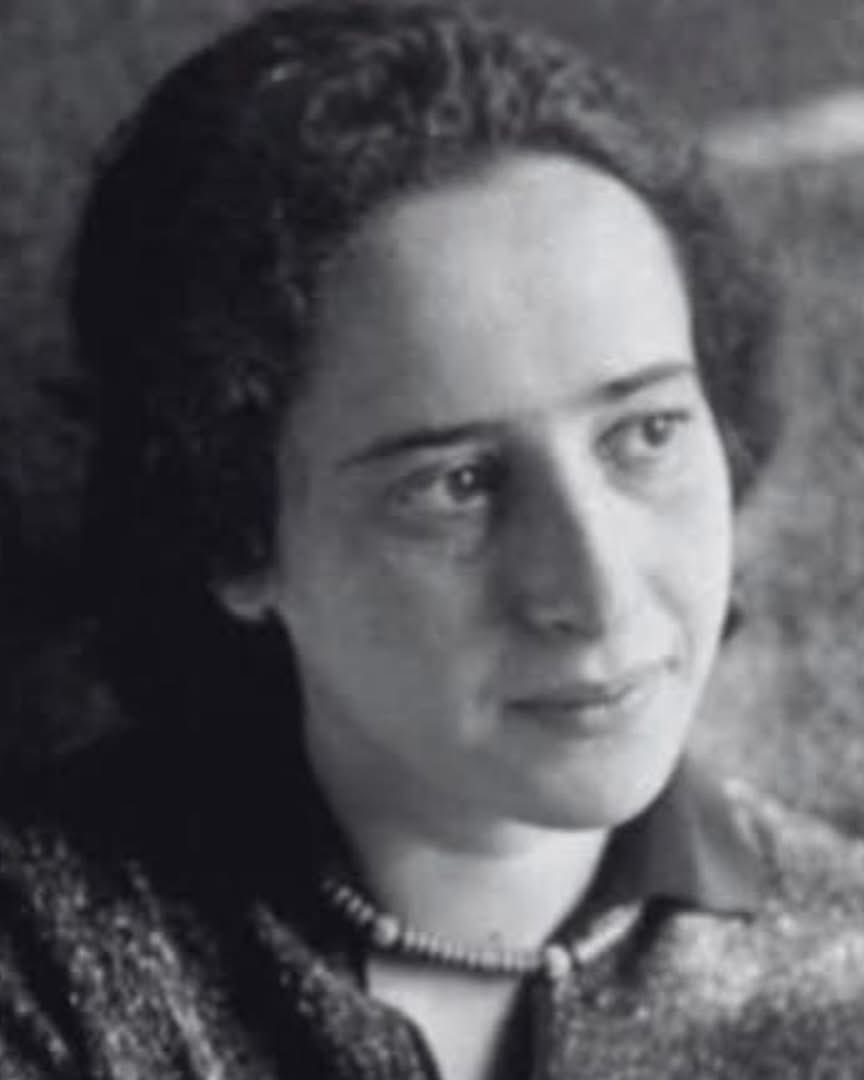
Hannah Arendt’s life and ideas offer a profound warning about the fragility of truth in the face of tyranny. Born in 1906 in Hanover, Germany, to a secular Jewish family, she lost her father at the age of seven and was raised by her mother in an environment of intellectual freedom. She pursued philosophy, studying under Martin Heidegger and Karl Jaspers, and emerged as a brilliant thinker. Yet her Jewish identity placed her in peril when the Nazis rose to power in 1933. In that year, Arendt was arrested by the Gestapo in Berlin for conducting illegal research into antisemitism, gathering evidence for a Zionist organisation. She spent several days in a Gestapo cell before being released, likely due to a sympathetic officer. She fled Germany immediately, first to Prague and then to Paris. When France fell to the Nazis in 1940, she was interned as an enemy alien in the camp at Gurs. She escaped and, with the help of networks including Varian Fry, made her way across the Pyrenees to Spain and Portugal. In 1941 she arrived in New York, a refugee with little more than her life and her urgent questions about how a cultured nation could descend into barbarism. These experiences shaped Arendt’s lifelong project. She spent decades examining how ordinary people participate in evil, how truth is eroded, and how resistance remains possible. Her seminal work, The Origins of Totalitarianism (1951), analysed Nazi Germany and Stalinist Russia as systems that destroyed not only lives but reality itself. She argued that the ideal subject of totalitarian rule was not the fervent believer but those for whom the distinction between fact and fiction, true and false, no longer exists. Totalitarianism thrives on relentless lying, not to persuade but to overwhelm, leaving people cynical and paralysed, unable to judge or act. Arendt’s most controversial insight came from covering the 1961 trial of Adolf Eichmann in Jerusalem for The New Yorker. Eichmann, a key organiser of the Holocaust, appeared not as a monster but as a banal bureaucrat, driven by careerism and obedience rather than hatred. She described this as “the banality of evil”: most evil is done by people who never decide to be good or evil, who stop thinking and surrender judgement to authority. In a 1973 interview with French journalist Roger Errera, amid the Watergate scandal, Arendt observed that constant lying erodes belief itself. If everyone lies, people stop believing anything, losing their capacity to think and act. A population thus deprived can be manipulated at will. Yet Arendt refused despair. In Men in Dark Times (1968), she celebrated individuals who, in oppressive eras, offered illumination through courage and integrity. She emphasised “natality”, the human capacity for new beginnings inherent in every birth. No system can fully extinguish the potential for spontaneous action and resistance. Arendt died on 4 December 1975 in New York, aged 69, from a heart attack while working at her desk. Her unfinished manuscript on judging was left mid-sentence, a fitting end for a thinker who lived by questioning. Her warnings resonate today, in an era of disinformation and authoritarian tendencies. The real danger is not the dictator alone but the erosion of truth, when ordinary people grow exhausted or cynical and cease to distinguish fact from fiction. Arendt’s antidote is simple yet demanding: think for yourself, preserve judgement, and kindle small lights of truth. Every act of resistance begins with refusing to surrender thought.
⭕️Faerie ❤️ tweet media
English
17
304
731
21K
James Mushore retweetledi
Chipo Dendere
Chipo Dendere@drDendere·
What I hate about what zanu has done to young people is this - their own children have dreams, they are studying abroad, starting businesses, becoming someone. - your children are making party slogans …their dreams? Reduced to the next round of handouts. No education or skills
Top Soup 4ED@topsoup4ed

Are you a Top Soup, and have you registered yet? Check the contact info in the bio and text ‘Link’ to be added to the group.

English
42
104
628
37.7K
James Mushore retweetledi
Keira Connolly
Keira Connolly@keira_con·
Wise words “My name’s Frank. I’m 64, a retired electrician. Forty-two years I spent running wires through houses, fixing breakers, making sure people had light in their kitchens and heat in their winters. Never once did anyone ask me where I went to college. Mostly, they just wanted to know if I could get the power back on before their ice cream melted. Last May, I was at my granddaughter Emily’s school career day. You know the drill — doctors, lawyers, a software guy in a slick suit talking about “scaling startups.” I was the only one there with a tool belt and work boots. When it was my turn, I told the kids, “I don’t have a degree. I’ve never sat in a lecture hall. But I’ve wired schools, hospitals, and your principal’s house. And when the hospital generator failed during a snowstorm in ’98, I was the one in the basement with a flashlight, keeping the lights on for newborn babies upstairs.” The kids leaned forward. They had questions — real ones. “How do you fix stuff in the dark?” “Do you make a lot of money?” “Do you ever get zapped?” (Yes, once, and it’ll curl your hair.) When the bell rang, one boy hung back. Small kid, freckles, hoodie too big for him. He mumbled, “My uncle’s a plumber. People laugh at him ’cause he didn’t finish high school. But… he’s the only one in the family who can fix anything.” I looked that boy in the eye and said, “Kid, your uncle’s a hero. When your toilet overflows at midnight, Harvard ain’t sending anyone. A plumber is.” Here’s the thing nobody told me when I was young — the world doesn’t run without tradespeople. You can have all the engineers you want, but if nobody builds the house, wires the power, or lays the pipes, those blueprints just sit in a drawer. We’ve made it sound like trades are what you do if you can’t go to college, instead of a path you choose because you like working with your hands, solving problems, and seeing your work stand solid for decades. Four years after high school, some kids walk away with diplomas. Others walk away with zero debt, a union card, and a skill they can take anywhere in the world. And guess what? When your furnace dies in January, it’s not the diploma that saves you. A few weeks ago, that same freckled kid’s mom stopped me at the grocery store. She said, “You probably don’t remember, but you told my son trades are important. He’s shadowing his uncle this summer. First time I’ve seen him excited about anything in years.” That’s the part we forget — for some kids, knowing their path is respected changes everything. It’s not about “just” fixing wires or pipes. It’s about pride. Purpose. The kind that sticks with you long after the job’s done. So next time you meet a teenager, don’t just ask, “Where are you going to college?” Ask, “What’s your plan?” And if they say, “I’m learning to weld,” or “I’m starting an apprenticeship,” smile big and say, “That’s fantastic. We’re going to need you.” Because we will. More than ever. And when the lights go out, you’ll be glad they showed up.”
Keira Connolly tweet media
English
2.8K
15.7K
61.4K
2.7M
Massimo
Massimo@Rainmaker1973·
Adorable baby toucans spotted inside a hollow tree trunk [📹 Centralfield]
English
4
26
239
37.3K
James Mushore retweetledi
Canada Hates Trump
Canada Hates Trump@AntiTrumpCanada·
If you believe 7 million ‘No Kings’ protesters were all paid, then you probably believe windmills cause cancer, Mexico paid for the wall, the Revolutionary Army took over the airports. bleach cures COVID, Trump’s golf scores are real, and Melania still lives with him.
Canada Hates Trump tweet media
English
1.1K
2.8K
9.6K
130.6K
James Mushore retweetledi
Stephen King
Stephen King@StephenKing·
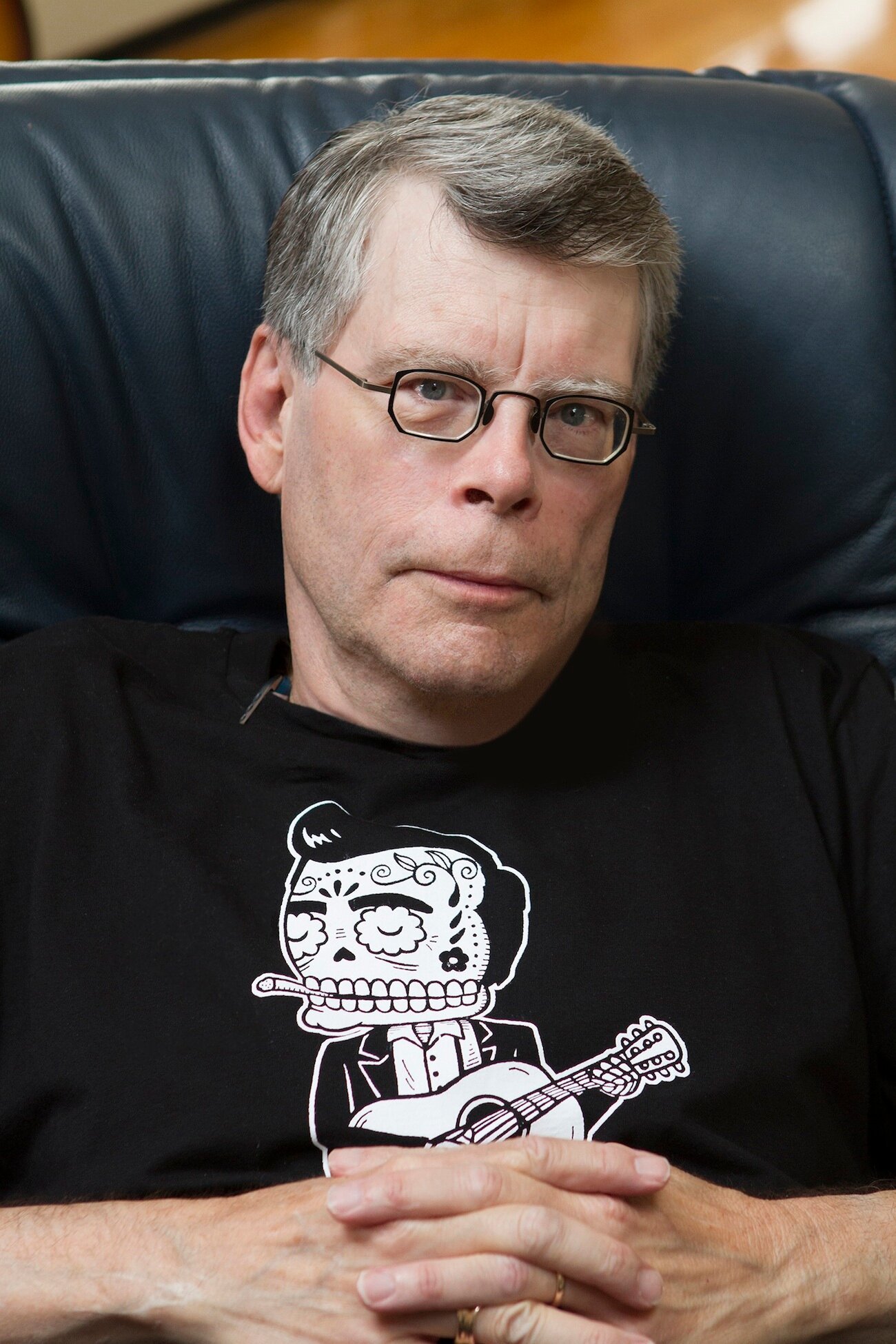
Gavin Newsom’s tweets are awesome. Thank you for your attention to this matter.
English
2.9K
6K
60.9K
1.4M
James Mushore retweetledi
Mr PitBull Stories
Mr PitBull Stories@MrPitbull07·
*One month before her 95th birthday, Patricia Routledge wrote something that still gently echoes:* **“I’ll be turning 95 this coming Monday. In my younger years, I was often filled with worry — worry that I wasn’t quite good enough, that no one would cast me again, that I wouldn’t live up to my mother’s hopes. But these days begin in peace, and end in gratitude.”** My life didn’t quite take shape until my forties. I had worked steadily — on provincial stages, in radio plays, in West End productions — but I often felt adrift, as though I was searching for a home within myself that I hadn’t quite found. At 50, I accepted a television role that many would later associate me with — Hyacinth Bucket, of Keeping Up Appearances. I thought it would be a small part in a little series. I never imagined that it would take me into people’s living rooms and hearts around the world. And truthfully, that role taught me to accept my own quirks. It healed something in me. At 60, I began learning Italian — not for work, but so I could sing opera in its native language. I also learned how to live alone without feeling lonely. I read poetry aloud each evening, not to perfect my diction, but to quiet my soul. At 70, I returned to the Shakespearean stage — something I once believed I had aged out of. But this time, I had nothing to prove. I stood on those boards with stillness, and audiences felt that. I was no longer performing. I was simply being. At 80, I took up watercolor painting. I painted flowers from my garden, old hats from my youth, and faces I remembered from the London Underground. Each painting was a quiet memory made visible. Now, at 95, I write letters by hand. I’m learning to bake rye bread. I still breathe deeply every morning. I still adore laughter — though I no longer try to make anyone laugh. I love the quiet more than ever. **I’m writing this to tell you something simple:** **Growing older is not the closing act. It can be the most exquisite chapter — if you let yourself bloom again.** Let these years ahead be your *treasure years*. You don’t need to be famous. You don’t need to be flawless. You only need to show up — fully — for the life that is still yours. *With love and gentleness,* — Patricia Routledge
Mr PitBull Stories tweet media
English
1.2K
7.3K
39.1K
1.4M
Wendell Pierce
Wendell Pierce@WendellPierce·
juilliard.edu/news/162521/ar… The Juilliard School will bestow an honorary doctorate upon Wendell Pierce for a 40 year career of distinction as an actor and producer. An alumnus from the Class of ‘85. Group 14.
Wendell Pierce tweet media
English
908
2.2K
29K
996.6K
James Mushore retweetledi
Brian Allen
Brian Allen@allenanalysis·
🚨 Trump just kicked NBC out of the Oval Office. After getting interrupted, he snapped: “You’re a DISGRACE! No more questions from you. NBC should be investigated!” This isn’t media strategy. It’s state-run energy with a dictator’s temper. The press asked questions. Trump demanded submission.
English
850
3.7K
13.1K
486.1K
James Mushore
James Mushore@james_mushore·
@tio_hector2 @FinLitBae We’ve had great mayors in the past. E.g. Much Masunda and Ben Manyenyeni. The problem is that the position is non-executive. One‘s decision making is therefore severely constrained. That’s why I wanted the Town Clerk position where one could actually make decisions.
English
1
0
2
54
el gordo alberto
el gordo alberto@tio_hector2·
@FinLitBae I would love the nearly was Harare Town clerk James Mushore to get a shot at being Mayor of Harare. He is erudite, street wise & years corporate experience - plus does not need the money just make a great city. Hey @james_mushore me & @FinLitBae can host you on a space are you 👍
English
1
0
1
651
Kudzai M Mubaiwa, FSA™ | KashKween | MasterOfCoin
Just to add to your offense, Harare needs someone who owns a house in Harare (& knows their home address 😆) since kuma early 80s chaiko to restore order - then we can hand over to those with no ties varikuda havo zve theory, power, chains and ceremonial vehicles. Tukai henyu.
Kudzai M Mubaiwa, FSA™ | KashKween | MasterOfCoin@FinLitBae

The point where Harare is requires someone who grew up in Harare to restore it as a city. Ndine hurombo kune vakazouya vakura but some of them just don’t get it. We had a don’t drop litter song in primary school 1990 I can still sing the whole thing and I do not litter.

English
3
7
55
3.4K
Dhara Blessed Mhlanga
Dhara Blessed Mhlanga@bbmhlanga·
Million likes to this woman. She managed everything for 73 days, she was tested and stood strong. Your voices kept her going. All I did was eat, sleep in prison for 73 days while she attended to kids, my needs and her job. Thank you Chihera. Marry the right girl.
Dhara Blessed Mhlanga tweet media
English
296
441
5.8K
147K