Jan Verner retweetledi
Jan Verner
785 posts

Jan Verner
@janverner
Head of R&D department
Munich, German Katılım Eylül 2009
128 Takip Edilen95 Takipçiler

NVIDIA CEO Jensen Huang Leaves Everyone SPEECHLESS (Supercut) youtu.be/oNwoA5akBlg?si…

YouTube
English

@enkocz Takže egyptské volby prošly SísíTestem! //cc
@boudman180,@janverner , @kracejic , @PascalCassinell
Čeština

Egyptské prezidentské volby vyhrál stávající prezident Abdal Fattáh Sísí, oznámila dnes egyptská volební komise. Získal podle ní 89,6 procenta hlasů, volební účast činila 66,8 procenta. denikn.cz/minuta/1310208/
Čeština

Hands-on with Gemini: Interacting with multimodal AI youtu.be/UIZAiXYceBI?si… via @YouTube

YouTube
English
Jan Verner retweetledi

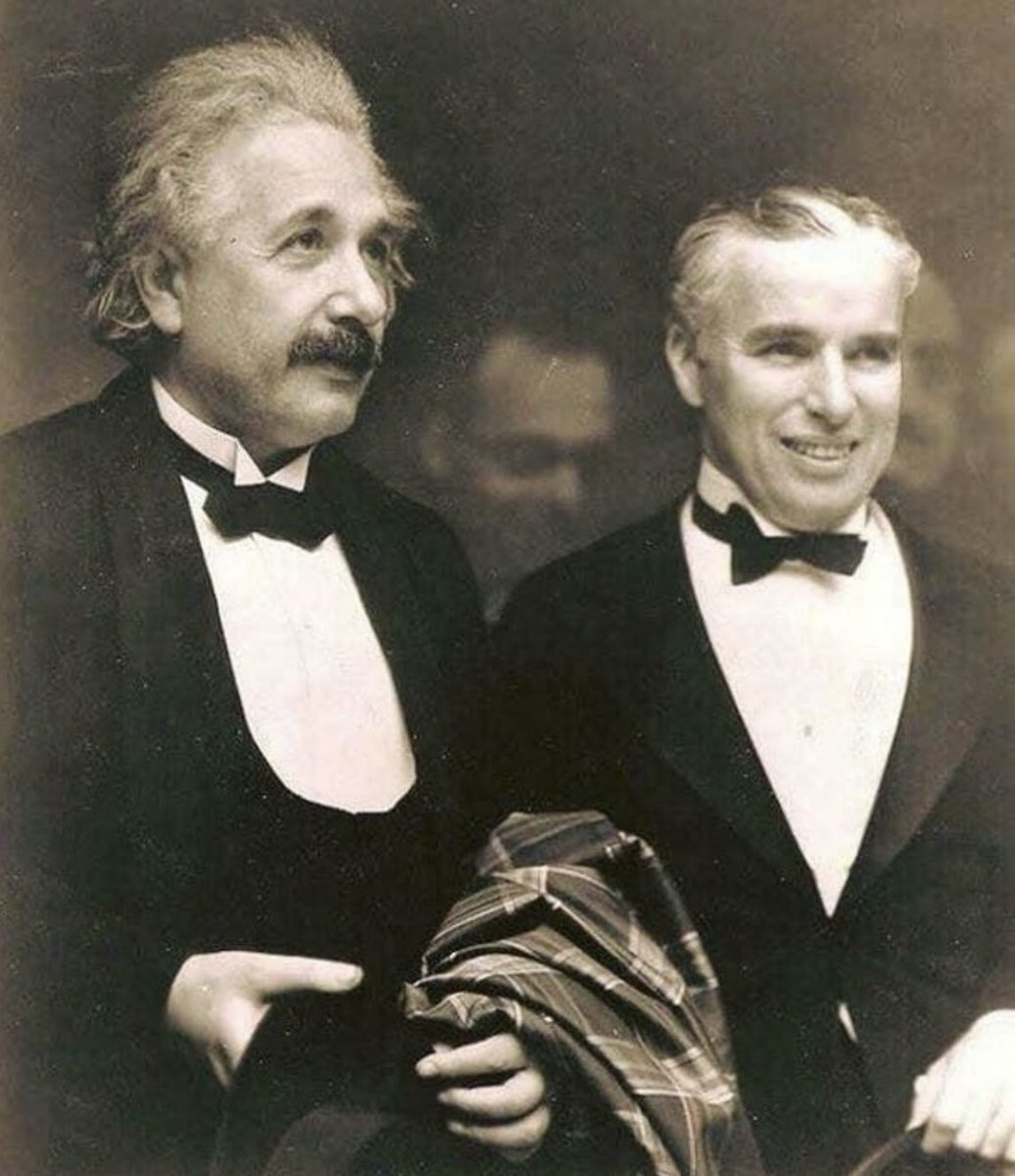
When Albert Einstein met Charlie Chaplin in 1931, Einstein said, "What I admire most about your art is its universality. You do not say a word, and yet the world understands you." "It's true." Replied Chaplin, "But your fame is even greater. The world admires you, when no one understands you."

English

Qualcomm Takes on Apple: The Battle For Chip Speed youtu.be/V68RE0M8zhk?si… via @YouTube

YouTube
English

Jan Verner retweetledi

Elon Musk fired 6,500 employees at Twitter.
A little birdie told me it's down to:
- 2 designers
- 6 iOS developers
- 20 web developers
- Around 1,400 sales and operations people
How is it possible that we are still using this website?
Two words:
Parkinson's Law.
Have you ever wondered why seemingly simple tech companies have tens of thousands of employees?
Sometimes, it's because they have huge sales forces or tech support/operations people.
But often it's also due to Parkinson's Law.
Parkinson's law is like lighter fluid for bureaucracy.
It's a business tapeworm that slowly eats away at companies, making them less and less efficient and innovative over time.
Parkinson's Law is the idea that the work will generally expand to the amount of time, budget, and number of people allocated to it, and no matter how many people you allocate to it, those people will feel busy.
They'll feel busy because, due to the excess time/slack in the system, they'll start focusing on less and less important tasks.
Here's how it manifests on an individual level:
Let's say you have a report due in a week.
The report might only take you around five hours to finish if you really focus and work efficiently. However, because you know you have a week to complete it, you might find yourself spending a lot more time on it than you need to.
You'll be more prone to distractions, take longer breaks, or perhaps decide to add more details, tables, graphs, and so forth.
Essentially, the task becomes more complex and time-consuming purely because you have more time in which to do it.
And here's how it manifests across organizations:
Imagine a big tech company. A social media company with various departments. Each department has tasks that it must complete to contribute to the overall productivity of the company.
Now, suppose each department is given a budget and a set amount of time to complete its tasks for the year.
According to Parkinson's Law, each department will use its entire budget and the entire allotted time, even if the tasks could have been completed more efficiently.
This is because as resources and time increase, departments tend to become more complex and less efficient.
For example, a department might add more steps to its procedures, requiring more approvals and creating more paperwork, which slows down the process.
Or it might use the full budget on additional personnel or equipment that doesn't necessarily improve productivity.
The department might also use the full budget to justify the same or larger budget for the next year, since budgets in many organizations are often determined based on the previous year's spending.
This is a phenomenon known as "budget padding" or "spend it or lose it" mentality.
Inefficiencies can also develop in staff allocation. If a department expands, it might add managerial positions that aren't strictly necessary.
More employees are hired to manage, creating layers of bureaucracy that may not contribute to productivity and can even slow decision-making.
I have seen this occur over and over again in my career. The larger the team, the larger the budget, the longer the timeline, the less gets accomplished.
I'm very curious to see how many more tech companies come to this realization.
So often, good times + revenue growth = Parkinson's Law.
English

NEUROSCIENTIST: You will NEVER LACK Motivation Again youtu.be/tWzakqerPUw via @YouTube

YouTube
English
Jan Verner retweetledi

🧵🧠 We're witnessing incredible scientific progress in image & text reconstruction from fMRI nowadays. But what about reconstructing video from fMRI? Allow me to introduce our recent preprint: Mind-Video
arxiv.org/abs/2305.11675
mind-video.com
drive.google.com/drive/folders/…
English


Brands that “left” Russia because of sanctions youtube.com/shorts/8hIOdAD… via @YouTube

YouTube
English

Jan Verner retweetledi

The European Parliament voted for MiCA to be implemented.
This means one of the world’s largest markets is introducing tailored regulations for crypto to protect users and support innovation.
The fine details will matter, but overall we think this is a pragmatic solution to the challenges we collectively face. There are now clear rules of the game for crypto exchanges to operate in the EU. We’re ready to make adjustments to our business over the next 12-18 months to be in a position of full compliance.
coindesk.com/policy/2023/04…
English