
Jose Dianti

906 posts

Jose Dianti banner
Jose Dianti

Jose Dianti

@jdianti

Intensivist by day...and by night too

Argentina - Canada Katılım Mayıs 2010
523 Takip Edilen380 Takipçiler
Jose Dianti
Jose Dianti@jdianti·
@martinvars Gran propuesta. La capa regulatoria determinística es el guardrail correcto. El desafío: el razonamiento clínico no es binario: integra LR, prob pre-test e incertidumbre explícita. Habría que incorporar modelos prob calibrados. LLM + reglas + bayesiano es un enfoque posible
Español
0
0
0
55
Martin Varsavsky
Martin Varsavsky@martinvars·
Aquí explico OpenClaw cómo lo uso yo y que significa para economía española.
Español
112
177
1.4K
91.9K
Jose Dianti retweetledi
Vélez Sarsfield
Vélez Sarsfield@Velez·
Con profundo dolor lamentamos el fallecimiento de Miguel Ángel Russo. Un caballero, un señor con todas las letras que supo honrar su capacidad como entrenador dos veces al frente de nuestro equipo, dónde condujo al Fortín al título del Clausura 2005. Hasta siempre, Miguel 💙
Español
57
1.4K
15.5K
249.5K
Jose Dianti retweetledi
The Cultural Tutor
The Cultural Tutor@culturaltutor·
I’ve made a short film. Look at the things around you: doors, bins, staircases, furniture, railings, doorhandles, windows. Do you like how they look, or not? Modern design has become boring, but it doesn’t have to be this way. The word “beautiful” is overused. We don’t need “beautiful” lamps, bus stops, and water fountains – we just need lamps, bus stops, and water fountains that are interesting, that actually mean something. Or, at the very least, not boring. Because the aesthetics of architecture and urban design aren’t just a bonus; they totally change how we think, feel, and behave. Boring environments make us more stressed and less productive; they erode our sense of community; they make us sadder, less trusting, and lonelier. A boring world is one where we spend even more time online and where our addictions are even harder to battle. The Problem There is global, widespread dissatisfaction with how the world looks. In this film, and the series it will lead to, we want to investigate that feeling and give it a voice. The point isn’t that we should return to the past or get rid of modernism. It’s about learning from the past in order to improve the present, and about giving the public what they very clearly want, which isn’t the eradication of modernism but the co-existence of modernism AND traditionalism. Just look where tourists go, where they take their photos, and that tells you everything you need to know about what most people find interesting or beautiful. And look at where people go on holiday. It’s always to cities filled with old architecture and design, with churches and mosques and palaces, with charming little alleyways and stone staircases and wrought-iron railings. Of the world’s fifty most visited buildings, only four were made in the 20th century, and they’re all museums or memorials. There’s a reason why posts about this go viral online all the time. Regardless of why the change happened, it is clearly the case that we no longer make things how we used to. People are rightly confused by the fact that old lamp posts (to take the example we focus on in the film) are usually so pretty, while modern ones are usually so boring. Some people say this is just an example of survivorship bias… and they’re mostly correct. But that’s the whole point! Saying old buildings are usually prettier than modern buildings is not to say that architecture used to be better, or that the past was better. It is simply to say that certain kinds of buildings, because they have been preserved, are good examples of what people like most. In which case... shouldn't we try to design at least some buildings in a way that we know people like? A Unifying Cause Everybody, from all sides of the political spectrum and all backgrounds, stands to benefit from a world that is designed more thoughtfully and imaginatively. The world could be such a colourful, meaningful, and thrilling place! So this isn’t about left versus right or conservatism versus progressivism; it’s about making our world a more interesting and meaningful place to live in. This should be a unifying cause, because everybody loses out when our homes and cities are badly designed. I want this film to unite people who think they’re on opposite sides, and to create a consensus that we need to change our approach to how we design our buildings and the objects – benches, bus stops, bins, lamp posts, aircon units – that fill our cities. The Importance of Details We are incredibly rich and have a sprawling choice of shows to stream, phones to buy, or shoes to wear… but everything feels more and more generic all the time. If you want to understand a society, don’t listen to what it says about itself – look at what it creates. You can learn everything about the Victorians – the good and the bad – just by looking at their lamp posts. And what do the ordinary details of the modern world say about us? That we are technologically advanced, very efficient… and care more about making money, about making things as quickly and cheaply as possible, than making our world an enjoyable place to actually live in. It’s important to learn about why and how things have changed, but that’s for another time. The first step is establishing that the public aren’t happy with modern architecture and design, and that something needs to be done. But what we need isn’t a total revival of so-called ‘traditionalism’; the truth is that traditionalism and modernism can (and should) co-exist. The trouble right now is that we only have one, and that people are tired of it. The Power of Noticing But this film (and the series it will, all being well, lead to) is about more than the specific argument it presents. Above all it’s about a way of seeing the world around us, a way of noticing and thinking. “How you do anything is how you do everything.” That is probably true, and it also applies to whole societies, not just individuals; a single doorbell implies everything else about the whole socio-economic and political system that gave rise to its creation. And, beyond being merely “useful”, the ability to notice details makes the world a richer place to live in, and life a richer thing to lead. This is what the film is about, more than anything: the power and joy of noticing. A Bigger Project This short film is just the beginning. We want to make a full series about the history of art and architecture, both for their own sake and also to see what we can learn about life in the twenty-first century and how to improve it. To keep updated you can join our email list over at our website, linked in the reply below. Final Words You can watch the film here on X, or over on YouTube, also linked in the reply below. So… this is where the dream begins, the dream of a new series and the dream of a more charming, more interesting, more meaningful modern world. Spread the word.
English
338
1.2K
7.6K
2.7M
Jose Dianti retweetledi
Matías Battaglia
Matías Battaglia@MBattaglia07·
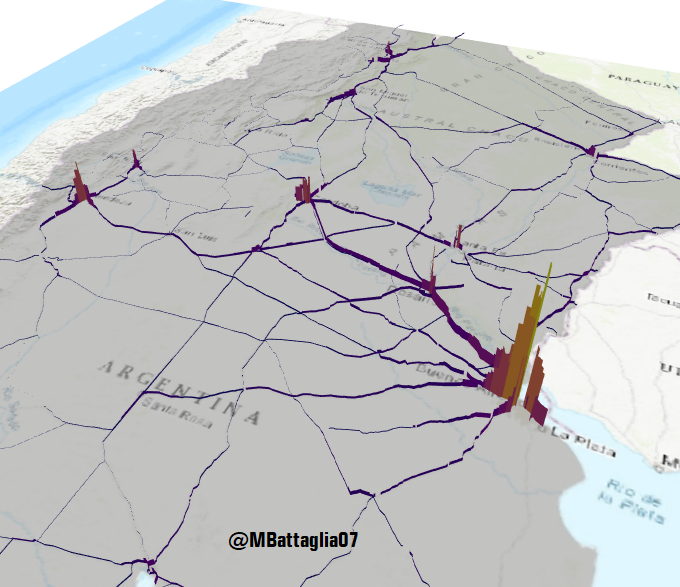
Me quedé pensando cómo darle una vuelta de rosca a los mapas de Tránsito 🛣 Asique va una prueba de concepto: el tránsito como si fuera una pared. Y el resultado es llamativo, ya que parece un gráfico de barras a la vez que de rutas: Va mirada desde PBA. Con su pico AMBA 🚘
Matías Battaglia tweet media
Español
20
33
323
21.5K
Jose Dianti retweetledi
Richard McElreath 🐈‍⬛
Richard McElreath 🐈‍⬛@rlmcelreath·
For the new kids in back: If you hate statistics, you'll love my free lectures. Putting science before statistics, from basics of inference & causal modeling to multilevel models & dynamic state space models. It's all free, made with love and sympathy. youtube.com/playlist?list=…
English
8
217
1.1K
80K
Jose Dianti retweetledi
Critical Care Reviews
Critical Care Reviews@CritCareReviews·
🚨 RESCUE 3 TRIAL Results 🚨 📍 33 sites 🇺🇸🇫🇷🇩🇪 👥 n=223 📊 Open-label RCT 🎯 Lungpacer diaphragm pacing after ≥2 weaning attempts & ≥96h MV 🩺 Outcome: Successful weaning by D30 🤔 Is this the future of mechanical ventilation? 📺 Free livestream but it's better in person
Critical Care Reviews tweet media
English
0
11
26
4.3K
Jose Dianti retweetledi
Michael Detsky
Michael Detsky@michael_detsky·
This was a great project to be a part of. One of the lessons I learned from this work is how casually the term “quality of life” is included in documentation without any text to support what contributes to an individuals perceived quality of life.
JGIM Journal of General Internal Medicine@JournalGIM

This Cohort Study by @Michael_Detsky et al revealed that physicians often failed to document the goals/priorities of their pts when making treatment recs. Lots of room to improve in documenting #CodeStatus discussions and recommendations. Read in #JGIM: buff.ly/dZKnGme

English
1
5
28
2.4K
Jose Dianti
Jose Dianti@jdianti·
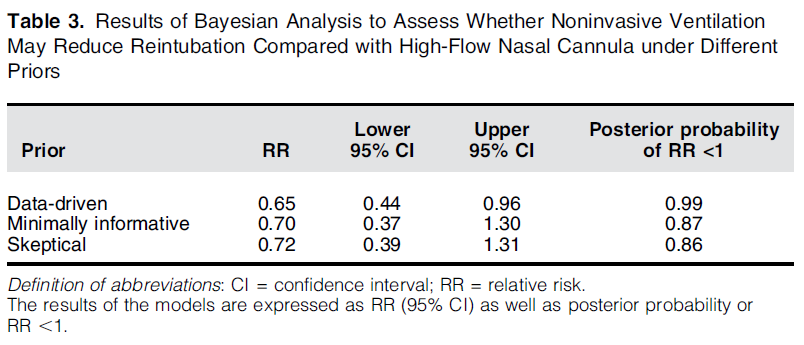
@phlegmfighter Yeah, i get what you mean. It’s a fair point, and there is definitely no right answer here. In my mind, a skeptical prior is one that has high certainty there is no effect (not necessarily that there is harm), and that is what we intended to capture here.
English
1
0
0
53
The Phlegmfighter
The Phlegmfighter@phlegmfighter·
@jdianti thanks for the clarification. For me a skeptical prior would be the upper end (high RR) of the distribution from prior studies - that is, the highest RR that is compatible with existing data.
English
1
0
0
53
The Phlegmfighter
The Phlegmfighter@phlegmfighter·
Heads I win, tails you lose. The "skeptical" prior is RR 0.72? No, a skeptical prior is RR >=1.0 The results of a "post hoc Bayesian analysis" are pre-ordained: nobody EVER does one and concludes the situation is WORSE than their data. EVER. atsjournals.org/doi/abs/10.116…
The Phlegmfighter tweet media
English
2
0
1
614
Jose Dianti retweetledi
Intensive Care Medicine
Intensive Care Medicine@yourICM·
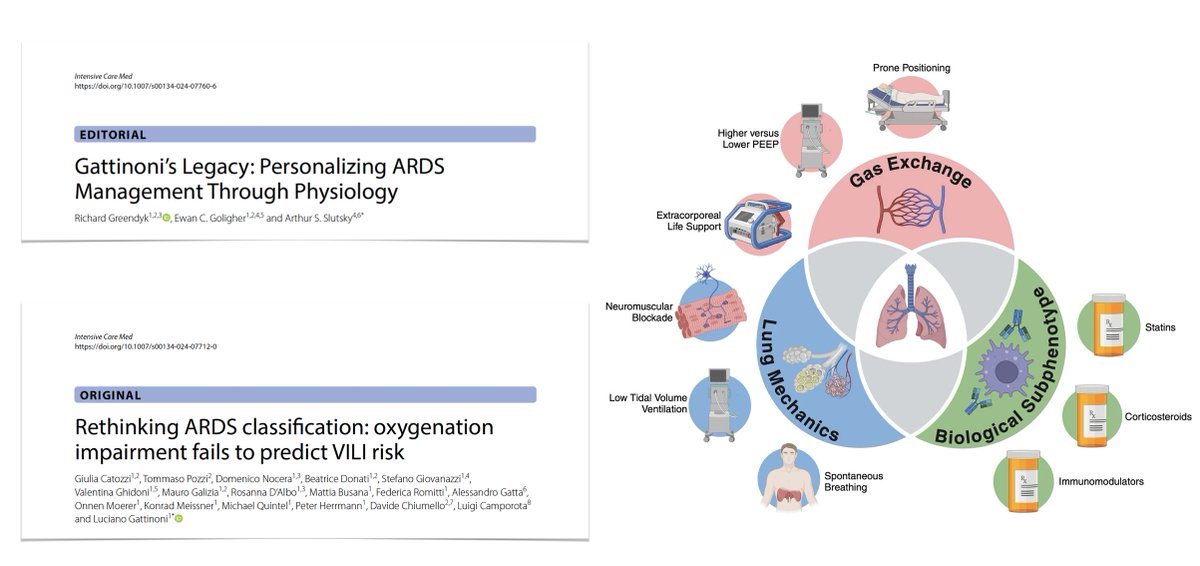
Gattinoni’s legacy? 🫁personalizing #ARDS management through approach integrating physiology, biology, imaging, cutting-edge trial design/analysis 🔗 bit.ly/41UN9FM 💡Refers to study suggesting oxygenation impairment fails to predict VILI risk 🔓 rdcu.be/d4ApC
Intensive Care Medicine tweet media
English
0
88
185
20.8K
Jose Dianti retweetledi
Vélez Sarsfield
Vélez Sarsfield@Velez·
Ella ya está en casa 🏆💙
Español
35
293
2.9K
199K
Jose Dianti retweetledi
Intensive Care Medicine
Intensive Care Medicine@yourICM·
Awake prone positioning in acute hypoxemic respiratory failure 🔎impact of changes in physiological variables within first 6h of first proning session 🫁relative ⬆️in ROX index + ⬇️ severity scores/⬆️ ROX index associated with ⬇️ risk of IMV and/or death 🔓rdcu.be/d0jS9
Intensive Care Medicine tweet media
English
0
39
84
12.9K
Jose Dianti retweetledi
Intensive Care Medicine
Intensive Care Medicine@yourICM·
PEEP in spontaneously breathing patients with #ARDS? 🫁 Personalised PEEP strategy based on best compromise between lung overdistension & collapse assessed by coupling EIT and transpulmonary pressure monitoring decreases lung stress & work of breathing. 🔓 bit.ly/40BUYjf
Intensive Care Medicine tweet media
English
0
36
82
10.3K