Jagdish Upasane retweetledi
Jagdish Upasane
99.2K posts

Jagdish Upasane
@jdupasane
Former Executive Editor, India Today (Hindi). Views are personal. Retweets not necessarily endorsement
Bharat Katılım Temmuz 2009
1.4K Takip Edilen2.7K Takipçiler
Jagdish Upasane retweetledi


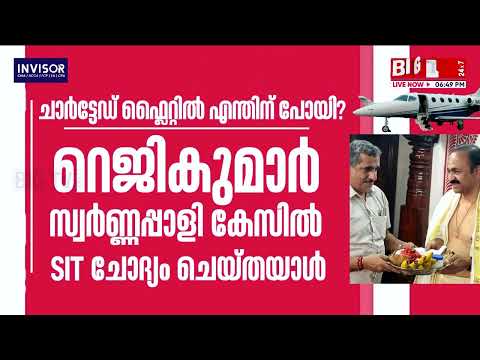
Breaking from Kerala:
Reportedly a day after his win in Kerala, VD Satheeshan took a chartered flight to meet NDA leaders B.M. Farooq (Ex-MLC) and Mohiyudin.
Interestingly, the party had no idea about it.
Is something brewing in Kerala too?
Source: YT link
youtu.be/qnS8BVATQ9U?si…

YouTube
English
Jagdish Upasane retweetledi

"DMK is formed to eradicate Santana Dharma and we will not stop until it’s done" Udhayanithi Stalin.
His father MKStalin made him Dy CM after his remarks.
Today he and his dad are eradicated for good.
#TamilNaduVoteCounting #TamilNaduElections
English
Jagdish Upasane retweetledi

I bow down to the people of TN for your verdict. Happy to see in my land, people have risen in one voice and spoken
1. No to buying of votes
2. No to dynastic Politics
& yes to a generational shift in politics.
Whoever gets it done has actually done a favour to all!
Congrats and best wishes to TVK & Thiru @TVKVijayHQ avl for a spectacular debut in TN politics. Let Almighty be with you to do what you intend to do.
And to all NDA candidates, it was a hard-fought battle on the ground. Congrats to all those who won, and for those who couldn’t register a victory this time, let’s keep fighting.
Commiserations to Thiru @mkstalin avl & Thiru @Seeman4TN avl for your loss in this election!
Finally & most importantly, I thank my dear @BJP4TamilNadu cadres and leaders for toiling hard on the ground. Better times will come soon!
English
Jagdish Upasane retweetledi

#LIVE: गोरखपुर के मौजा जंगल बेनी माधव नं.-1 में निर्मित दो मंजिला कन्वेंशन सेंटर का लोकार्पण समारोह। twitter.com/i/broadcasts/1…
हिन्दी
Jagdish Upasane retweetledi

Her name was Ruchika Girhotra.
She was 14 years old. A tennis player from Panchkula, Haryana.
On August 12 1990, she went to meet S.P.S. Rathore at his office. He was the Inspector General of Police and head of the Haryana Lawn Tennis Association. He had promised her father he would arrange special coaching for her.
When her friend stepped out of the room, he molested her.
Her family filed a complaint three days later.
Rathore had her expelled from school. Her father was suspended from his bank job on false charges. Six cases were filed against her brother Ashu. The family's house was forcibly sold. They fled to the outskirts of Shimla and took up earth filling work to survive.
On December 28 1993, days after Ashu was paraded in handcuffs through their neighbourhood, Ruchika consumed poison.
She died the next day. She was 17.
Rathore threw a party that night.
He then refused to release her body to her father unless he signed blank papers. Those papers were later used to forge documents accepting a false autopsy report.
Despite a police inquiry recommending an FIR against him, Rathore kept getting promoted. He became the Director General of Police of Haryana in 1999.
The case went through 40 adjournments and more than 400 hearings over 19 years.
In December 2009 a court convicted him of molestation. He was sentenced to six months' imprisonment and fined Rs 1,000.
The sentence was later enhanced to 18 months. The Supreme Court upheld his conviction in 2016 but reduced it to the time already served. He walked free.
The judge who tried to add abetment to suicide charges against him was forced into premature retirement.
The judge who dismissed those charges was a neighbour of Ruchika's family involved in a property dispute with them.
S.P.S. Rathore was later invited as a VIP guest to a Republic Day event in Panchkula.
Ruchika Girhotra was 14 when he molested. She was 17 when she died.
Follow for stories India deserves to remember.

English
Jagdish Upasane retweetledi

#LIVE: प्रदेश के 1.43 लाख शिक्षामित्रों की मानदेय बढ़ोतरी के उपलक्ष्य में शिक्षामित्र सम्मान समारोह। twitter.com/i/broadcasts/1…
हिन्दी
Jagdish Upasane retweetledi

#LIVE: गोरखपुर में ₹14 करोड़+ की लागत से तारामंडल क्षेत्र में वॉटर बॉडी के ऊपर दो-लेन ब्रिज का उद्घाटन समारोह। twitter.com/i/broadcasts/1…
हिन्दी
Jagdish Upasane retweetledi

Kolkata was once supposed to be India’s Silicon Valley, not Bengaluru.
The city had everything going for it:
Indian Statistical Institute in Kolkata ran India’s first electronic computer in the 1950s, Webel was building an electronics hub by the 1980s, and the city already had colonial‑era advantages like early electricity, telegraphs, railways and a major port backing a dense belt of elite colleges and industry.
On paper, this should have been the place where India’s tech story took off. Instead, Bengal’s politics went to war with computers.
The CPM government spent the 70s and 80s backing protests against computerisation in banks and offices because they feared computers would eliminate jobs.
The message to business was very clear:
if you bring technology here, you will face resistance.
While this fear was driving policy in Bengal, Bengaluru and Hyderabad were opening their doors to the same companies.
So the big IT parks, global tech campuses, startup activity, and serious capital flowed there, not to Kolkata.
And once that happens, it is very hard to catch up.
Regions that resist new technology suffer from what economists call “technology diffusion failure”:
early adopters keep getting compounding benefits from knowledge spillovers, while laggards fall further and further behind.
When an ecosystem settles in places like Bengaluru, network effects and skills start to lock in those advantages, and late entrants face higher costs, weaker local talent pools, and capital quietly moving elsewhere.
TMC arrived promising to correct this.
And some IT investment did come in; the state talks of around ₹14,000 crore in IT and new parks in Salt Lake and New Town.
But Bengal still did not become the first choice for large product companies or global tech hubs, because the deeper issue remained: investors had seen how politics could suddenly turn against a project.
The best example of that is Singur, where Mamata Banerjee’s agitation forced the Tata Nano plant out of Bengal.
That is exactly what can finally change now.
When Tata left Singur, Gujarat under Narendra Modi showed what a pro-industry state can do by turning the same project into a showcase at Sanand.
If the newly forming BJP government brings that same investor-friendly mindset to Bengal, the pitch to companies changes in a very practical way.
English
Jagdish Upasane retweetledi