jefflau.eth

12K posts

jefflau.eth banner
jefflau.eth

jefflau.eth

@Jefflau

Building @ensdomains. Distilling the complicated into the simple. Curious about ZK, dabbling in crypto(graphy)

Katılım Aralık 2010
657 Takip Edilen11.6K Takipçiler
Sabitlenmiş Tweet
jefflau.eth
jefflau.eth@Jefflau·
Thread of my threads distilling the complicated into the simple. Previous topics include: - Zero Knowledge Proofs - EIP-1559 - Rollups - ETH2 and the merge I’ll add new threads here for easy referencing for myself and others.
English
36
99
557
0
jalil.eth
jalil.eth@jalilwahdat·
ETHRegistrarController.sol One of the finest views of Ethereum
jalil.eth tweet media
English
6
2
55
1.3K
jefflau.eth retweetledi
brantly.eth
brantly.eth@BrantlyMillegan·
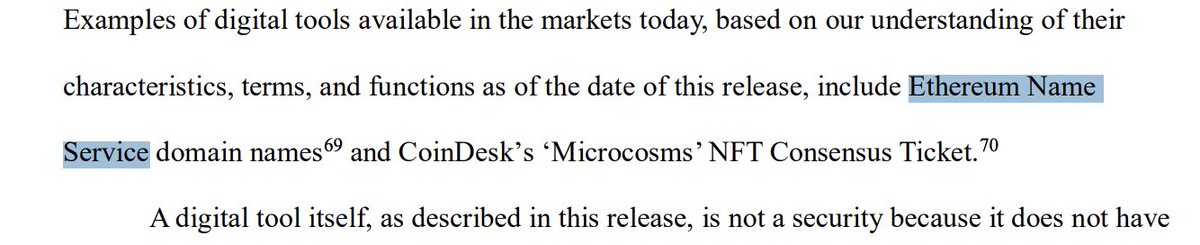
incredible seeing the SEC cite @ensdomains as a premiere example of a legitimate digital tool using blockchain technology 🔥🔥🔥🔥🔥🔥🔥🔥🔥🔥🔥🔥🔥🔥🔥🔥
brantly.eth tweet mediabrantly.eth tweet media
English
54
103
447
28.2K
Sam
Sam@minimalisam·
@Jefflau Gotta build in better renewal reminder tooling my guy
English
1
0
1
63
Marc Zeller
Marc Zeller@Marczeller·
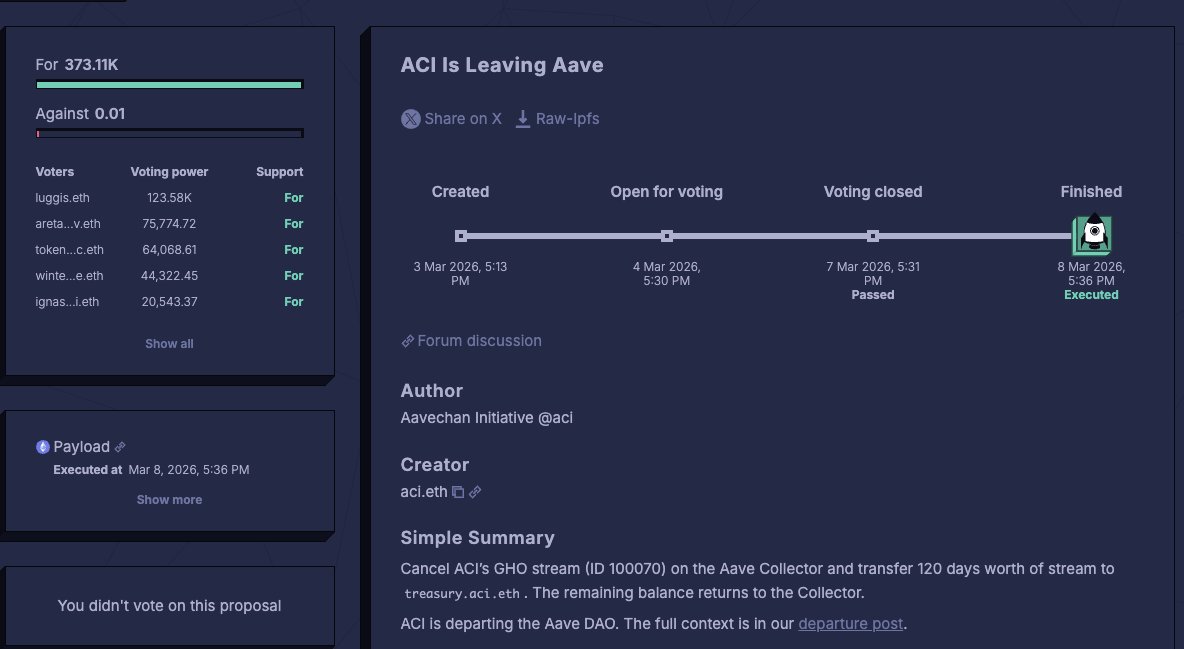
A new chapter is starting today. Yet for Aave, nothing will change in the short term; there's a lot of inertia, and liquidity is sticky, so there's no reason to be concerned. We had quite a few good things in the pipeline, and we will deliver them during the transition period. You already know this, I'm too hungry to retire, so it's the end of a chapter but not of the journey.
Marc Zeller tweet media
English
85
10
603
40.2K
jefflau.eth retweetledi
Katherine Wu | katherine.eth
Katherine Wu | katherine.eth@katherinewu·
If you recently bought a [name].crypto or [name].agent domain name from a third party naming service, this is important to know: These domain extensions (and many others that sound fun/cool) are not anchored to the global DNS root- meaning no one actually controls or guarantees them! ICANN (the body that governs real internet domains) could assign .agent to a completely different registry tomorrow. This means that now two systems claim to have the same domain string, and your wallet and a browser would resolve it differently. Ironically, this actually makes things MORE dangerous since someone could lose funds sending to a name that resolves to two different places depending on context. This is called 'name collision', and avoiding name collision is how the internet can operate functionally in the first place. Always check the IANA's root zone database (link in second tweet) before you purchase a domain name. If the TLD isn't listed there, it's not anchored to the global DNS root, meaning that you don't actually own what you think you own since its not 'real' internet infrastructure.
ens.eth@ensdomains

Launching a new .whatever namespace is easy. Building naming infrastructure that works across wallets, apps, exchanges, and the web is much harder. Why ENS chose to extend the existing internet namespace instead of inventing new roots ⤵️ ens.domains/blog/post/ens-…

English
41
28
135
20.9K
jefflau.eth retweetledi
ens.eth
ens.eth@ensdomains·
Another day, another alpha launch. The ENS Explorer Alpha is now live on Sepolia. This is a new, comprehensive tool and the primary source of truth for ENS, built for builders, power users, and anyone who needs deep visibility into the protocol. Try it → explorer.ens.dev
ens.eth tweet media
English
38
97
231
760K
jefflau.eth retweetledi
vitalik.eth
vitalik.eth@VitalikButerin·
@RyanSAdams ETH is a store of value and one of the most important apps on ethereum.
English
612
1K
7.7K
1.1M
jefflau.eth retweetledi
vitalik.eth
vitalik.eth@VitalikButerin·
It's a good decision! ENS names and records are a form of state that is central to the Ethereum ecosystem, the state is limited in size and there is high value in it being as accessible as possible from anywhere. It's also a semi-financial application, in the sense that buying and holding ENS names has a cost, and ENS names can become very valuable objects. With the expanded scaling roadmap, Ethereum L1 is the ideal place for these applications. More generally, I expect that the optimal architecture for decentralized identity and social (the general space I see ENS being in) is to have this kind of per-user account and profile data on L1, and to have special-purpose L2s, likely much simpler than full EVMs, to handle user actions (eg. actions on social platforms).
Katherine Wu | katherine.eth@katherinewu

A quick update on ENSv2: we have made the decision to deploy ENSv2 exclusively on Ethereum L1 and to cease development of Namechain. To be clear, ENSv2 will still ship. The only thing that’s changed is that instead of deploying ENSv2 on our own L2 stack, it will be deployed on L1. It is important to note that ENSv2 is ultimately an upgrade to ENS as it exists today — it’s still ENS! Regardless of where it ultimately gets deployed, it does not fundamentally change ENS the protocol nor does it change any part of our mission and ultimate goal of building the identity layer on Ethereum. The design for ENSv2 was always intended to work fully as designed, whether deployed on L1 or L2. Our product roadmap does not change. We have detailed progress on the ENSv2 Hub to show what exactly v2 will mean for you, and what the team has been building: giving each name its own registry (making your .eth names more powerful and customizable to your own rules!), building two brand new apps from the ground up (both deployed to testnet this week), and much more. I am so excited for this release (soon!) and think it will completely change the way you interact with your own ENS names. The timing of this decision coincides with a broader discussion about the role of L2s in Ethereum. I continue to believe that L2s play a vital role in extending the value of the world computer that is Ethereum, and ENS will continue to support as many chains as possible. In fact, very soon anyone will be able to register a .eth name regardless of which EVM chain they are on — meaning that even if your assets live on Optimism or Arbitrum, it’s a one-click process (no bridge, no gas tokens). We also continue to believe in a multi-chain world beyond EVM chains (a reminder that ENS has and always will support your addresses across major chains like Solana, Bitcoin, and more). We have published the detailed rationale for the decision to stay on L1 on our blog, and I encourage you to read it (in the QT here!) The .eth stays on 🫡

English
483
318
2.2K
390.2K
jefflau.eth retweetledi
Katherine Wu | katherine.eth
Katherine Wu | katherine.eth@katherinewu·
A quick update on ENSv2: we have made the decision to deploy ENSv2 exclusively on Ethereum L1 and to cease development of Namechain. To be clear, ENSv2 will still ship. The only thing that’s changed is that instead of deploying ENSv2 on our own L2 stack, it will be deployed on L1. It is important to note that ENSv2 is ultimately an upgrade to ENS as it exists today — it’s still ENS! Regardless of where it ultimately gets deployed, it does not fundamentally change ENS the protocol nor does it change any part of our mission and ultimate goal of building the identity layer on Ethereum. The design for ENSv2 was always intended to work fully as designed, whether deployed on L1 or L2. Our product roadmap does not change. We have detailed progress on the ENSv2 Hub to show what exactly v2 will mean for you, and what the team has been building: giving each name its own registry (making your .eth names more powerful and customizable to your own rules!), building two brand new apps from the ground up (both deployed to testnet this week), and much more. I am so excited for this release (soon!) and think it will completely change the way you interact with your own ENS names. The timing of this decision coincides with a broader discussion about the role of L2s in Ethereum. I continue to believe that L2s play a vital role in extending the value of the world computer that is Ethereum, and ENS will continue to support as many chains as possible. In fact, very soon anyone will be able to register a .eth name regardless of which EVM chain they are on — meaning that even if your assets live on Optimism or Arbitrum, it’s a one-click process (no bridge, no gas tokens). We also continue to believe in a multi-chain world beyond EVM chains (a reminder that ENS has and always will support your addresses across major chains like Solana, Bitcoin, and more). We have published the detailed rationale for the decision to stay on L1 on our blog, and I encourage you to read it (in the QT here!) The .eth stays on 🫡
ens.eth@ensdomains

ENSv2 will be deployed exclusively on Ethereum. ens.domains/blog/post/ens-…

English
88
101
836
405.5K
jefflau.eth retweetledi
ens.eth
ens.eth@ensdomains·
Claiming an ENS name will get a lot simpler with ENSv2. The ENS App Alpha is now live on Sepolia Faster registration, stablecoin payments, notifications, chain and wallet abstraction, and a redesigned dashboard. Try it → app.ens.dev
ens.eth tweet media
English
68
153
428
52.5K
jefflau.eth retweetledi
vitalik.eth
vitalik.eth@VitalikButerin·
There have recently been some discussions on the ongoing role of L2s in the Ethereum ecosystem, especially in the face of two facts: * L2s' progress to stage 2 (and, secondarily, on interop) has been far slower and more difficult than originally expected * L1 itself is scaling, fees are very low, and gaslimits are projected to increase greatly in 2026 Both of these facts, for their own separate reasons, mean that the original vision of L2s and their role in Ethereum no longer makes sense, and we need a new path. First, let us recap the original vision. Ethereum needs to scale. The definition of "Ethereum scaling" is the existence of large quantities of block space that is backed by the full faith and credit of Ethereum - that is, block space where, if you do things (including with ETH) inside that block space, your activities are guaranteed to be valid, uncensored, unreverted, untouched, as long as Ethereum itself functions. If you create a 10000 TPS EVM where its connection to L1 is mediated by a multisig bridge, then you are not scaling Ethereum. This vision no longer makes sense. L1 does not need L2s to be "branded shards", because L1 is itself scaling. And L2s are not able or willing to satisfy the properties that a true "branded shard" would require. I've even seen at least one explicitly saying that they may never want to go beyond stage 1, not just for technical reasons around ZK-EVM safety, but also because their customers' regulatory needs require them to have ultimate control. This may be doing the right thing for your customers. But it should be obvious that if you are doing this, then you are not "scaling Ethereum" in the sense meant by the rollup-centric roadmap. But that's fine! it's fine because Ethereum itself is now scaling directly on L1, with large planned increases to its gas limit this year and the years ahead. We should stop thinking about L2s as literally being "branded shards" of Ethereum, with the social status and responsibilities that this entails. Instead, we can think of L2s as being a full spectrum, which includes both chains backed by the full faith and credit of Ethereum with various unique properties (eg. not just EVM), as well as a whole array of options at different levels of connection to Ethereum, that each person (or bot) is free to care about or not care about depending on their needs. What would I do today if I were an L2? * Identify a value add other than "scaling". Examples: (i) non-EVM specialized features/VMs around privacy, (ii) efficiency specialized around a particular application, (iii) truly extreme levels of scaling that even a greatly expanded L1 will not do, (iv) a totally different design for non-financial applications, eg. social, identity, AI, (v) ultra-low-latency and other sequencing properties, (vi) maybe built-in oracles or decentralized dispute resolution or other "non-computationally-verifiable" features * Be stage 1 at the minimum (otherwise you really are just a separate L1 with a bridge, and you should just call yourself that) if you're doing things with ETH or other ethereum-issued assets * Support maximum interoperability with Ethereum, though this will differ for each one (eg. what if you're not EVM, or even not financial?) From Ethereum's side, over the past few months I've become more convinced of the value of the native rollup precompile, particuarly once we have enshrined ZK-EVM proofs that we need anyway to scale L1. This is a precompile that verifies a ZK-EVM proof, and it's "part of Ethereum", so (i) it auto-upgrades along with Ethereum, and (ii) if the precompile has a bug, Ethereum will hard-fork to fix the bug. The native rollup precompile would make full, security-council-free, EVM verification accessible. We should spend much more time working out how to design it in such a way that if your L2 is "EVM plus other stuff", then the native rollup precompile would verify the EVM, and you only have to bring your own prover for the "other stuff" (eg. Stylus). This might involve a canonical way of exposing a lookup table between contract call inputs and outputs, and letting you provide your own values to the lookup table (that you would prove separately). This would make it easy to have safe, strong, trustless interoperability with Ethereum. It also enables synchronous composability (see: ethresear.ch/t/combining-pr… and ethresear.ch/t/synchronous-… ). And from there, it's each L2's choice exactly what they want to build. Don't just "extend L1", figure out something new to add. This of course means that some will add things that are trust-dependent, or backdoored, or otherwise insecure; this is unavoidable in a permissionless ecosystem where developers have freedom. Our job should make to make it clear to users what guarantees they have, and to build up the strongest Ethereum that we can.
English
2.6K
1.6K
9.9K
6.3M
jefflau.eth retweetledi
vitalik.eth
vitalik.eth@VitalikButerin·
In 2014, there was a vision: you can have permissionless, decentralized applications that could support finance, social media, ride sharing, governing organizations, crowdfunding, potentially create an entire alternative web, all on the backs of a suite of technologies. Ethereum: the blockchain. The world computer that could give any application its shared memory. Whisper: the data layer. Messages too expensive for a blockchain, that do no need consensus. Swarm: the storage layer. Store files for long-term access. Over the last five years, this core vision has at times become obscured, with various "metas" and "narratives" at various times taking center stage. But the core vision has never died. And in fact, the core technologies behind it are only growing stronger. Ethereum is now proof of stake. Ethereum is now scaling, it is now cheap, and it is on track to get more scalable and cheaper thanks to the power of ZK-EVMs. Thanks to ZK-EVM + PeerDAS, the "sharding" vision is effectively being realized. And L2s can give additional and different kinds of gains in speed on top. Whisper is now Waku ( docs.waku.org ), and already powers many applications (eg. railway.xyz, status.app just to name two I use). Even outside of Waku, the quality of decentralized messaging has increased. Fileverse (decentralized Google Docs and Sheets alternative: fileverse.io ) has seen massive gains in usability over the past year. IPFS is now highly performant and robust as a decentralized way of retrieving files, though IPFS alone does not solve the storage problem. Hence, there is still room to improve there. All of the prerequisites for the original web3 vision are here, in full force, and are continuing to get stronger over the next few years. Hence, it's time to buidl, and buidl decentralized. Fileverse is an excellent example of the right way to do things: * It uses Ethereum and Gnosis Chain for what they are good for: names, accounts and permissioning, document registration * It uses decentralized messaging and file storage to store documents and propagate changes to documents * The application passes the walkaway test: github.com/fileverse/walk… (even if Fileverse disappears, you can still retrieve them and even keep editing them with the open source UI) This is what we mean by "build a hammer that is a tool you buy once and it's yours, not a corposlop AI dishwasher that requires you to register for a google account and charges a subscription fee per month for extra washing modes, and probably spies on you and stops working if you get politically disfavored by a foreign country". If you think this criticism of corposlop is hyperbolic, well turns out, it's literally a concatenation of these three: * mein-mmo.de/en/user-buys-n… * theguardian.com/technology/202… * irishtimes.com/world/us/2025/… In 2014, decentralized applications were toys, hundreds of times more difficult to use in web2. In 2026, fileverse is now usable enough that I regularly write documents in it and send them to other people to collaborate. The decentralized renaissance is coming, and you can be part of making it happen.
vitalik.eth tweet media
English
824
810
4.8K
505.2K
jefflau.eth retweetledi
vitalik.eth
vitalik.eth@VitalikButerin·
Ethereum itself must pass the walkaway test. Ethereum is meant to be a home for trustless and trust-minimized applications, whether in finance, governance or elsewhere. It must support applications that are more like tools - the hammer that once you buy it's yours - than like services that lose all functionality once the vendor loses interest in maintaining them (or worse, gets hacked or becomes value-extractive). Even when applications do have functionality that depends on a vendor, Ethereum can help reduce those dependencies as much as possible, and protect the user as much as possible in those cases where the dependencies fail. But building such applications is not possible on a base layer which itself depends on ongoing updates from a vendor in order to continue being usable - even if that "vendor" is the all core devs process. Ethereum the blockchain must have the traits that we strive for in Ethereum's applications. Hence, Ethereum itself must pass the walkaway test. This means that Ethereum must get to a place where we _can ossify if we want to_. We do not have to stop making changes to the protocol, but we must get to a place where Ethereum's value proposition does not strictly depend on any features that are not in the protocol already. This includes the following: * Full quantum-resistance. We should resist the trap of saying "let's delay quantum-resistance until the last possible moment in the name of ekeing out more efficiencies for a while longer". Individual users have that right, but the protocol should not. Being able to say "Ethereum's protocol, as it stands today, is cryptographically safe for a hundred years" is something we should strive to get to as soon as possible, and insist on as a point of pride. * An architecture that can expand to sufficient scalability. The protocol needs to have the properties that allow it to expand to many thousands of TPS over time, most notably ZK-EVM validation and data sampling through PeerDAS. Ideally, we get to a point where further scaling is done through "parameter only" changes - and ideally _those_ changes are not BPO-style forks, but rather are made with the same validator voting mechanism we use for the gas limit. * A state architecture that can last decades. This means deciding, and implementing, whatever form of partial statelessness and state expiry will let us feel comfortable letting Ethereum run with thousands of TPS for decades, without breaking sync or hard disk or I/O requirements. It also means future-proofing the tree and storage types to work well with this long-term environment. * An account model that is general-purpose (this is "full account abstraction": move away from enshrined ECDSA for signature validation) * A gas schedule that we are confident is free of DoS vulnerabilities, both for execution and for ZK-proving * A PoS economic model that, with all we have learned over the past half decade of proof of stake in Ethereum and full decade beyond, we are confident can last and remain decentralized for decades, and supports the usefulness of ETH as trustless collateral (eg. in governance-minimized ETH-backed stablecoins) * A block building model that we are confident will resist centralization pressure and guarantee censorship resistance even in unknown future environments Ideally, we do the hard work over the next few years, to get to a point where in the future almost all future innovation can happen through client optimization, and get reflected in the protocol through parameter changes. Every year, we should tick off at least one of these boxes, and ideally multiple. Do the right thing once, based on knowledge of what is truly the right thing (and not compromise halfway fixes), and maximize Ethereum's technological and social robustness for the long term. Ethereum goes hard. This is the gwei.
English
1.1K
939
7.7K
897K
jefflau.eth retweetledi
vitalik.eth
vitalik.eth@VitalikButerin·
“Ethereum was not created to make finance efficient or apps convenient. It was created to set people free” This was an important - and controversial - line from the Trustless Manifesto ( trustlessness.eth.limo ), and it is worth revisiting it and better understanding what it means. “efficient” and “convenient” have the connotation of improving the average case, in situations where it’s already pretty good. Efficiency is about telling the world's best engineers to put their souls into reducing latency from 473 ms to 368ms, or increasing yields from 4.5% APY to 5.3% APY. Convenience is about people making one click instead of three, and reducing signup times from 1 min to 20 sec. These things can be good to do. But we must do them under the understanding that we will never be as good at this game as the Silicon Valley corporate players. And so the primary underlying game that Ethereum plays must be a different game. What is the game? Resilience. Resilience is the game where it’s not about 4.5% APY vs 5.3% APY - rather, it’s about minimizing the chance that you get -100% APY. Resilience is the game where if you become politically unpopular and get deplatformed, or if a the developers of your application go bankrupt or disappear, or if Cloudflare goes down, or if an internet cyberwar breaks out, your 2000ms latency continues to be 2000ms. Resilience is the game where anyone, anywhere in the world will be able to access the network and be a first-class participant. Resilience is sovereignty. Not sovereignty in the sense of lobbying to become a UN member state and shaking hands at Davos in two weeks, but sovereignty in the sense that people talk about "digital sovereignty" or "food sovereignty" - aggressively reducing your vulnerabilities to external dependencies that can be taken away from you on a whim. This is the sense in which the world computer can be sovereign, and in doing so make its users also sovereign. This baseline is what enables interdependence as equals, and not as vassals of corporate overlords thousands of kilometers away. This is the game that Ethereum is suited to win, and it delivers a type of value that, in our increasingly unstable world, a lot of people are going to need. The fundamental DNA of web2 consumer tech is not suited to resilience. The fundamental DNA of _finance_ often spends considerable effort on resilience, but it is a very partial form of resilience, good at solving for some types of risks but not others. Blockspace is abundant. Decentralized, permissionless and resilient blockspace is not. Ethereum must first and foremost be decentralized, permissionless and resilient block space - and then make that abundant.
English
1.2K
1.2K
7K
1.1M
jefflau.eth retweetledi
Keyiiaa⊹˚ ✰✰✰✰✰✰
South Korean President Lee Jae-myung awarded Faker the Cheongnyong Medal. The highest honor any South Korean athlete can receive 👏🏻
English
103
2.3K
27.2K
1M
Gidwell
Gidwell@gidwell·
I don’t get the monad and farcaster hate farcaster use qualified me for monad airdrop, which paid for a new running watch that’ll delay depression until the next cycle incredible tech
Gidwell tweet media
English
6
0
19
860