

jinwosan $P2P
1.7K posts

jinwosan $P2P retweetledi

A new update on our “AI Fraud Engine” - we’ve been building and testing this over the past 12 weeks, and it’s finally live as of today 🫡
This update screens and defends against counterparty risk in real time for every P2P trade and blocks fraudulent transactions before they are even placed.
We could have built this long ago- but a significant amount of historical transaction fraud data was needed for the AI to accurately identify fraudulent patterns.
It has gone through rigorous training and testing before being deployed today, and we’re confident that within the next four weeks, it will significantly reduce fraud-related issues in the Indian market.
English
jinwosan $P2P retweetledi

We’re not afraid of bears.
@P2Pdotme is locked and loaded for March 26th!

Seb Monty@SebMontgomery
Crypto Exchange @krakenfx Delays IPO Plans They are waiting for more favorable market conditions. If Kraken with insights on institutional demand, liquid funds, and retail flows thinks it's not the right time for an IPO, maybe it's time to rethink if the bottom is actually in.
English
jinwosan $P2P retweetledi
jinwosan $P2P retweetledi

How does allocation work for users?
1. Everyone enters at the same valuation.
2. Only if the round is oversubscribed, XP holders keep more of their allocation based on tier:
Tier 3: 1.5x
Tier 2: 2x
Tier 1: 3x
Rest is refunded. Non-XP holders get the remaining pool pro-rata.
P2P.me (TGE arc)@P2Pdotme
We want to see as many of our users as possible participate in our ICO. Our success is not measured by the number of VCs backing us again, or by getting oversubscribed far beyond what we need. Our KPI for this ICO is how many of our users are true believers who decide to back our work. Users investing in and holding the protocol tokens to see it grow hits different 🫡 To promote participation, we have set up an XP system and will soon launch a preferential allocation meter for users on p2p.foundation We have over 22K active users, and about 5K of them have registered early interest to participate in our ICO to build an XP score. They will receive allocation preference over everyone else - because their early vote matters more than anyone else’s 🫡
English
jinwosan $P2P retweetledi
jinwosan $P2P retweetledi
Why ICO instead of raising more VC ?
Read this 👌
don@Thedonkey
I've been thinking about a dynamic that doesn't get discussed enough: the relationship between token distribution and regulatory survival. The basic observation is simple. Regulation needs a target. A CEO to subpoena, a company to sue, a bank account to freeze. This is how enforcement works. But what happens when there's no target? When ownership is distributed across 50,000 people in 120 countries? When there's no headquarters, no corporate entity, no single point of failure? We have clear examples of this playing out. Bitcoin achieved this state organically over a decade. Satoshi disappeared. Mining distributed coins to thousands of participants worldwide. Today there's no Bitcoin Inc to shut down. Regulators understand this. They go after exchanges like Binance and Coinbase, but Bitcoin itself keeps producing blocks every 10 minutes regardless of what any government decides. Ethereum did it more intentionally. The 2014 crowdsale distributed ETH to thousands of early participants across jurisdictions. The Ethereum Foundation @ethereum exists but doesn't control the protocol. When the SEC started asking questions about whether ETH was a security, the answer increasingly became "it doesn't matter because there's no issuer to regulate anymore." Multiple independent teams maintain clients. No single entity can be compelled to change the protocol. Uniswap is the DeFi-era example. @UniswapLabsVC built the protocol, but then distributed UNI tokens broadly and deployed immutable contracts. Today even if Uniswap Labs got shut down tomorrow, the protocol would keep running. The frontend can be geo-blocked, and it has been, but the smart contracts don't care. Anyone can build an interface. The liquidity stays. Tornado Cash showed the limits and the stakes. The protocol was decentralized but the developers weren't distributed enough. They got arrested. The contracts still run, but the case demonstrated that decentralization has to be real and complete, not just aesthetic. Now we're seeing a new wave attempting this transition in real time. @p2pdotme protocol is where we're putting this thesis into practice. We're building decentralized on/off ramps, which is maybe the most regulatory-sensitive category in crypto. Converting between fiat and stablecoins without custodial escrow. We're launching the $P2P token with 50% floating at TGE, no insider unlocks at launch, ownership transferring to token holders through futarchy-based governance. The explicit goal is that the protocol becomes community-owned infrastructure rather than a company product. We chose this structure deliberately because fiat ramps are exactly the kind of thing regulators pay attention to. If we're going to build something that lets anyone in the world convert between local currency and crypto without intermediaries, it needs to be owned by everyone, not controlled by us. The pattern across all these examples is consistent. Start with a team, build something valuable, distribute ownership as widely as possible, step back from control. The team that builds the protocol is not the same as the community that runs it. The transition is the key. Here's where it gets interesting. We're now in a period where innovation is moving maybe 10x to 100x faster than regulatory frameworks can adapt. AI agents executing financial transactions. New forms of coordination that don't map to existing legal categories. Protocols doing things regulators haven't even contemplated yet. The traditional advice is "wait for regulatory clarity." But clarity might take 5 years. Your runway is 18 months. What do you do? One answer, increasingly, is to decentralize fast enough that by the time regulators decide what category you belong to, there's no longer a "you" to regulate. Just a protocol. Just a coordination pattern maintained by thousands of independent actors. This reframes what ICOs actually are. The common view is that an ICO is a fundraising mechanism that happens to use tokens. I'd argue the more important framing is that an ICO is a decentralization mechanism that happens to raise money. The fundraising is almost a side effect. What matters is the ownership distribution. Think about it. A project that raises $10M from 100,000 people has done something fundamentally different from one that raises $100M from 10 VCs. The first has potentially achieved sufficient decentralization. The second has just done a traditional fundraise with token aesthetics. The implications for protocol design are significant. If decentralization is a survival strategy rather than just a philosophical preference, then you should optimize your token launch for distribution breadth rather than capital raised. Airdrops to actual users. Liquidity mining. Grants to contributors. Geographic diversity. Minimal VC concentration. Fast vesting for insiders. Anything that spreads ownership as widely as possible, as quickly as possible. Some will object that this is just regulatory arbitrage. Maybe. But I'd distinguish between two cases. Using decentralization to continue doing something clearly illegal is bad and the decentralization doesn't make it legitimate. But using decentralization to preserve useful innovation while regulatory frameworks catch up is different. It's buying time for society to evaluate whether the technology is beneficial. The printing press faced regulatory hostility. So did radio. So did encryption. In each case, the technology survived long enough to prove its value, and regulation eventually adapted. Decentralization can serve the same function for crypto and AI protocols. It's not evasion. It's preservation. The protocols that understand this will structure themselves accordingly. Fast path to community ownership. Minimal insider concentration. Multiple independent teams capable of maintaining the code. Global distribution of token holders. No single entity that can be compelled to shut things down. Bitcoin proved this model works. Ethereum refined it. Uniswap demonstrated it scales to DeFi. The next generation of protocols, in payments and AI agents and whatever comes next, will either learn from these examples or risk becoming regulatory casualties. And when the regulatory dust settles in 5 or 10 years, the decentralized protocols will still be running. The ones that stayed centralized while waiting for clarity may not be. Not financial or legal advice. Just observations about the strategic landscape.
English
@Nikhilgupt85825 @P2Pdotme Not really this isnt about running away its about removing single points of failure
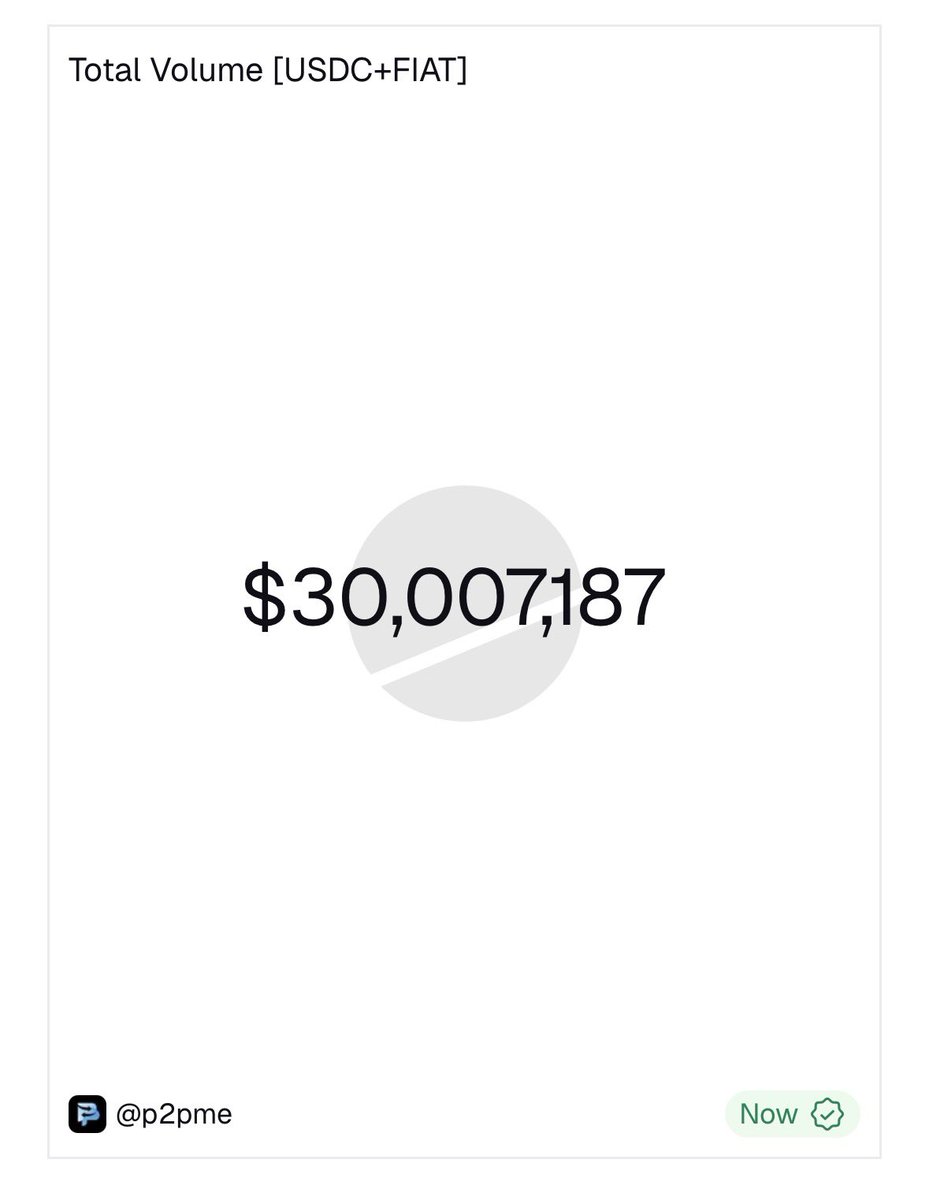
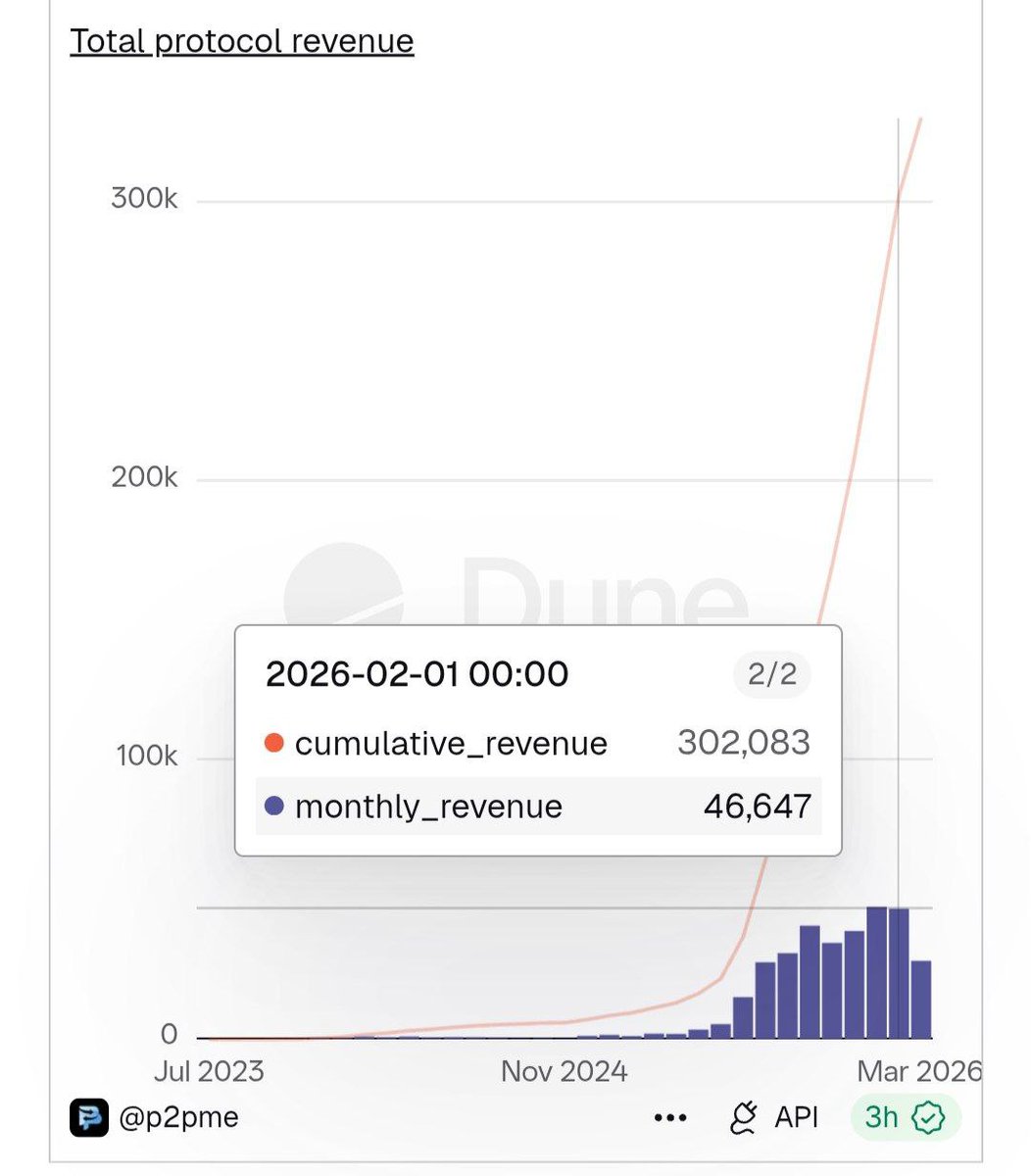
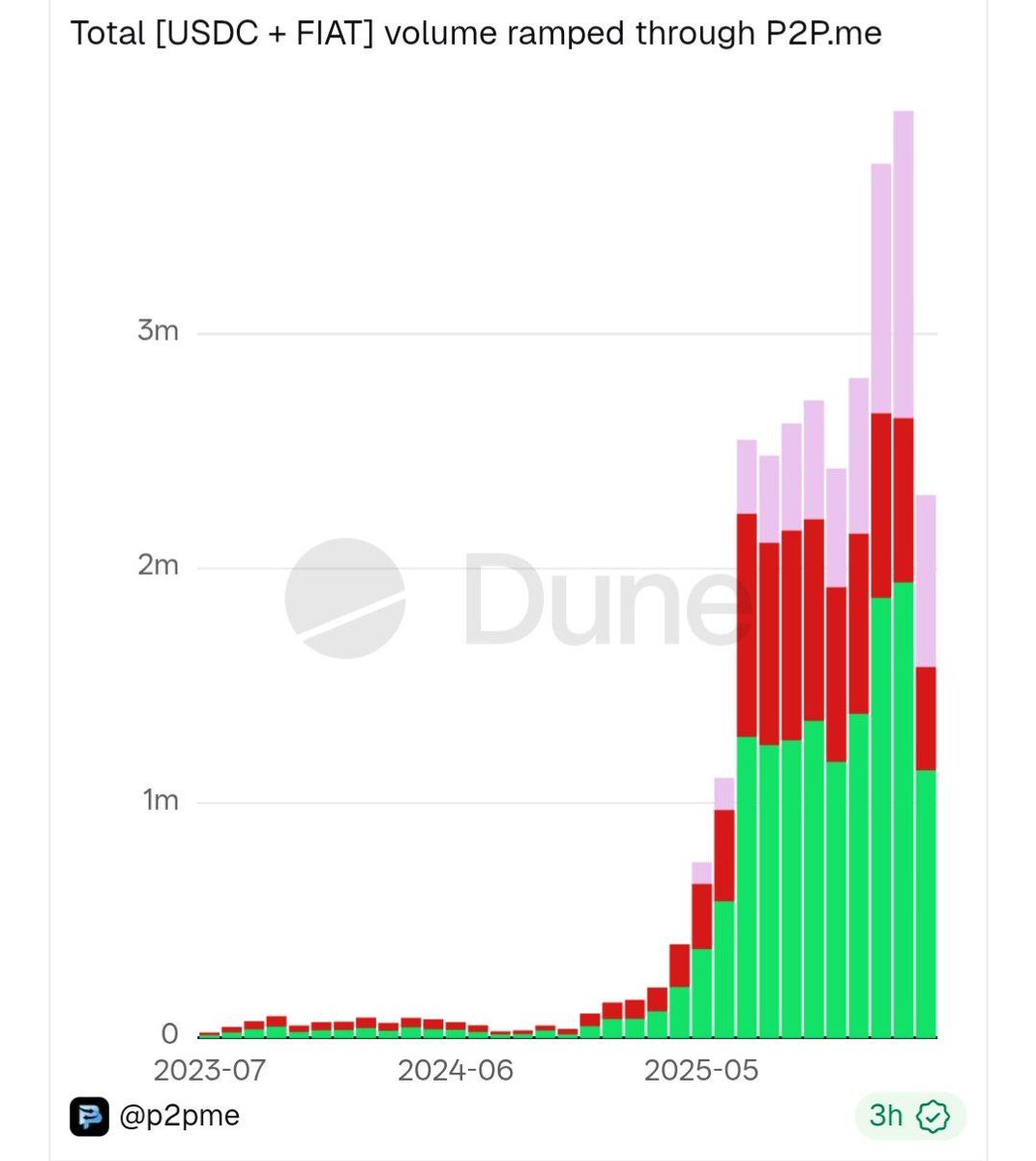
P2Pdotme is already live with ~$13.9M volume 165k+ orders
$P2P is decentralized: 50% community zero insider unlock so no single entity to shut down
Check the onchain data dune.com/p2pme/latest

English

@0xI999or @P2Pdotme Fair concern but this isnt a typical ICO. $P2P uses a MetaDAO sale (no private rounds fair distribution) and already has a live product with real revenue
50% supply is with the community at launch zero insider unlocks
P2P utility governance staking and revenue linked ownership
English

jinwosan $P2P retweetledi
We want to see as many of our users as possible participate in our ICO.
Our success is not measured by the number of VCs backing us again, or by getting oversubscribed far beyond what we need.
Our KPI for this ICO is how many of our users are true believers who decide to back our work.
Users investing in and holding the protocol tokens to see it grow hits different 🫡
To promote participation, we have set up an XP system and will soon launch a preferential allocation meter for users on p2p.foundation
We have over 22K active users, and about 5K of them have registered early interest to participate in our ICO to build an XP score.
They will receive allocation preference over everyone else - because their early vote matters more than anyone else’s 🫡
English
jinwosan $P2P retweetledi
Learn more about token economics, roadmap and protocol over at docs (link below 👇)
don't have time to read? Use the ask AI button!
P2P Foundation@p2pdotfound
$P2P MetaDAO sale goes live on March 26 NOTE: NO BID WALL If commitments exceed the $6M ask, the excess will be refunded. Only if total commitments exceed the $80M mark $8M ($20M FDV) be accepted. If total commitments exceed the $150M mark, $10M ( $25M FDV) will be accepted.
English
jinwosan $P2P retweetledi
Any entrepreneur can’t ask for a better partner than Multicoin and Shayon in particular.
There are probably very few people in the world who are truly “kind” to dreamers. Often, those who fail to realise their dreams are called “mad,” and the ones who make it through are called “gods.”
But Shayon genuinely respects your dream and partners with you through the ups and downs. non-judgmentally, always asking, “How can I help?” and “How can I be part of this?”
There were bad days in our journey together, and there were good days, but the way the days unfolded never changed how he looked at us: “with conviction”
Thank-you for the kindness you showed in supporting us through our madness. We are just getting started 🫡
English
