

JK Sharma जय शर्मा
29.2K posts

JK Sharma जय शर्मा
@jksharma000
60plus. Very young. Striving to return some of what I received. Retired as sr mgr in CPSE. Proud 🕉, Support नूपुर। Oppose विधर्म। धर्मो रक्षति रक्षितः।
Haryana, India Katılım Şubat 2013
16.3K Takip Edilen16.7K Takipçiler
JK Sharma जय शर्मा retweetledi

Read full blog at HinduinfoPedia
hinduinfopedia.in/the-kerala-sto…
English
JK Sharma जय शर्मा retweetledi
हिंदी में पूरा ब्लॉग पढ़ें
द केरल स्टोरी दो: पृष्ठभूमि, प्रकरण और सार्वजनिक चर्चा| HinduinfoPeida
youtu.be/qhCzgOGS5vM
#सार्वजनिकचर्चा#केरलस्टोरीदो #सामाजिकमुद्दे #न्यायालय #मतपरिवर्तन #HinduinfoPedia #समसामयिक
YouTube
हिन्दी
JK Sharma जय शर्मा retweetledi
Watch the Video
The Kerala Story Two: Background, Cases, and Public Debate | HinduinfoPeida
youtu.be/14Yys2f6Re4
#KeralaStoryTwo #ConversionDebate #PublicDiscourse #LegalDevelopments #SocialIssues #HinduinfoPedia #NationalDiscussion

YouTube
English
JK Sharma जय शर्मा retweetledi
JK Sharma जय शर्मा retweetledi
Read the story at Medium
The Kerala Story 2: When Suppression Becomes the Real Story
medium.com/p/the-kerala-s…
#KeralaStoryTwo #ConversionDebate #PublicDiscourse #LegalDevelopments #SocialIssues #HinduinfoPedia #NationalDiscussion
English
JK Sharma जय शर्मा retweetledi
The Kerala Story 2- The Narrative Immunity System: Why Some Stories Trigger Institutional Panic
Certain films are debated. Others are resisted. The difference between debate and resistance reveals something deeper than artistic disagreement. It reveals what I call the Narrative Immunity System — the protective reflex that activates when a storyline begins to expose structural patterns rather than isolated events.
Kerala Story 2 is not provoking reaction because it is dramatic. It is provoking reaction because it connects.
When separate incidents begin to look like a sequence, institutions grow uneasy. Individual cases can be dismissed as aberrations. A sequence suggests design. A design suggests infrastructure. And infrastructure suggests long-term planning.
The Narrative Immunity System exists to prevent that shift in perception.
From Incident to Architecture
Every society has crime. Every society has interfaith marriages. Every society has legal disputes. These, taken individually, can be processed within ordinary frameworks.
The shift occurs when recurring methods become visible.
False identity as an entry point.
Psychological isolation of the target.
Coercive compliance framed as voluntary adaptation.
Delayed justice reframed as due process.
Digital delegitimization of complainants.
When these elements appear repeatedly across regions, they cease to be coincidence. They resemble architecture.
Architecture cannot survive exposure. That is why exposure triggers resistance.
Harmony as Assertion, Not Evidence
One of the most telling responses to such films is the insistence that “harmony” must be preserved. Harmony, however, is not preserved by suppressing testimony. Harmony is the by-product of transparency and accountability.
When declarations of harmony precede investigation, the declaration becomes a shield rather than a description. The Narrative Immunity System reframes disruption as danger, even when the disruption is simply documentation.
A film that shows victims does not create disharmony. It reveals fractures that already exist. The attempt to prevent its circulation signals anxiety about pattern recognition.
The Survivor Problem
Institutions are comfortable debating ideas. They are less comfortable confronting faces. Survivors complicate abstraction. They bring specificity into conversations that prefer theory.
Specificity is difficult to neutralize.
Names, timelines, court outcomes, and geographic spread resist dismissal. When multiple survivors from different states describe similar trajectories, the argument shifts from “Did this happen?” to “Why does this keep happening?”
The Narrative Immunity System works hardest at this stage. The goal is not to disprove every account. The goal is to dilute attention. Label the documentation. Question the motive. Reframe the storyteller.
Once motive becomes the focus, the method disappears from scrutiny.
The Digital Echo Chamber
Modern resistance is rarely silent. It is algorithmic.
Within hours of controversial releases, reaction ecosystems generate synchronized messaging. The same adjectives appear across titles. The same framing dominates thumbnails. The same dismissal spreads before viewers engage with content.
Volume creates the illusion of consensus.
When narrative control becomes a race against time, the first objective is to predefine the conversation. If audiences are told what to think before they see the material, exposure weakens.
The Narrative Immunity System understands speed. It knows that early labeling shapes perception more powerfully than later rebuttal.
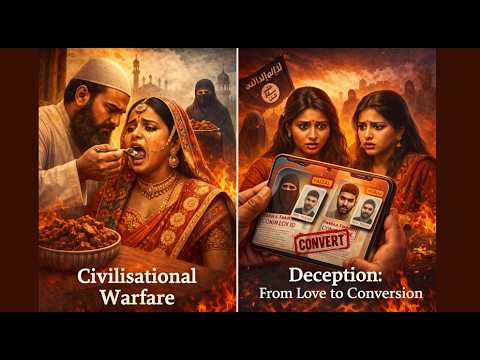
Civilisational Interfaces
The most unsettling elements of such films are not the dramatic sequences. They are the subtle ones.
Food as compliance.
Marriage as conversion vector.
Sacred space as boundary test.
Law as delay mechanism.
Digital shaming as silencing tool.
These are not random domains. They are civilisational interfaces — the places where identity meets daily life. When pressure is applied consistently at these interfaces, erosion becomes normalized.
Normalization is the quietest form of transformation.
Why Structural Narratives Threaten Power
Power can manage scandal. It struggles to manage structure.
If a case is singular, it can be absorbed. If it becomes systemic, accountability expands. Questions extend beyond individuals toward networks, incentives, and institutional responses.
That expansion is destabilizing.
The Narrative Immunity System intervenes precisely at that moment. It reframes structural exposure as social risk. It presents documentation as provocation. It converts scrutiny into alleged intolerance.
This inversion protects continuity.
The Cost of Fragmentation
The most effective defensive strategy is fragmentation.
Treat one case as local.
Treat another as personal.
Treat a third as misinterpretation.
Treat a fourth as coincidence.
When patterns are separated, architecture disappears. The public remains focused on symptoms, not design.
The film’s real disruption lies in refusing fragmentation. It stitches together geography and method. It suggests that repetition is not accidental.
That suggestion alone is enough to trigger panic.
Cinema as Pattern Recognition
Films cannot prosecute networks. They cannot amend laws. They cannot enforce transparency. Their influence lies elsewhere.
They can reveal repetition.
Once viewers begin recognizing patterns, they engage differently with headlines, court updates, and digital debates. Recognition reshapes interpretation.
That is why narrative control becomes urgent when pattern recognition begins spreading.
Beyond Applause and Outrage
The reaction cycle around Kerala Story 2 is itself instructive. Resistance confirms relevance. Attempts to delegitimize confirm discomfort. The louder the dismissal, the more structural the exposure.
This is not about agreement or disagreement with every scene. It is about acknowledging that repetition demands examination.
When documentation triggers institutional panic, it is rarely because it invents. It is because it connects.
And once connection happens, the Narrative Immunity System cannot fully restore the old equilibrium.
The story leaves the theatre. It enters collective awareness.
That is when real conversations begin.
Full analysis: hinduinfopedia.in/the-kerala-sto…
English
Read the story at Medium
The Kerala Story 2: When Suppression Becomes the Real Story
medium.com/p/the-kerala-s…
#KeralaStoryTwo #ConversionDebate #PublicDiscourse #LegalDevelopments #SocialIssues #HinduinfoPedia #NationalDiscussion
English
The Narrative Suppression Ecosystem: When Cinema Disturbs Power
A Film That Triggered Institutions Before Audiences
Some films are released into theatres. Others are released into controversy. The difference lies not in promotion but in reaction. When a film encounters legal scrutiny, political commentary, digital outrage, and cultural gatekeeping even before public viewing begins, it has already stepped beyond entertainment.
Kerala Story 2 operates inside what may be called a narrative suppression ecosystem. This ecosystem activates whenever documentation challenges an established storyline. The purpose is not necessarily to refute facts. It is to question the legitimacy of presenting them at all.
When institutional energy is mobilized ahead of audience engagement, the message becomes clear: the narrative is considered dangerous.
From Individual Cases to Structural Patterns
The most significant shift this film attempts is moving from isolated events to observable repetition. Individual experiences can be dismissed as rare. A pattern cannot be dismissed so easily.
Across different regions and social contexts, similar mechanisms appear. Deception in personal relationships. Pressure toward identity transformation. Administrative hesitation. Legal delay. Public reframing. Digital deflection. Each element on its own appears manageable. Combined, they suggest coordination.
The discomfort surrounding the film arises not from a single storyline but from convergence. When separate accounts begin to resemble one another structurally, the audience is invited to think beyond coincidence. That invitation unsettles systems that rely on fragmentation.
Fragmented narratives protect institutions. Integrated narratives challenge them.
Harmony as Declaration Versus Harmony as Reality
One of the most revealing aspects of the reaction to the film has been the invocation of social harmony. Harmony is a valuable aspiration in any plural society. Yet harmony cannot be declared into existence. It must be experienced by citizens.
When institutions assert harmony while simultaneously discouraging documentation that complicates the picture, tension emerges. The question becomes whether harmony is being protected or simply proclaimed.
A society confident in its cohesion does not fear examination. It does not resist uncomfortable testimony. It does not treat cinematic portrayal as existential threat. The intensity of resistance often reveals more than the film itself.
The Role of Survivor Testimony
In the narrative suppression ecosystem, personal testimony becomes the most destabilizing force. Abstract ideals can be defended with rhetoric. Specific experiences demand engagement.
When individuals speak about coercion, deception, or manipulation, the conversation shifts from ideology to accountability. It becomes harder to reduce lived experience to theory. It becomes harder to dismiss concerns as imagination.
The tension lies here. Documentation humanizes structural questions. It prevents dismissal through abstraction. That humanization forces uncomfortable reflection.
Cinema amplifies voices that might otherwise remain local. Once amplified, those voices enter national discourse. That shift alone challenges the comfort of narrative control.
Digital Amplification and the Propaganda Label
The contemporary battleground for cultural narratives is digital space. Within hours of release announcements, commentary ecosystems activate. Labels emerge quickly. The most common tactic is categorization. Once something is labeled propaganda, discussion shifts away from content toward motive.
This strategy reframes debate. Instead of evaluating claims, the focus turns to intent. Instead of examining testimony, attention centers on accusation. The subject dissolves into meta-commentary.
The narrative suppression ecosystem thrives on this inversion. If conversation never reaches substance, substance remains unexamined. The loudest reaction becomes the dominant perception.
Yet digital intensity does not erase underlying patterns. It merely attempts to overwhelm them.
Cultural Boundaries and Civilisational Interfaces
The film also intersects with broader debates about cultural boundaries. Food practices, marriage norms, sacred spaces, and identity markers are not minor customs. They function as civilisational interfaces. They transmit meaning across generations.
When coercion or deception targets these interfaces, the effect is not only personal disruption. It is symbolic displacement. Individuals become sites of contestation between frameworks of belonging.
This dynamic does not belong to any single community. Every society negotiates the tension between openness and preservation. The challenge arises when boundary defense is portrayed automatically as hostility, while boundary testing is portrayed as progress.
A balanced discourse requires symmetry. If participation is framed as a right, preservation must also be acknowledged as a right. Ignoring one side creates structural imbalance.
From Documentation to Recognition
Cinema alone cannot solve institutional complexities. It cannot replace courts, policy, or social reform. Its influence lies elsewhere. It initiates recognition.
Recognition precedes reform. Recognition disrupts denial. Recognition links dispersed experiences into a shared understanding. Once viewers begin connecting patterns independently, suppression becomes less effective.
The narrative suppression ecosystem depends on treating events as unrelated. It depends on compartmentalization. It depends on fatigue. When audiences instead perceive continuity, fatigue turns into inquiry.
Inquiry is not hostility. Inquiry is civic responsibility.
The Power of Pattern Visibility
What ultimately unsettles established systems is not outrage but visibility. When mechanisms become visible, their predictability becomes apparent. Predictability undermines claims of randomness.
If similar controversies repeat around similar themes, observers begin asking structural questions. Those questions cannot be silenced permanently through labeling.
A society committed to pluralism must allow examination of its tensions. Shielding topics from discussion does not resolve them. It merely postpones engagement.
Kerala Story 2, whether praised or criticized, has already achieved one outcome. It has compelled public attention toward the process by which certain narratives are amplified and others are resisted. That exposure itself becomes part of the conversation.
Beyond the Screen
The true impact of such films lies not in box office numbers but in discursive shift. If viewers leave theatres thinking about structural repetition rather than isolated drama, the film has succeeded in altering perception.
The debate will continue. Opinions will diverge. That is natural in a diverse society. What matters is whether discussion engages substance rather than suppression.
When cinema becomes documentation, it challenges comfort zones. When documentation challenges power, reaction intensifies. Observing that reaction carefully often reveals as much as the original content.
The question is not whether one agrees with every scene. The deeper question is whether society is willing to examine recurring patterns without reflex dismissal.
The conversation has begun.
Read the complete civilisational analysis at:
hinduinfopedia.in/the-kerala-sto…
English
हिंदी में पूरा ब्लॉग पढ़ें
द केरल स्टोरी दो: पृष्ठभूमि, प्रकरण और सार्वजनिक चर्चा| HinduinfoPeida
youtu.be/qhCzgOGS5vM
#सार्वजनिकचर्चा#केरलस्टोरीदो #सामाजिकमुद्दे #न्यायालय #मतपरिवर्तन #HinduinfoPedia #समसामयिक
YouTube
हिन्दी
Watch the Video
The Kerala Story Two: Background, Cases, and Public Debate | HinduinfoPeida
youtu.be/14Yys2f6Re4
#KeralaStoryTwo #ConversionDebate #PublicDiscourse #LegalDevelopments #SocialIssues #HinduinfoPedia #NationalDiscussion
YouTube
English
@AnchorAnandN
Do you really believe there are moderates in Islam?
Do you know anyone who refuses to believe in Quran 9.5 verse?
Anyone who doesn't believe in
nara e takbeer
And anyone who believe in God other than what is defined by PBUH Mohammad?
If you know they believe in above listed and still call him moderate, you are living in a virtual world.
Visit Hinduinfopedia.in
Hinduinfopedia.com
Hinduinfopedia.org
And particularly on the recent post
Raktbeej
hinduinfopedia.com/raktbeej-thesi…
You are bound by media ethics as I am in my writing!
Keep doing that. And I will keep presenting the record of what Islam is.
English
@AmazonHelp
You have cheated me
I bought a watch. It is unusable as seen in the images. I raised return request. It was not registered. I raised request on 17 February 2026. When I checked now I found it was not registered.
Please arrange collection and refund the money.
See the images that display defects.
Problem
The strap is wrong and one can't wear it


English
Read at Medium
Reimagining Character Formation for Institutions and Society | HinduinfoPedia
medium.com/p/reimagining-…
#RSSModel #CharacterFormation #CivilizationalStability #Seva #Discipline #NationalPolicy #HinduinfoPedia
English
Civilizational Character Architecture for a Changing World
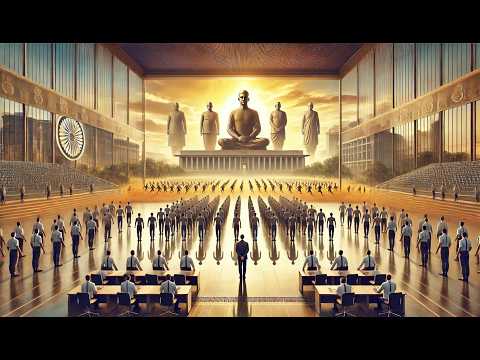
Public debate often revolves around economics, elections, technology, and policy reforms. Yet beneath all visible crises lies a quieter structural issue: the weakening of civilizational character architecture. Institutions do not decay merely because of flawed laws or insufficient funding. They decline when the people within them lack disciplined formation, shared values, and a service-oriented mindset.
The stability of any society depends on how it shapes its citizens long before they occupy positions of authority. Leadership failures, corporate scandals, institutional mistrust, and civic fragmentation are rarely failures of intelligence. They are failures of character architecture. When formation is accidental rather than intentional, disorder eventually becomes systemic.
A renewed emphasis on structured character development offers a long-term corrective. Not as ideological imposition, but as foundational design.
From Skill Production to Human Formation
Modern systems excel at producing skilled individuals. Universities generate specialists. Corporations refine technical expertise. Governments train administrators. Yet specialization without formation often produces imbalance. Competence grows while responsibility weakens. Capability expands while humility shrinks.
Human formation is broader than training. It integrates discipline, moral clarity, emotional resilience, and service consciousness into everyday conduct. It recognizes that authority must be earned through example, not merely granted through designation.
Institutions that embed this deeper architecture into their culture create environments where individuals internalize standards rather than comply reluctantly. Expectations become self-regulated rather than externally enforced. Such systems reduce the need for excessive oversight because responsibility becomes intrinsic.
The Role of Structured Discipline
Discipline is frequently misunderstood as rigidity. In reality, structured discipline provides clarity and strength. Clear hierarchies, punctuality norms, visible respect, and shared codes of behavior create predictable environments. Predictability fosters trust. Trust strengthens cooperation.
In workplaces, disciplined culture ensures that authority is respected without suppressing dialogue. In civic life, it promotes responsibility without diminishing rights. In educational settings, it builds resilience without stifling creativity.
Societies that remove all structure in pursuit of unrestricted freedom often encounter fragmentation. Conversely, societies that balance freedom with responsibility maintain continuity across generations. Discipline is not the opposite of liberty; it is its stabilizing partner.
Mentorship as Institutional Continuity
Civilizational continuity depends on intergenerational transmission. Knowledge alone is insufficient. Wisdom must be embodied and demonstrated. Mentorship provides this bridge.
When experienced individuals actively guide the next generation, institutions retain coherence. Ethical standards are preserved. Organizational memory is strengthened. Young leaders inherit not just procedures but principles.
Mentorship-centered cultures foster loyalty and reduce isolation. Individuals feel connected to something larger than personal ambition. They perceive leadership as stewardship rather than entitlement. This transformation alters how power is exercised and how institutions endure.
Service as Social Glue
At the heart of sustainable societies lies a shared ethic of contribution. Service-oriented frameworks shift attention from entitlement to responsibility. When individuals prioritize contribution, public discourse becomes less adversarial and more constructive.
Service does not require uniform identity. It requires recognition of interdependence. Communities that elevate service as a core value experience stronger cohesion and reduced polarization. Workplaces that reward collaboration over ego build healthier cultures. Governments that model responsibility inspire public trust.
Service transforms institutions from transactional entities into mission-driven communities. It aligns personal fulfillment with collective progress.
Scaling Character Architecture to National Vision
The concept of civilizational character architecture extends beyond families and workplaces. It can inform national vision. Education systems can integrate structured character programs alongside academics. Leadership development pathways can evaluate integrity alongside capability. Public service training can emphasize humility and duty alongside administrative skill.
Nations already recognize the strategic importance of defense and economic growth. Recognizing character formation as equally strategic would mark a profound shift. Societies that invest intentionally in disciplined, service-oriented citizens create long-term stability.
This approach is not about exclusion or conformity. It is about strengthening the moral infrastructure that supports pluralism. Diversity flourishes best within a stable framework of shared civic virtues.
A Framework for Long-Term Stability
Rapid technological transformation and global interconnectedness amplify both opportunity and vulnerability. Institutions must therefore reinforce their foundations. Civilizational character architecture provides that reinforcement.
When discipline, mentorship, and service are consciously embedded into institutional culture, resilience increases. Leaders become more accountable. Citizens become more responsible. Organizations become more durable.
This is not nostalgia. It is strategic foresight. Sustainable progress requires both innovation and rootedness. It demands both freedom and formation. Without formation, innovation destabilizes. Without discipline, freedom fragments.
The Path Forward
The future will belong to societies that balance competence with character. Those that intentionally design their human development systems will outlast those that leave formation to chance. Civilizational character architecture is not a slogan. It is a structural principle.
Strengthening families, reforming education, reshaping corporate culture, and renewing public life through disciplined mentorship and service-oriented values can restore institutional coherence. The transformation begins with recognizing that human development is not incidental to national success. It is its foundation.
For extended analysis and detailed exploration of this framework, visit hinduinfopedia.org/rss-character-….
English
हिंदी वीडियो देखें
आरएसएस चरित्र निर्माण प्रणाली: संस्थान से राष्ट्र तक | Hinduinfopedia
youtu.be/8A-oSJYaa_M
#चरित्रनिर्माण #तप #सेवा #दंड #राष्ट्रचेतना #संस्कार #HinduinfoPedia
YouTube
हिन्दी
Watch the Hindi Video
RSS Character Manufacturing System: From Corporations to Nations Hinduinfopedia
youtu.be/ZuHPIQjS2uI
#RSSModel #CharacterFormation #CivilizationalStability #Seva #Discipline #NationalPolicy #HinduinfoPedia

YouTube
English
I just published
Rethinking the Idea of a Borderless Brotherhood: History, Power, and Internal Conflict medium.com/p/rethinking-t…
#Ummah #IslamHistory #SectarianConflict #Geopolitics #SunniShia #GlobalPolitics #HinduinfoPedia
#इतिहास #सुन्नीशिया #आन्तरिकसंघर्ष #उम्मत
English
The Internal Fracture Pattern: Power, Faith, and Political Reality
Public conversations around religion often become emotional very quickly. Some idealize. Others attack. A more serious approach studies patterns — especially where political power and religious authority intersect.
This post examines what may be called the Internal Fracture Pattern — the recurring tendency of religious-political systems to generate internal rivalry over time. The focus is not personal belief or individual spirituality. It is structural dynamics: how authority, legitimacy, and governance evolve inside faith-based political frameworks.
The goal is clarity, not provocation.
The Ideal of Universal Solidarity
Many religious traditions articulate a vision of moral unity. Within Islamic thought, the idea of a global community of believers presents a powerful emotional and theological narrative. It speaks of equality beyond tribe, race, and geography. It promises mutual care and collective strength.
On paper, such solidarity should create resilience.
However, ideals operate within human systems. When religious legitimacy becomes intertwined with political authority, interpretation becomes power. Power attracts contestation. Contestation produces factions.
The transition from shared belief to competing authority has been a defining feature of multiple civilizations across history.
Authority and Legitimacy
Religious authority is not merely symbolic. It can determine law, governance, and social order. When multiple actors claim authentic interpretation, rivalry becomes inevitable.
In systems where theology influences political legitimacy, disagreement is rarely confined to academic debate. Competing claims over “correct belief” can transform into political struggle. Once political leadership and doctrinal authenticity merge, every dispute becomes existential.
This dynamic is not exclusive to one religion. It has appeared in Christian Europe, in sectarian Jewish history, and in various ideological movements of the modern era. The pattern is universal: concentrated moral authority, when contested, fragments.
The Internal Fracture Pattern is less about doctrine and more about structure.
Historical Continuity of Internal Conflict
Across centuries, internal conflicts within Muslim-majority societies have shaped political geography and social order. Leadership disputes, sectarian divisions, imperial rivalries, and modern state confrontations reveal a persistent theme: shared faith does not automatically override power competition.
Ethnicity, language, regional identity, and economic interests repeatedly assert themselves.
In many cases, external conflict temporarily suppresses internal disagreement. Yet once the external pressure reduces, suppressed divisions re-emerge. The cycle repeats.
This historical continuity suggests that unity narratives often depend on external tension to remain stable.
The Modern Nation-State Factor
Today, Muslim-majority countries function within a global system of nation-states. Borders, armies, energy resources, trade routes, and strategic alliances shape decision-making.
National interest consistently outweighs transnational religious rhetoric.
States compete for regional leadership. They pursue influence through economic partnerships, military alliances, and ideological sponsorship. Even when leaders invoke shared faith, their policies reflect geopolitical calculation.
This divergence between rhetoric and strategy reveals a structural tension between spiritual universality and political sovereignty.
The Internal Fracture Pattern becomes more visible when religious identity meets modern state competition.
Identity Mobilization and Strategic Messaging
Religious solidarity can serve as a mobilizing force during crisis. Leaders often emphasize unity when confronting external challenges. This creates emotional cohesion and political leverage.
However, such cohesion is often situational.
When the external threat diminishes, dormant internal disputes regain prominence. Sectarian, ideological, or ethnic differences resurface. Unity narratives lose momentum. Rival factions reposition themselves.
This is not unique to religious systems. Nationalist movements, ideological revolutions, and even corporate alliances demonstrate similar cycles.
Human systems prioritize advantage. Identity is often the vehicle, not the driver.
The Individual and the Structure
It is essential to distinguish between believers and institutions. Millions of Muslims worldwide live peacefully, contribute constructively to society, and reject violence. Faith, for most individuals, is ethical and personal.
The Internal Fracture Pattern concerns governance structures, not private devotion.
When religious legitimacy becomes a central pillar of state authority, competition intensifies because dissent challenges both power and sacred narrative. Where institutions are pluralistic and rule-based, disagreement is absorbed. Where authority is sacralized, disagreement destabilizes.
Institutional design matters more than theological aspiration.
Pluralism as Stabilizer
In diverse democracies, secular constitutional frameworks often act as stabilizing mechanisms. They prevent theological disputes from escalating into political conflict. They create shared civic identity across communities.
Plural systems do not eliminate tension, but they channel it through law rather than violence.
This explains why religious minorities in some secular democracies may experience greater long-term stability than populations in regions where religion and governance are fused tightly.
The durability of institutions determines the durability of peace.
The Broader Civilizational Insight
Every civilization grapples with the relationship between moral ideals and political reality. Unity is aspirational. Power is practical.
When unity depends primarily on shared opposition rather than shared institutional structure, it remains fragile. Sustainable cohesion requires layered integration: family, community, economy, law, and civic identity working together.
Where cohesion depends heavily on external rivalry, internal stability becomes conditional.
The Internal Fracture Pattern teaches a simple lesson: structural design determines long-term outcomes more reliably than rhetoric.
Closing Perspective
Examining historical and political patterns is not an act of hostility. It is an act of analysis. Constructive societies benefit from studying how authority, identity, and power interact over time.
Faith can inspire ethical life. Governance requires institutional resilience.
Understanding the Internal Fracture Pattern allows citizens and policymakers to approach religious and geopolitical discourse with nuance rather than emotion.
Long-term stability rests not on slogans of unity, but on systems capable of managing difference.
Full analytical exploration available here:
hinduinfopedia.com/the-ummah-delu…
English