

Mason Dunaway
35.8K posts


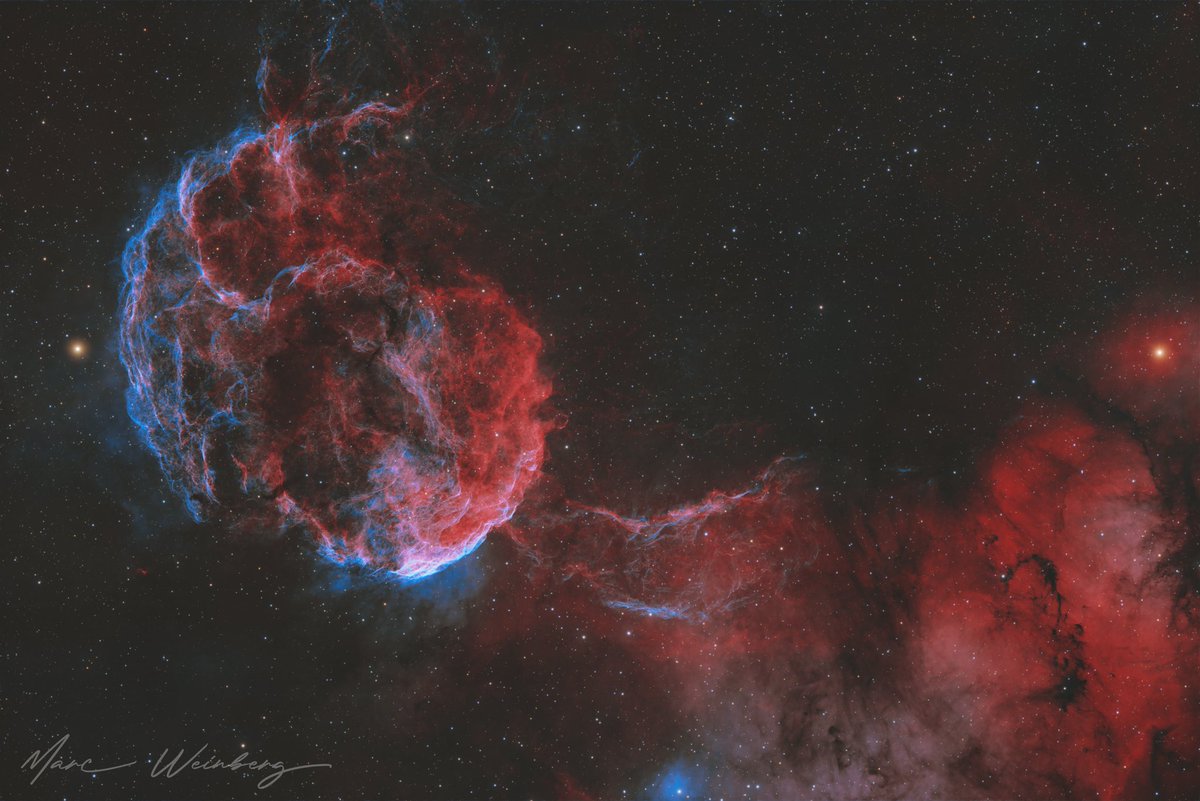
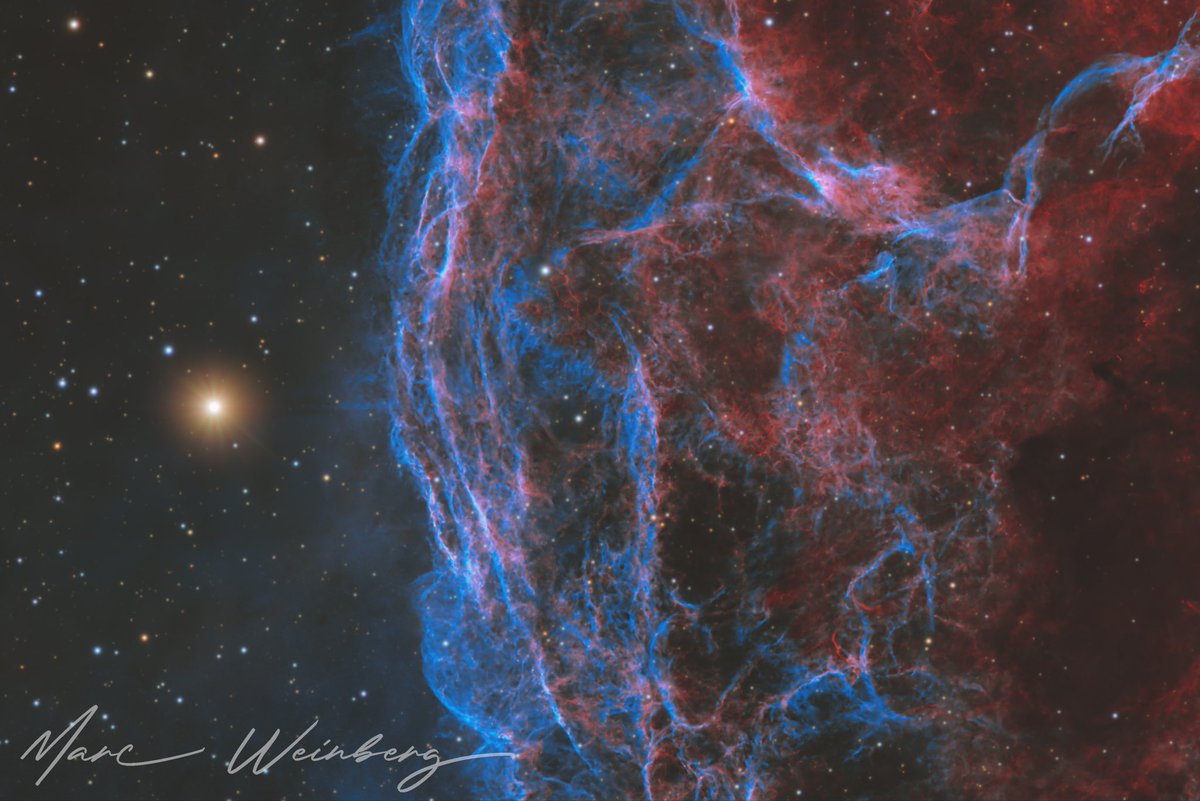
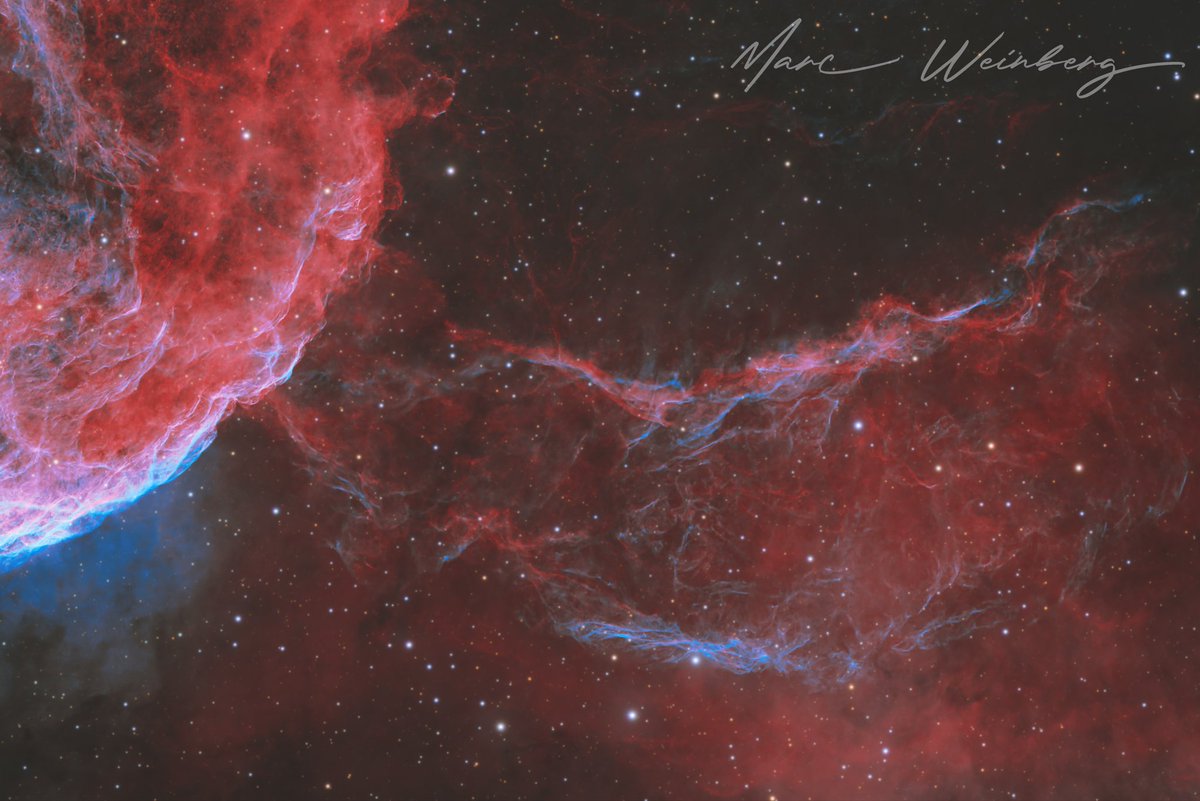
A galactic supernova remnant from my telescope! I have a huge fascination with the power of our world and universe. I have chased s Cat. 5 hurricane and an EF-5 tornado as a storm chaser, so I obviously find the power on our planet fascinating. I also find the power in our skies above equally fascinating. This is why I turned my telescope to the Jellyfish Nebula (IC 443). This image is the culmination of about a month of work with 58 hours and 43 minutes of data. The power of a galactic supernova is utterly mid blowing and I set out to capture it! In addition to the main image, I have added 3 cropped versions for you to see some of the insane detail of this epic galactic explosion.
The Jellyfish Nebula, cataloged as IC 443, is the remnant of the death of a star that went supernova. A supernova is one of the most explosive powers in all the Universe. The former star that exploded now exists as a pulsar or neutron star offset in the shockwave / explosion you see on the left side of the image inside the shell. This star went supernova between 3,000 and 30,000 years ago. This mind blowing shock shell is located around 5,000 light years from Earth in the constellation of Gemeni. The “tentacles” of the Jellyfish are being formed by shock waves that are interacting with the dense molecular clouds you see scattered through the whole image. How big is this? If you were able to see this with the naked eye, it would appear to be about 2.8 times the size of a full moon in our sky.
IC 443 (Jellyfish) is a challenging target because the blue (oxygen) shell is very faint. It took a lot of work to capture the detail in the faint tendrils you see in this image and extensive processing to reveal it. I love longer integration in my astro-images, so I wanted to see how much of the oxygen in the shock shell I could capture. I will say, I am very pleased with how much detail I was able to capture. IC 443 is a magnificent example of the power of a supernova interacting with the dense gasses around it. Look closely and you will see some exceptional detail in the shock shell. The star field is also very rich with many old stars (reddish) and many young hot stars (blueish).
Some details for the nerds. This is an HOO image with RGB stars. 25hrs 50m of Ha data and 29hr 50m of Oiii data captured in 5 min subframes. Stars are about 1 hour of data captured in 30s subs. Stacked, processed, and combined in PixInsight. Small touches in PS afterward. This is full frame data captured from my 1000mm refractor.

English
Mason Dunaway retweetledi

Mason Dunaway retweetledi

This could very well be the funniest thing I've seen in baseball. 🤣🤣🤣
English
Mason Dunaway retweetledi

I love this shit. Go on San Antonio do the thing
Shea Serrano@SheaSerrano
my cousin sent me this 😂😂😂
English
Mason Dunaway retweetledi


Do people hate Arsenal that much that they want city to win?
English
Mason Dunaway retweetledi

Mason Dunaway retweetledi

Mason Dunaway retweetledi
Mason Dunaway retweetledi

Mason Dunaway retweetledi

Reds hitters not using the Fucking ABS system is pissing me off so much. These strike calls are 6 inches off the plate in crucial situations.
English
